

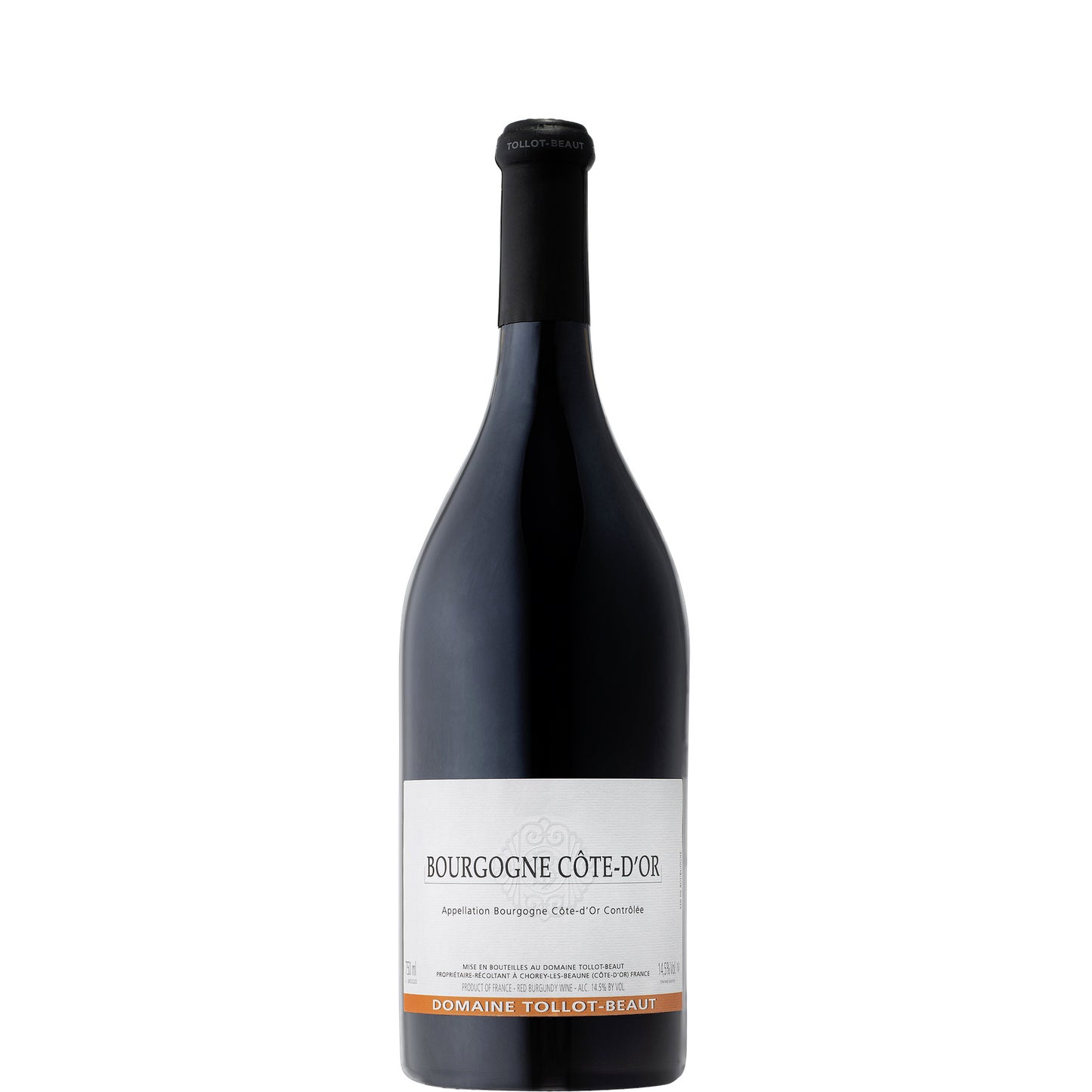
Bourgogne Côte d'Or rouge, Domaine Tollot-Beaut, 2024
Bourgogne Côte d'Or rouge, Domaine Tollot-Beaut, 2024
- 75cl
- 13%
- Red Still
- Pinot Noir
Couldn't load pickup availability

Optimal drinking window: 2026 - 2030
The naturally open, juicy character of the 2024 vintage aligns well with Tollot Beaut's style. Acidity remained fresh and crunchy, extraction was kept gentle, and the wines show clear fruit, floral lift and fine, dusty tannins, alongside the signature weight and power you find at this domaine.
"From Chorey fruit. Juicy and floral, with tart yellow cherry, raspberry and strawberry, finishing lean and fresh with hints of cassis and green apple."
Ksenia Pashkova, Club Merchandiser
Serve the Bourgogne Rouge slightly cool, open it early, and pair it with something simple. It doesn't need ceremony - just a decent glass and good company.
Right now the wine is in its primary flush — bright red fruit, freshness to the fore, and an easy charm that makes it hard to resist. Over the next year or two that fruit will begin to knit together with the wine's fine mineral structure, giving slightly more cohesion and length on the palate. By 2028 or so it will be at its most composed, though it won't develop the secondary complexity you'd expect from a village Burgundy with more concentration. After 2030, the freshness that defines it will start to fade, and there's little here to take up the slack — so drink it while it's singing.
What the critics say:
"The vinifications were straightforward as the fruit was clean and the alcohols reasonable so the wines had no trouble finishing their sugars. As to the style, 2024 is definitely a cooler vintage with good freshness and transparency and it makes me think of our 2010s. I was very impressed by the quality I found here and a number of the wines are very much worth your interest. ♥"
Tasting Notes
AppearanceClear, bright ruby with a youthful pink rim — light on its feet before you've even lifted the glass.
NoseFresh red cherry and a little strawberry, with a faint earthy, almost woodland floor quality underneath. There's a floral lift — dried rose petals perhaps — that gives it a prettiness typical of well-made Côte de Beaune Pinot. Clean and inviting without being showy.
PalateLight to medium-bodied, with silky tannins and lively acidity that keeps everything feeling focused and energetic. The red fruit carries through cleanly, with a touch of spice from restrained oak and a subtle mineral quality on the mid-palate. Nothing over-extracted, nothing forced.
FinishClean, medium-length, with a lingering freshness and just a hint of fine-grained tannin grip at the end.
Overall impressionPrecisely what a good Côte d'Or rouge should be: honest, fresh, and quietly satisfying.
Food Pairings
In the villages around Beaune, this kind of Pinot would land on the table alongside a simple roast chicken — ideally one rubbed with butter and tarragon and cooked until the skin crackles. Jambon persillé, the jellied ham and parsley terrine that's a Burgundian Sunday staple, is a natural match for the wine's savoury edge and bright acidity. A plate of local Époisses or Cîteaux cheese would be equally at home, as would a slow-cooked rabbit with mustard and crème fraîche. In the warmer months, locals wouldn't think twice about serving a wine like this with a charcuterie board and a long afternoon.
We think this wine would go well with
Serve at around 14-15°C — slightly cooler than you might think, which keeps the freshness lively and the fruit precise. No need to decant; 20-30 minutes open in the bottle is quite sufficient for a wine of this weight. A medium-bowled Burgundy glass will let the nose open up without over-aerating what is a relatively delicate wine.
The Bourgogne Côte d'Or appellation draws from vineyards that fall just outside the named village boundaries, typically on slightly flatter ground at the base of the escarpment or on the plateau above. In Tollot-Beaut's case, parcels around Chorey-lès-Beaune tend to sit on lighter, more alluvial soils with less limestone depth than the village crus — which makes for wines that are more immediately approachable, with freshness rather than structure at the fore. The Côte d'Or's continental climate, with warm days and cool nights, gives the fruit definition even in generous vintages.
Bourgogne Côte d'Or is a relatively recent appellation, introduced in 2017, designed to give a geographical identity to Burgundy's regional wines from the Côte d'Or département specifically, setting them apart from the broader Bourgogne appellation that covers much of the region. It covers Pinot Noir and Chardonnay from vineyards within the Côte d'Or that don't qualify for village or premier cru status. In practice, it sits a meaningful step above generic Bourgogne in terms of character and provenance, particularly when the grower also farms higher-level parcels and applies the same winemaking approach throughout.
The 2024 growing season in Burgundy was, frankly, a test of nerve. A wet spring brought significant mildew pressure, and vignerons who stayed sharp in the vineyard — working fast, keeping canopies open, reducing yields where necessary — came out the other side with something worth talking about. Summer brought warmer, drier conditions that helped the fruit recover composure, and harvest arrived broadly on the later side, with growers picking carefully to find phenolic ripeness without sacrificing freshness. Quantity was down across much of the Côte, which concentrates minds as much as it concentrates wine.
What emerged is a vintage that rewards those who put the work in. The Pinots we have tasted carry real precision and translucency — not because they are light, but because the acidity is lively and the fruit unforced. Chardonnays from the Côte de Beaune look particularly promising: taut, mineral, with genuine length. This is not a vintage to panic-open. Most village and premier cru reds want three to five years at minimum, with the better appellations drinking well until 2035 and beyond. The whites are more approachable now, though the best will reward patience too.
FAQs
What does this wine taste like?
Bright red cherry and strawberry on the nose, with a light earthy quality underneath. On the palate it's silky and fresh, with lively acidity and fine-grained tannins. This is Pinot Noir in an elegant, precise style rather than a rich or generous one.
When should I drink this wine?
It's drinking well right now in 2026 and doesn't need any further time. We'd enjoy it over the next four to six years, with a peak somewhere around 2028 to 2030. Don't leave it beyond 2032.
What food should I pair this with?
Roast chicken, rabbit with mustard, jambon persillé, or a good charcuterie board. It's also a natural companion to soft Burgundian cheeses like Époisses or Cîteaux. Keep the food simple — the wine rewards that approach.
Is this worth cellaring?
Not particularly, no. This is a regional Burgundy from a reliable estate, and its appeal is very much about freshness and immediacy. A couple of years of additional patience won't hurt, but there's no reason to wait. Open it soon and enjoy it for what it is.
How should I serve it?
Serve at around 14-15°C — a little cooler than room temperature. No decanting needed; just open the bottle 20-30 minutes before you pour. A medium Burgundy glass works best to let the nose unfold without over-aerating the wine.
How does Tollot-Beaut's regional wine compare to their village and premier cru wines?
It's made with the same care and reflects the same house style — restrained, clean, and precise — but without the depth or age-worthiness of their Beaune or Savigny premiers crus. Think of it as the best introduction to what the domaine does, at a fraction of the price. If you like this, their village-level wines are very much worth exploring.

Explore related wines


What are you looking for tonight? Tell me the occasion, a grape, a region — or just try a suggestion below.
Your recommendations will appear here.
-
-
Speak to one of our Wine Gurus
Speak to a Wine GuruWith years of experience, our team can help you with all your wine buying and selling needs