

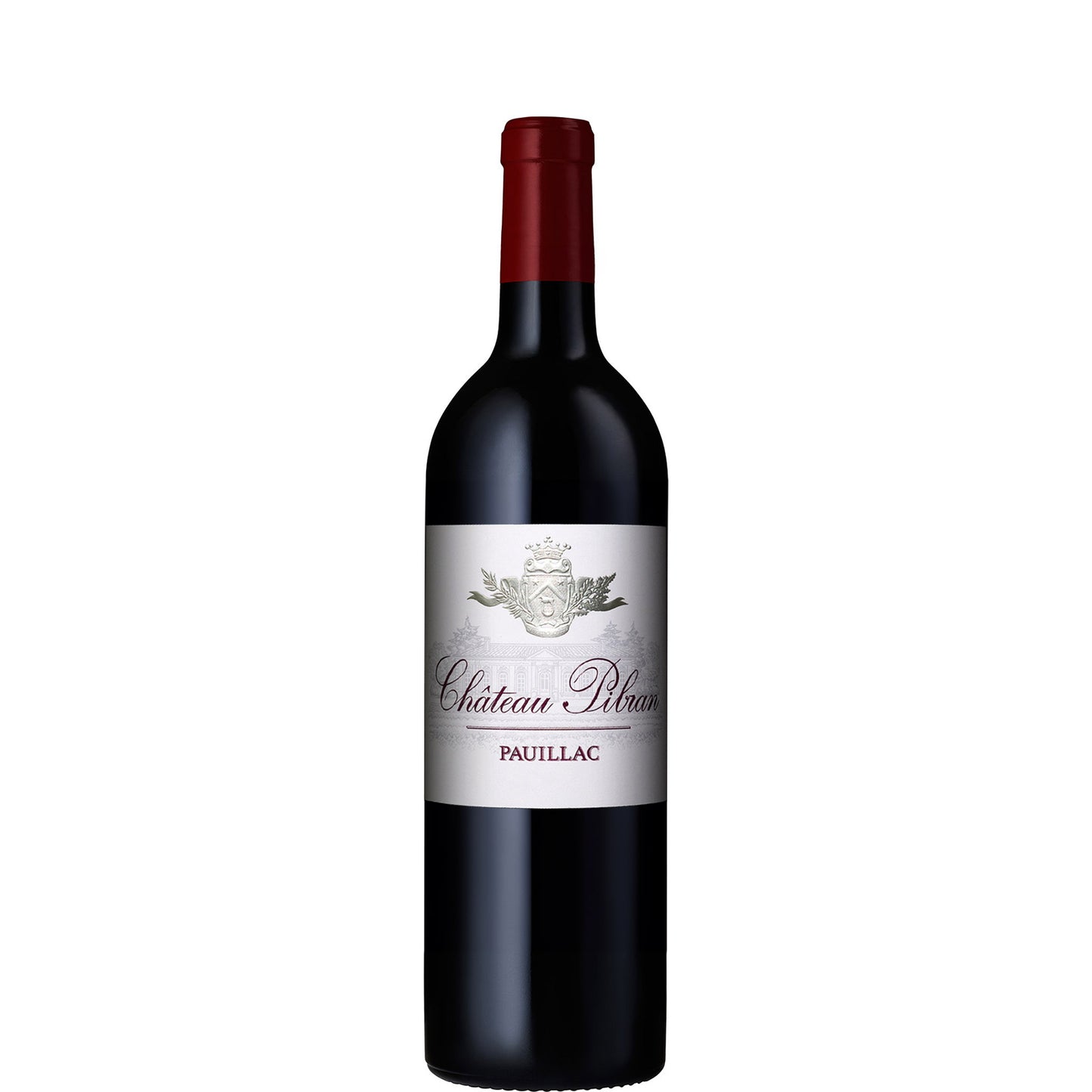
Château Pibran, 2017
Château Pibran, 2017
- 75cl
- 13.5%
- Red Still
- Merlot, Cabernet Sauvignon
Couldn't load pickup availability

Optimal drinking window: Now - 2038
About Château Pibran, 2017
The 2017 Château Pibran is a superb wine from the AXA stable (and a close cousin to Château Pichon Baron).
It displays a good colour—moderate to rich garnet with some lingering purple hues. The nose is sweet and inviting, offering aromas of currants, stewed plums, and hints of Ribena. On the palate, it strikes a balance between freshness and depth, with plenty of dark fruit flavours complemented by a soft to moderate mouthfeel. The fruit lingers nicely on the finish, and while the tannins are present, they are not overpowering.
Currently in its primary phase, the 2017 shows beautiful fruit purity with the tannins already well-integrated thanks to the vintage's generous character. Over the next five years, expect the cedar and tobacco notes to become more prominent whilst the primary fruit evolves from fresh redcurrant toward more complex dried cherry and plum flavours. By the early 2030s, tertiary notes of leather and earth will emerge, adding layers of complexity whilst maintaining the wine's essential charm. The wine should plateau around 2032-2035, holding its peak for several years before beginning a gentle decline, though its soft structure suggests it will remain pleasant well into the 2040s.
What the critics say:
"The 2017 Pibran is a juicy, absolutely delicious Pauillac to drink now and over the next decade or so. Sweet tobacco, cedar, licorice, mint and dried cherry add pretty aromatic top notes to round things out. The 2017 is not super complex or structured, but it is a wine of immense pleasure and sensuality. I loved it."
"Medium to deep garnet-purple colored, the 2017 Pibran gives up notes of redcurrant jelly, baked plum and blackcurrant cordial with ints of stewed tea, fragrant earth and new leather. Medium-bodied, the palate has great vibrancy, with bags of crunchy fruit and a soft texture, finishing with lovely purity."
Tasting Notes
AppearanceModerate to rich garnet with lingering purple hues that hint at the wine's youth.
NoseSweet and inviting, offering aromas of redcurrant jelly and stewed plums with hints of Ribena-like concentration. Pretty aromatic top notes of sweet tobacco, cedar, and mint add sophistication, whilst subtle touches of fragrant earth and new leather provide depth.
PalateMedium-bodied with great vibrancy and bags of crunchy dark fruit flavours. The texture is soft to moderate, with present but not overpowering tannins that provide structure without dominating. Lovely purity runs through the wine, balancing freshness with depth in a style that's immediately appealing.
FinishThe fruit lingers nicely with touches of liquorice and dried cherry, whilst the soft tannins provide a gentle framework.
Overall impressionA wine of immense pleasure and sensuality that captures Pauillac's character without the intimidating structure of the classified growths.
Food Pairings
In the Médoc, this would traditionally accompany the region's famous agneau de Pauillac, salt-marsh lamb that grazes on the estuary's edges and develops a distinctive mineral character. Local bistros serve it simply roasted with garlic and herbs, letting the meat's natural flavour shine alongside the wine's cedar and tobacco notes. Duck confit from nearby Gascony is another classic pairing, the rich fat balancing the wine's tannins whilst echoing its earthy undertones. Côte de boeuf grilled over vine prunings brings out the wine's smoky complexity, whilst the local custom of serving aged hard cheeses like Comté allows the wine's fruit to evolve beautifully in the glass.
We think this wine would go well with
Serve at 17-18°C to allow the fruit and cedar notes to express themselves fully. Whilst approachable without decanting, we'd suggest an hour in a traditional carafe to let the wine breathe and soften any remaining tannins. Use large Bordeaux glasses to concentrate the aromatics, particularly those lovely tobacco and mint top notes. If opening a young bottle, consider double-decanting to add extra aeration without losing the wine's youthful vibrancy.
Pibran's 17 hectares lie on the classic Pauillac terroir of deep Günzian gravel over clay subsoil, providing excellent drainage whilst retaining enough moisture for the vines during dry spells. The vineyard sits at a modest elevation with good exposure, benefiting from the tempering influence of the nearby Gironde estuary. This combination of warm gravel soils and maritime climate allows for slow, even ripening of the Cabernet Sauvignon whilst maintaining the freshness that defines the best Pauillac wines.
Pauillac is the most celebrated commune of the Haut-Médoc, home to three of Bordeaux's five First Growths: Lafite, Latour, and Mouton Rothschild. The appellation's reputation rests on its distinctive terroir of deep gravel beds that provide perfect drainage for Cabernet Sauvignon, which typically dominates the blends here. Pauillac wines are known for their power, structure, and remarkable ageing potential, though estates like Pibran show the commune can also produce wines of elegance and approachability. The appellation's 1,200 hectares include 18 classified growths, making it the most densely packed area of fine wine estates in Bordeaux.
The 2017 growing season in Bordeaux reads like a masterclass in how vines adapt to extremes. April frost damaged budbreak across the region, reducing yields significantly, then July and August delivered serious heat that pushed ripening along at pace. The saving grace came with cooler nights and a perfectly timed return to moderate conditions in September, allowing whatever fruit remained to develop proper balance rather than simply racing to sugar.
What emerged was a vintage of surprising concentration—not because the fruit was inherently powerful, but because there was simply less of it to go around. The Cabernets, particularly Cabernet Sauvignon, show real intensity without the hard edges that scorching summers often produce, while Merlot varies more dramatically depending on terroir and timing. We find these wines drinking beautifully now, offering immediate pleasure with their forward fruit and supple tannins, though the better examples will happily cruise until 2030. This isn't a vintage for the cellar obsessives, but for those who actually open bottles.
FAQs
What does this wine taste like?
Sweet tobacco and cedar with juicy redcurrant and plum flavours, soft tannins and lovely purity. It's more approachable than many Pauillac wines whilst still showing the commune's distinctive character.
When should I drink this wine?
It's drinking beautifully now and will continue to improve until the mid-2030s. The soft tannins make it approachable young, but patience will be rewarded with greater complexity.
What food pairs well with this wine?
Venison and lamb work brilliantly, as do rich dishes like duck confit. The wine's cedar notes complement grilled meats, whilst its fruit balances aged hard cheeses like Comté.
Should I decant this wine?
An hour in a carafe will help it breathe and show at its best, though it's perfectly enjoyable without decanting. Serve at 17-18°C in large Bordeaux glasses.
Is this wine worth cellaring?
Absolutely. Whilst delicious now, it will develop beautiful complexity over the next decade as cedar and tobacco notes become more prominent and tertiary flavours emerge.
How does this compare to other Pauillac wines?
It offers genuine Pauillac character without the power and price of the classified growths. Think of it as Pauillac's more charming, approachable side whilst still maintaining the appellation's distinctive style.

OUR GROWERS
Château Pibran


What are you looking for tonight? Tell me the occasion, a grape, a region — or just try a suggestion below.
Your recommendations will appear here.
-
-
Speak to one of our Wine Gurus
Speak to a Wine GuruWith years of experience, our team can help you with all your wine buying and selling needs