

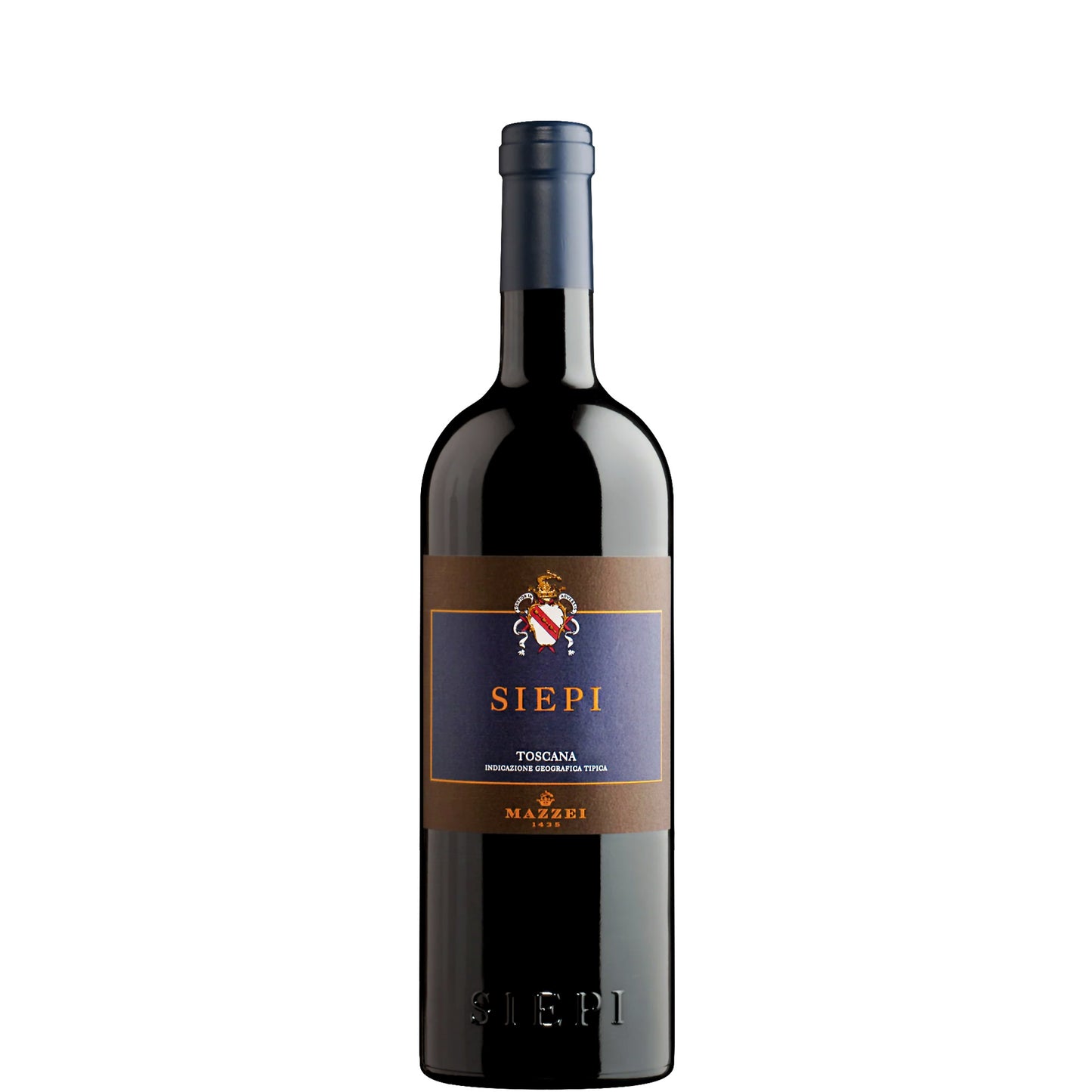
Mazzei Siepi, 2020
Mazzei Siepi, 2020
- 75cl
- 14.5%
- Red Still
- Merlot, Sangiovese
Couldn't load pickup availability

Optimal drinking window: Now - 2045
Siepi is crafted by the renowned Mazzei family, long admired in Tuscany and clearly on a stellar trajectory. This wine is a 50/50 blend of Sangiovese and Merlot, a true meeting of Italy and France, sourced from sun-drenched vineyards in Castellina in Chianti, just west of Radda, on some of the region’s most prized terroir.
It’s always been an impressive wine, but recent vintages have reached new heights. The vines are now in their prime, and there’s an unmistakable touch of winemaking magic that’s lifted Siepi firmly into the top tier of Tuscan reds.
Right now, in 2026, Siepi 2020 is in what you might call its exuberant youth — the fruit is vivid, the energy is high, and it is already delivering real pleasure. Over the next three to five years the primary fruit will begin to knit with the oak and the tannins will soften further, moving the wine into a more composed, harmonious middle phase. By the early 2030s we would expect secondary complexity to emerge properly: dried herbs, leather, forest floor, and a deeper spice character. The wine should reach a plateau of complexity somewhere around 2032 to 2038, and given the structure on show here, there is no reason it should not remain in fine shape until at least 2045. This is a wine worth laying down.
What the critics say:
"Dried herbs and sweet spices on the nose, forest notes with bramble fruits, concentrated and expressive. Such a smooth delivery on the palate, tannins glide across the tongue giving the sweet strawberry, raspberry and plum fruit time to expand in the mouth as the acidity gives a mouthwatering aspect. This is very much on the lively and vibrant fruit - shouting loudly about its energy. Feels extremely well made, clear definition, finesse and balance. Such a gorgeous fruit profile, the high-toned strawberry and cherry, bright and piercing, yet also round and generous with tobacco and wood nuances. Ample tannins are fine but present, giving support. All round an exceptionally beautiful wine. I love this. Giving such immediate and youthful enjoyment but this will continue to age well. Ageing 18 months in French oak barrels (70% new), barriques (Merlot), tonneaux (Sangiovese), followed by four months in concrete tanks."
"Graphite and lead pencil is coming through, together with violets and blackberries. Some tar and asphalt, too. Full-bodied, yet creamy and crunchy, with agile liveliness that goes on for minutes. Fabulous length. Drinkable already, but will age gracefully for decades."
Tasting Notes
AppearanceDeep, dense ruby with a vivid violet rim that signals both youth and concentration.
NoseDried herbs and sweet spice announce themselves first, then the fruit builds — bramble, plum, and that high-toned, almost piercing Sangiovese cherry that feels genuinely vibrant rather than confected. Graphite and a flicker of violet add lift and intrigue; the 18 months in French oak has left a trace of tobacco and cedar without crowding anything out.
PalateThe tannins are present and structured but astonishingly fine, gliding rather than gripping, and the fruit — strawberry, raspberry, dark plum — expands across the palate with real generosity. There is a mouthwatering acidity that keeps everything lively and focused, and a creaminess, possibly the Merlot's contribution, that rounds the whole thing out. The two varieties feel genuinely integrated here, not simply blended.
FinishRemarkably long, with graphite and sweet spice echoing for well over a minute.
Overall impressionA wine that drinks beautifully now but has the architecture to age with real distinction — one of the most complete Tuscan reds we have tasted from this vintage.
Food Pairings
In Castellina, this would almost certainly be poured alongside bistecca alla Fiorentina — a thick-cut T-bone from Chianina cattle, charred over wood embers and served barely rested with nothing more than olive oil and salt. The Sienese tradition of pappardelle with wild boar ragu would be equally at home here, the wine's acidity cutting through the richness of the slow-cooked meat. Aged Pecorino Toscano, particularly the stagionato style, would be a simpler but equally rewarding match. If you are pushing towards something more celebratory, a whole roasted saddle of lamb with rosemary and garlic is the kind of dish this wine was built for.
We think this wine would go well with
Serve at 17 to 18 degrees Celsius — any cooler and the tannins will feel tighter than they need to. Decanting is strongly recommended: give it at least 90 minutes in a wide-bowled decanter to allow the fruit to open up and the oak to integrate fully. A large Burgundy-style glass will reward you with the full aromatic range, including that lifted cherry and violet character that is one of Siepi's signatures.
The Siepi vineyard sits at around 400 metres above sea level in Castellina in Chianti, just west of Radda, on soils that are predominantly galestro — the crumbly, schist-like rock that is one of Chianti's great gifts to viticulture — mixed with alberese clay. The altitude keeps the vines cool at night even in warm summers, preserving the freshness and lift that stops this wine feeling heavy. The combination of well-drained rocky soils and significant diurnal temperature variation is precisely what gives Siepi its energy alongside its concentration.
Siepi sits within the broader Chianti Classico zone but is released as an IGT Toscana, a classification that allowed Mazzei the freedom to blend Merlot alongside Sangiovese at a time when the Chianti Classico DOC would not have permitted it. This places it in the so-called Super Tuscan category — wines that deliberately stepped outside the appellation rules in order to make something more ambitious. The IGT designation carries no strict rules on blending or ageing, which is precisely the point: it is a quality statement, not a regulatory one.
The 2020 growing season in Tuscany threw everything it had at the vines, then delivered one of those dramatic turnarounds that makes wine people believe in providence. A cold, wet spring delayed budbreak and kept everyone on edge about flowering, whilst summer brought punishing heat that had producers reaching for shade nets and irrigation systems. Just when the vintage looked destined for mediocrity, September arrived with cooling temperatures and crucial rainfall that allowed the grapes to recover their composure and ripen properly rather than simply desiccate on the vine.
What emerged from the cellars shows Tuscany's resilience in fine form. The Sangiovese displays more immediate charm than we often see from the variety, with bright cherry fruit that doesn't sacrifice the underlying structure that makes Chianti and Brunello age so gracefully. Super Tuscans from the coastal areas fared particularly well, where Cabernet Sauvignon and Merlot thrived in the maritime influence and produced wines with both power and freshness. Most 2020s are drinking beautifully now, offering accessibility without compromising their long-term prospects, and we suspect the best will reward cellaring for another decade or more.
FAQs
What does Siepi taste like?
It is built around vivid, high-toned fruit — cherry, strawberry, dark plum and bramble — with fine, gliding tannins and a mouthwatering acidity that keeps everything lively. There is tobacco, sweet spice and a trace of graphite from the oak ageing, but the fruit is always the star. The Merlot adds a creaminess and roundness that the Sangiovese alone would not deliver.
When should I drink the 2020?
It is genuinely enjoyable right now, and if you are opening a bottle in 2026 you will not be disappointed. That said, this is a wine with real ageing potential. Drinking it somewhere between 2028 and 2038 will give you the most complex and rewarding experience, and it should remain in excellent shape until 2045.
Is Siepi worth cellaring?
Absolutely, and the 2020 vintage especially so. With 98 points from both Decanter and James Suckling, it is one of the most acclaimed recent releases from the estate. The tannin structure and acidity are both built for the long haul. If you can resist opening it for five or more years, the reward will be considerable.
What food should I serve with Siepi?
The Tuscan classics work best: a bistecca alla Fiorentina, a slow-cooked wild boar ragu, or a roasted leg of lamb with rosemary. Aged Pecorino Toscano is a simpler but very satisfying match if you want something less formal. The wine's acidity means it handles richness well, so do not be afraid of dishes with depth.
What is a Super Tuscan, and where does Siepi fit?
Super Tuscans are wines that stepped outside the traditional Chianti Classico rules — typically by including international varieties like Merlot or Cabernet Sauvignon — and were released under the broader IGT Toscana classification instead. Siepi is a classic example: a 50/50 blend of Sangiovese and Merlot that would not have qualified as Chianti Classico but makes a strong case for being one of Tuscany's finest reds regardless of what the label says.
How should I serve Siepi?
Serve at 17 to 18 degrees Celsius and decant for at least 90 minutes before drinking — this wine opens up significantly with air. Use a large Burgundy-style glass to capture the full aromatic range, particularly the lifted cherry and violet notes that make Siepi so distinctive.
OUR GROWERS
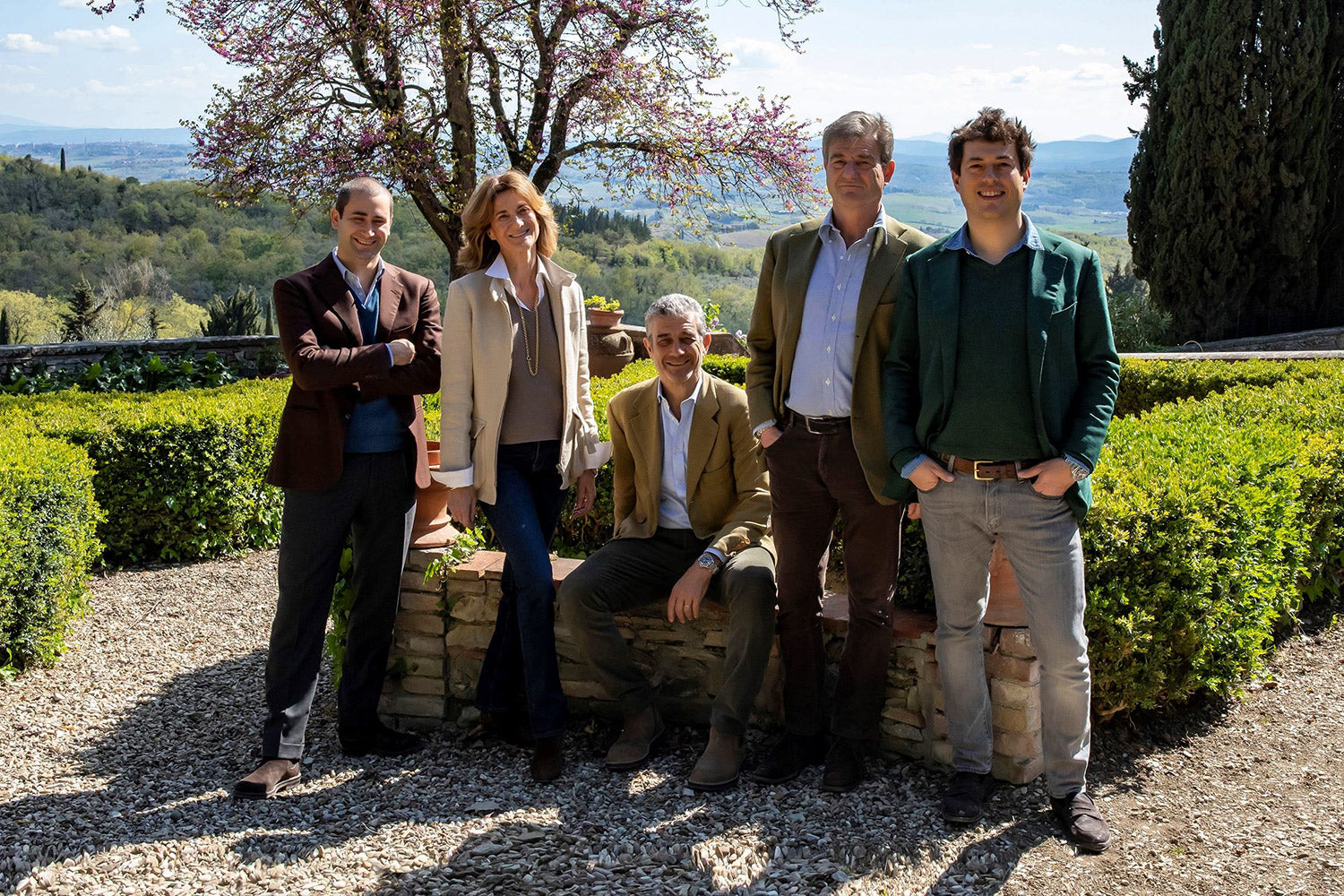
Mazzei


What are you looking for tonight? Tell me the occasion, a grape, a region — or just try a suggestion below.
Your recommendations will appear here.
-
-
Speak to one of our Wine Gurus
Speak to a Wine GuruWith years of experience, our team can help you with all your wine buying and selling needs