

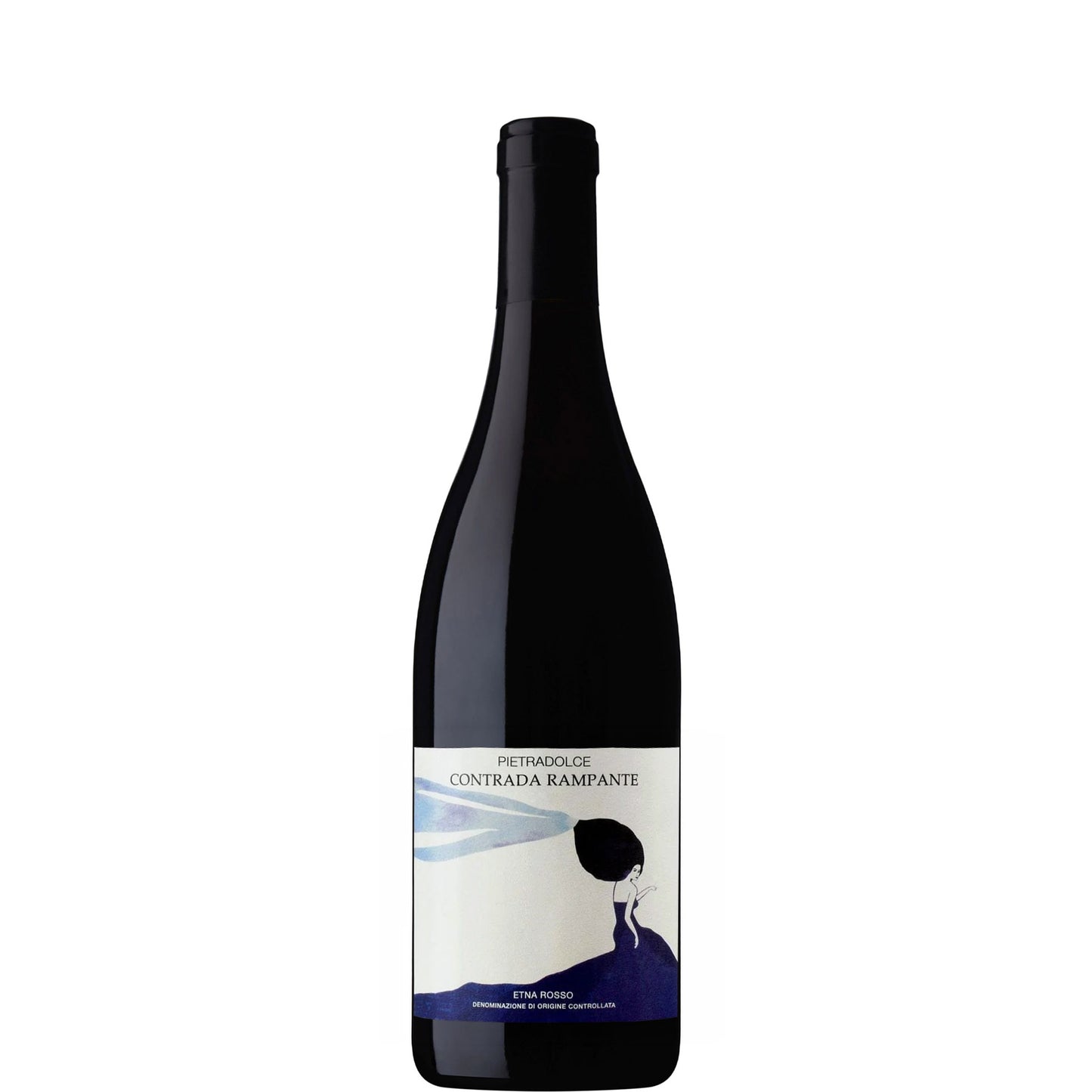
Pietradolce, Contrada Rampante Etna Rosso, 2017
Pietradolce, Contrada Rampante Etna Rosso, 2017
- 75cl
- 15%
- Red Still
- Nerello Mascalese
- Organic
Couldn't load pickup availability

Optimal drinking window: Now - 2030
Rampante is one of Etna's most coveted single contrade, a high-altitude north-facing plot on the volcano's upper slopes where Nerello Mascalese grows in ancient, ungrafted vines on black basalt soils. Pietradolce's 2017 from this site is exactly the kind of wine that has made Etna the most exciting red wine conversation in Italy: pale in colour, deceptively light on its feet, but with a depth and mineral intensity that keeps pulling you back. The 2017 vintage brought warm, dry conditions that gave the wine a little more flesh than usual without sacrificing the site's characteristic tension.
This is a wine about place more than variety, and Rampante's volcanic signature is all over it: that combination of bright red fruit, iron and ash minerality, and tannins that are fine but insistent.
At nine years old, the 2017 Rampante is entering a very good drinking window, with the primary fruit still vivid but the volcanic mineral character now fully integrated into the wine's structure. Over the next three to four years, expect the red fruit to dry out slightly into more savoury, earthy territory — dried cherry, leather, and that volcanic iron note becoming more prominent. The wine will likely reach a plateau of complexity somewhere around 2026-2030, where fruit and secondary development are in ideal balance. Beyond 2030, the fruit may begin to fade faster than the structure, so those with bottles in the cellar should keep an eye on it rather than treating it as indefinitely age-worthy.
What the critics say:
"With pre-phylloxera fruit from 90-year-old vines in the village of Castiglione di Sicilia, this asset in the Pietradolce portfolio is a relatively new addition. The 2017 Etna Rosso Contrada Rampante shows some extra concentration and darkness that reflects the vineyard site and the hot growing conditions of the vintage. The wine offers a lot of savory characteristics with leather and crushed stone, but there are some solid tones of blackberry and wild plum at its core. This was a release of about 4,000 bottles."
"Attractive ripe berry, plum and spice aromas follow through to a medium to full body, chewy tannins and a powerful finish. Drink after 2021."
Tasting Notes
AppearancePale, translucent ruby with a garnet edge — classic Nerello, easily mistaken for a serious Pinot Noir.
NoseBlood orange, wild strawberry, and dried rose petals, then something smokier and more mineral underneath — iron filings and warm volcanic rock. With air, a savoury note of dried thyme and a faint waft of incense emerges.
PalateThe 2017 warmth gives this a slightly more generous entry than some Rampante vintages, with ripe red cherry and a touch of pomegranate flesh. But the structure is very much there: fine, grippy tannins and a bright, saline acidity that the volcanic soils seem to embed in every bottle from this site.
FinishLong and mineral, with that iron and ash character reasserting itself alongside dried cherry skin and a faint spice.
Overall impressionA wine that rewards attention — the more you give it, the more it gives back.
Food Pairings
On the slopes of Etna, this would find its natural home alongside slow-braised rabbit with wild herbs and black olives, or the robust pork sausages cooked with fennel seed that are a staple of the mountain villages. The local tradition of pasta alla Norma — rigatoni with fried aubergine, tomato, and aged ricotta salata — works beautifully against Nerello's acidity and mineral edge. Grilled swordfish steaks with capers and lemon are a less obvious but genuinely excellent pairing, where the wine's lightness of colour translates into a surprising versatility at the table. Aged pecorino siciliano, its saltiness cutting through the tannin, rounds out the picture.
We think this wine would go well with
Serve at 16-17°C — cooler than most reds, which lets the mineral character and bright acidity do their work properly. Decanting for 45 minutes to an hour is worth it for a 2017; the wine opens up meaningfully and the tannins soften just enough. A large Burgundy-style bowl is the right glass, giving the more delicate aromatic register room to express itself without being overwhelmed.
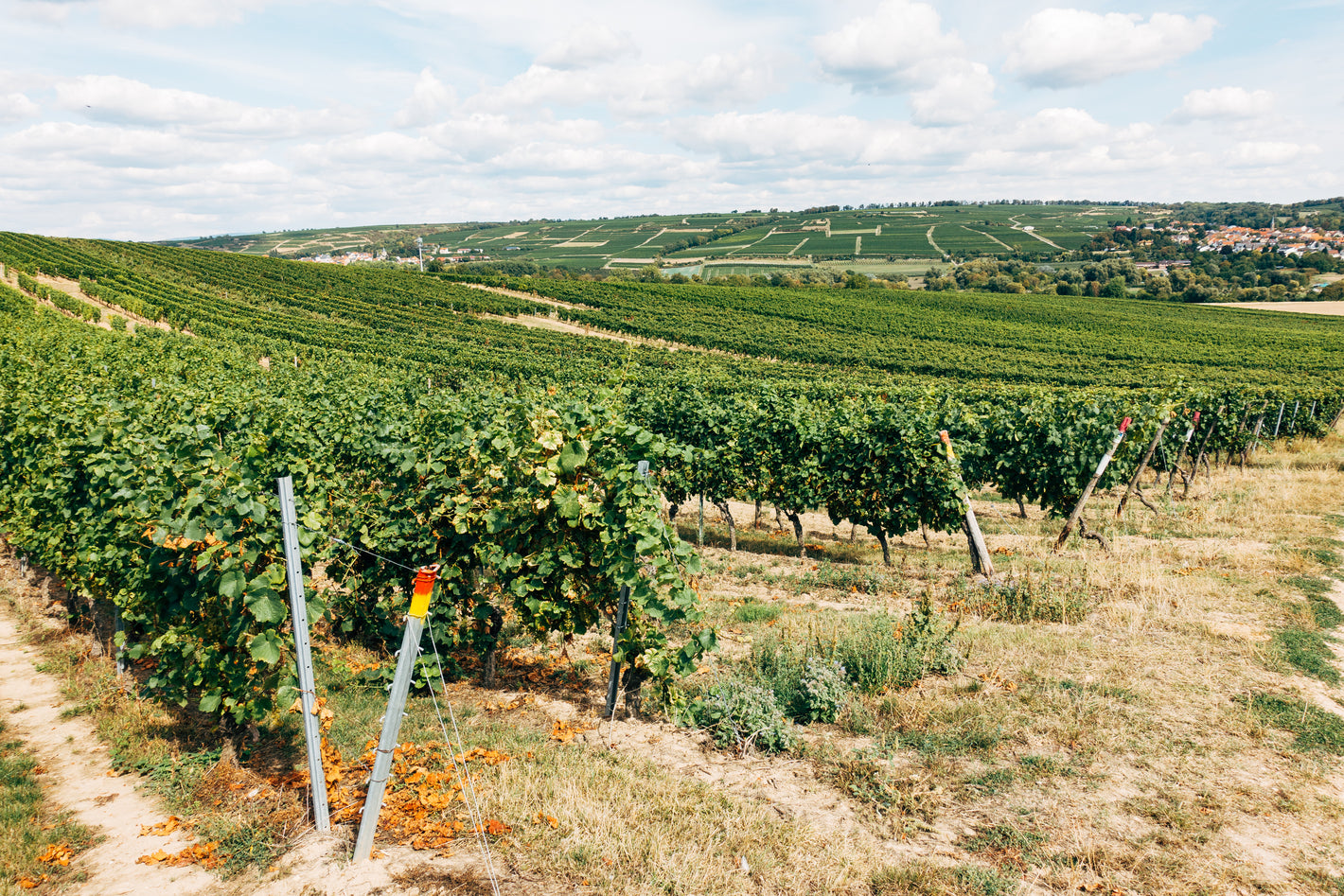
The Rampante contrada sits on the northern slopes of Etna at around 700-800 metres altitude, where the combination of altitude and volcanic basalt soils produces wines of striking mineral intensity and natural freshness. The soils are predominantly black lava and volcanic ash with very low fertility, forcing vines to dig deep and yielding tiny quantities of concentrated, highly individual fruit. The north-facing aspect slows ripening considerably, preserving acidity and giving Rampante wines a cooler, more austere character than those from the warmer southern and eastern flanks. Ungrafted pre-phylloxera vines are common here, adding further complexity and a directness of expression that is hard to replicate.
Etna DOC was established in 1968, making it one of Sicily's oldest appellations, though its renaissance as a fine wine region really began in the early 2000s. The rosso designation covers Nerello Mascalese-dominant reds, typically with a small allowance for Nerello Cappuccio, grown on the volcanic slopes of Europe's most active volcano. What makes Etna unusual within the Italian DOC system is the growing recognition of individual contrade as meaningful sub-units, functioning in practice like Burgundian lieux-dits, even though the regulations don't formally encode them. Wines from the north side of the volcano are broadly considered the most refined, with greater freshness and mineral definition than those from elsewhere on the mountain.
Sicily in 2017 was shaped by heat and drought, part of a difficult summer that affected much of southern Italy. Yields were down significantly as the vines struggled through an exceptionally dry growing season, and harvest came early. That stress concentrates the mind of the vine, and the wines that resulted tend to show real depth and intensity — Nero d'Avola in particular produced wines with serious stuffing, dark fruit, and grippy structure. Nerello Mascalese on Etna, where altitude and volcanic soils offer some natural protection, fared well too, producing wines with more tension than the heat might suggest.
These are not delicate, understated wines — 2017 in Sicily is a vintage about power and character rather than finesse, and the best producers used that raw material well. The reds have the concentration to age, but most are already giving a great deal of pleasure now. We'd drink the lighter styles and whites without delay, and give the more serious Etna reds and structured Nero d'Avolas until 2025 to 2028, though there's no need to wait if you're opening them tonight.
FAQs
What does Contrada Rampante taste like?
Think pale, almost Pinot-like colour, then wild red cherry, blood orange, dried rose, and a mineral character that is all volcanic iron and ash. The 2017 has a touch more warmth and generosity than cooler vintages from this site, but the structure and mineral intensity are very much intact.
When should I drink this wine?
It is drinking well now and will continue to do so until around 2030. The sweet spot for maximum complexity is probably 2026 to 2030, when fruit and secondary development will be in the best balance. Don't leave it indefinitely — this is not a wine that simply improves forever.
What food should I pair with this wine?
Anything with enough savour to match the mineral intensity: slow-braised rabbit, pork with fennel, grilled swordfish with capers, pasta alla Norma, or aged pecorino siciliano. It is more versatile at the table than its structure might suggest.
Should I decant it?
Yes, for about 45 minutes to an hour. The wine opens up noticeably and the tannins relax enough to make it more immediately approachable. Serve it at 16-17°C rather than room temperature — the mineral freshness is one of its best qualities and warmth will suppress it.
Why does this wine look so pale for a red?
Nerello Mascalese is naturally a low-pigment grape, and the high altitude and volcanic soils of Etna's northern slopes push that further. The colour is no indication of weight or quality — wines from Rampante are serious and structured despite their translucent ruby appearance. Think of it as Etna's answer to Pinot Noir.
What makes Contrada Rampante special?
Rampante is one of a handful of named contrade on Etna's northern slopes that have established reputations for producing wines with distinctive character. Its high altitude, north-facing aspect, and very old ungrafted vines on black basalt give it a cooler, more mineral profile than most of the volcano's other plots. Pietradolce recognised this early and bottles it as a single-site wine specifically to let that character speak without dilution.

OUR GROWERS
Pietradolce
Explore related wines


What are you looking for tonight? Tell me the occasion, a grape, a region — or just try a suggestion below.
Your recommendations will appear here.
-
-
Speak to one of our Wine Gurus
Speak to a Wine GuruWith years of experience, our team can help you with all your wine buying and selling needs