
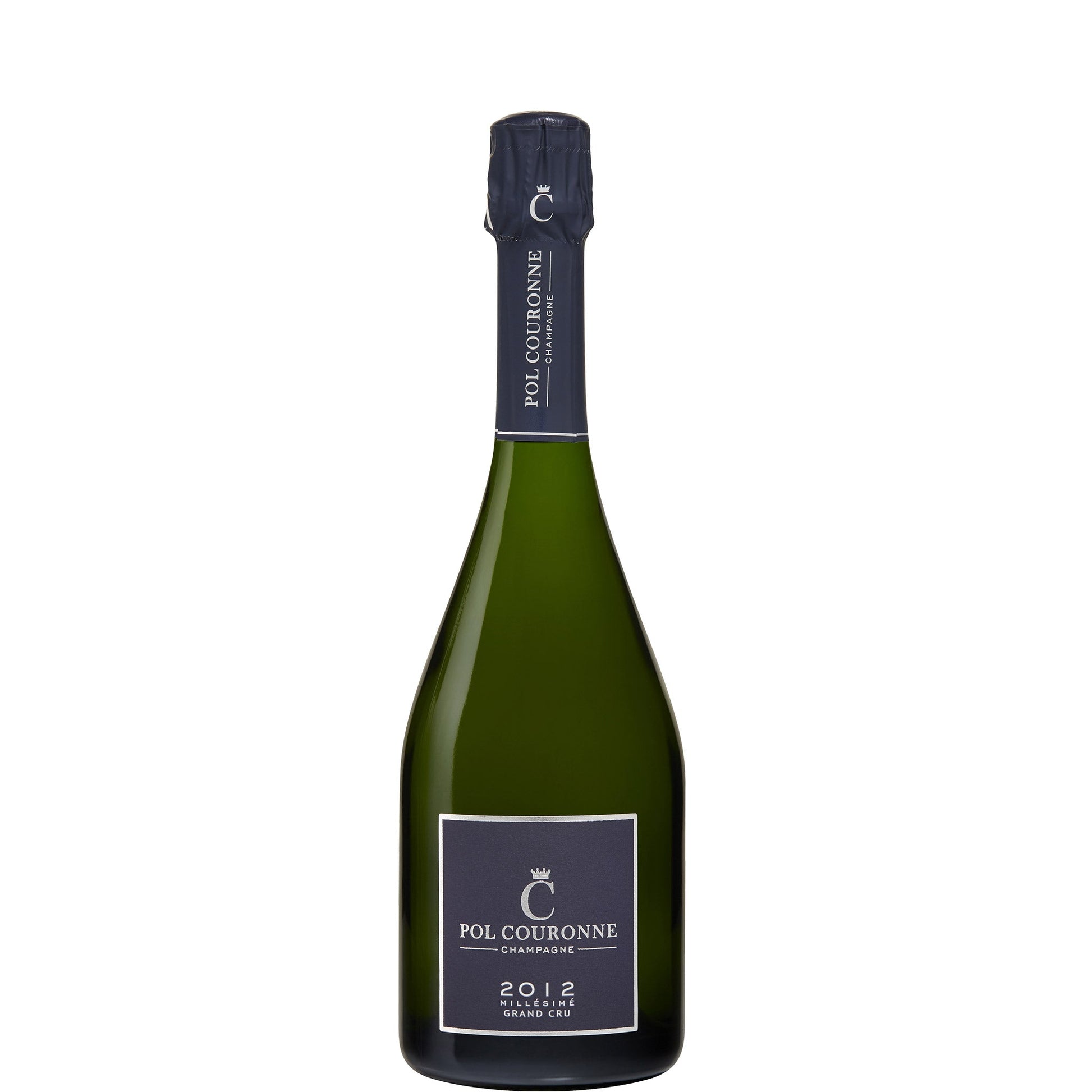
Pol Couronne, Cuvée Millésime, 2012
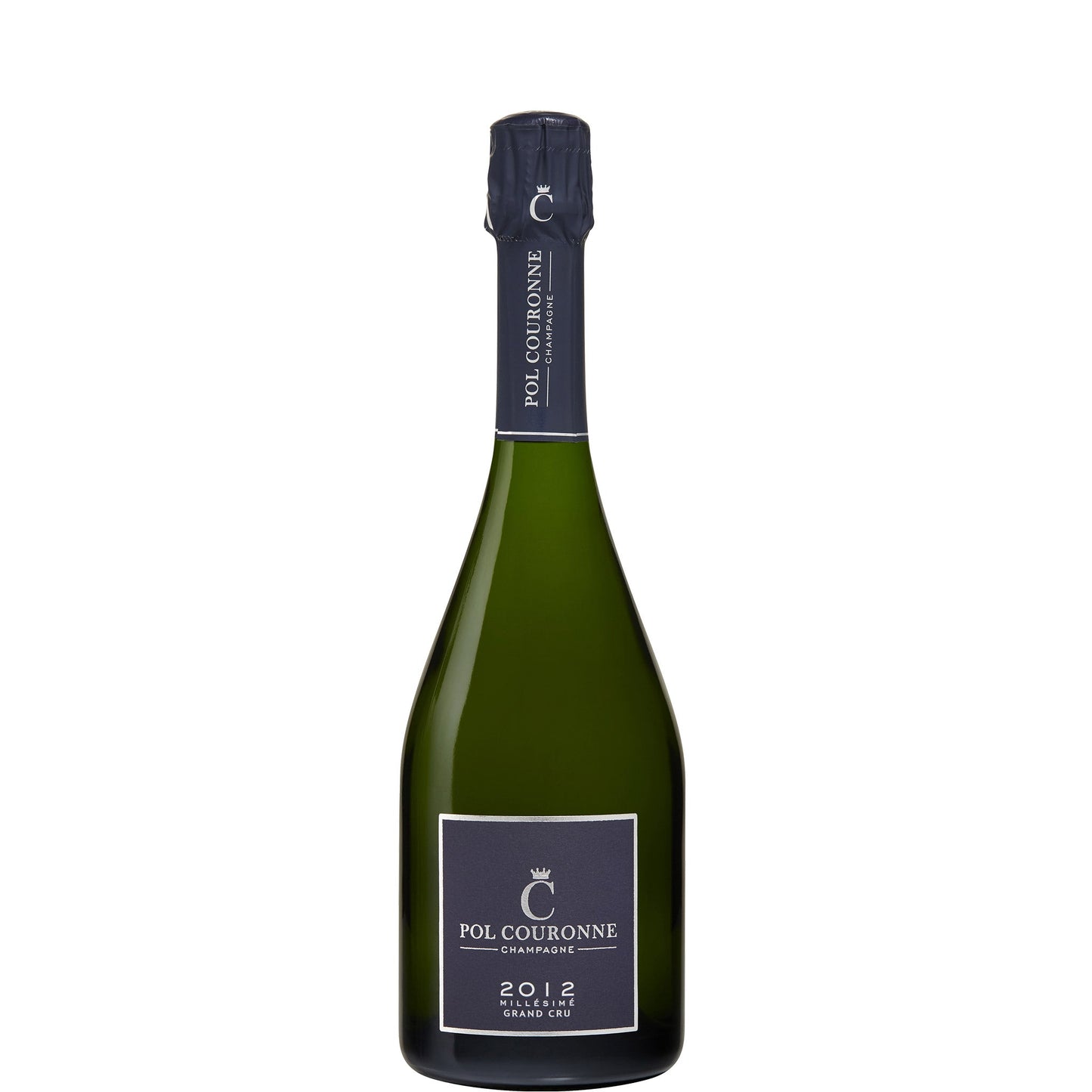
Pol Couronne, Cuvée Millésime, 2012
- 75cl
- 12%
- White Sparkling
- Chardonnay, Pinot Noir
Couldn't load pickup availability

Optimal drinking window: Now - 2033
About Pol Couronne, Cuvée Millésime, 2012
The Champenois terroir is imbued with a strong identity, marked by the specificities of its soils and its grape varieties, as well as by its climatic conditions under oceanic and continental influences. It is this complexity that the house Pol Couronne makes a point of honour to find in its wines to best represent the region by a delicate blend of quality grape varieties.
Pol Couronne 2012 has undergone a maturation period of 42 months on the lees. The colour is golden yellow and its foam is fine and abundant. The nose has toasted and dried fruit notes, the palate well structured and rich, giving way to a beautiful freshness on the finish. A powerful and mineral vintage.
The Pol Couronne Champagne House was founded in 1887. For over a century, sustainable vineyard practices and winemaking traditions have been used to create characterful and high quality wines. Pol Couronne embraces the complexity of assemblage (the blending of the grapes within a wine) by working with vineyards across the Champagne region that best emphasise the character of each varietal. For example, the sandy-clay soils of Avize produce a special minerality within the Chardonnay grape that adds linearity and freshness to their wine.
The 2012 is already drinking with great confidence, and the 42 months on lees means the autolytic character — that toasted, bready richness — is fully integrated rather than nascent. We are in the prime drinking window right now, where the fruit is concentrated and the mineral backbone is at its most expressive. Over the next three to four years, expect the dried fruit and nutty complexity to deepen further as the dosage continues to marry with the wine's natural acidity.
Tasting Notes
AppearanceDeep golden yellow with a fine, persistent mousse that speaks to 42 months of lees ageing.
NoseToasted brioche and roasted hazelnuts give way to dried apricot and a chalky, mineral undercurrent. There is a composed, almost serious quality to the aromatics — this is not a flamboyant nose, but a focused one. Time in the glass opens up a subtle note of beeswax and preserved lemon.
PalateRich and structured, with a full body that carries real weight without ever feeling heavy. The acidity is the backbone here — bright and precise — cutting cleanly through the dried fruit and pastry richness. A chalky mineral quality runs from mid-palate to finish, adding definition and length.
FinishLong, saline, and fresh — the mineral thread lingers well after the fruit has faded.
Overall impressionA vintage Champagne that earns its place at the table, with the structure and character of a truly exceptional year.
Food Pairings
In Champagne, a wine like this would find its natural home alongside a plateau de fruits de mer — oysters, langoustines, and sea urchin in particular are built for a mineral, structured fizz. Locals also have a habit of pairing aged Champagne with poulet au champagne, a slow-braised chicken dish that mirrors the wine's richness and toasted character beautifully. A fine slice of comte or aged Chaource cheese would also do well here, the saline, nutty quality of the cheese echoing the wine's mineral finish. If you want to go further, a simple roast scallop with brown butter is one of the more satisfying matches you will find.
We think this wine would go well with
Serve at 9-11°C — cold enough to preserve the freshness, but not so cold that you suppress the complexity that 42 months of ageing has built. No need to decant, but do allow it 10 minutes in the glass before diving in. A tulip-shaped or white Burgundy glass will serve this better than a flute, giving the aromatics room to open up. Pour gently to preserve the mousse.
Pol Couronne draws from vineyards across the Champagne region, with a particular focus on Avize in the Côte des Blancs, where sandy-clay soils give the Chardonnay a pronounced mineral edge and a clean, linear freshness. The region sits at the intersection of oceanic and continental climates, which creates the tension between ripeness and acidity that defines great Champagne. The chalk that runs beneath much of the appellation acts as both a water reservoir and a natural amplifier of mineral character in the finished wine. The 2012 vintage was one of the finest in recent Champagne history, marked by a long, warm growing season that produced concentrated, structured fruit with excellent natural acidity.
Champagne is the most tightly regulated sparkling wine appellation in the world, covering around 34,000 hectares in north-eastern France and governed by the CIVC. Only wines made from Chardonnay, Pinot Noir, and Pinot Meunier — among a handful of others — using the traditional method of secondary fermentation in bottle may carry the name. The appellation sets minimum ageing requirements: 15 months on the lees for non-vintage wines and 36 months for vintage, though serious houses typically exceed these. Champagne sits apart from other French appellations in that blending across villages, years, and grape varieties is not a compromise but the very craft at the heart of the region's identity.
The 2012 vintage in Champagne reminds us why patience pays off in this corner of France. After a challenging growing season marked by wet conditions and disease pressure, producers who managed their vineyards carefully pulled off something rather special. The harvest came late, which allowed those who waited to gather fruit with surprising concentration and balance. What looked like a difficult year on paper became one of those vintages that catches you off guard.
We find 2012 Champagnes drinking superbly now, showing a mineral backbone that keeps everything honest while delivering fruit that's both ripe and refreshing. The Chardonnay particularly shines, bringing crystalline precision that makes your mouth water, whilst the Pinot Noir adds just enough weight without any heaviness. These aren't the most powerful Champagnes you'll encounter, but they're beautifully drinkable and will continue drinking well until 2030 for the best examples. Sometimes the tricky vintages teach us the most about what great winemaking can achieve.
FAQs
What does the Pol Couronne 2012 taste like?
Rich and structured, with toasted brioche, dried apricot, roasted hazelnuts, and a pronounced chalky mineral quality. The acidity is bright and precise, and the finish is long and saline. It is a serious vintage Champagne rather than a light, easy-drinking fizz.
When should I drink this wine?
Now is an excellent time. The 2012 is in its prime drinking window, with the fruit fully concentrated and the mineral complexity at its peak. We would drink it until around 2029-2030, after which the freshness will begin to soften. Do not sit on it too long.
What food goes well with this Champagne?
Oysters and other shellfish are the classic match for a mineral, structured vintage Champagne like this. It also works very well with roast scallops, lobster, and aged hard cheeses such as comte. If you want something more substantial, a simple roast chicken with butter and tarragon will handle the wine's richness without overwhelming it.
How should I serve it?
Serve at 9-11°C in a tulip or white Burgundy glass rather than a flute — the wider bowl gives the complex aromatics space to open up. No decanting needed, but give it 10 minutes in the glass before your first sip. It will reward a little patience.
What makes the 2012 vintage special in Champagne?
2012 was one of the finest vintages in recent Champagne history. A long, warm growing season produced fruit with excellent concentration and natural acidity — the kind of balance that gives a wine both richness and the structure to age. Houses that made a vintage wine in 2012 were working with genuinely exceptional raw material.
Is this worth cellaring further?
It is already drinking at its best, so further cellaring is more of a risk than a reward. If you enjoy a more oxidative, nutty style of aged Champagne, holding until 2028-2030 is reasonable. But the precision and mineral freshness that define this wine are at their most vivid right now.

Explore related wines


What are you looking for tonight? Tell me the occasion, a grape, a region — or just try a suggestion below.
Your recommendations will appear here.
-
-
Speak to one of our Wine Gurus
Speak to a Wine GuruWith years of experience, our team can help you with all your wine buying and selling needs