

Pouilly-Fuissé 'Les Courtelongs', Domaine Saumaize-Michelin, 2024
Pouilly-Fuissé 'Les Courtelongs', Domaine Saumaize-Michelin, 2024
- 75cl
- 13.5%
- White Still
- Chardonnay
- Organic
- Biodynamic
Couldn't load pickup availability

Optimal drinking window: 2026 - 2032
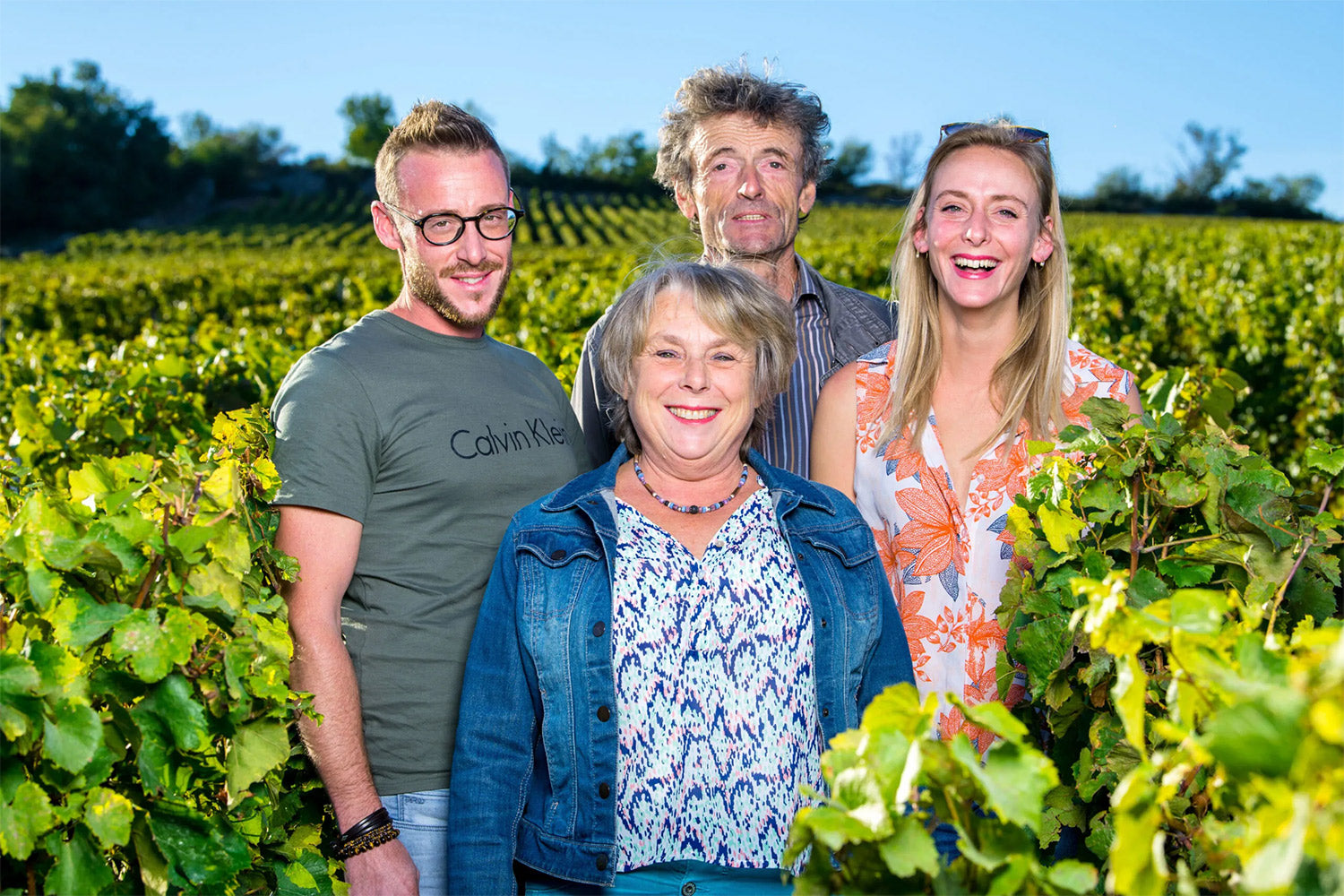
Saumaize-Michelin are among the finest growers in Pouilly-Fuissé, and 'Les Courtelongs' is a perfect illustration of why this appellation deserves to be taken as seriously as its more celebrated Burgundian neighbours. From vines on the limestone slopes beneath the dramatic rock of Solutré, this is a village-level Chardonnay with the kind of precision and minerality that makes you sit up straight.
The 2024 vintage brought freshness and nervy acidity to the Mâconnais, and this wine wears that well — it's taut without being austere, generous without being soft.
On the palate, white peach and hazelnut give way to a chalky, saline finish that lingers longer than the price tag might lead you to expect.
Domaine Saumaize-Michelin is one of Tim Atkin's Top 15 Mâconnais Producers.
Right now, the 2024 is in a lively, primary phase where the fruit is vivid and the acidity is doing its best work. Over the next one to two years it will begin to knit together, with the mineral and nutty secondary character starting to emerge more clearly. By 2028 or so it should be at or near its peak — more integrated, with greater textural depth and a longer, more complex finish. Drink sooner if you want energy; wait a couple of years if you want complexity.
What the critics say:
Tasting Notes
AppearancePale gold with a faint green tint, bright and clear in the glass.
NoseWhite peach, lemon curd, and toasted hazelnut open things up, with a cool, chalky mineral edge underneath that pulls everything into focus. There's a subtle floral lift — white blossom, perhaps a whisper of acacia — that gives it real elegance without feeling perfumed. It's restrained but not closed.
PalateThe acidity is the first thing you notice — bright and clean, framing a core of ripe citrus and stone fruit with admirable precision. The texture is creamy but never heavy, with the limestone soil showing clearly in a chalky, saline mid-palate that keeps the wine taut. There's enough weight to be satisfying but not a gram of excess.
FinishLong and mineral, fading slowly on notes of wet stone and lemon zest.
Overall impressionA genuinely serious village Chardonnay that punches well above its station.
Food Pairings
In the Mâconnais, this would land alongside a plate of jambon persillé — the cold jellied ham terrine that turns up on every decent table in Burgundy. River fish are the obvious match too: a simple grilled pike-perch from the Saône with beurre blanc is about as good as it gets. Locally they'd also pair it with Époisses or Comté at various stages of ageing — the wine's acidity cuts through the richness of the former and mirrors the nuttiness of the latter. Frogs' legs sautéed in garlic butter are another regional classic that works a treat.
We think this wine would go well with
Serve at around 11-12°C — cool enough to keep the acidity bright, but not so cold that it mutes the fruit. No need to decant; just open and pour, though letting it sit in the glass for five minutes does it no harm. A wide-bowled white Burgundy glass will open it up nicely and let the mineral character come forward.
Les Courtelongs sits on the limestone-rich slopes around Vergisson, one of the two iconic rocky outcrops that define Pouilly-Fuissé's landscape. The soils are predominantly limestone and clay over Jurassic rock, which gives the wines their characteristic mineral backbone and fine, chalky texture. Altitude and the cooling influence of the surrounding hills help retain acidity, particularly valuable in warmer vintages. The combination of lean soils and good drainage keeps yields in check and concentrates flavour without sacrificing freshness.
Pouilly-Fuissé sits at the southern tip of Burgundy in the Mâconnais, producing exclusively white wine from Chardonnay across five communes, including Fuissé, Solutré-Pouilly, and Vergisson. It was elevated to include a formal Premier Cru classification in 2020, recognising that the best individual lieux-dits here genuinely merit distinction. Compared to Mâcon-Villages it is a step up in concentration and structure; compared to the Côte de Beaune it tends to be rounder and more accessible young, though the top examples age with real grace. Les Courtelongs is a recognised lieu-dit within this framework, not yet a Premier Cru but consistently producing wine of that quality.
The 2024 growing season in Burgundy was, frankly, a test of nerve. A wet spring brought significant mildew pressure, and vignerons who stayed sharp in the vineyard — working fast, keeping canopies open, reducing yields where necessary — came out the other side with something worth talking about. Summer brought warmer, drier conditions that helped the fruit recover composure, and harvest arrived broadly on the later side, with growers picking carefully to find phenolic ripeness without sacrificing freshness. Quantity was down across much of the Côte, which concentrates minds as much as it concentrates wine.
What emerged is a vintage that rewards those who put the work in. The Pinots we have tasted carry real precision and translucency — not because they are light, but because the acidity is lively and the fruit unforced. Chardonnays from the Côte de Beaune look particularly promising: taut, mineral, with genuine length. This is not a vintage to panic-open. Most village and premier cru reds want three to five years at minimum, with the better appellations drinking well until 2035 and beyond. The whites are more approachable now, though the best will reward patience too.
FAQs
What does Les Courtelongs taste like?
It's precise and mineral-driven, with white peach, lemon curd, and hazelnut on the nose, and a chalky, saline quality on the palate that is very much the signature of Vergisson limestone. There's real freshness here — this is not a broad or buttery style of Chardonnay, but it has plenty of presence.
When should I drink this wine?
It's drinking well now, but it will reward another year or two in the cellar. We'd say the sweet spot is 2027 to 2030, when the primary fruit will have integrated and the secondary complexity starts to show. Drink it until around 2032.
What food should I serve it with?
Anything that likes a wine with good acidity and mineral backbone: river fish, creamy sauces, jambon persillé, aged Comté, or chicken roasted with tarragon. It's also excellent with simple grilled shellfish or a leek and gruyère tart.
How should I serve it?
Serve at around 11-12°C in a wide-bowled white Burgundy glass. No need to decant — just open and pour, and give it a few minutes in the glass to open up.
Is this wine worth cellaring?
Yes, for a few years at least. The 2024 vintage brought excellent natural acidity to the Mâconnais, and this wine has the structure to develop. It won't be a 20-year proposition, but 2028 to 2030 will show it at its most complex and rewarding.
How does Saumaize-Michelin compare to other Pouilly-Fuissé producers?
They are consistently among the best in the appellation — rigorous in the vineyard, restrained in the cellar, and with a clear house style built on precision rather than weight. If you know Domaine Ferret or Château Fuissé, Saumaize-Michelin sits comfortably in that company, often at a slightly friendlier price.

Explore related wines


What are you looking for tonight? Tell me the occasion, a grape, a region — or just try a suggestion below.
Your recommendations will appear here.
-
-
Speak to one of our Wine Gurus
Speak to a Wine GuruWith years of experience, our team can help you with all your wine buying and selling needs