

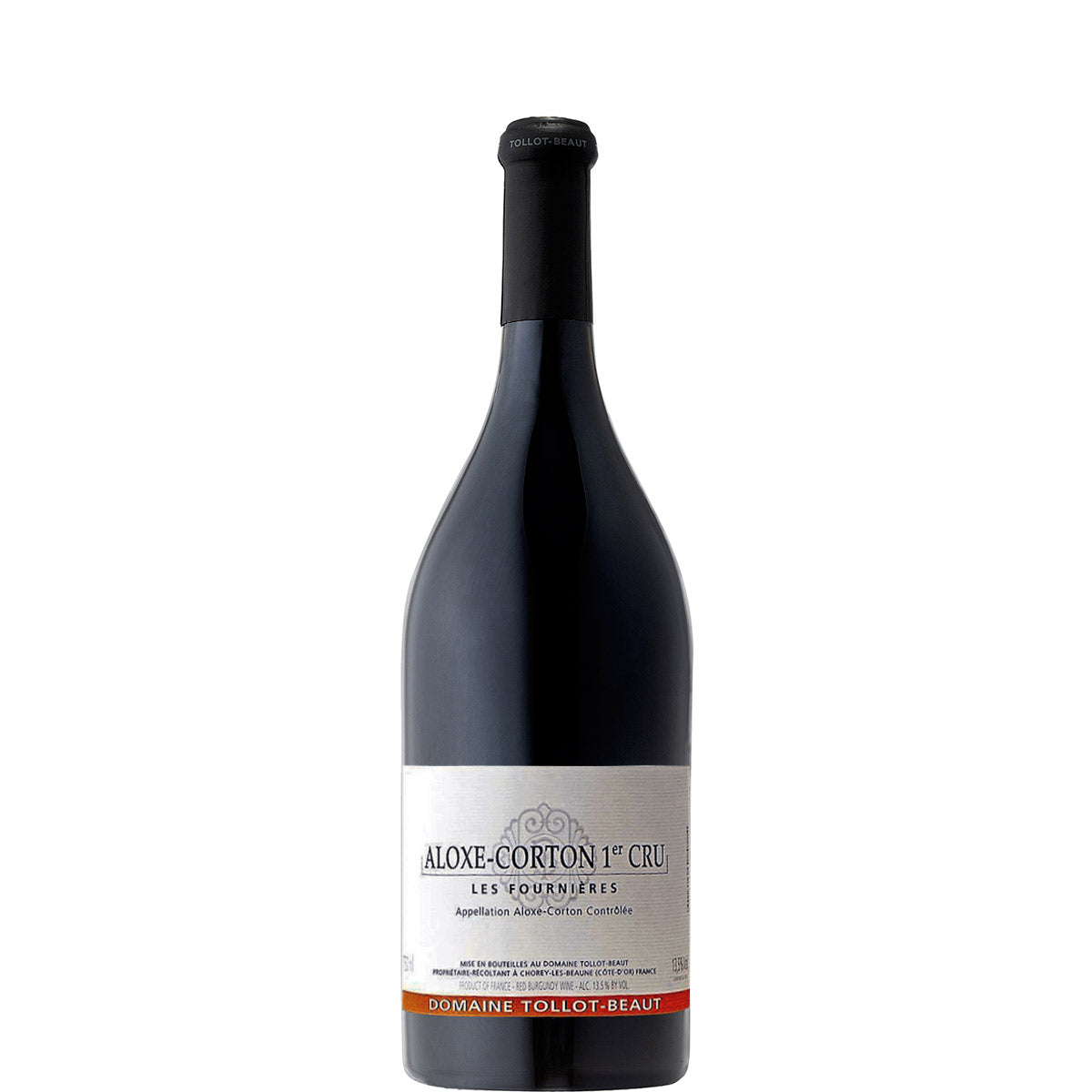
Aloxe-Corton Premier Cru 'Les Fournières', Domaine Tollot-Beaut, 2011
Aloxe-Corton Premier Cru 'Les Fournières', Domaine Tollot-Beaut, 2011
- 75cl
- 13.5%
- Red Still
- Pinot Noir
Couldn't load pickup availability

Optimal drinking window: Now - 2032
Tollot-Beaut are one of the most reliable names in the Côte de Beaune — a family domaine that has farmed Aloxe-Corton for generations without fanfare or fuss. Les Fournières sits on the lower slopes of the Corton hill, producing a style that is earthier and more structured than the village's Grand Cru neighbours, with a character all its own: iron-tinged, savoury, and built on precision rather than generosity.
The 2011 vintage in Burgundy is one of the most underrated of the decade — picked early before autumn rains arrived, yielding wines of surprising freshness and definition. Fifteen years on, this has settled into a composed, complex red with dried cherry, warm earth, and real mineral grip. It is not a wine that shouts, which is exactly the point.
At fifteen years old, this is in a good place. The primary cherry fruit has dried and integrated, and the secondary complexity — earth, iron, dried herbs — is now the main event. We are at or close to the plateau, which in a vintage like 2011 is unlikely to be a long one. There is no urgency, but this is not a wine to set aside for another decade.
Tasting Notes
AppearanceMature, translucent ruby with a fading garnet rim and good clarity.
NoseDried cherry, iron filings, and warm forest floor lead, with a secondary layer of dried rose petal and faint sous-bois. There is nothing overripe here — this is cool-fruited and quietly aromatic, the kind of nose that rewards a bit of time in the glass.
PalateMedium-bodied with a lean, precise texture and tannins that have softened to a fine, chalky grip. Red fruit has dried and concentrated, giving way to earthy, mineral flavours — iron, clay, dried herbs — with a thread of acidity keeping everything honest. No excess anywhere.
FinishLong and savoury, with mineral persistence and a faint bitter cherry note at the very end.
Overall impressionComposed, precise, and quietly satisfying — mature Burgundy doing exactly what mature Burgundy should.
Food Pairings
In the villages around Beaune, a wine like this would go straight to the table alongside coq au vin — the earthy, savoury character of the wine and the richness of the braised chicken finding easy common ground. Boeuf bourguignon is another natural pairing, the wine's acidity cutting through the fat while its earthiness echoes the mushrooms and lardons. Locally, you would also find this served with époisses or a young Comté — the region's cheeses have a pungency and richness that Pinot Noir from the Corton hill handles particularly well. Roast pigeon or partridge with lentils would be a fine London equivalent.
We think this wine would go well with
Serve at around 16°C — any warmer and the wine's precision starts to blur. Decant for at least an hour; at fifteen years old the wine has settled but benefits from the air to open up its earthy, mineral layers. A Burgundy-style glass with a wider bowl is ideal, giving the more restrained aromatics room to develop rather than concentrating them too aggressively.
Les Fournières occupies the lower-middle section of the Corton hill, where the soils shift from the iron-rich limestone and red marl higher up toward a slightly heavier, clay-inflected base. This gives the wine more structure and earthiness than the most elevated premiers crus, but also a mineral grip that sets it apart from village Aloxe-Corton. The aspect is broadly east-facing, offering good morning sun and natural protection from the west. It is not the flashiest address on the hill, but the soil complexity shows in the glass.
Aloxe-Corton is the northernmost village appellation of the Côte de Beaune, best known as the base camp for the Corton Grand Cru — the only red Grand Cru in the Côte de Beaune. The premier cru vineyards sit between the village appellation and the Grand Cru belt, offering more structure and mineral character than straight Aloxe-Corton but without quite the breadth or grandeur of Corton itself. The reds tend toward the savoury and iron-edged rather than the lush, making them excellent table wines that reward patience. Compared to Pernand-Vergelesses next door, Aloxe premiers crus are typically denser and more age-worthy.
Burgundy 2011 arrived after a particularly tricky growing season that kept vignerons on their toes from spring through harvest. An early, warm start gave way to a cool, damp summer that had everyone fretting about ripeness and disease pressure. August finally brought the sunshine that saved the day, allowing for proper maturation, though harvest began unusually late in September with careful selection absolutely crucial.
What emerged was a vintage of genuine charm rather than power—wines with lovely freshness and purity that show their terroir without shouting about it. The Pinot Noirs display bright red fruit character with well-integrated tannins, whilst the Chardonnays offer mineral precision and restrained richness. These aren't wines for the cellar athletes, but they're drinking beautifully now and will continue to please until 2026, making them perfect for those who prefer finesse over muscle in their Burgundy.
FAQs
What does this wine taste like?
Lean and savoury rather than lush — dried cherry, iron, warm earth, and a mineral grip that lingers on the finish. It is precise and composed, a classic example of mature Côte de Beaune Pinot Noir.
When should I drink this wine?
It is drinking well now and will hold until around 2032, but this is not a wine that will keep improving. Open it over the next few years and enjoy it at its plateau rather than waiting to see what happens next.
Do I need to decant it?
Yes — give it at least an hour in a decanter. At fifteen years old there may be a little sediment, and the wine benefits from air to open up its earthy, mineral character.
What food works best with this wine?
Anything with depth and savouriness: braised chicken, beef bourguignon, roast pigeon, or aged hard cheeses like Comté. The wine's earthy character and fine acidity make it a natural at the dinner table rather than for sipping on its own.
How does Les Fournières compare to Corton Grand Cru?
It is leaner and more mineral than most Grand Cru Corton, which tends toward more weight and breadth. Les Fournières sits on the lower slopes where soils are heavier and the wine picks up more earth and iron — it is a premier cru in character as much as classification, and offers serious quality at a considerably more reasonable price.
Is 2011 a good vintage in Burgundy?
It is one of the decade's most underrated. An early harvest brought in clean, fresh fruit before autumn rains arrived, and the best wines have aged with real elegance. It lacks the sheer scale of 2010 or 2015, but the wines have a precision and freshness that has served them well over fifteen years.

Explore related wines


What are you looking for tonight? Tell me the occasion, a grape, a region — or just try a suggestion below.
Your recommendations will appear here.
-
-
Speak to one of our Wine Gurus
Speak to a Wine GuruWith years of experience, our team can help you with all your wine buying and selling needs