

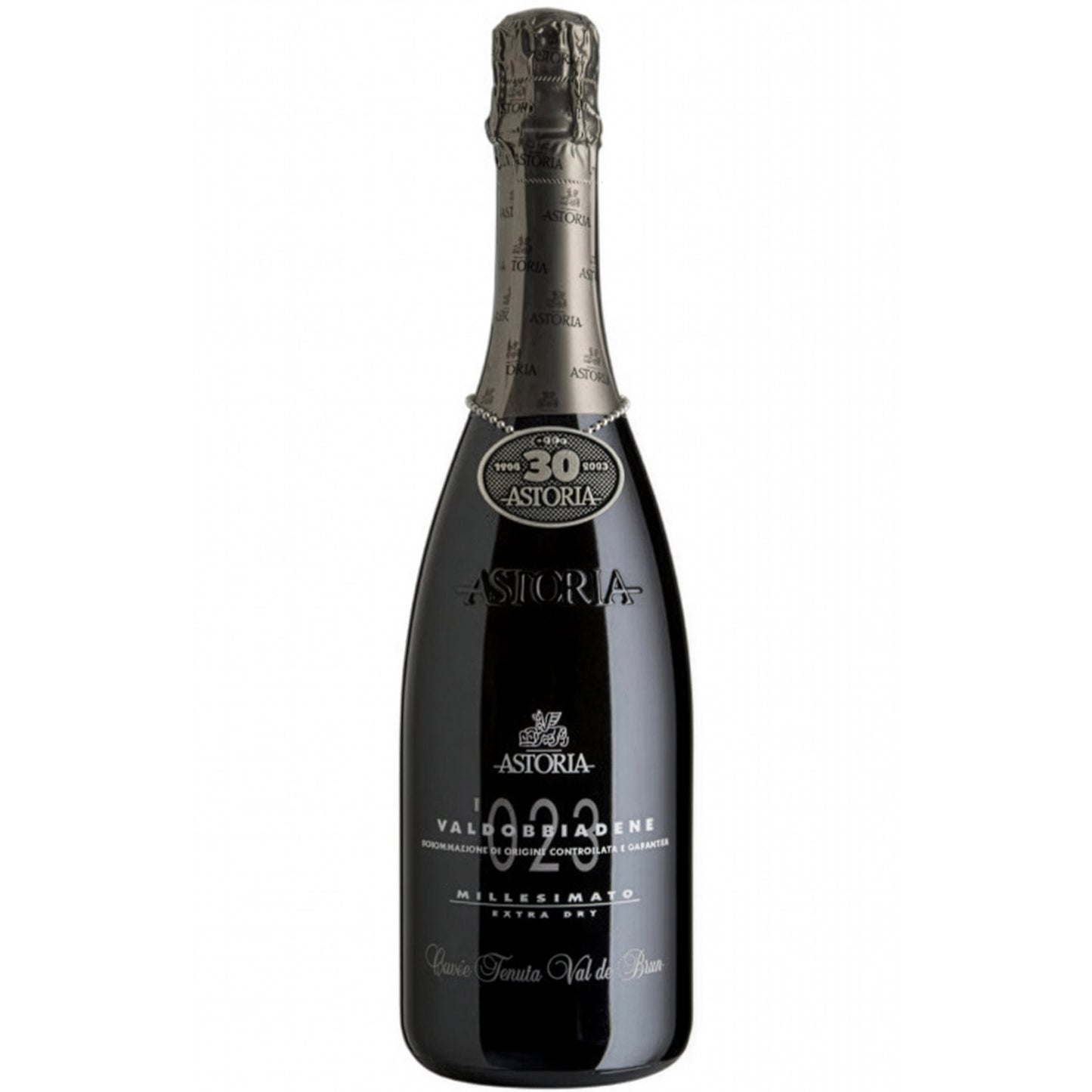
Astoria, Valdobbiadene Prosecco Superiore Extra Dry Millesimato DOCG, 2023 - Magnum
Astoria, Valdobbiadene Prosecco Superiore Extra Dry Millesimato DOCG, 2023 - Magnum
- 150cl
- 11.5%
- White Sparkling
- Glera
Couldn't load pickup availability

Optimal drinking window: 2026 - 2028
Prosecco Superiore di Valdobbiadene is a different beast from the everyday stuff, and Astoria's Millesimato — a single-vintage expression rather than a blended NV — is a neat illustration of why.
The Glera grape grown on the steep, UNESCO-listed hillsides around Valdobbiadene produces something genuinely aromatic and lively: white peach, green apple, a whisper of wisteria, and that characteristic clean, slightly almond-tinged finish that sets the Superiore DOCG apart from its Prosecco DOC cousins. In a magnum, the slower, gentler evolution of the bubbles means it arrives at the table in particularly fine form — great for a crowd who actually want to taste their fizz, not just toast with it.
Prosecco Superiore Millesimato is built for freshness, and that freshness is its greatest asset right now. We wouldn't hold this beyond 2027 or 2028 at the outer limit; Glera doesn't build the kind of secondary complexity that rewards extended cellaring, and the effervescence will gradually soften and diminish over time. Drink it while it's alive.
Tasting Notes
AppearancePale straw with a fine, persistent perlage that streams cleanly to the surface.
NoseFresh and inviting — white peach, green apple, and a lift of acacia blossom. There's a subtle almond note in the background that is distinctly Glera, and the Valdobbiadene provenance gives it a little more depth than you'd expect from a straightforward Prosecco.
PalateLight-bodied and crisp, with lively acidity that keeps things bright from start to finish. The fruit is clean and precise — pear, green apple, a touch of citrus pith — without any of the clumsy sweetness that lets lesser Prosecco down. The mousse is fine and well-integrated, particularly in this magnum format.
FinishShort to medium, clean, with a pleasingly bitter almond echo that is classically Valdobbiadene.
Overall impressionA genuinely expressive Prosecco Superiore that earns its DOCG designation — and the magnum makes it even more of an event.
Food Pairings
In the Veneto, Prosecco Superiore is rarely far from the table at the start of a meal. Locals would reach for it alongside cicchetti — the Venetian answer to tapas — particularly tiny crostini with salt cod mantecato or thin slices of sopressa on polenta. It's also the natural companion to delicate prosciutto di San Daniele, where the wine's acidity cuts cleanly through the fat. At the table, it works well with risotto bianco or a simple plate of grilled branzino with lemon. The slight bitterness of the finish makes it surprisingly good with fried things — fritto misto is a classic pairing in the region for good reason.
We think this wine would go well with
Serve well chilled at 6-8°C — the freshness and aromatic lift are at their best when cold, and the fine bubbles hold more cleanly. No decanting needed; open and pour straight away. A tulip-shaped sparkling wine glass rather than a flute is ideal, as it gives the aromatics a little more room to express themselves without letting the bubbles escape too quickly. In a magnum, pour promptly once opened — this isn't a wine to nurse over hours.
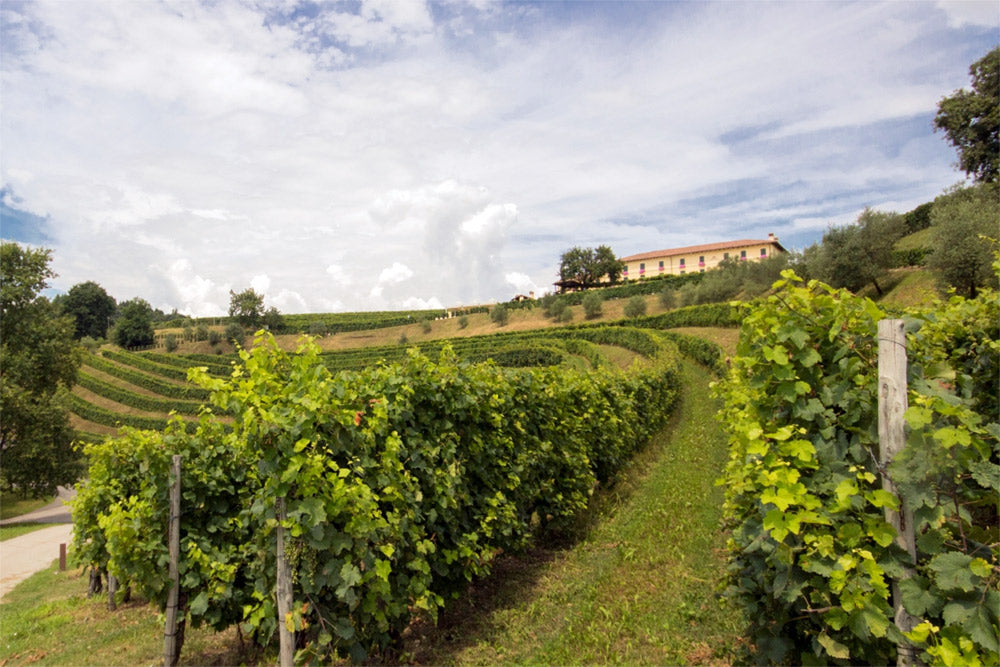
The Valdobbiadene hills are steep, often terraced, and classified as a UNESCO World Heritage Site — the so-called Conegliano Valdobbiadene Prosecco Hills. Soils are predominantly moraine and alluvial in origin, with good mineral content and excellent drainage that keeps vine vigour in check. The altitude and the diurnal temperature swings between warm days and cool nights help preserve the natural acidity and aromatic freshness that makes Glera in this zone so much more expressive than on the plains below.
Prosecco di Valdobbiadene Superiore DOCG sits at the top of the Prosecco quality pyramid, distinct from the broader and more industrial Prosecco DOC that covers a much larger swathe of northeast Italy. Valdobbiadene, along with Conegliano, is where the best Glera-based wines come from — the steeper terrain, older vines, and more attentive viticulture translate into wines with real aromatic lift and structure. The Millesimato designation means the wine is made from a single vintage rather than a blend of years, offering a snapshot of that harvest's character. The finest single-vineyard expression here is Cartizze, though the broader Valdobbiadene Superiore DOCG consistently outperforms its lowland counterparts.
We're still getting to grips with 2023 in Veneto, but early signs suggest a vintage that kept producers on their toes. The growing season brought its share of challenges, with variable weather patterns that demanded careful vineyard management and precise timing at harvest. What emerges is a year where the best producers really earned their stripes, navigating conditions that rewarded experience and penalised complacency.
The wines we've tasted so far show promise rather than immediate fireworks. Soave displays lovely mineral backbone with citrus precision, while Valpolicella shows bright red fruit that's more vivacious than brooding. The Amarone producers we work with seem quietly confident about their drying grapes, though it's far too early for definitive judgments there. These aren't wines crying out for immediate attention, but they're building nicely in bottle and should reward patience over the next few years.
FAQs
What does this Prosecco taste like?
Fresh, aromatic, and crisp — white peach, green apple, acacia blossom, with a characteristic almond note on the finish. It's a step up from everyday Prosecco, with more definition and aromatic clarity thanks to the Valdobbiadene Superiore DOCG designation and single-vintage Millesimato production.
What makes Valdobbiadene Superiore different from regular Prosecco?
The Superiore DOCG is made on steep, UNESCO-protected hillsides around Valdobbiadene, where the terrain, drainage, and temperature variation produce Glera with noticeably more freshness and aromatic depth than the flatland Prosecco DOC. The Millesimato designation here means it's a single-vintage wine rather than a blend of years, which gives it a more defined character.
When should I drink this?
Now, ideally. This is a wine built for freshness and immediate pleasure.
What food should I serve with it?
It's a natural aperitivo wine — excellent with charcuterie, soft cheeses, and anything lightly salted or fried. Prosciutto, crostini, salt cod, or a simple plate of grilled fish all work beautifully. The clean acidity also makes it a fine companion to delicate risotto.
Why buy a magnum?
Beyond the obvious — it's generous enough for a proper gathering — the magnum format means slower, gentler carbonation and a slightly more refined mousse. It also looks the part on a table. If you're opening fizz for a crowd, this is the way to do it.
How should I serve it?
Cold — 6-8°C. Use a tulip-shaped sparkling wine glass rather than a narrow flute to let the aromatics open up.


What are you looking for tonight? Tell me the occasion, a grape, a region — or just try a suggestion below.
Your recommendations will appear here.
-
-
Speak to one of our Wine Gurus
Speak to a Wine GuruWith years of experience, our team can help you with all your wine buying and selling needs