

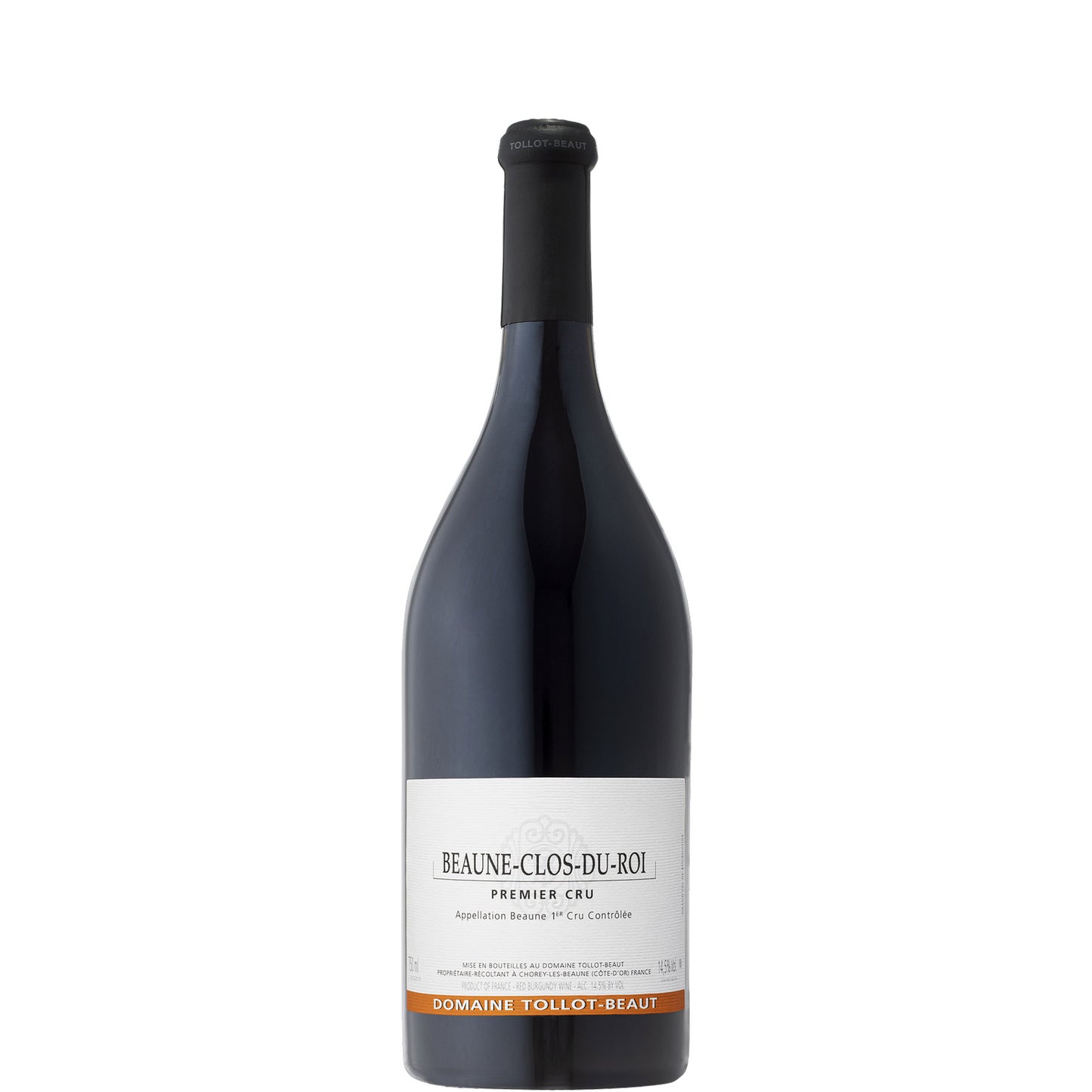
Beaune Premier Cru 'Clos du Roi', Domaine Tollot-Beaut, 2023
Beaune Premier Cru 'Clos du Roi', Domaine Tollot-Beaut, 2023
- 75cl
- 13.5%
- Red Still
- Pinot Noir
Couldn't load pickup availability

Optimal drinking window: 2028 - 2035
The Clos du Roi from Domaine Tollot-Beaut comes from one of the most respected Premier Cru vineyards in Beaune, located on the northern side of the appellation on gently sloping, limestone-rich soils. Clos du Roi has a reputation for producing structured, mineral-driven Pinot Noir with more backbone than many Beaune sites, combining ripe fruit with firm tannins and good ageing potential.
Domaine Tollot-Beaut farms several parcels here, with vines planted in the late 1970s and 1980s. The site’s brown limestone soils and elevated position help give the wines both intensity and freshness, while élevage in Burgundian barrels (with a proportion of new oak) adds texture and subtle spice without overwhelming the fruit.
The 2023 vintage in Burgundy followed a relatively balanced growing season with alternating warm and cool periods. Harvest came in early September after a late heatwave accelerated ripening, producing wines with expressive fruit, good colour and appealing freshness when picking dates were carefully judged.
Right now the 2023 is a little closed, the fruit bright but the structure still pulling everything inward — it is the kind of wine that feels like it is holding something back. By 2028 to 2030, expect the cherry and violet to deepen into something more savoury and complex, with the earthy and mineral character becoming more prominent. The plateau of drinking pleasure should run comfortably from 2029 through the mid-2030s, when secondary notes of forest floor, dried herb, and leather will start to emerge properly.
Tasting Notes
AppearanceClear, mid ruby with a lively, translucent rim.
NoseFresh red cherry and wild strawberry lead, with dried violet and a faint woody spice from well-integrated oak. There is a cool, almost stony quality underneath that opens with time in the glass.
PalateSilky and precise rather than generous — the fruit is present but the structure is the thing here, with fine-grained tannins and bright natural acidity giving the wine real shape. A subtle earthiness and saline mineral edge run through from mid-palate to finish.
FinishClean, long, and stony, with the fruit fading gracefully into mineral persistence.
Overall impressionA serious, restrained Beaune premier cru that rewards patience more than most.
Food Pairings
In Burgundy, a wine like this would most naturally find itself on the table alongside a poulet de Bresse roasted with butter and tarragon — simple cooking that lets the wine do the talking. Coq au vin is the obvious classic, and for good reason: the wine's acidity and earthy depth are made for long-braised poultry. A lapin à la moutarde, or rabbit braised with Dijon mustard and cream, is another local favourite that works beautifully here. If you are leaning towards cheese, a young Époisses or a wedge of Cîteaux alongside some good bread is all you need.
We think this wine would go well with
Serve at around 16°C — cool enough to keep the acidity lively, but not so cold that the structure closes up. In 2026 we would decant for 30 to 45 minutes to open the wine up gently; as it ages and softens, you can shorten that or skip it entirely. A wide-bowled Burgundy glass gives the nose the room it needs to unfurl.
Clos du Roi sits on the upper slopes of Beaune, where the limestone bedrock sits closer to the surface and the topsoil thins out — conditions that push vines to work harder and wines to develop a mineral tension rarely found lower down the hill. The elevation provides cooler temperatures and good drainage, which helps preserve the acidity that gives this climat its structure. It is one of the few Beaune premiers crus where the soil profile genuinely argues for cellaring.
Beaune Premier Cru encompasses some 30-odd named lieux-dits on the slopes immediately above the town of Beaune itself. As an appellation it is sometimes underestimated next to the headline villages of Pommard or Volnay, but its best premiers crus — Grèves, Fèves, and Clos du Roi among them — can hold their own. Wines must be made from Pinot Noir for reds, with yields and minimum alcohol levels regulated by Burgundy's broader AOC rules. The diversity of expositions and soils across the appellation means quality varies considerably by climat, which is precisely why knowing your producer matters.
The 2023 growing season in Burgundy unfolded like a cautionary tale about climate change, then pulled off a last-minute redemption that left everyone rather stunned. After a warm, early spring pushed budbreak ahead of schedule, the vines endured a thoroughly miserable summer of persistent rain and cool temperatures that had growers muttering darkly about rot and dilution. Just when things looked dire, September arrived with glorious sunshine and dry winds that concentrated the fruit and saved the harvest—though not without some frantic sorting in the cellars.
What emerged from this meteorological rollercoaster are wines that wear their vintage on their sleeve: Pinot Noirs with bright, singing acidity and red fruit that feels almost crystalline in its purity, whilst the Chardonnays show remarkable tension and mineral drive. The reds are drinking beautifully now if you fancy immediate pleasure, but we suspect the better villages and premiers crus will reward patience over the next decade. It's not a powerhouse vintage, but there's something genuinely charming about these wines—they remind us why we fell for Burgundy in the first place.
FAQs
What does this wine taste like?
Silky and precise, with red cherry, dried violet, and a stony mineral edge that runs through to the finish. It is more about structure and tension than overt fruit — closer in character to a Côte de Nuits style than a typical generous Beaune.
When should I drink it?
We would give it until at least 2028 before opening. It should be at its best between 2029 and 2035.
Is it worth cellaring?
Yes. Clos du Roi is one of Beaune's most structured premiers crus, and Tollot-Beaut's version has the acidity and fine tannins to develop well over a decade or more. If you have the patience, it will reward you.
What food should I serve it with?
Classic Burgundian cooking is the answer: roast chicken, coq au vin, rabbit with mustard, or a simple mushroom risotto. Avoid anything too heavily spiced — this wine is refined and it wants food to match.
How should I serve it?
Around 16°C, with 30 to 45 minutes in a decanter if you are opening it now. Use a wide-bowled Burgundy glass to give the nose room to open up.
How does Tollot-Beaut compare to other Beaune producers?
They are quietly one of the most reliable names in Beaune — a family domaine without the profile of some Burgundy stars, but with consistent quality across their range. Their Clos du Roi is a benchmark wine for the climat, made with a light touch and a clear sense of place.

Explore related wines


What are you looking for tonight? Tell me the occasion, a grape, a region — or just try a suggestion below.
Your recommendations will appear here.
-
-
Speak to one of our Wine Gurus
Speak to a Wine GuruWith years of experience, our team can help you with all your wine buying and selling needs