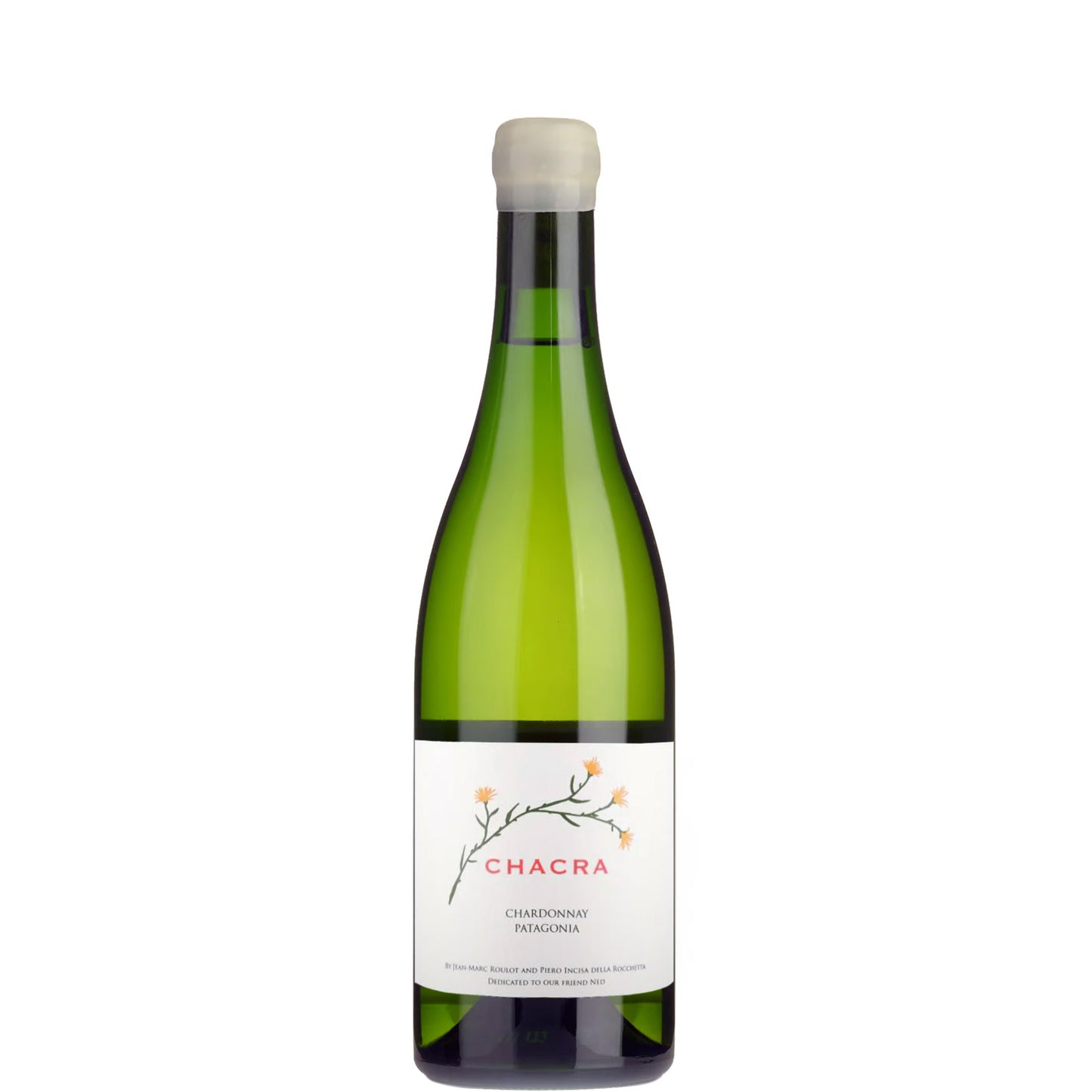

Bodega Chacra, Chardonnay, 2025
Bodega Chacra, Chardonnay, 2025
- 75cl
- 12%
- White Still
- Chardonnay
- Organic
- Biodynamic
Couldn't load pickup availability
Enquire about this item

Drinking window: 2026 - 2030
Wondering who the della Rochettas are? Piero’s Grandfather is the founder of Tenuta San Guido; the makers of Sassicaia. Winemaking is truly in his blood. The Chacra estate originally consisted of a single plot, planted way back in 1932, which had been simply abandoned. Other sites soon followed, which were both seriously old vines too and needless to say, some work was needed to bring the winery to its current run of form.
Made in partnership with Jean-Marc Roulot of Meursault fame, the Chardonnay is planted on limestone rich plots, much like the finest vineyards of the Côte d’Or, imbuing the wines with an impressive geological intensity. These have more than a touch of Roulot purity and finesse to them. The cool climate here, with its wide diurnal swings and fierce Andean winds, keeps the fruit taut and the acidity singing, and the result sits somewhere between a lean Burgundy and something altogether more wild and windswept.
What the critics say:
"Wow. This is really complex, with sliced apples, lemons, flint, stones and a hint of limes on the nose. It’s floral and aromatic with white flowers. Long, long finish. Complex and thoughtful. Drink or hold."
The vineyards sit in the Rio Negro valley at around 300 metres altitude, on sandy soils over ancient river deposits — low fertility, excellent drainage, and a natural defence against phylloxera that helped preserve those extraordinarily old vines. The climate is continental and uncompromising: warm days, very cold nights, and a near-constant wind that stresses the vines and concentrates flavour. That combination of lean soils and thermal range gives the wines their characteristic freshness and mineral lift.
Rio Negro is a GI (Indication of Geographic Origin) within Argentina's Patagonia wine region, sitting well south of Mendoza at latitudes between 38° and 40° S. It is one of the country's coolest wine-growing areas, and that coolness is the defining factor: grapes ripen slowly and retain the acidity that warmer Argentine regions can struggle to preserve. The region remains small and relatively little-known internationally, which means quality producers like Chacra have shaped its reputation almost single-handedly.
Patagonia's 2025 vintage is, frankly, too recent for firm conclusions — harvest data and critical assessments are still filtering through, and we'd rather be straight with you than dress up uncertainty in confident language. What we do know is that the region's high-altitude Río Negro and Neuquén vineyards continued to benefit from the wide diurnal temperature swings that define Patagonian growing seasons: warm days building phenolic ripeness, cold nights locking in freshness. Early indications suggest a season without dramatic disruption, which in Patagonia typically points towards wines of good natural balance rather than forced concentration.
The region's Pinot Noir and Malbec are the ones to watch, as ever. From what we're hearing, the Pinots look particularly promising — taut, with the kind of red-fruit clarity that the best Patagonian sites deliver when the season doesn't push too hard. Malbec from this latitude tends to run leaner and more structured than its Mendoza cousins, and 2025 appears to follow that logic. Most wines should drink well from 2026 or 2027, with the more serious reds worth holding until 2029 or beyond.