

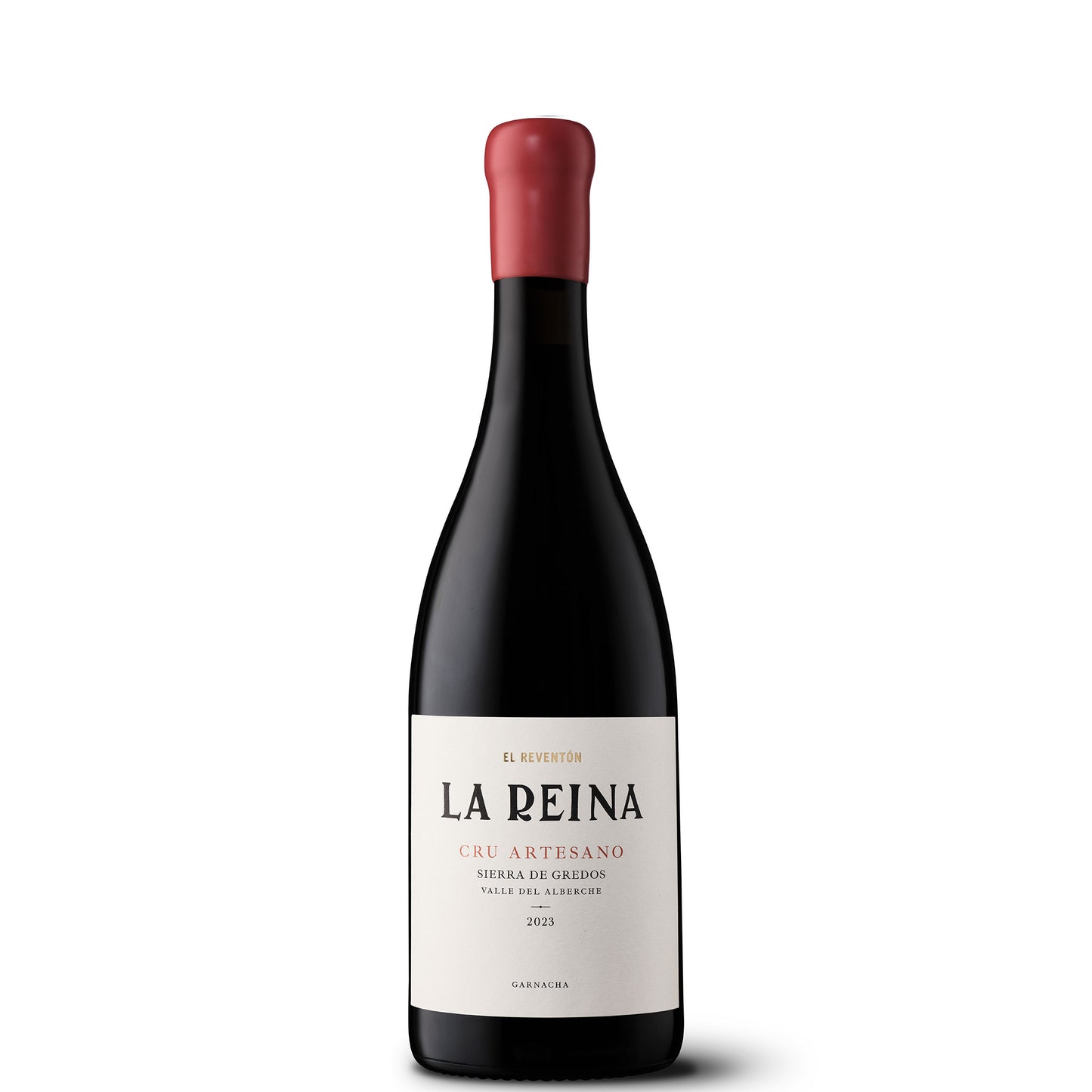
Bodega El Reventón, Cru Artesano, 2023
Bodega El Reventón, Cru Artesano, 2023
- 75cl
- 14.5%
- Red Still
- Garnacha
- Organic
- Biodynamic
Couldn't load pickup availability

Optimal drinking window: Now - 2030
Together with Catena Zapata’s renowned winemaker Alejandro Vigil—her partner at El Enemigo—and Honest Grapes club member Gearóid Lane, Adrianna purchased the revered El Reventón vineyard from cult producer Comando G.
The team has since expanded with La Reina, a 7-hectare estate in San Juan de la Nava, and an historic vineyard on the San Gregorio slopes once owned by the Landi family.
Perched nearly 900 metres up in the Sierra de Gredos mountains overlooking Madrid, these sites offer ideal conditions for Garnacha (Grenache). The altitude, rocky soils and cool nights producing wines of remarkable finesse, more reminiscent of Chambolle-Musigny than Châteauneuf-du-Pape.
From old bush vines rooted in granitic soils, the focus is firmly on freshness, aromatic complexity and texture rather than density or sweetness, though the 2023s still carry impressive depth and intensity. These debut releases of their flagship wines have been eagerly anticipated since our tasting with Adrianna at 67 Pall Mall last year. The La Reina Cru Artesano stands out as outstanding value at just £50 a bottle.
The 2023 is already expressive and open, which means there's real pleasure to be had right now. Over the next two to three years, the whole-cluster element will knit further into the fabric of the wine, adding spice and structural complexity without obscuring the primary fruit. By 2028 or so it should be hitting its stride — more layered, slightly more serious, with the granite minerality more pronounced. We'd expect a plateau somewhere between 2028 and 2030, after which the fruit will start to recede and the wine will become more contemplative than exuberant. Drink it before 2033 unless your cellar is impeccably cool.
What the critics say:
"This is floral, with aromas of violets, thyme, crushed raspberries and herbs. The palate is medium- to full-bodied with bright, delicious fruit that’s restrained and voluminous. From a 6.2-hectare head-trained vineyard planted in 1978 on granitic soils between San Juan de la Nava and Navaluenga. This comes from a specific section planted in the highest part at 860 on slate soils. This has 30% whole clusters and is aged in 500L used French oak barrels. Drink now or hold."
Tasting Notes
AppearanceTranslucent ruby with a pale, almost rose-tinted rim — exactly what you'd expect from old-vine Garnacha grown at altitude.
NoseViolets and crushed raspberry lead, followed by dried thyme and a faint mineral smokiness that speaks directly to the slate underfoot. There's a floral lift here that feels Burgundian — cool, precise, and very much alive.
PalateMedium-bodied with the kind of silky, fine-grained texture that 30% whole clusters and old vines tend to produce together. The fruit is bright and restrained rather than jammy, with a savoury, herb-tinged core and real volume without weight. Acidity is the engine here — it carries everything cleanly to the back of the palate.
FinishLong, cool, and mineral, with thyme and a faint graphite edge that hangs around well after the glass is set down.
Overall impressionA Garnacha that earns its Chambolle comparison — not through imitation, but through genuine mountain character.
Food Pairings
In the villages around the Sierra de Gredos, lamb is the default answer — specifically lechazo, milk-fed lamb slow-roasted in a wood-fired oven until the skin blisters and the meat falls apart. The wine's acidity cuts straight through the richness. Cochinillo, the suckling pig that defines Castilian Sunday lunches, works just as well for the same reason. Locally cured meats — chorizo from Salamanca, morcilla from Burgos — make for a simpler but equally satisfying match, especially alongside a slice of bread rubbed with tomato. If you're leaning lighter, a plate of grilled wild mushrooms with garlic and olive oil lets the wine's herbal, earthy notes do the talking.
We think this wine would go well with
Serve at around 16°C — cool enough to keep the aromatics fresh and the acidity lively, but not so cold that it shuts down the mid-palate. A 20-30 minute decant is worth doing, less to open the wine up than to blow off any reductive tightness from the bottle. A larger Burgundy-style bowl is the right glass — it gives the floral aromatics room to lift without dispersing the more delicate fruit.
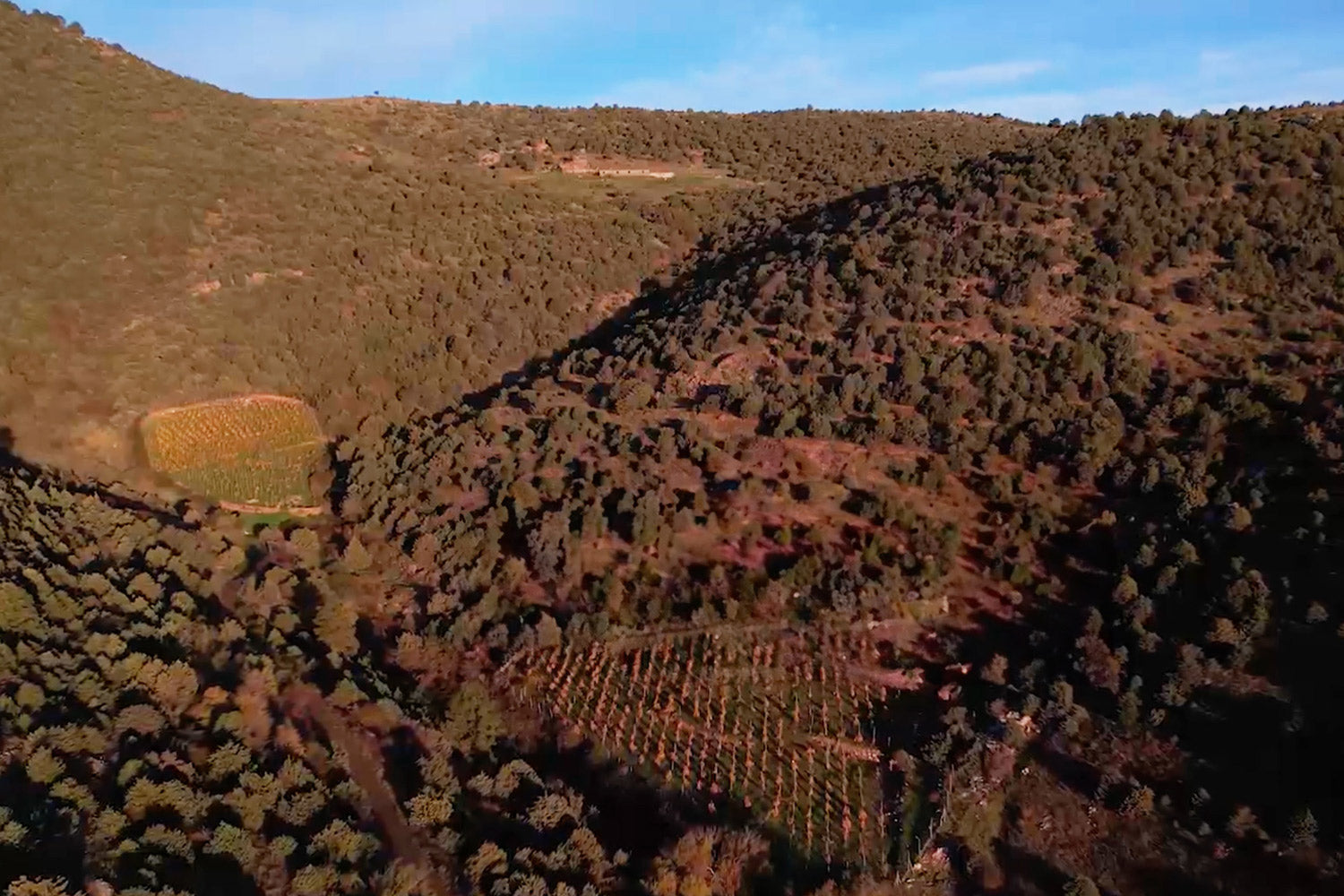
The El Reventón vineyard sits at around 860 metres in the Sierra de Gredos, on the higher, cooler reaches where slate soils take over from the surrounding granite. That altitude means warm days but genuinely cold nights, which preserves the kind of aromatic lift and natural acidity that you rarely find in Garnacha this far south. The old bush vines — planted in 1978 and head-trained without irrigation — push roots deep into fractured rock, producing small yields of intensely flavoured fruit with no need for extraction. The result is a wine shaped by restraint, not ripeness.
Sierra de Gredos is not a DO in the traditional sense — it sits within the broader Vinos de Madrid framework but operates more as a loose collective of like-minded growers who identified this mountain range as something genuinely special for Garnacha. What unites them is an altitude-driven philosophy: freshness over power, granite over clay, whole-cluster fermentation over extraction. It is the antithesis of Châteauneuf-du-Pape Grenache — lighter in colour, higher in acid, and far closer in spirit to the Pinot Noirs of Burgundy's Côte de Nuits. Comando G put the region on the map; producers like El Reventón are now pushing it further.
The 2023 growing season in Sierra de Gredos brought the kind of textbook conditions that make winemakers quietly optimistic rather than breathlessly excited. Spring arrived gently across these granite slopes, with steady rainfall providing the water reserves that proved crucial later. Summer heat was intense but not punishing, and crucially, the nights remained cool at altitude, preserving the acidity that gives Gredos wines their backbone. Harvest began in late September under clear skies, with growers able to pick at their leisure rather than racing against weather.
What emerged from the cellars confirms our initial enthusiasm: wines with real tension and minerality, where the granite terroir speaks clearly through both Garnacha and the region's white varieties. The reds show deeper colour and more structured tannins than we often see here, whilst retaining that distinctive herbal lift and mountain freshness. Quality is high across the board, from the established names to the younger generation of growers who continue to redefine what Spanish mountain wine can achieve. These wines are drinking beautifully now but have the structure to develop until 2035, possibly longer for the best examples.
FAQs
What does this wine taste like?
Think Garnacha stripped of everything heavy: violets, bright raspberry, wild thyme, and a cool mineral edge from the slate soils. It's medium-bodied, silky, and aromatic — closer to a fine Burgundy than anything from the southern Rhône.
When is the best time to drink it?
It's drinking well now and will continue to do so until around 2032. The sweet spot is probably 2028 to 2031, once the whole-cluster complexity has fully integrated. If you're opening it young, a short decant helps.
What food should I pair it with?
Slow-roasted lamb or suckling pig are the classic local matches — the wine's acidity handles the richness with ease. It's also excellent with Iberian charcuterie, grilled mushrooms, or anything with garlic and olive oil.
How should I serve it?
Around 16°C, in a Burgundy-style bowl. Decant for 20-30 minutes if you're opening it soon after purchase — it rewards a little air.
Is this wine worth cellaring?
Yes, with a clear window in mind. It will gain complexity until around 2031, then begin to simplify. This isn't a wine built for multi-decade ageing, but five to seven years in a good cellar will be well rewarded.
Who made this wine and why does it matter?
El Reventón is a collaboration between Adrianna Catena, Alejandro Vigil — Catena Zapata's head winemaker and Adrianna's partner at El Enemigo — and Honest Grapes club member Gearóid Lane. They acquired the vineyard from Comando G, the cult producer who first put Sierra de Gredos on the map, and these 2023s are their debut releases. It's a serious team with serious intent, and the wines back it up.
OUR GROWERS
Bodega El Reventón
Explore related wines


What are you looking for tonight? Tell me the occasion, a grape, a region — or just try a suggestion below.
Your recommendations will appear here.
-
-
Speak to one of our Wine Gurus
Speak to a Wine GuruWith years of experience, our team can help you with all your wine buying and selling needs