

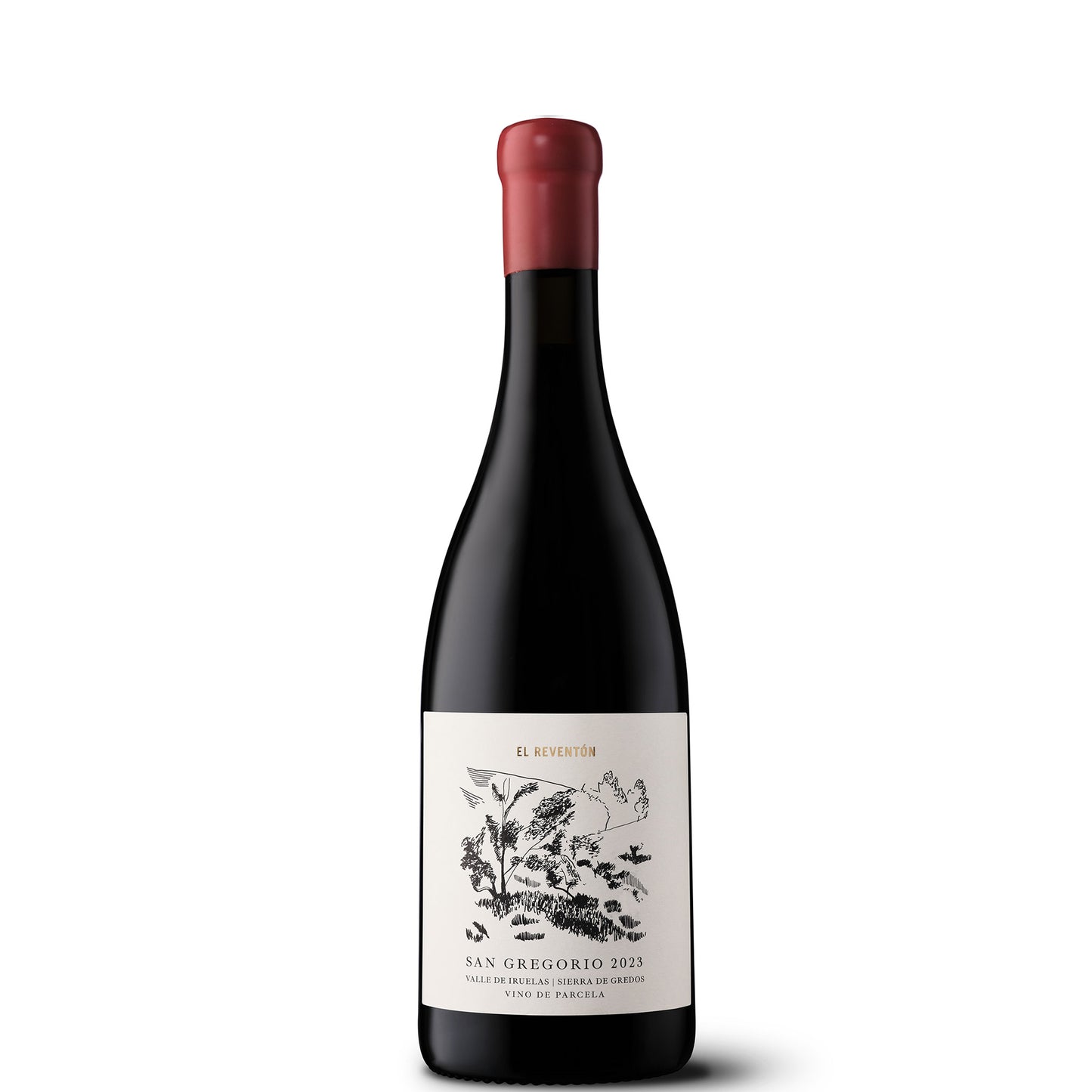
Bodega El Reventón, San Gregorio, 2023
Bodega El Reventón, San Gregorio, 2023
- 75cl
- 14.5%
- Red Still
- Garnacha
- Organic
Couldn't load pickup availability

Optimal drinking window: Now - 2032
Together with Catena Zapata’s renowned winemaker Alejandro Vigil - her partner at El Enemigo - and Honest Grapes club member Gearóid Lane, Adrianna purchased the revered El Reventón vineyard from cult producer Comando G.
San Gregorio is a single-vineyard red made from old-vine Garnacha grown at altitude, where cool nights and thin, sandy soils strip the variety of its jammy tendencies and leave something much more interesting in their place. Think Pinot Noir's delicacy crossed with the herbal, stony character that Gredos does like nowhere else in Spain.
The 2023 is fresh, precise, and drinking well already. Red cherry, wild thyme, and a chalky mineral pull on the finish make it compelling now with a light chill and good company.
Right now, the 2023 is in a sweet spot of primary fruit freshness where the red cherry and herbal lift are at their most vivid. Over the next two to three years, that fruit will begin to integrate and the mineral, earthy secondary character will become more prominent. By around 2028-2029, expect the wine to have developed greater complexity and a more savoury, dried-fruit profile. It will likely plateau somewhere around 2030-2031 before the fruit slowly fades. Drink it in that window rather than pushing further.
What the critics say:
"Ferrous and wild, with notes of blood, steak tartare and garrigue herbs, this Garnacha from a 55-year-old vineyard in El Tiemblo is bursting with granitic energy and mountain freshness. Peach syrup sweetness is woven into a taut structure of sinewy tannins. Minimal oak and whole-bunch ferment lend detail and precision. Raw, focused and pure, with serious terroir driven tension."
"The single-vineyard red from the village of El Tiemblo, the 2023 San Gregorio comes from 0.9 hectares of vines planted in 1940 and fermented with full clusters in concrete with a long maceration and aged part in used barrels, part in stainless steel. It has a nuanced nose, with a stony sensation; it is earthier, nuanced, layered and complex, developing notes of fresh meat and blood. It has a very delicate texture and is fine-bonded, with very fine tannins, vibrant flavors and a very tasty, almost salty finish. They now have an adjacent plot to this, but it might make a different wine. Only 789 bottles and 60 magnums produced."
Tasting Notes
AppearancePale to medium ruby with a translucent, bright rim that signals altitude and old vines rather than extraction.
NoseLifted red cherry, pomegranate, and dried rosemary open things up, with a cool, stony undercurrent running beneath the fruit. There's a subtle floral note, almost violet, that's typical of old-vine Gredos Garnacha. Clean and precise rather than brooding.
PalateLight to medium-bodied with fine, silky tannins and bright, mouthwatering acidity that keeps everything moving. The fruit is pure red cherry and wild strawberry, framed by that granite mineral quality that gives Gredos wines their distinctive bite. There's no excess weight here; this is Garnacha at its most transparent and refreshing.
FinishLong and saline, with a persistent stony quality and a whisper of dried herbs that lingers well after the wine is gone.
Overall impressionA compelling argument for Gredos as Spain's most exciting red wine address right now.
Food Pairings
In the villages around the Sierra de Gredos, this kind of wine sits naturally alongside cochinillo, the slow-roasted suckling pig that remains the great culinary tradition of Castile, where the fat and sweetness of the pork find a willing partner in the wine's acidity and mineral grip. Lamb chops grilled over vine cuttings, a preparation you'll find at almost any local asador, work just as well. Simpler still, a plate of Iberian charcuterie and some aged Manchego with membrillo would let the wine's red fruit and saline finish do the work. The locals would probably drink this young, slightly cool, without ceremony, which is exactly right.
We think this wine would go well with
Serve at 14 to 16 degrees Celsius, slightly cooler than you might expect for a red, which will sharpen the mineral edge and keep the freshness alive. Decanting is optional for the 2023; thirty minutes in a carafe will help if the wine seems closed initially, but it will open quickly in the glass. A Burgundy-style glass with a wider bowl will give the delicate aromatics room to express themselves without overwhelming them.
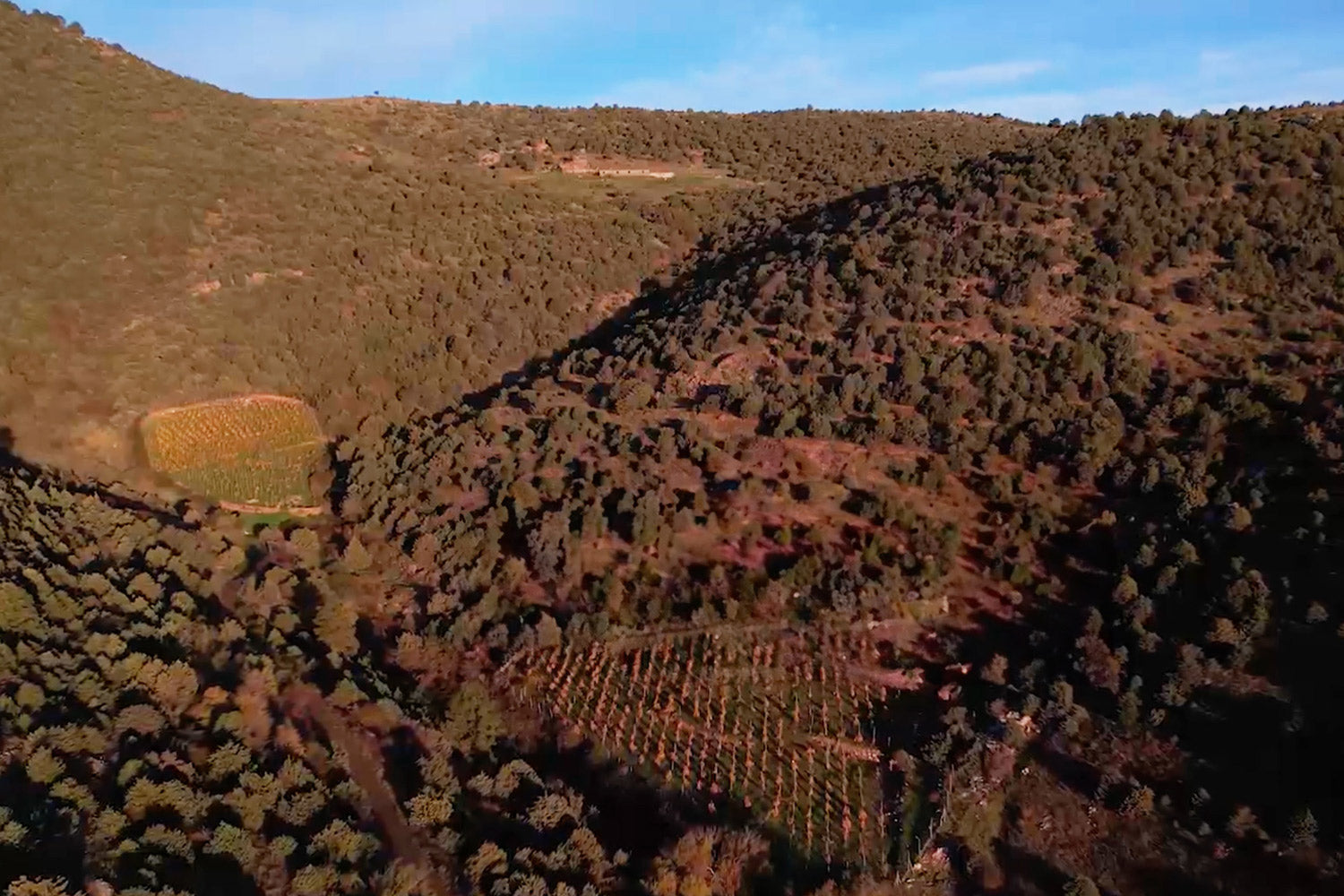
The San Gregorio vineyard sits on thin, sandy granite soils at high altitude in the Sierra de Gredos, the range that forms a natural barrier between Old and New Castile. The granite drains freely, forces the vines to work for every drop of water, and contributes that characteristic stony, mineral quality to the wine. Altitude keeps summer temperatures moderate and nights cool, which is why Gredos Garnacha has a freshness and aromatic lift quite unlike anything from Priorat or Roussillon. The old vines, planted without irrigation and trained low to the ground, produce tiny yields of intensely flavoured fruit.
Sierra de Gredos falls under the broader Vinos de Madrid DO, though many of its most compelling producers also use the VI (Vino de Independientes) classification or simply label their wines as Vino de la Tierra de Castilla y León to signal their independence from the DO's conventions. The Gredos zone has no appellation of its own yet, which is both its limitation and its freedom: producers are not bound by restrictive rules and can work with old-vine Garnacha on their own terms. Compared to Priorat, also a granite-and-Garnacha story, Gredos wines are lighter in body, higher in acidity, and more overtly mineral, sitting much closer in spirit to Burgundy than to the Rhône.
The 2023 growing season in Sierra de Gredos brought the kind of textbook conditions that make winemakers quietly optimistic rather than breathlessly excited. Spring arrived gently across these granite slopes, with steady rainfall providing the water reserves that proved crucial later. Summer heat was intense but not punishing, and crucially, the nights remained cool at altitude, preserving the acidity that gives Gredos wines their backbone. Harvest began in late September under clear skies, with growers able to pick at their leisure rather than racing against weather.
What emerged from the cellars confirms our initial enthusiasm: wines with real tension and minerality, where the granite terroir speaks clearly through both Garnacha and the region's white varieties. The reds show deeper colour and more structured tannins than we often see here, whilst retaining that distinctive herbal lift and mountain freshness. Quality is high across the board, from the established names to the younger generation of growers who continue to redefine what Spanish mountain wine can achieve. These wines are drinking beautifully now but have the structure to develop until 2035, possibly longer for the best examples.
FAQs
What does San Gregorio taste like?
Think Garnacha with the freshness of a cool-climate Pinot Noir: bright red cherry, wild herbs, and a stony, saline mineral quality running through everything. It's light-footed and precise rather than rich or powerful, which is exactly what makes Gredos Garnacha so compelling.
When should I drink this wine?
It's already drinking well in 2026 and will continue to do so until around 2032. The sweet spot is probably 2027 to 2030, when a few more years in bottle will add complexity without losing the freshness that defines it.
What food does this pair well with?
Slow-roasted suckling pig or lamb grilled over coals are the classic Castilian matches. It also works brilliantly with Iberian charcuterie, aged Manchego, or simply a plate of good jamón. The wine's acidity and mineral grip mean it cuts through rich, fatty foods with ease.
How should I serve it?
Serve it slightly cooler than most reds, around 14 to 16 degrees Celsius, to keep the mineral freshness alive. A short decant of thirty minutes is optional but can help if the wine seems a little closed when first opened.
Is this worth cellaring?
Yes, modestly. It will develop well until around 2030 and the mineral complexity will deepen with a few years in bottle. That said, it's not built for a decade or more in the cellar; the charm is in that fresh, lifted Gredos character, and you want to catch it while it's still vibrant.
How does Gredos Garnacha differ from other Spanish Garnacha?
Sierra de Gredos is high altitude and granite-soiled, which strips out the heavy, sun-baked ripeness you find in Priorat or Garnacha from hotter regions. The result is lighter in body, higher in acidity, and much more mineral in character. Many serious drinkers compare it to Burgundy in spirit, though it's unmistakably Spanish.
OUR GROWERS
Bodega El Reventón
Explore related wines


What are you looking for tonight? Tell me the occasion, a grape, a region — or just try a suggestion below.
Your recommendations will appear here.
-
-
Speak to one of our Wine Gurus
Speak to a Wine GuruWith years of experience, our team can help you with all your wine buying and selling needs