

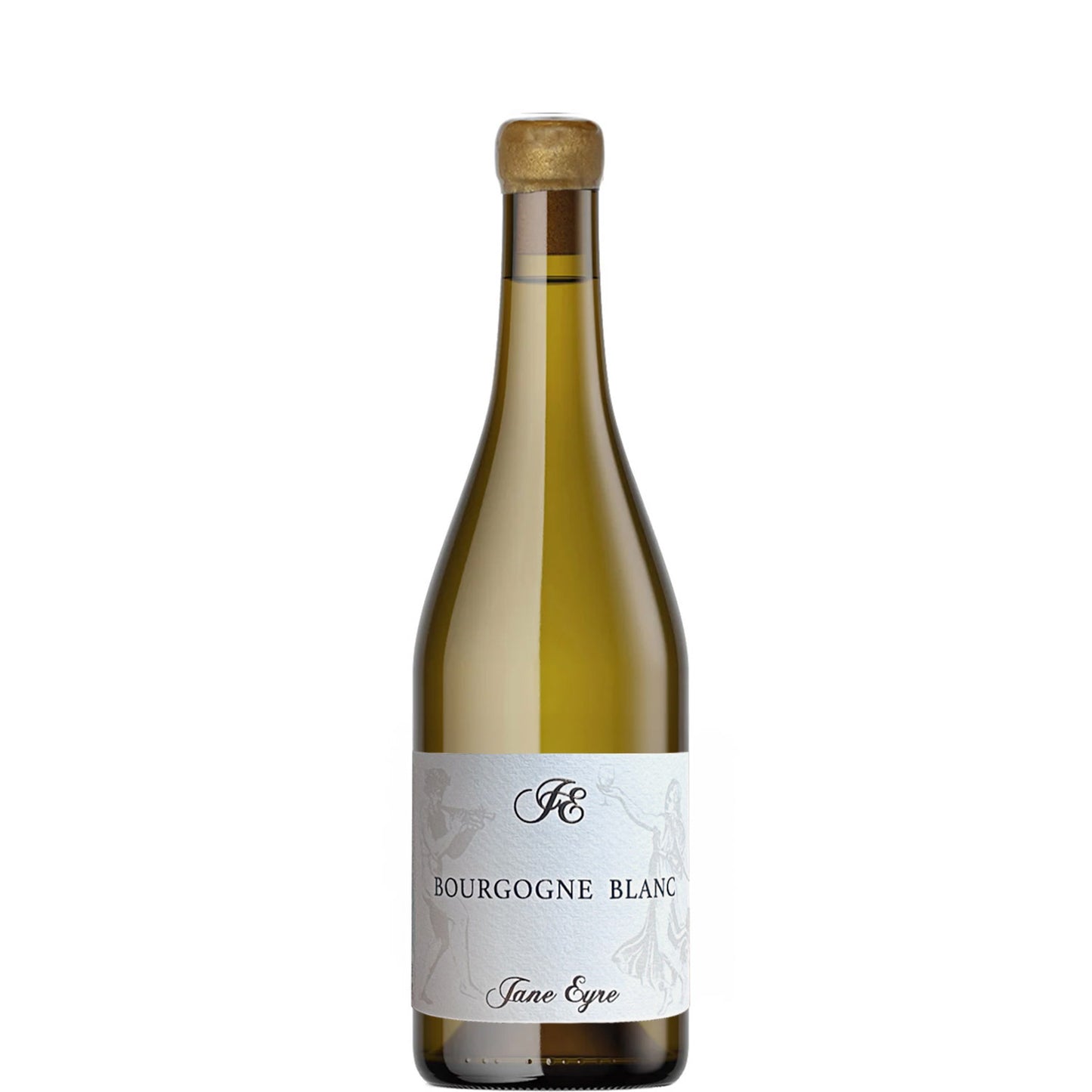
Bourgogne Blanc, Jane Eyre, 2023
Bourgogne Blanc, Jane Eyre, 2023
- 75cl
- 13%
- White Still
- Chardonnay
Couldn't load pickup availability

Optimal drinking window: Now - 2030
Jane Eyre’s 2023 Bourgogne Blanc is everything we love about her style: elegant, restrained and beautifully drinkable. Clean and refined, it has bright acidity, subtle creaminess and a light mineral lift that keeps things focused and refreshing. Perfect with roast chicken, creamy pasta, or grilled white fish.
Jane’s use of whole-cluster fermentation increased in 2023, coupled with colder soaks at the start of fermentation. This approach has resulted in wines with richer colours and enhanced complexity. While the vintage is already showing expressive charm, it also holds great potential for aging, making 2023 both approachable and collectible. The wines evolve quickly, offering fresh insights with each tasting.
Right now, in 2026, the 2023 is in a lovely early window where its primary fruit and fresh acidity are singing. Over the next year or two, that initial brightness will begin to integrate and the wine will develop a rounder, more honeyed character with greater mid-palate weight. By 2028 or 2029, a faint nuttiness and more pronounced mineral complexity should emerge, which is when it will arguably be at its most interesting. We would not push it much beyond 2030 at this level, though Jane Eyre's emphasis on whole-cluster fermentation and cold soaks does give it more structure than a typical Bourgogne Blanc. Drink it before the acidity begins to soften too far and the freshness fades.
Tasting Notes
AppearancePale gold with a bright, lively gleam and good clarity.
NoseFresh and inviting, with white peach, ripe lemon, and a faint waft of hazelnut from the lees. There is a delicate floral edge and a cool, chalky quality that keeps it clean and precise. The whole-cluster influence from 2023 adds a faint herbal freshness that lifts everything.
PalateBright acidity frames a gently creamy mid-palate of green apple and poached pear, with a subtle saline mineral quality running through the core. The texture is more generous than you might expect at this level, thanks to those cold soaks and extended whole-cluster work, without ever feeling heavy. It is focused and refreshing, with genuine presence.
FinishClean and lingering, with that mineral lift persisting alongside a squeeze of citrus pith.
Overall impressionA grower-level Bourgogne Blanc that punches well above its appellation, with the kind of precision and freshness that makes you reach for a second glass.
Food Pairings
In Burgundy, a wine like this would land naturally alongside a classic poulet de Bresse roasted simply with butter and tarragon, where the wine's acidity cuts through the richness without overwhelming the bird. The Burgundians are also fond of serving their local whites with gougères, those irresistible warm cheese puffs that appear at every serious tasting table. A jambon persillé, the region's elegant terrine of ham set in herbed parsley jelly, is another natural companion. Freshwater fish from the rivers of the Saône basin, such as pike quenelles in a cream sauce, are perhaps the most traditional pairing of all, and the wine's creamy texture meets them perfectly.
We think this wine would go well with
Serve at 10 to 12°C, cool enough to keep the acidity lively but not so cold that you shut down the more subtle creamy and mineral qualities. No need to decant, though a 15-minute rest out of the fridge if it has been stored cold does no harm. A standard white Burgundy tulip glass works well here, with enough bowl to let the nose open up without losing the freshness that makes this wine what it is.
Bourgogne Blanc is produced from Chardonnay grown across various appellations within the Côte d'Or and surrounding areas of Burgundy. The region's hallmark limestone and clay soils give the wines their characteristic tension between richness and acidity. At this village level, the vineyards tend to sit on gentler slopes where the soils retain more moisture, lending a rounder texture than the grands crus above. The continental climate, with warm summers and cool autumns, allows Chardonnay to ripen fully while retaining the freshness that makes Burgundy's whites so compelling.
Bourgogne Blanc is the entry-level white appellation of Burgundy, covering Chardonnay grown across the entire region outside more specific appellations. It sits at the base of Burgundy's hierarchy, below village, premier cru, and grand cru designations, but in the hands of a skilled producer it can offer genuine insight into a grower's house style at an accessible price. The rules require a minimum of 11% ABV and restrict yields to 60 hl/ha, though quality-minded producers typically work well within these limits. Think of it as the handshake before the conversation: a Bourgogne Blanc from someone who makes serious wine at higher levels is rarely something to dismiss.
The 2023 growing season in Burgundy unfolded like a cautionary tale about climate change, then pulled off a last-minute redemption that left everyone rather stunned. After a warm, early spring pushed budbreak ahead of schedule, the vines endured a thoroughly miserable summer of persistent rain and cool temperatures that had growers muttering darkly about rot and dilution. Just when things looked dire, September arrived with glorious sunshine and dry winds that concentrated the fruit and saved the harvest—though not without some frantic sorting in the cellars.
What emerged from this meteorological rollercoaster are wines that wear their vintage on their sleeve: Pinot Noirs with bright, singing acidity and red fruit that feels almost crystalline in its purity, whilst the Chardonnays show remarkable tension and mineral drive. The reds are drinking beautifully now if you fancy immediate pleasure, but we suspect the better villages and premiers crus will reward patience over the next decade. It's not a powerhouse vintage, but there's something genuinely charming about these wines—they remind us why we fell for Burgundy in the first place.
FAQs
What does this wine taste like?
Bright and focused, with white peach, lemon, and green apple alongside a subtle creamy texture and a clean mineral lift. It is restrained rather than showy, and all the better for it.
When should I drink it?
It is drinking very well right now and will continue to do so until around 2030. The 2023 vintage has more structure than is typical for this appellation, so there is no rush, but the freshness and primary fruit are genuinely lovely at the moment.
What food does it pair well with?
Roast chicken, creamy pasta dishes, grilled white fish, or anything with a bit of butter in the sauce. It is also excellent with a good cheese board if you keep the cheeses on the lighter, fresher end.
How should I serve it?
Serve at around 10 to 12°C in a standard white Burgundy tulip glass. No need to decant. If it has come straight from a cold fridge, give it 10 or 15 minutes to warm up slightly before pouring.
Is it worth cellaring?
For a Bourgogne Blanc, yes, more so than most. Jane Eyre's whole-cluster fermentation and cold-soak approach in 2023 has given the wine genuine structure. A year or two in the cellar will reward you with added complexity, but do not leave it past 2030.
What makes Jane Eyre's approach to this wine distinctive?
She increased whole-cluster fermentation in 2023 and used colder soaks at the start of fermentation, which gives the wine more texture and a faint herbal freshness that lifts it above the typical Bourgogne Blanc crowd. It is a wine made with grand cru attention at a regional appellation level.
Explore related wines


What are you looking for tonight? Tell me the occasion, a grape, a region — or just try a suggestion below.
Your recommendations will appear here.
-
-
Speak to one of our Wine Gurus
Speak to a Wine GuruWith years of experience, our team can help you with all your wine buying and selling needs