

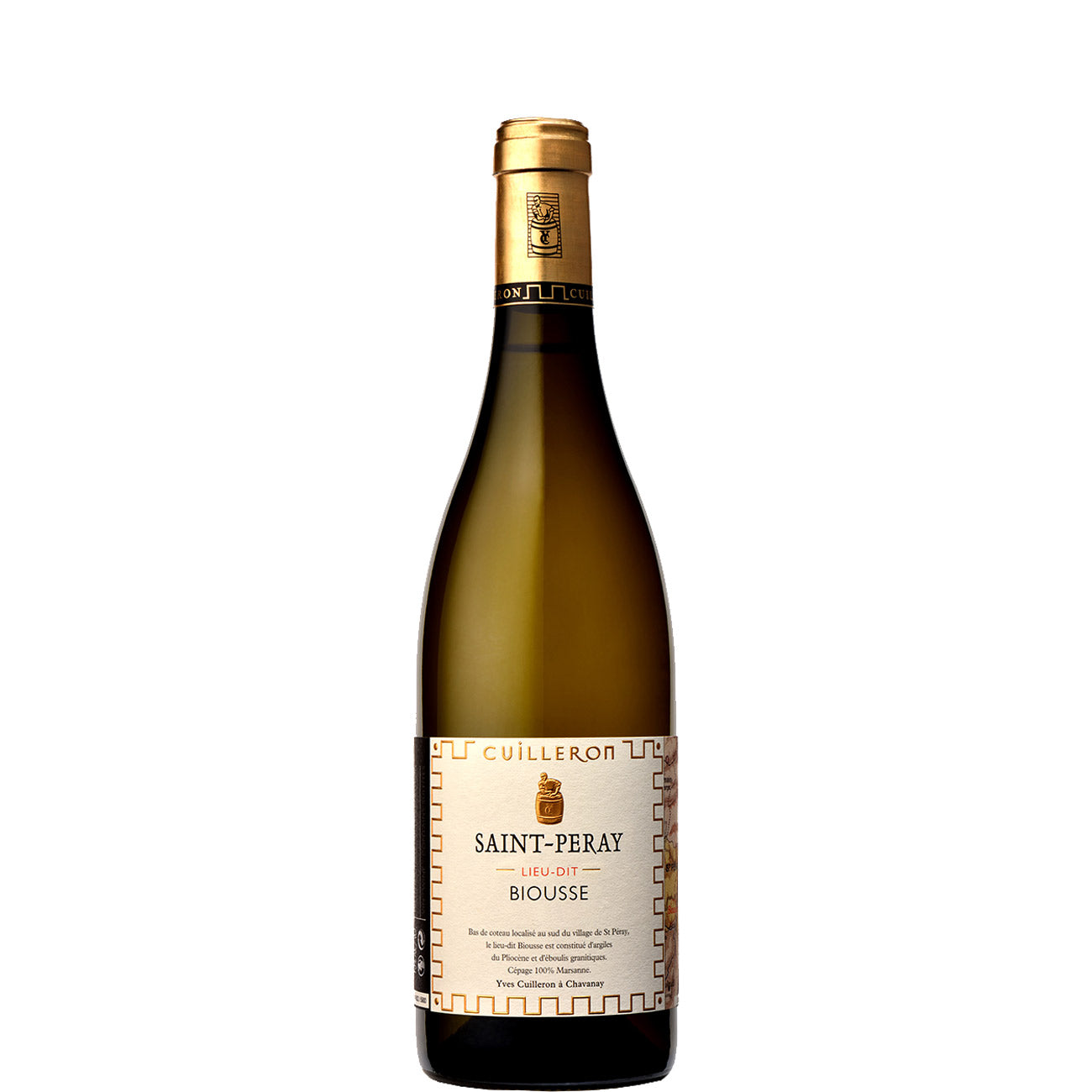
Cave Yves Cuilleron, Saint-Péray, Biousse, 2023
Cave Yves Cuilleron, Saint-Péray, Biousse, 2023
- 75cl
- 13.5%
- White Still
- Marsanne
Couldn't load pickup availability

Optimal drinking window: 2026 - 2034
Yves Cuilleron is one of the northern Rhône's most reliably exciting producers, and his Saint-Péray Biousse is a wine that rewards anyone still sleeping on this appellation. Made entirely from Marsanne, the grape that defines Saint-Péray, Biousse comes from a single lieu-dit and is vinified in a mix of old oak and stainless steel, giving it the freshness you want from a young wine alongside the texture and weight that Marsanne, done right, always delivers.
The 2023 vintage brought warmth and generous ripeness to the northern Rhône, and you can feel that in the glass: broad, golden, and satisfying, with white stone fruit and a nutty, waxy character that will only deepen with a few more years in bottle.
Right now, Biousse 2023 is in an appealing primary phase with its fruit generous and forward - good to drink today if you are not a natural waiter. Over the next two to three years, that fruit will begin to settle and integrate with the oak, and the wine will take on a richer, more honeyed character. By around 2029-2030, expect the full waxy, nutty complexity that mature Marsanne does better than almost any other grape.
What the critics say:
"The 2023 Saint-Péray Biousse is a varietal Marsanne, originating from the same name lieu-dit located south of the village of Saint-Péray. Raised in a combination of French oak barriques and foudres with roughly ten percent new oak, the 2023 kicks off with vivid honeysuckle, yellow apple, lemon zest and flinty subtleties. Crisp, concentrated and extroverted, the 2023 is totally exquisite, touching the palate with abundant substance and walking off the stage with a long, sapid exit."
Tasting Notes
AppearancePale gold with a faint green rim, clear and inviting.
NoseWhite peach, apricot blossom, and a waxy, lanolin-like richness that is pure Marsanne. There is a subtle roasted hazelnut quality already beginning to emerge, suggesting the wine is starting to knit together nicely.
PalateBroad and generous across the mid-palate, with stone fruit giving way to a firmer, mineral-driven spine that keeps things focused. The oak influence is present but well-integrated — adding weight rather than flavour.
FinishLong and savoury, with a pleasing bitter almond note on the very end that lifts the whole thing.
Overall impressionA serious, site-specific Marsanne that is approachable now but has plenty more to say in three to five years.
Food Pairings
In the Ardèche and around Valence, this style of wine is a natural partner to quenelles de brochet — those silky pike dumplings in a rich crayfish sauce that are almost impossibly good. Roast chicken with tarragon butter is the kind of mid-week match the locals would make without overthinking it. Saint-Péray blanc also has the structure to hold its own against a slow-braised veal blanquette or a good, nutty Comté aged at least 18 months. For something lighter, try it alongside a gratin dauphinois — the richness of potato and cream finds a worthy sparring partner here.
We think this wine would go well with
Serve at around 12-13°C — cold enough to feel refreshing, but not so cold that the texture closes down. No need to decant, though giving it 20 minutes in the glass to open up will reward you. A wide-bowled white Burgundy glass works well here, giving the wine enough room to show its aromatic complexity without losing the freshness.
The Biousse vineyard sits on the granite-dominated soils typical of the northern Rhône, with decomposed granite providing excellent drainage and lending the wine its characteristic mineral grip. The continental climate of Saint-Péray — warm summers tempered by cool nights — allows Marsanne to ripen fully while retaining the acidity that keeps these wines lively. The 2023 growing season was notably warm, giving the fruit generous ripeness without tipping into overstatement.
Saint-Péray is the southernmost appellation of the northern Rhône, sitting just below Cornas and producing exclusively white wine from Marsanne and Roussanne — though Marsanne dominates almost entirely in practice. It is one of France's most underrated white wine appellations, often overshadowed by its neighbour Hermitage, yet capable of producing wines of real depth and longevity. Styles range from still to sparkling, though still wines increasingly define the appellation's modern reputation.
The 2023 growing season in the Rhône started promisingly with a mild winter and early budbreak, but spring brought its challenges with late frosts affecting some vineyards, particularly in the north. Summer delivered the heat we expect here, though without the punishing extremes that can shut down photosynthesis entirely. What saved the vintage was September's cooling temperatures and occasional rain, allowing the grapes to retain freshness while completing their ripening cycle. Harvest began earlier than usual but proceeded at a measured pace, giving producers flexibility to pick at optimal moments.
The result is a vintage that captures the Rhône's sunny disposition without the overwrought power that can make these wines feel heavy-handed. Syrah from the northern appellations shows particular promise, combining the grape's natural spice and dark fruit intensity with surprising lift and precision. In the south, Grenache-based blends benefit from that late-season freshness, offering immediate charm whilst maintaining enough structure for proper ageing. Most 2023s are drinking beautifully now and will continue to develop until 2035, making this a vintage that rewards both early drinking and patient cellaring.
FAQs
What does Biousse taste like?
Think white peach, apricot blossom, and a waxy, hazelnut-edged richness — classic Marsanne character, with a mineral backbone that keeps it from feeling heavy. The 2023 vintage adds a little extra ripeness and warmth to the mix.
When should I drink the 2023 Biousse?
It is drinking well now, but we think it will be at its most interesting from around 2028 onwards, once the fruit has settled and the wine has taken on a richer, more complex character. Drink it until 2034.
What food should I serve with this wine?
It loves rich, cream-based dishes — quenelles, blanquette de veau, or a good gratin. Aged Comté cheese is another excellent match. Avoid anything too light or delicate; this wine wants food with some weight behind it.
How should I serve this wine?
Serve at around 12-13°C in a wide-bowled white Burgundy glass. No need to decant, but give it a little time in the glass to open up fully.
Is Saint-Péray worth taking seriously?
Absolutely. It is one of France's most underrated white wine appellations, consistently overshadowed by Hermitage despite being capable of real depth and longevity. Cuilleron is one of the producers who has done most to remind people of that.
What makes Marsanne distinctive as a grape?
Marsanne is unusual in that it starts life relatively neutral and broadens into something rich and complex with age — developing waxy, honeyed, nutty qualities that few other white grapes can match. It can feel a little closed in youth, which is why patience with wines like this one is usually rewarded.

OUR GROWERS
Yves Cuilleron


What are you looking for tonight? Tell me the occasion, a grape, a region — or just try a suggestion below.
Your recommendations will appear here.
-
-
Speak to one of our Wine Gurus
Speak to a Wine GuruWith years of experience, our team can help you with all your wine buying and selling needs