

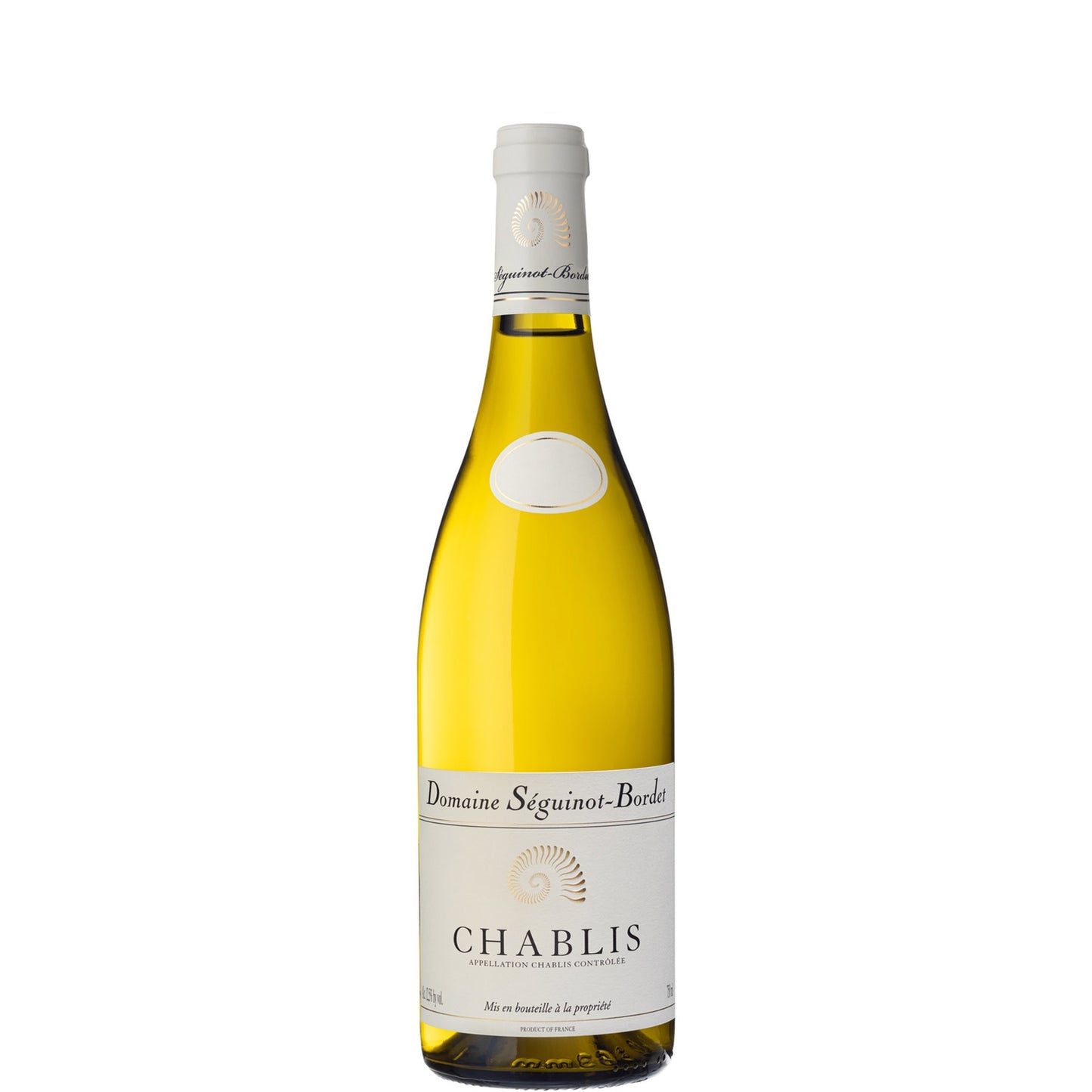
Chablis, Domaine Séguinot-Bordet, 2025
Chablis, Domaine Séguinot-Bordet, 2025
- 75cl
- 12.5%
- White Still
- Chardonnay
Couldn't load pickup availability

Optimal drinking window: 2026 - 2035
Domaine Séguinot-Bordet crafts village-level Chablis that captures everything we love about this corner of Burgundy: pure Chardonnay shaped by Kimmeridgian clay and limestone into something lean, mineral, and utterly distinctive. This 2025 vintage shows the estate's knack for balancing Chablis's famous austerity with enough fruit to keep things engaging.
Still tightly wound in its youth, this wants a year or two to reveal its full character. When it does, expect the classic interplay of citrus precision and chalky minerality that makes proper Chablis such a perfect companion to oysters, but versatile enough for everything from roast chicken to goat's cheese.
This 2025 is currently in its primary phase, showing pure fruit and mineral character. Over the next year, the tight citrus flavours will begin to integrate with the chalky minerality, developing more nuanced aromatics of honey, hazelnuts, and wet stones.
Tasting Notes
AppearancePale gold with green highlights and brilliant clarity.
NoseRestrained aromas of green apple, lemon zest, and wet stones dominate, with subtle hints of white flowers and fresh herbs. There's an almost saline quality that speaks to the ancient seabed soils, along with a touch of gunflint minerality that's quintessentially Chablis.
PalateLean and precise with razor-sharp acidity driving flavours of citrus pith, green apple, and chalky minerals. The texture is taut and linear rather than generous, with a backbone of limestone that gives structure without weight. A subtle salinity emerges mid-palate, adding complexity to the pure fruit character.
FinishLong and mineral-driven with persistent citrus and a chalky, almost powdery texture that lingers beautifully.
Overall impressionA textbook Chablis that prioritises precision and minerality over immediate charm.
Food Pairings
In Burgundy's northernmost outpost, locals have always understood that Chablis and shellfish are natural partners, with the wine's briny minerality echoing the oysters that once populated these ancient seabeds. Classic pairings include plateaux de fruits de mer, escargots de Bourgogne swimming in garlic butter, and the region's famous andouillette sausages with their pungent, acquired-taste appeal. The wine also shines alongside freshwater fish from local rivers, particularly pike perch in cream sauce, and the creamy, ash-ripened Chaource cheese that's made just down the road. These pairings work because they honour Chablis's lean, mineral character rather than overwhelming it.
We think this wine would go well with
Serve well-chilled at 8-10°C to preserve the wine's crisp acidity and mineral precision. No decanting required, but do open the bottle 15-20 minutes before serving to let the tight aromas begin to unfold. Use a medium-sized white wine glass with a narrower bowl to concentrate the subtle aromatics. If the wine seems particularly closed on opening, a gentle swirl will help coax out those mineral and citrus notes.
The vineyards sit on the classic Kimmeridgian clay-limestone soils that define Chablis, rich in fossilised oyster shells that date back 150 million years. This unique geology, combined with a cool continental climate, creates the tension between ripeness and acidity that gives Chablis its distinctive character. The chalky subsoil provides excellent drainage while the clay retains enough moisture to sustain the vines through dry spells, resulting in wines with remarkable mineral precision.
Chablis AOC represents the purest expression of Chardonnay in Burgundy, where the grape must prove itself without the cushion of oak or the generosity of warmer climates. The appellation covers village-level wines from seven communes, all planted on Kimmeridgian soils that impart that signature mineral backbone. Unlike the richer Chardonnays from the Côte de Beaune, Chablis prizes tension over opulence, creating wines that are lean, precise, and remarkably food-friendly. The best examples age gracefully for a decade or more, developing honeyed complexity while retaining their crystalline purity.
The 2025 vintage in Burgundy remains a work in progress, with harvest only recently concluded and the wines still settling into their skins in cellars across the Côte d'Or. Early reports suggest a season that kept vignerons on their toes, though we're still waiting for the full picture to emerge as the wines complete their primary fermentation and malolactic conversion.
What we can say is that 2025 appears to be shaping up as a vintage that will require patience rather than immediate gratification. The reds seem to have good colour and structure, whilst the whites are showing promising acidity that should reward those willing to wait. We'd recommend holding fire on firm judgements until the wines have had proper time to show their true character, likely not until late 2026 at the earliest. For now, it's one to watch rather than one to declare.
FAQs
What does this Chablis taste like?
It's lean and mineral-driven with green apple, citrus, and chalky stones, showing the classic austere style that makes Chablis distinctive from other Chardonnays.
When should I drink this wine?
Enjoy until around 2035 when it will show beautiful honeyed complexity alongside its mineral core.
What food pairs best with this wine?
Oysters and shellfish are the classic match, but it also works beautifully with roast chicken, goat's cheese, or anything with cream sauce that won't overwhelm its delicate character.
How should I serve this Chablis?
Serve well-chilled at 8-10°C in a medium-sized white wine glass, opening the bottle 15-20 minutes before serving to let the aromas develop.
Is this wine worth cellaring?
Absolutely, this style of Chablis rewards patience and will develop beautiful complexity over the next decade while retaining its essential mineral character.
How does this compare to other white Burgundies?
It's much leaner and more mineral-focused than Chardonnays from the Côte de Beaune, prioritising precision and tension over richness and oak influence.

OUR GROWERS
Domaine Séguinot-Bordet
Explore related wines


What are you looking for tonight? Tell me the occasion, a grape, a region — or just try a suggestion below.
Your recommendations will appear here.
-
-
Speak to one of our Wine Gurus
Speak to a Wine GuruWith years of experience, our team can help you with all your wine buying and selling needs