

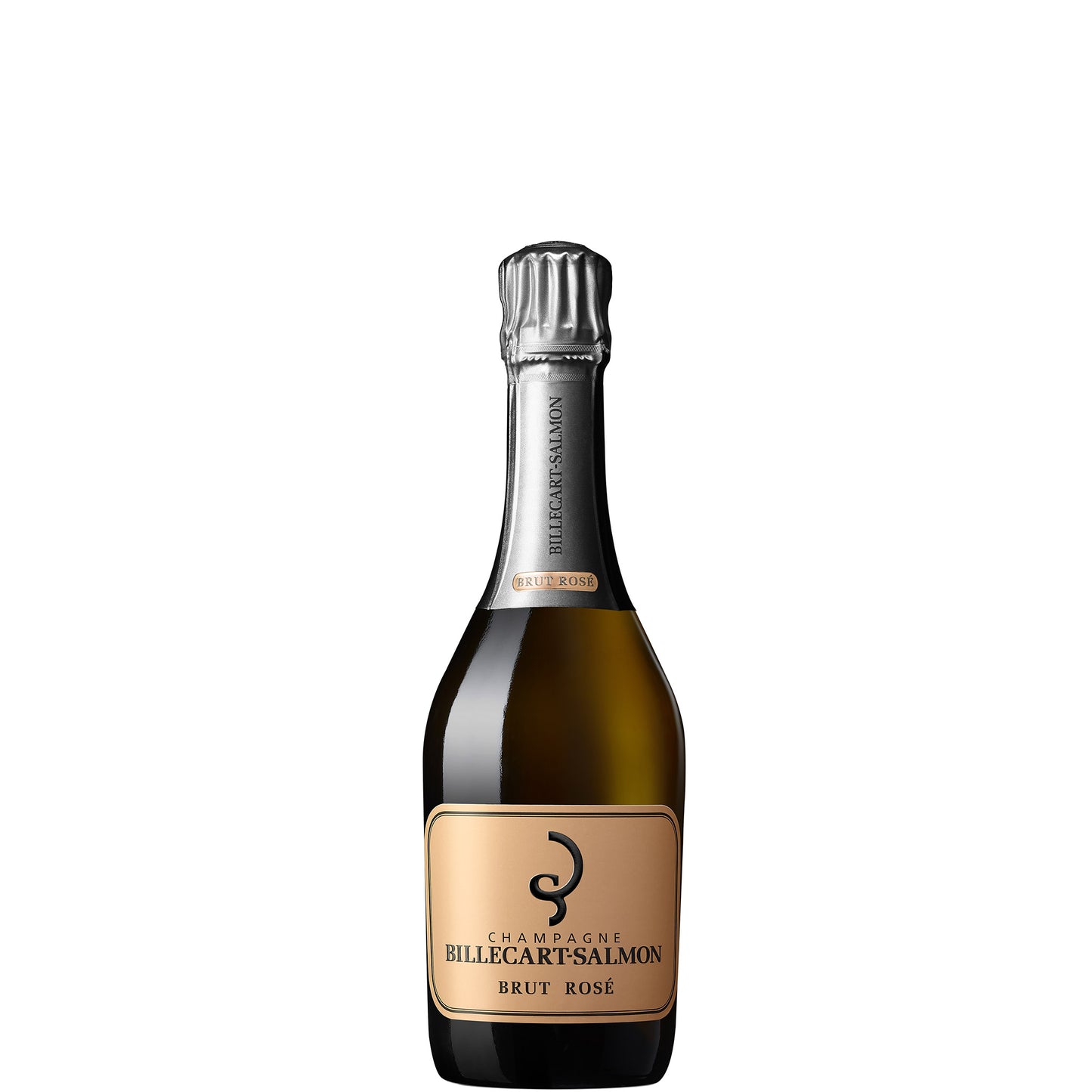
Champagne Billecart-Salmon, Brut Rosé, Nv - Half-bottle
Champagne Billecart-Salmon, Brut Rosé, Nv - Half-bottle
- 37.5cl
- 11%
- Rosé Sparkling
- Chardonnay, Pinot Noir, Pinot Meunier
Couldn't load pickup availability

Optimal drinking window: 2026 - 2030
Billecart-Salmon's Brut Rosé is one of the benchmarks of the style; it is a wine that has earned its reputation not through marketing muscle but through consistent, disarming elegance. Made from a blend of Pinot Noir, Meunier, and Chardonnay, with a small addition of still red wine from Mareuil-sur-Aÿ giving it that signature pale onion-skin blush, this is Champagne that prioritises precision over power. The perlage is impossibly fine, the mousse gentle, and the whole thing feels like it was designed to make you pause mid-conversation.
This half-bottle format is ideal for two glasses of something special - an aperitif with real intent, or the kind of thing you open mid-week when the occasion is simply that Tuesday felt long enough.
Non-vintage Champagne like this is blended to be ready, and Billecart's Brut Rosé is no exception — it's at its best right now, with the red fruit vivid and the mousse at its liveliest. Over the next two to three years it will hold comfortably, but the freshness that defines it will slowly soften into something slightly more biscuity and autolytic. By 2029-2030 the primary charm will start to fade; this isn't a wine to cellar long, particularly in a half-bottle where the wine-to-glass ratio means it evolves faster than a full bottle.
What the critics say:
"Vivid, almost luscious strawberry aromas. Flecks of nutmeg and clove spice amid the lively, refreshing fruit on its slender, fresh body. A real joyful classic."
"Cinnamon and dried nutmeg add to the experience of bread dough and rose petals. Flavorful on the medium-bodied palate and finely poised with bright acidity. Medium-long on the finish. Drink now."
Tasting Notes
AppearancePale pale salmon, almost copper-tinged, with a persistent stream of impossibly fine bubbles rising through the glass.
NoseFresh strawberry and raspberry, but lifted and delicate rather than jammy — more like a bowl of fruit on a cool morning than a summer pudding. There's brioche underneath, and a faint drift of rose petal that keeps it feeling light on its feet.
PalateSilky and precise, with the red fruit carrying across seamlessly from nose to palate, framed by a fine, creamy mousse. The acidity is the backbone here — bright and focused — with just enough weight from the Pinot Noir to give it shape without losing the aerial quality that defines this wine.
FinishClean, long, and slightly chalky — leaving you thinking about the next sip rather than the last one.
Overall impressionThe kind of rosé Champagne that makes you understand why people drink rosé Champagne.
Food Pairings
In the Champagne region, rosé like this would traditionally be poured alongside the local charcuterie — rillettes, jambon de Reims, and the occasional slice of andouillette if you're feeling adventurous. Shellfish are the natural partner: oysters from Brittany would be the instinctive choice, but langoustines simply grilled with butter are, if anything, better. Locals might also serve it with a light salmon tartare, where the wine's acidity and gentle red fruit cut through the richness without overwhelming the fish.
We think this wine would go well with
Serve well chilled at around 7-9°C — warmer than that and you lose the precision that makes this wine special. No decanting needed; just give it a moment in the glass before diving in. A tulip-shaped Champagne glass rather than a flute will let the aromatics open up properly and show the wine at its best.
Billecart-Salmon draws from a network of vineyards across the Montagne de Reims, Vallée de la Marne, and Côte des Blancs, supplemented by long-standing grower relationships. The chalk subsoils that run through the region retain moisture through dry summers while keeping the vine roots cool, contributing to the naturally high acidity that makes Champagne a wine built for bubbles. The red wine component comes specifically from Mareuil-sur-Aÿ, a Premier Cru village renowned for the finesse of its Pinot Noir.
Champagne is the most tightly regulated sparkling wine appellation on earth, covering roughly 34,000 hectares in northeast France. Only Pinot Noir, Meunier, and Chardonnay may be used, and the traditional method — with secondary fermentation in bottle and a minimum of fifteen months on the lees for non-vintage — is compulsory. What separates Champagne from its imitators isn't the method alone but the chalk, the cool climate, and centuries of blending knowledge accumulated within those rules.
FAQs
What does Billecart-Salmon Brut Rosé taste like?
Think delicate strawberry and raspberry, brioche, and rose petal, with an impossibly fine mousse and a clean, chalky finish. It's precise and light-footed rather than rich or bold — elegance is the whole idea here.
When should I drink this half-bottle?
Now, ideally. Non-vintage rosé Champagne is blended to be ready on release, and in a half-bottle format it evolves faster than a full bottle. Drink it within the next two to three years while the fruit is still vivid and the bubbles lively.
What food should I pair with this wine?
Oysters or langoustines are the classic partners, but it works equally well with a salmon tartare, light charcuterie, or simply a bowl of fresh strawberries. The acidity and red fruit make it surprisingly versatile at the table.
How should I serve it?
Chill it to around 7-9°C and pour into a tulip-shaped glass rather than a narrow flute — you'll get far more from the aromatics that way. No decanting needed; just a moment in the glass to open up.
Is Billecart-Salmon Brut Rosé worth the price?
It sits at the premium end of non-vintage rosé Champagne, but it consistently delivers the kind of finesse that justifies it. This is a house that has been making rosé longer than most, and it shows — the quality is genuinely reliable in a category where inconsistency is common.
What makes this a half-bottle and does that matter?
A half-bottle is 37.5cl — roughly two generous glasses — which makes it a brilliant option for a special aperitif for two, or a solo treat without committing to a full bottle. The trade-off is that wine in smaller formats ages faster, so drink this sooner rather than later.

OUR GROWERS
Champagne Billecart-Salmon
Explore related wines


What are you looking for tonight? Tell me the occasion, a grape, a region — or just try a suggestion below.
Your recommendations will appear here.
-
-
Speak to one of our Wine Gurus
Speak to a Wine GuruWith years of experience, our team can help you with all your wine buying and selling needs