

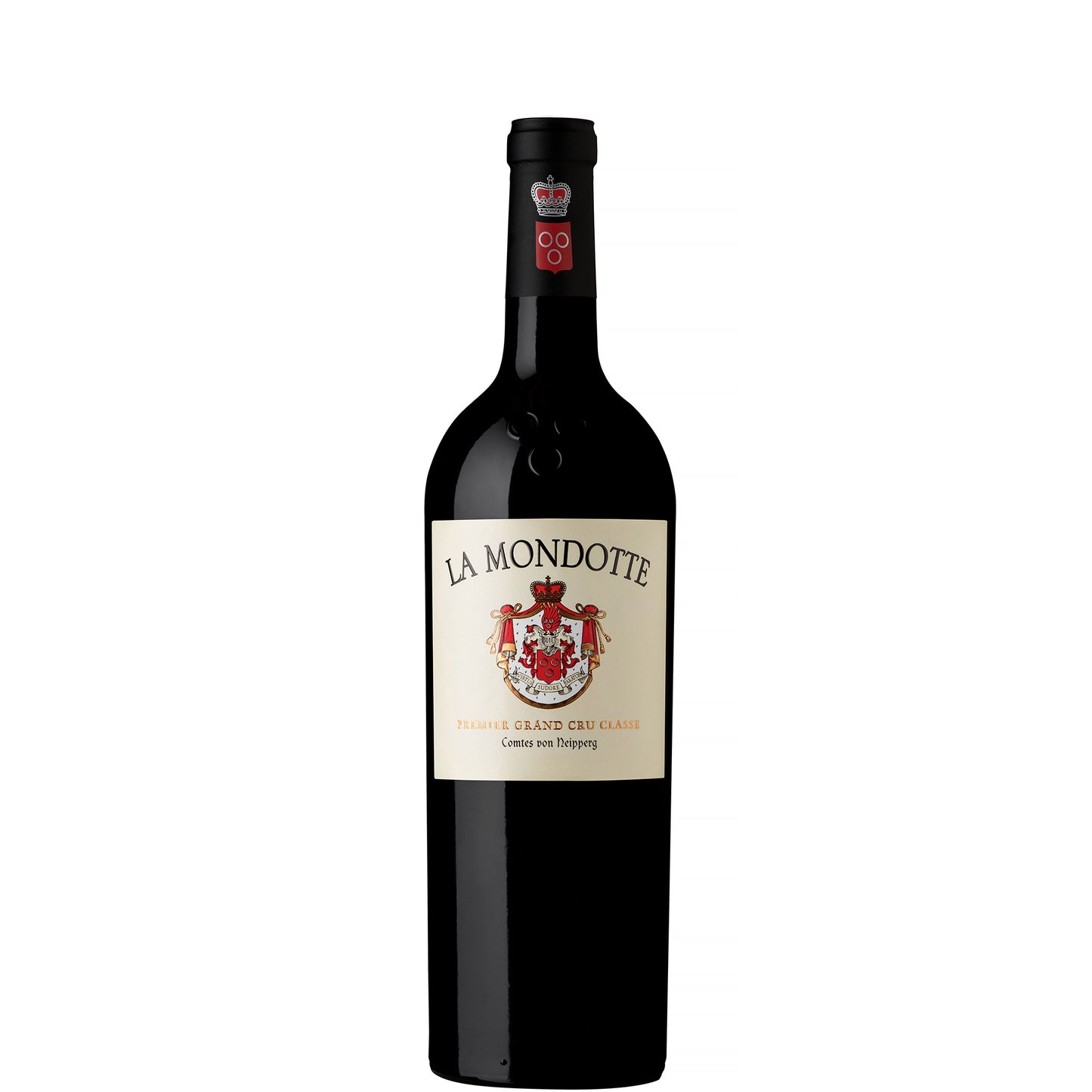
Château La Mondotte, 2018
Château La Mondotte, 2018
- 75cl
- 14.5%
- Red Still
- Merlot, Cabernet Franc
- Organic
Couldn't load pickup availability

Optimal drinking window: Now - 2050
La Mondotte's 4.5-hectares of vines grow on the clay-limestone plateau east of Saint-Emilion. This small gem of a vineyard has all the natural attributes of a Premier Grand Cru Classé. The terroir consists of very silty clay overlaying a rocky subsoil. This shallow, meagre soil induces excellent water regulation and is propitious to deep rooting. Fine natural drainage combined with outstanding sunshine make for early and complete ripening.
The grapes, especially Merlot, are picked under ideal conditions every year. Dating from the 19th century, La Mondotte has been certified organic since 2014.
Right now, in 2026, La Mondotte 2018 is at the very beginning of its useful life. The primary fruit is vivid and generous, but the real complexity — truffle, dried flowers, savoury earth — is still layered beneath the surface. Between 2028 and 2032, we'd expect the tannins to knit more seamlessly into the wine and secondary characteristics to begin asserting themselves with greater confidence. The plateau of complexity is probably somewhere between 2030 and 2045, when this will be among the most complete expressions of the vintage. After that, the wine should age gracefully for many years further, slowly shifting from opulent to contemplative, though there's no reason to panic about decline before 2050.
What the critics say:
"Blackberry, plum, mushroom and wood undertones. It’s full-bodied with firm, ripe tannins. Savory and fleshy texture on the palate. Well balanced. Flavorful finish with length. Such polish and composure for a young wine. So classy! Try after 2026."
"Deep garnet-purple in color, the 2018 La Mondotte strolls nonchalantly out of the glass with expressive scents of plum preserves, blueberry compote and chocolate-covered cherries, followed by suggestions of candied violets, licorice, hoisin and black truffles with a waft of ground cloves. It's medium to full-bodied with seriously impressive tension and wonderfully ripe, velvety tannins supporting the generous black fruit preserves layers, finishing with amazing length and loads of panache. It will require a good 4-5 years to unlock some of its finer nuances, then drink this powerhouse over the next 25+ years."
Tasting Notes
AppearanceDeep garnet-purple, dense and opaque at the core with a clean, violet-tinged rim.
NoseDark plum preserve and black cherry lead, then something more intriguing takes over: black truffle, licorice, and a whisper of candied violet that lifts the whole thing. There's a savoury, almost earthy depth here that stops it feeling sweet despite the generosity of the fruit.
PalateFull-bodied but taut, with the tension of a wine that hasn't yet decided to give everything away. The tannins are ripe and velvety rather than grippy, framing layers of black fruit compote and dark chocolate with real composure. It's powerful without being heavy, which is the trick this vintage pulls off better than almost any other.
FinishThe finish is remarkably long, savoury, and persistent, with a mineral thread that keeps pulling you back.
Overall impressionA wine of serious class and precision that is only just beginning to open up.
Food Pairings
On the Right Bank, a wine like this traditionally meets the kitchen about halfway. Think slow-braised beef cheeks in Pomerol, their collagen-rich sauce mirroring the wine's velvety texture. A côte de boeuf rested and carved at the table would be equally at home, particularly with a bone marrow and shallot butter. The Bordelais are also fond of roast duck with ceps gathered from the Landes forests just to the south, and it's hard to argue with them. If you want something lighter but equally Gascon in spirit, a board of aged Comté or a slice of truffled Brie de Meaux would be just the thing.
We think this wine would go well with
Serve at around 17°C — any warmer and the alcohol starts to push ahead of the fruit. Decant for at least two hours in 2026; this wine is still relatively closed and benefits from a long, patient pour into a large Burgundy-style bowl that gives the aromas room to gather themselves. If you have a Zalto Universal or similar, that works beautifully here — though you'll forgive us that one use of the word.
La Mondotte sits on the clay-limestone plateau to the east of Saint-Émilion, where silty clay topsoil over shallow, rocky subsoil forces vines to root deeply in search of water and nutrients. The meagre, free-draining soils regulate water stress naturally, which is the key to the consistently concentrated, precisely ripe fruit this site produces year after year. The combination of excellent natural drainage and high sun exposure means grapes reach full phenolic maturity reliably, which at 4.5 hectares the team can manage with near-obsessive care.
Saint-Émilion Grand Cru is the broader classification, but La Mondotte occupies a curious and historically charged position: it was long excluded from the Grand Cru Classé hierarchy simply because it didn't submit to the classification process, despite producing wine that arguably outperformed many estates that did. It was finally admitted to the Premier Grand Cru Classé B tier in 2012. Saint-Émilion's classifications are reassessed every decade, which makes it a livelier, if more contested, system than the frozen-in-1855 Médoc rankings.
The 2018 growing season in Bordeaux delivered exactly what vignerons pray for: a long, warm summer that ripened both Cabernet Sauvignon and Merlot to perfection without the punishing heat that can shut down the vines. After a wet spring that had everyone fretting about mildew, the weather gods smiled with consistent sunshine and just enough rain to keep the vines happy. The harvest stretched into October under glorious conditions, allowing producers to pick each parcel at optimal ripeness rather than racing against the clock.
What emerged from the cellars shows Bordeaux at its most seductive: wines with immediate charm that don't sacrifice depth or aging potential. The Left Bank Cabernets have that lovely cassis purity we adore, while Right Bank Merlots are plush and welcoming without being flabby. These aren't the austere, intellectual wines that demand decades of patience, but rather bottles that reward both early drinking and cellaring. Most are singing beautifully now, though the best will happily evolve until 2035 and beyond.
FAQs
What does Château La Mondotte 2018 taste like?
Rich, precise, and savoury rather than simply opulent. Dark plum, black cherry, and chocolate are underpinned by black truffle, licorice, and candied violet. The tannins are ripe and velvety, but there's real tension running through the wine that keeps it focused and long on the finish. Think power with composure rather than sheer weight.
When is the best time to drink this wine?
It's approachable now if you decant it well in advance, but we'd encourage patience. This wine is built for a long life and will genuinely reward those who can wait until 2030 or beyond. The window runs comfortably until 2050, so there's no urgency — but equally, no need to wait decades to enjoy it.
Is the 2018 vintage worth the investment?
2018 is one of the great Right Bank vintages of recent memory, and La Mondotte produced one of its finest wines in this year, earning 97-98 points from multiple top critics. For a wine of this quality and longevity, the price reflects a genuine article. If you're building a cellar, this is the kind of bottle that justifies the space.
What food should I serve with this?
Slow-braised beef cheeks or a côte de boeuf would be the classic match. Duck with wild mushrooms works brilliantly too. If you're going cheese, aged Comté or a truffled soft cheese bridges the wine's savoury depth rather well. Keep the cooking rich but not overly sweet.
How should I serve this wine?
Serve at around 17°C and decant for at least two hours, ideally more. The wine is still quite closed in 2026 and needs air to reveal its best. Use a large-bowled glass to give the aromas room to develop properly.
How does La Mondotte sit within the Saint-Émilion classification?
La Mondotte is classified as a Premier Grand Cru Classé B, though it spent years outside the classification entirely — not from any lack of quality but simply because it didn't submit for assessment. It was admitted in 2012 and has been among the appellation's most admired estates ever since. Think of it as the insider's choice: less famous than Ausone or Pétrus, but not far behind in the glass.


What are you looking for tonight? Tell me the occasion, a grape, a region — or just try a suggestion below.
Your recommendations will appear here.
-
-
Speak to one of our Wine Gurus
Speak to a Wine GuruWith years of experience, our team can help you with all your wine buying and selling needs