

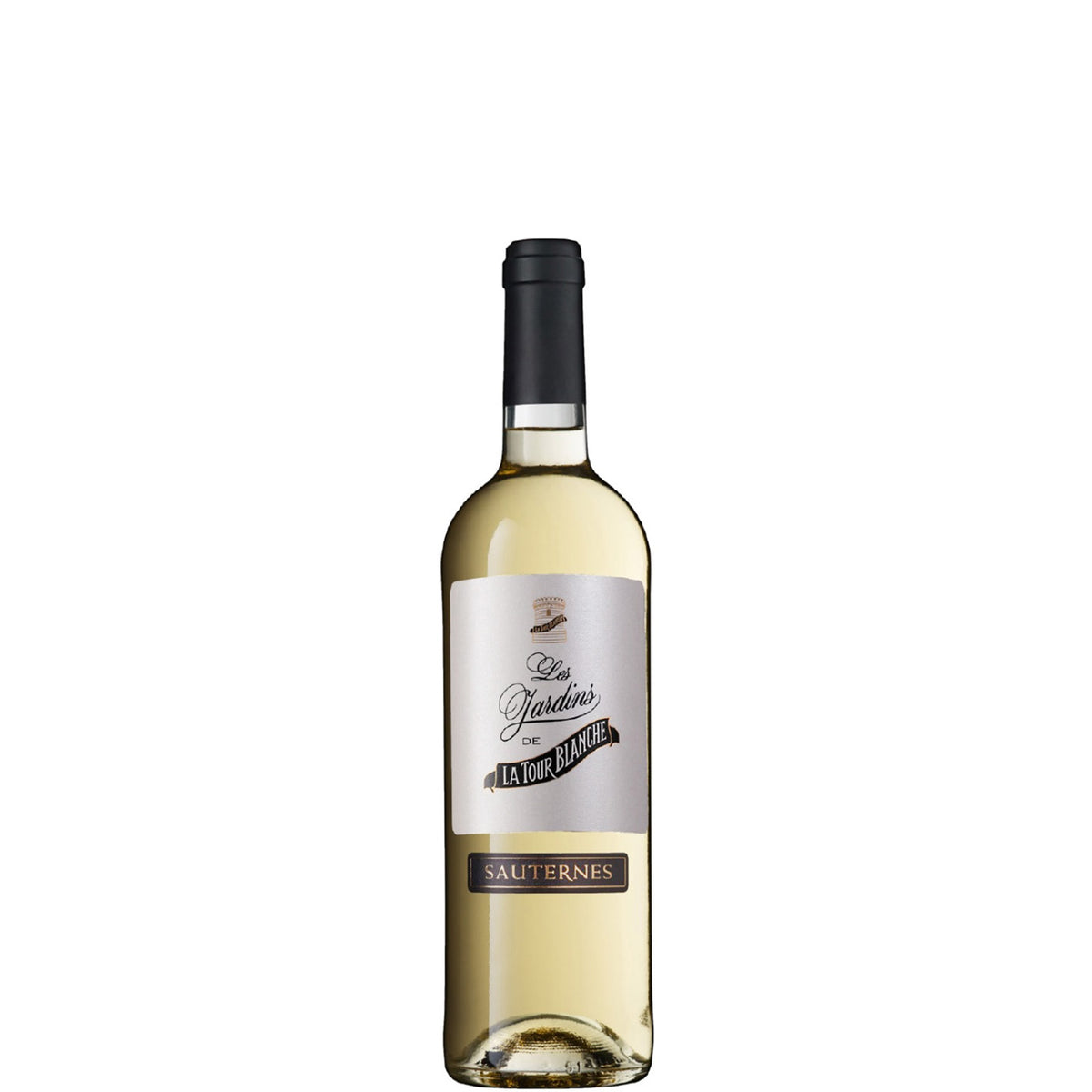
Château La Tour Blanche, Les Jardins De La Tour Blanche Sauternes, 2020 - Half-bottle
Château La Tour Blanche, Les Jardins De La Tour Blanche Sauternes, 2020 - Half-bottle
- 37.5cl
- 13.5%
- Dessert
- Semillon, Sauvignon, Muscadelle
Couldn't load pickup availability

Optimal drinking window: Now - 2035
Les Jardins de La Tour Blanche is the second wine of the Sauternes estate that also happens to be one of France's great wine schools — a Premier Cru Classé in 1855 that trains the next generation of winemakers while quietly producing some of the most reliably structured sweet whites in the appellation. This 2020 is made predominantly from Sémillon, with Sauvignon Blanc adding lift and freshness, and carries all the hallmarks of a vintage that delivered concentration without the oppressive heat of some of its neighbours.
It pours a warm golden amber, with the viscous, unhurried quality you want from a Sauternes, and the palate offers candied citrus peel, dried apricot, and a honeyed richness that never tips into cloying. The half-bottle format is a smart choice — perfectly portioned for two with a cheese course or a slice of foie gras.
In 2026, Les Jardins is in a pleasingly open window — the botrytis richness is integrated and the fruit is vivid and expressive. Over the next two to three years, the citrus freshness will begin to settle and the wine will take on more honeyed, waxy complexity. By 2029 or 2030, expect the dried fruit and marmalade notes to dominate over the fresher elements.
Tasting Notes
AppearanceDeep golden amber with a warm, viscous bead and good clarity in the glass.
NoseCandied orange peel and dried apricot lead, with a layer of acacia honey and a faint waft of saffron. There is a freshness here — green mango and preserved lemon — that keeps it from feeling heavy or overworked.
PalateMedium-full bodied with good sugar-acid balance, the sweetness shaped by a clean citrus backbone that lifts the richer honeyed notes. Stone fruit, warm brioche, and a subtle waxy texture from the botrytis work together without any one element dominating.
FinishPleasingly long with a bright grapefruit note cutting through the sweetness right at the end.
Overall impressionA generous, well-proportioned Sauternes that drinks beautifully young but has the structure to develop further over the next five or six years.
Food Pairings
In the Sauternais, the classic pairing is Roquefort — the salt and funk of the cheese against the wine's sweetness is one of French gastronomy's great tricks. Foie gras, particularly prepared as a terrine with a touch of Sauternes in the recipe itself, is almost mandatory at any serious Bordelais table. Locally, you might also find it alongside langoustines with a saffron cream, or simply poured cold as an aperitif with slices of melon in summer. For dessert, tarte Tatin or a simple crème brûlée works well, provided the dish is not sweeter than the wine.
We think this wine would go well with
Serve well chilled, between 8 and 10°C — pulled from the fridge 15 minutes before pouring. No need to decant. A tulip-shaped white wine glass or a small Burgundy-style bowl works best, concentrating the aromas without letting them dissipate. The half-bottle format means you will likely finish it in one sitting, which is exactly as it should be.
The vineyards at La Tour Blanche sit on the clay-limestone slopes of Bommes, one of the five communes that make up the Sauternes appellation. The soils here are heavier than the gravel-dominated sites closer to the Garonne, which tends to produce wines of slightly more weight and structure. The estate's position encourages the morning mists that rise from the Ciron river each autumn, creating the humidity that allows Botrytis cinerea — noble rot — to develop across the grapes, concentrating sugars and building the wine's characteristic richness.
Sauternes is one of the world's most iconic sweet wine appellations, sitting within the southern Graves in Bordeaux and covering five communes: Sauternes, Bommes, Fargues, Preignac, and Barsac (the last of which also has its own appellation). The wines must be made from botrytis-affected grapes — principally Sémillon, with Sauvignon Blanc and Muscadelle permitted — and the best estates harvest in multiple passes through the vineyard, picking only the most concentrated berries each time. Yields are tiny and the work is intensive, which is why even entry-level Sauternes requires a degree of investment. It sits apart from its sweeter neighbour Loupiac or Monbazillac in terms of both prestige and the strict requirement for natural botrytisation.
The 2020 Bordeaux vintage began with one of the wettest winters on record, followed by a scorching summer that nearly broke temperature records across the region. What could have been a disaster became salvation: those deep winter water reserves carried the vines through the heat, while the dry conditions from July onwards concentrated flavours beautifully. The harvest started early and moved quickly, with most châteaux picking under ideal September skies.
We find 2020 Bordeaux surprisingly charming for such a hot year - the wines show ripe, generous fruit without the baked character you might expect. The Merlot-based Right Bank wines are particularly successful, displaying plush damson and blackberry flavours with enough freshness to keep them lively. Cabernet Sauvignon on the Left Bank delivers power and concentration, though some properties struggled more than others with the heat. Most 2020s are drinking beautifully now - this isn't a vintage that demands decades of patience, and we rather like that about it.
FAQs
What does Les Jardins de La Tour Blanche taste like?
Rich and honeyed, with candied orange peel, dried apricot, and a waxy botrytis texture, all balanced by a bright citrus freshness that keeps the sweetness from feeling heavy. Think elegant rather than syrupy.
When should I drink this wine?
It is drinking very well right now and will continue to do so until around 2032. The half-bottle format means it will evolve a touch faster than a full bottle, so if you want the fruit at its most vivid, open it in the next two or three years.
What food should I serve it with?
Roquefort or any strong blue cheese is the classic match. Foie gras terrine is hard to beat. It also works wonderfully with langoustines in a cream sauce, or simply poured cold alongside a ripe melon. For dessert, crème brûlée or tarte Tatin are both good calls, as long as neither is sweeter than the wine itself.
How should I serve it?
Chill it well — around 8 to 10°C — and pull it from the fridge about 15 minutes before you plan to pour. No decanting needed. A tulip-shaped white wine glass or a small bowl glass works best.
What is the relationship between Les Jardins and the main Château La Tour Blanche wine?
Les Jardins de La Tour Blanche is the second wine of the estate — made from younger vines or vats not selected for the grand vin. It offers the same winemaking philosophy and appellation character at a more accessible price point, and is generally intended for drinking earlier rather than extended cellaring.

OUR GROWERS
Château La Tour Blanche


What are you looking for tonight? Tell me the occasion, a grape, a region — or just try a suggestion below.
Your recommendations will appear here.
-
-
Speak to one of our Wine Gurus
Speak to a Wine GuruWith years of experience, our team can help you with all your wine buying and selling needs