

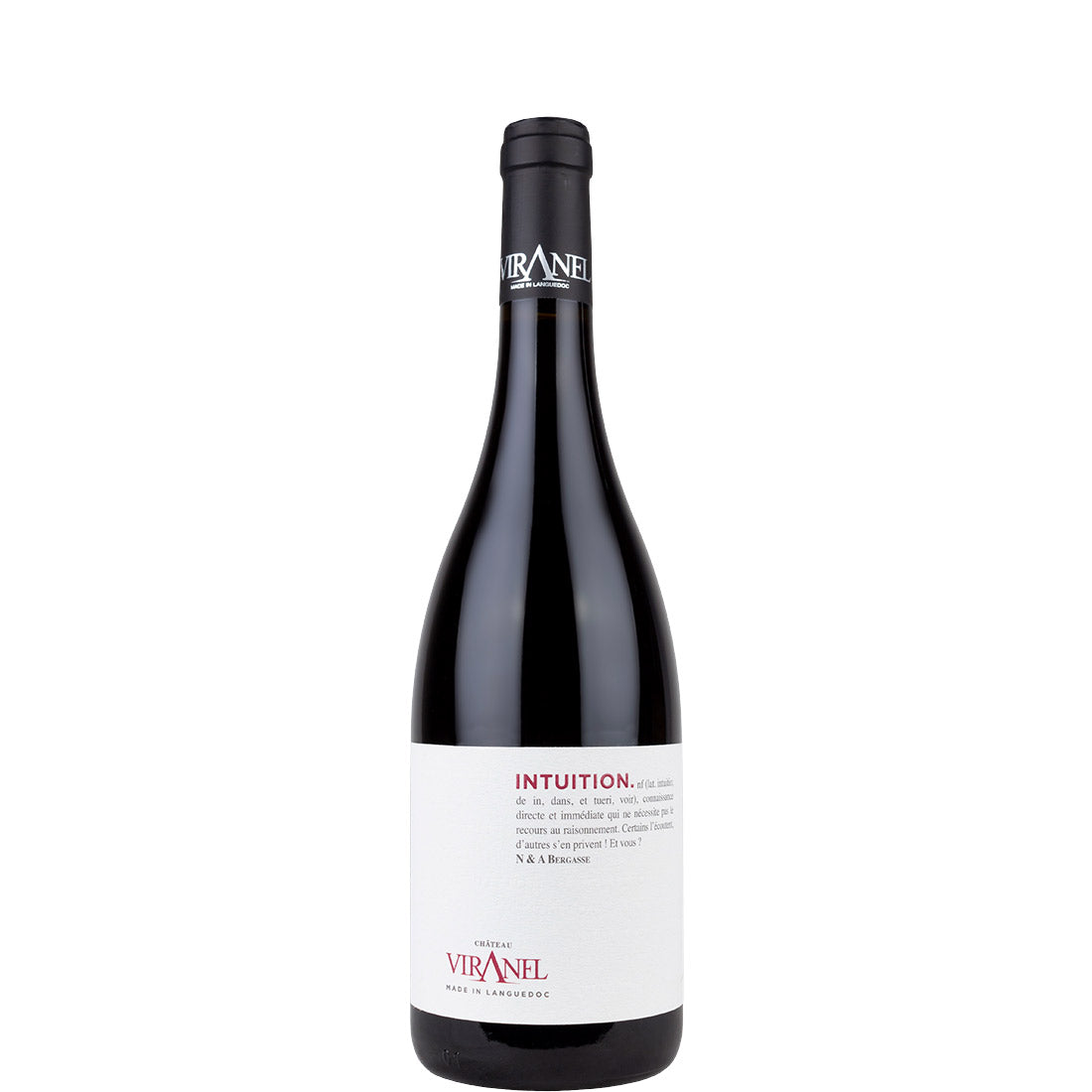
Château Viranel, Saint-Chinian Intuition Rouge, 2018
Château Viranel, Saint-Chinian Intuition Rouge, 2018
- 75cl
- 14.5%
- Red Still
- Syrah, Grenache, Mourvèdre
Couldn't load pickup availability

Optimal drinking window: Now - 2030
Saint-Chinian doesn't get the press it deserves, but Château Viranel is exactly the kind of producer that makes you wonder why. Intuition Rouge is made from old vines, some nudging 90 years of age, grown on south-facing limestone terraces in the Languedoc's schist-and-limestone heartland. That combination of ancient roots and poor, well-drained soils gives the wine a focus and energy you don't always find at this price point: vivid blackcurrant and griotte cherry, a lift of violet, and a streak of liquorice that keeps things interesting. The tannins are ripe and present without being a chore.
The 2018 vintage delivered warm, generous conditions across the south of France, and this wine wears that ripeness with confidence rather than excess. The family farm as close to organically as the realities of the vineyard allow, using no chemical fertilisers and reaching for treatments only when the harvest genuinely depends on it, which most years means not at all.
The 2018 is already in a generous, open phase and has been drinking comfortably since around 2021. The primary fruit is still very much in the driving seat, with the floral and liquorice elements adding interest rather than dominance. Over the next two to three years, you might expect the fruit to settle and integrate further, with the tannins becoming more seamless and the savoury, earthy quality of the old vines becoming more pronounced. We'd call it at peak between now and 2028.
What the critics say:
"There is no vintage or alcohol on the label – I'm guessing at the former by the background notes I was sent. Lovely fleshy nose with grilled top notes. Wholesome, dark fruit. The strength and plushness sitting in the structure as well as the fruit, tannins moulded into the fruit so completely that it's difficult to tell them apart. Glossy but with a brushed-steel and driftwood edges, so not losing its sense of place to winemaking. Cacao husks, damson, black cherry with more than a touch of fragrant woody herbs. On the finish, coffee and heat at the back of the throat. Complete and substantial and immensely satisfying."
Tasting Notes
AppearanceDeep ruby with a purple core that holds to a clean, bright rim.
NoseGenerous and lifted: blackcurrant and griotte cherry upfront, then violet, and behind that a dark thread of liquorice that ties it together. There's a freshness here that you might not expect from the warm 2018 vintage.
PalateFull-bodied but not heavy, with ripe tannins that grip without rasping. The fruit mirrors the nose, blackcurrant dominant, with a slight savouriness on the mid-palate that speaks to the old vines and the limestone beneath them. The acidity keeps everything in order.
FinishLong and clean, with the liquorice note returning and a faint mineral dryness on the close.
Overall impressionA wine punching well above its station, with the kind of focus that old vines on good limestone tend to produce.
Food Pairings
Around Saint-Chinian, this is the kind of wine that turns up alongside a slow-braised daube of beef, the meat softened for hours in red wine with olives and orange peel. Grilled lamb chops with herbes de Provence are another natural pairing, the wine's dark fruit and savouriness cutting through the fat cleanly. Local charcuterie, particularly saucisson sec from the Hérault, works well at a more casual pitch. In cooler months, a cassoulet from nearby Castelnaudary, heavy with duck confit and white beans, would be a fine match for the wine's grip and depth.
We think this wine would go well with
Serve at around 16-17°C, cool enough to keep the freshness alive but warm enough not to tighten the tannins. A 30-minute decant will open up the nose and soften the structure just enough if you're drinking it tonight. A large-bowled red wine glass, a standard Burgundy or southern Rhône shape, will give the aromatic lift room to develop without dissipating.
The Intuition Rouge vineyards sit on south-facing limestone terraces, a topography that maximises sunshine hours while the thin, rocky soils force vines to dig deep for water and nutrients. This stress, accumulated over 30 to 90 years of vine age, is precisely what concentrates flavour without stripping freshness. The altitude and exposure in this part of Saint-Chinian also bring cooler nights that preserve acidity and lift, keeping the wine from feeling heavy despite the warmth of the vintage.
Saint-Chinian sits in the western Languedoc, between the Hérault and the foothills of the Massif Central, and was granted its own AOC in 1982. It is a tale of two soils: schist in the north produces spicier, more mineral wines, while limestone in the south tends toward rounder, more fruit-forward styles with a characteristic freshness. The appellation permits Syrah, Grenache, Mourvèdre, Carignan, and Cinsault, typically blended. Compared to its neighbour Faugères, Saint-Chinian is perhaps less fashionable but offers arguably better value, with producers like Viranel quietly making a strong case for its quality.
FAQs
What does Intuition Rouge taste like?
Dark blackcurrant and griotte cherry are the lead characters, with violet florals, a thread of liquorice, and ripe tannins that have real grip without being aggressive. There's a freshness to it that comes from old vines on limestone, which keeps it from feeling heavy despite the warmth of the 2018 vintage.
When should I drink this wine?
It's drinking well right now and has been for a couple of years. We'd enjoy it any time until around 2030, with the sweet spot probably between now and 2028. After that the primary fruit will start to fade, though the structure should hold.
What food should I serve it with?
Grilled lamb with herbs, a slow-braised beef daube, or good charcuterie are all natural matches. It has enough grip to handle rich, fatty dishes and enough freshness not to overwhelm something simpler. A cassoulet would be a serious pairing.
How should I serve it?
Around 16-17°C is ideal. Give it 30 minutes in a decanter if you have time, and use a large-bowled red glass to let the aromatics develop. Served too warm and the alcohol starts to show; too cold and the tannins tighten.
Is it worth cellaring?
It's not a wine to lay down for a decade, but if you have bottles and want to let them settle further, you have comfortable runway until around 2028-2030. Buying it to drink in the next year or two is an equally sound plan.
Is Château Viranel organic?
Not certified, but they farm as close to organic as the site allows. No chemical fertilisers are used, and vineyard treatments are only applied when the harvest is genuinely under threat, which most years means none at all. It's a pragmatic, considered approach rather than a marketing position.

OUR GROWERS
Château Viranel


What are you looking for tonight? Tell me the occasion, a grape, a region — or just try a suggestion below.
Your recommendations will appear here.
-
-
Speak to one of our Wine Gurus
Speak to a Wine GuruWith years of experience, our team can help you with all your wine buying and selling needs