

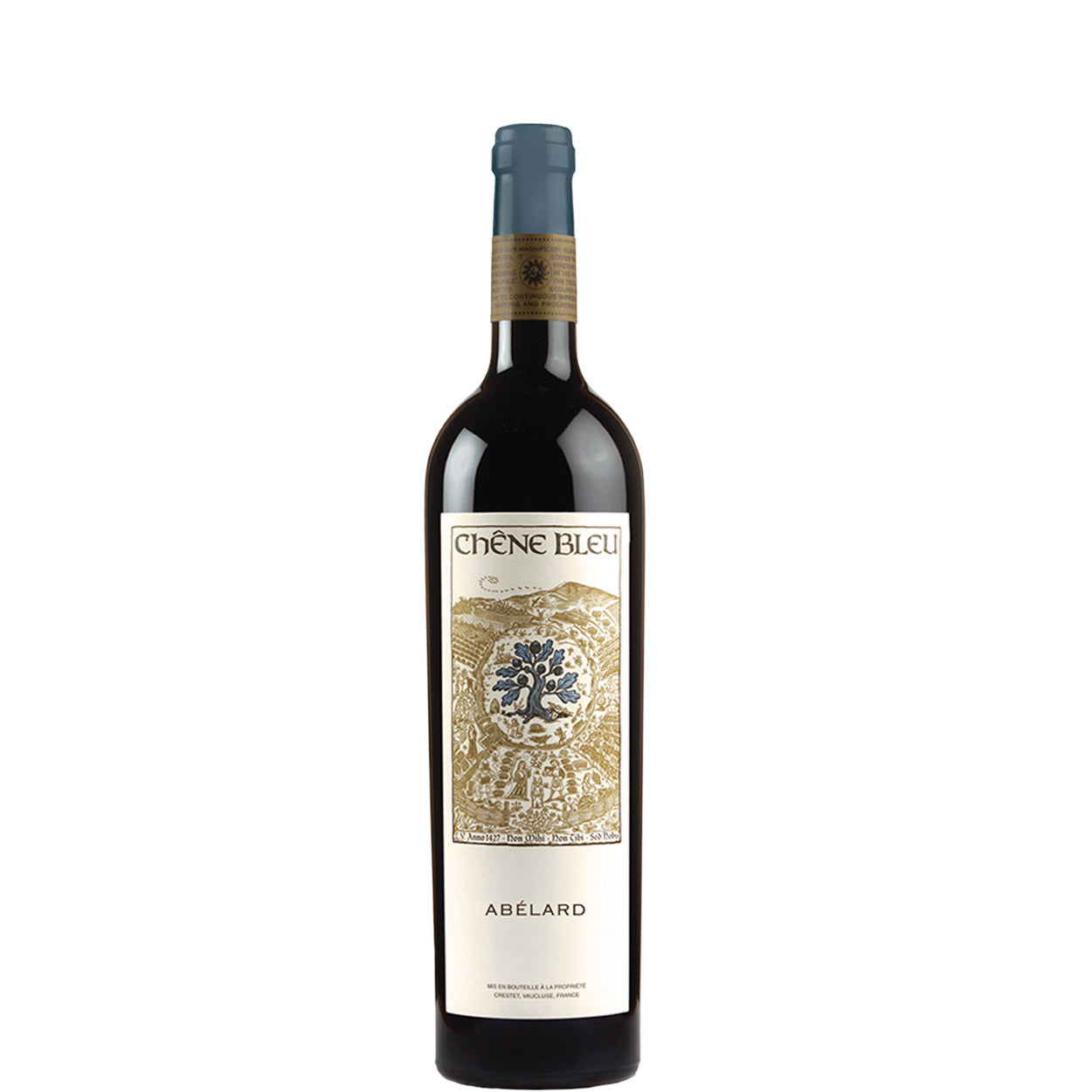
Chêne Bleu, Abélard, 2017
Chêne Bleu, Abélard, 2017
- 75cl
- 14.5%
- Red Still
- Grenache, Syrah
- Organic
- Biodynamic
Couldn't load pickup availability

Optimal drinking window: Now - 2035
Chêne Bleu is one of the most serious estates in the southern Rhône valley — an ancient priory set high in the Ventoux foothills, making wines that belong to no easy category. Abelard is their flagship red, a Syrah-led blend with Grenache and Mourvèdre that carries the altitude and the wild garrigue of its mountain vineyards.
The 2017 is a beautifully composed vintage here: the warm, dry summer concentrated the fruit without cooking it, and nine years on there is real poise between the dark berry richness and the stony, almost graphitic spine that runs through everything Chêne Bleu does at this level.
This is not a wine that needs food to justify it, though it will reward a serious table. The tannins are firm and fine-grained, the finish is long and mineral, and there is still enough primary energy to suggest it has a good decade ahead of it.
In 2026 the 2017 is in a comfortable, open drinking window — the primary fruit has softened and integrated, and the secondary savoury and mineral qualities are well established. Over the next three to five years, the garrigue and graphite notes will become increasingly dominant as the fruit recedes, adding complexity without losing freshness. Around 2030 to 2032 it is likely to hit its most nuanced and complete expression.
Tasting Notes
AppearanceDeep, inky ruby with a garnet rim and good clarity — nine years in and still looking youthful.
NoseDark cherry and dried violet open first, then the garrigue arrives — thyme, crushed rosemary, a breath of wild lavender. Underneath it all, there is graphite and cool, stony mineral depth that marks this out from anything grown closer to sea level.
PalateFull-bodied but not heavy, with fine-grained tannins that frame rather than dominate. The fruit is dark and concentrated — blackberry, Morello cherry, a touch of smoked meat from the Mourvèdre — but the acidity is bright and the wine has real tension through the mid-palate. It is mountain fruit, and you can feel the altitude.
FinishLong and mineral, with dried herb and iron-flecked persistence that lingers well beyond the last sip.
Overall impressionA wine that earns its seriousness without making you work for the pleasure.
Food Pairings
In Provence and the Ventoux foothills, this weight and character of red would typically meet a slow-braised daube de boeuf — beef cooked with olives, orange peel, and a generous pour of the local wine itself. Grilled lamb chops rubbed with herbes de Provence are the simpler, equally satisfying option. A leg of lamb roasted with garlic and rosemary, rested properly, would be hard to argue with. Locally, you might also see this alongside a platter of aged Banon cheese or a charcuterie board of saucisson d'Arles and cured meats from the Vaucluse.
We think this wine would go well with
Serve at 16-17°C — cool enough to let the mineral character come through, but not so cold that the tannins tighten up. Decant for at least an hour; the wine is accessible without it, but opens considerably with air, the dark fruit softening and the garrigue becoming more expressive. A large-bowled Syrah or Rhône-style glass works well, giving the wine room to breathe and concentrating the aromatic complexity.
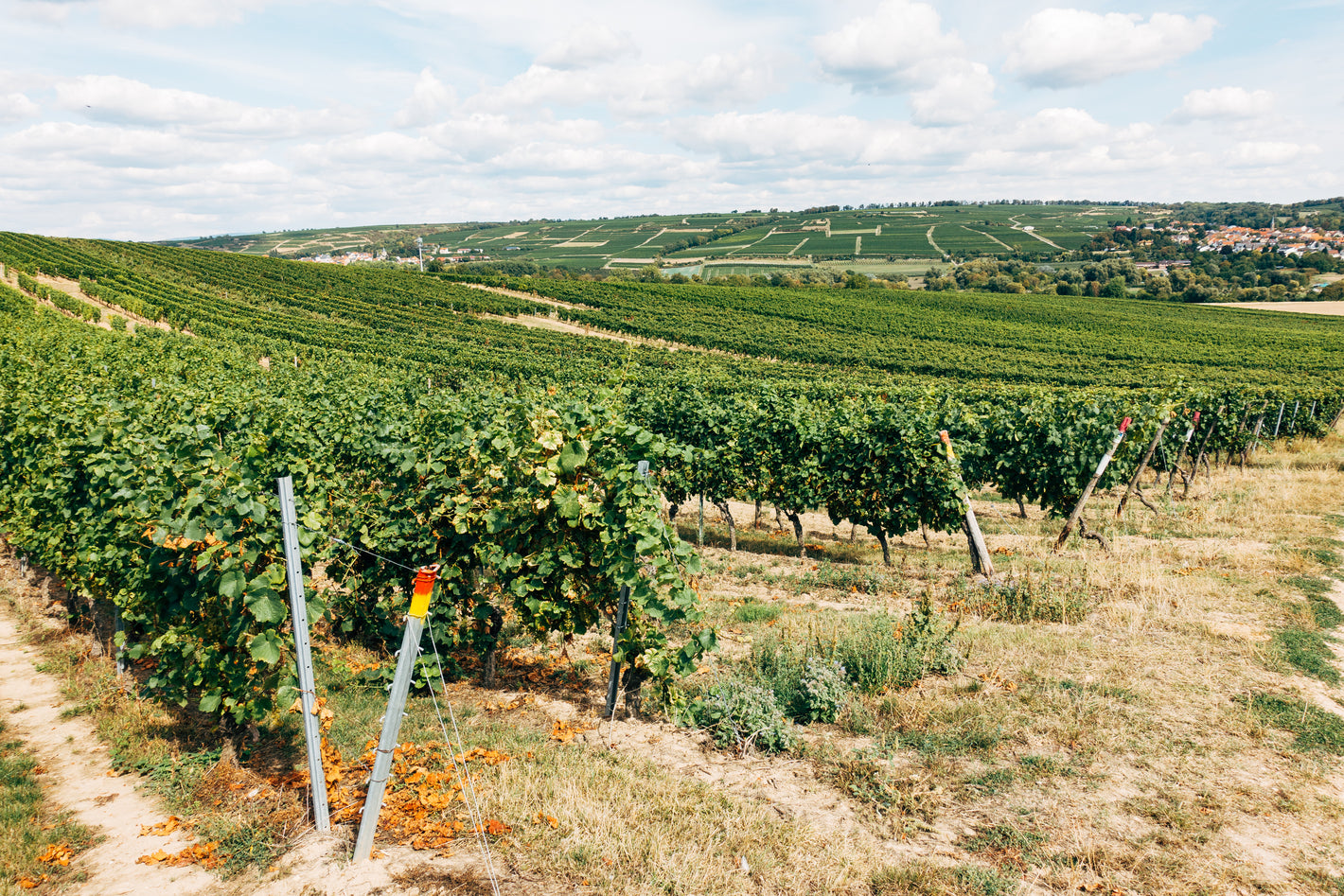
The vineyards sit at between 500 and 600 metres altitude on the northern slopes of Mont Ventoux, which alone sets Chêne Bleu apart from the hot valley floor. The soils are a mix of Jurassic limestone, clay, and broken blue stone — the chêne bleu, or blue oak, of the estate's name referring to the holm oaks that populate this rocky, wild landscape. The altitude brings genuine diurnal temperature variation, preserving acidity and freshness that most southern Rhône producers simply cannot access. The result is a cooler-climate precision that sits oddly and brilliantly in what most people assume is a wines-of-sun-and-weight region.
Chêne Bleu sits within the Ventoux AOC, a large and diverse appellation covering the slopes and plains around Mont Ventoux in the southern Rhône. Rules permit red blends from Grenache, Syrah, Mourvèdre, and Cinsault among others, but the appellation encompasses enormous stylistic variation — from light, commercial fruit-driven wines at lower altitudes to the more serious mountain-grown efforts like Chêne Bleu's. Compared to its neighbours in Châteauneuf-du-Pape or Gigondas, Ventoux is less prestigious on paper but increasingly respected for the freshness and value its higher elevations can deliver. Chêne Bleu effectively trades on quality rather than appellation fame.
Southern France in 2017 was shaped by one defining fact: a brutal spring frost that tore through vineyards across the Languedoc and Roussillon in late April, cutting yields sharply in many appellations. What followed was a hot, dry summer that accelerated ripening and pushed harvest dates earlier than usual. The upside of that heat was concentration and ripe phenolics; the risk, in less carefully managed sites, was alcohol running away from balance. Grenache, Syrah, and Carignan all benefited from the sun, though producers who picked early and kept freshness in the glass made the better wines.
The wines that emerged tend to be full-bodied and fruit-forward, with a warmth and immediacy that makes them genuinely satisfying to drink now rather than in ten years. This is not a vintage that rewards waiting indefinitely. Most reds are at or near their peak, and we would be pulling corks on the mid-range bottles without hesitation. The better structured Syrah-dominated wines still have a few years in them, but broadly speaking, 2017 Southern France is a drink-now vintage, and a very enjoyable one at that.
FAQs
What does Abelard taste like?
Dark cherry and dried violet up front, then garrigue — thyme, rosemary, wild lavender — and a cool, stony mineral depth running underneath. The tannins are firm but fine-grained, and the finish is long with an iron and herb persistence. It is Syrah-led but the blend gives it real complexity.
When should I drink the 2017?
It is drinking well now and has been since around 2022. We would be happy opening a bottle tonight, but it has enough structure and fruit to hold comfortably until 2035. Around 2030 to 2032 is likely to be the sweet spot if you can wait.
What food should I serve with it?
Slow-braised lamb or beef is the obvious match — a daube, a shoulder roasted with garlic and rosemary, or simply good lamb chops off a hot grill. Aged hard cheeses and cured meats from the region also work brilliantly. It is a wine built for the table.
Do I need to decant it?
Yes, and generously. At least an hour in a decanter makes a real difference — the fruit softens, the garrigue opens up, and the whole wine becomes more expressive. If you are pouring straight from the bottle, give it thirty minutes at minimum.
Is Chêne Bleu a well-known producer?
Not in a household-name sense, but amongst serious wine buyers they are very well regarded. Xavier and Nicole Rolet set out to make mountain wines from the Ventoux foothills that could compete with far more famous southern Rhône appellations, and by most measures they have succeeded. The wines tend to fly under the radar relative to their quality.
Is this wine worth cellaring?
Yes, though it is already giving a lot of pleasure. If you have the patience and the storage, 2030 to 2032 is likely to be the most rewarding window. The structure is there to support ageing; the question is whether the fruit will outlast the tannins, and at this altitude we are confident it will.

Explore related wines


What are you looking for tonight? Tell me the occasion, a grape, a region — or just try a suggestion below.
Your recommendations will appear here.
-
-
Speak to one of our Wine Gurus
Speak to a Wine GuruWith years of experience, our team can help you with all your wine buying and selling needs