

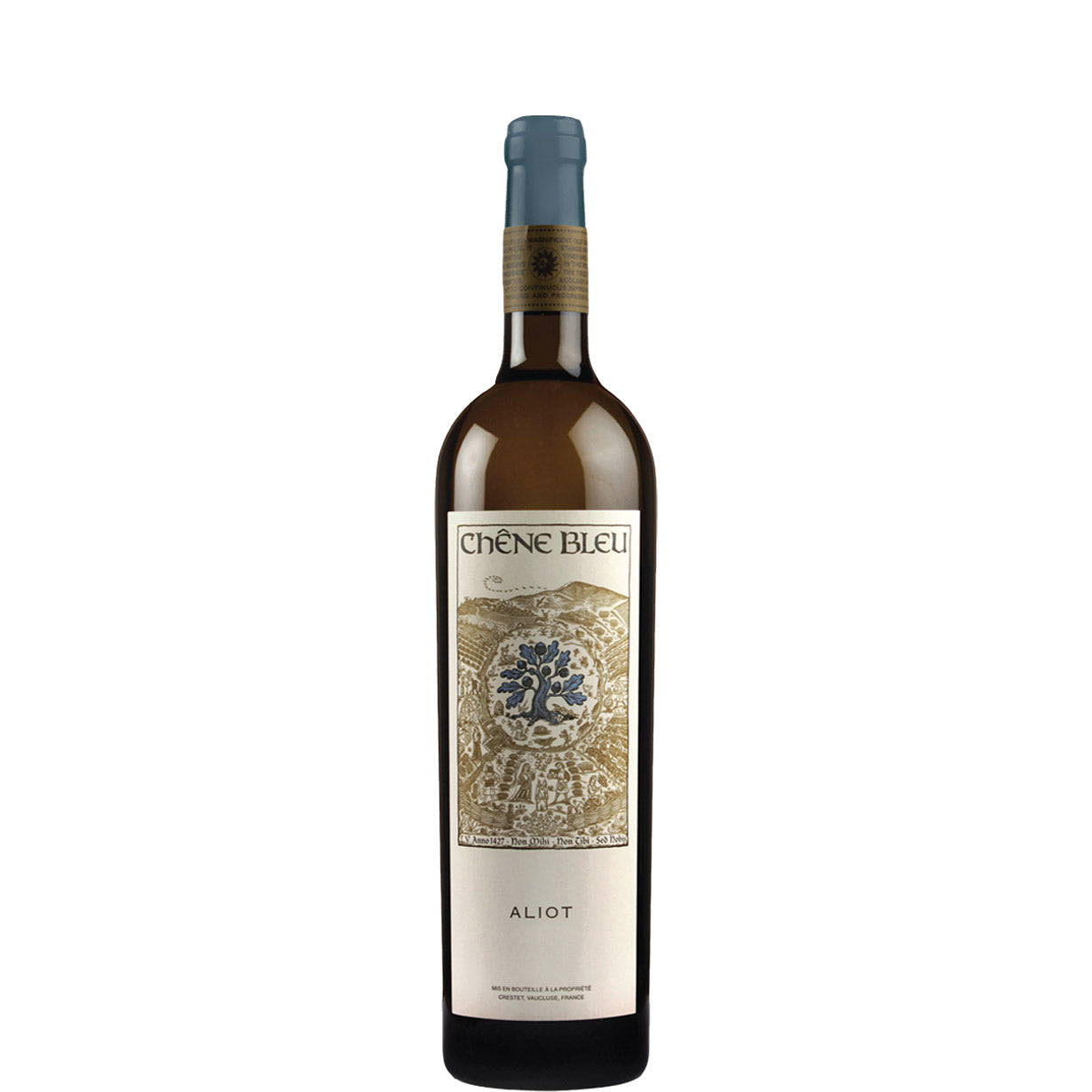
Chêne Bleu, Aliot Blanc, 2022
Chêne Bleu, Aliot Blanc, 2022
- 75cl
- 13.5%
- White Still
- Roussanne, Viognier, Grenache Blanc
- Organic
- Biodynamic
Couldn't load pickup availability

Optimal drinking window: 2026 - 2032
Chêne Bleu sits high in the Dentelles de Montmirail, above the Rhône Valley in Vaucluse, at an altitude that gives their wines a freshness you simply do not expect from this corner of southern France. Aliot Blanc is a blend led by Roussanne with Viognier and Grenache Blanc, vinified with real care to preserve the vineyard's natural tension. The 2022 is rich and textured without ever feeling heavy, the warmth of the vintage giving flesh to the mid-palate while the elevation keeps the acidity honest.
This is a white for people who think serious southern French whites are an oxymoron. Roasted white stone fruit, herbs from the garrigue, and a saline, almost stony finish that lingers longer than you expect. Drink it now with something substantial, or give it another year or two and watch it find another gear.
Right now the 2022 is in a generous, open phase where the fruit is expressive and the texture appealing without requiring any patience from the drinker. Over the next two to three years the Roussanne will begin to knit more tightly with the oak influence, and a waxy, lanolin complexity will start to emerge that makes these wines so interesting at four or five years old. By around 2029 it should be at its most complete, with the primary fruit integrating into something richer and more savoury.
Tasting Notes
AppearancePale gold with a faint green edge, clear and bright in the glass.
NoseWhite peach and apricot skin lead, with dried herbs and a warmth that recalls sun-baked limestone. There is a floral lift from the Viognier that keeps it from feeling heavy, and a faint lees-derived breadiness underneath.
PalateFuller than the nose suggests, with a waxy, textured mid-palate from the Roussanne and a freshness that snaps back on the finish. Flavours of fennel, warm stone, and ripe pear, with real grip and direction. The acidity is not showy but it is there, holding everything together.
FinishLong, saline, and stony, with a herbal echo that confirms exactly where this wine was grown.
Overall impressionA white that earns its weight, structured enough to age but giving generously right now.
Food Pairings
In this corner of Vaucluse, you would find this on the table alongside a daube of lamb with olives and orange peel, the rich braise perfectly matched to the wine's texture and herbal edge. Grilled daurade with Provençal vegetables and a drizzle of good olive oil is a natural partner, as is a spread of anchoïade with crudités before a long Sunday lunch. A generous plateau of local goat's cheeses, from fresh chèvre to aged Banon, works beautifully with the mineral acidity here. Even a simple tapenade on good bread and a glass of this on a warm evening in the Luberon would be hard to improve upon.
We think this wine would go well with
Serve at around 12-13°C, cool enough to keep the acidity fresh but not so cold that the texture closes up. This does not need decanting, but give it ten minutes in the glass and it will open up considerably. A wider-bowled white wine glass works well here, something with enough volume to let the aromatic side of the Viognier breathe without losing the precision.
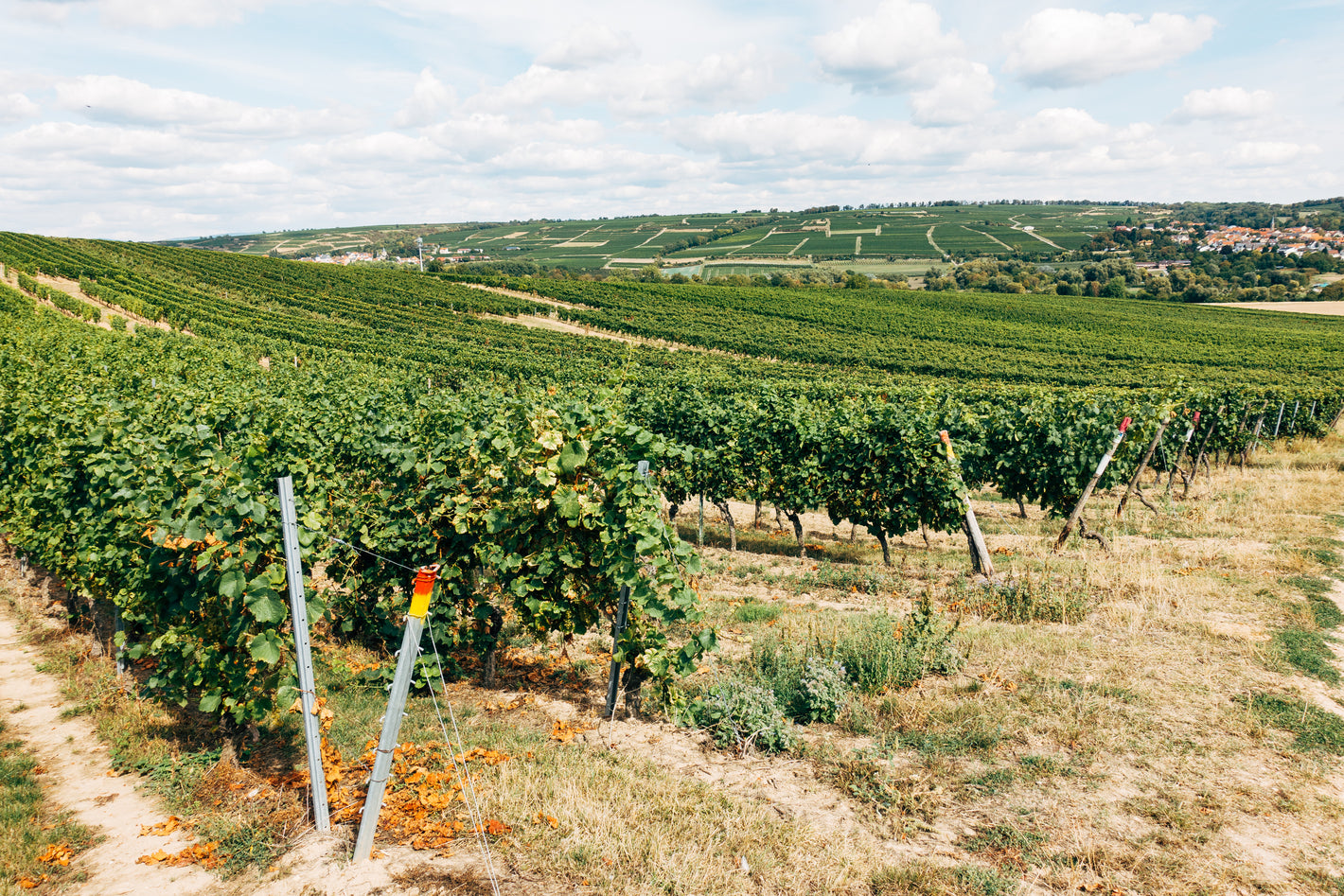
The vineyards at Chêne Bleu sit at around 500 metres in the rocky foothills of the Dentelles de Montmirail, well above the warm valley floor. Soils are a mix of limestone scree and clay, providing both drainage and enough water retention to keep vines calm through the hot Provençal summer. The altitude translates directly into cooler nights, longer hang time, and the kind of natural acidity that low-altitude southern French whites so often lack. The Mistral wind also plays its part, keeping disease pressure low and concentrating flavour in the fruit.
Chêne Bleu's wines are released under the IGP Méditerranée designation, which is effectively a choice rather than a limitation. The broader Côtes du Rhône appellation covers this area, but IGP status gives producers the freedom to work with grape varieties and techniques outside the AC rules, and Chêne Bleu uses that freedom deliberately. The IGP Méditerranée covers a vast swathe of southern France and carries less prestige than the named Rhône appellations on paper, but in practice some of the most interesting wines in the region now sit under this umbrella.
The 2022 growing season across Southern France was defined by heat and drought — and not in a gentle, sun-drenched way. A succession of heatwaves through the summer pushed temperatures well beyond seasonal norms, and rainfall was scarce across the Languedoc, Roussillon, and the Rhône's southern reaches. Yields were down almost everywhere, but the vines that managed the stress well — older bush vines with deep roots, growers who keep their soils alive — produced concentrated, ripe fruit with good natural structure. Harvest came early, and those who picked at the right moment were rewarded.
What ended up in the bottle is genuinely exciting. Grenache is the star — giving rich, sun-warmed fruit that doesn't tip into jamminess, with real grip underneath. Carignan and Mourvèdre followed suit, and the whites, particularly those from higher-altitude sites in the Languedoc, held onto more freshness than the season might suggest. These are wines built to last, but many are already drinking well now, with the more structured reds worth holding until 2027 or beyond.
FAQs
What does Aliot Blanc taste like?
Think white peach, apricot skin, and warm stone with a herbal, garrigue-tinged edge from the southern French hillside it grows on. The texture is rich and waxy from the Roussanne, but there is real mineral tension on the finish that stops it from feeling heavy.
When is the best time to drink the 2022?
It is drinking well right now and will continue to do so until around 2032. If anything, another year or two in the cellar will help the wine find a secondary, more savoury complexity, but there is no reason to wait if you have a good meal to match it with tonight.
What food should I pair this with?
This is a white that can handle rich dishes. Roast chicken with herbs from the Provençal countryside, grilled fish with olive oil and capers, lamb dishes with Mediterranean flavours, or a generous cheese course with aged goat's cheese all work very well. It is also good enough to drink on its own.
How should I serve it?
Serve at around 12-13°C. Too cold and the texture will close up; too warm and you lose the freshness that makes it interesting. No need to decant, but give it ten minutes in a wide-bowled glass before you judge it.
Is Chêne Bleu worth the price?
Chêne Bleu makes wine at an altitude and with a precision that is genuinely unusual for southern France, and the prices reflect that ambition. If you are comparing it to mainstream Côtes du Rhône, it looks expensive. If you are comparing it to serious white Burgundy or white Hermitage of similar quality, it looks rather good value.
What grapes go into Aliot Blanc?
The blend is led by Roussanne, which gives the wine its texture and age-worthiness, with Viognier adding floral lift and Grenache Blanc contributing freshness and weight. The proportions vary slightly vintage to vintage depending on what the vineyard gives them.

Explore related wines


What are you looking for tonight? Tell me the occasion, a grape, a region — or just try a suggestion below.
Your recommendations will appear here.
-
-
Speak to one of our Wine Gurus
Speak to a Wine GuruWith years of experience, our team can help you with all your wine buying and selling needs