

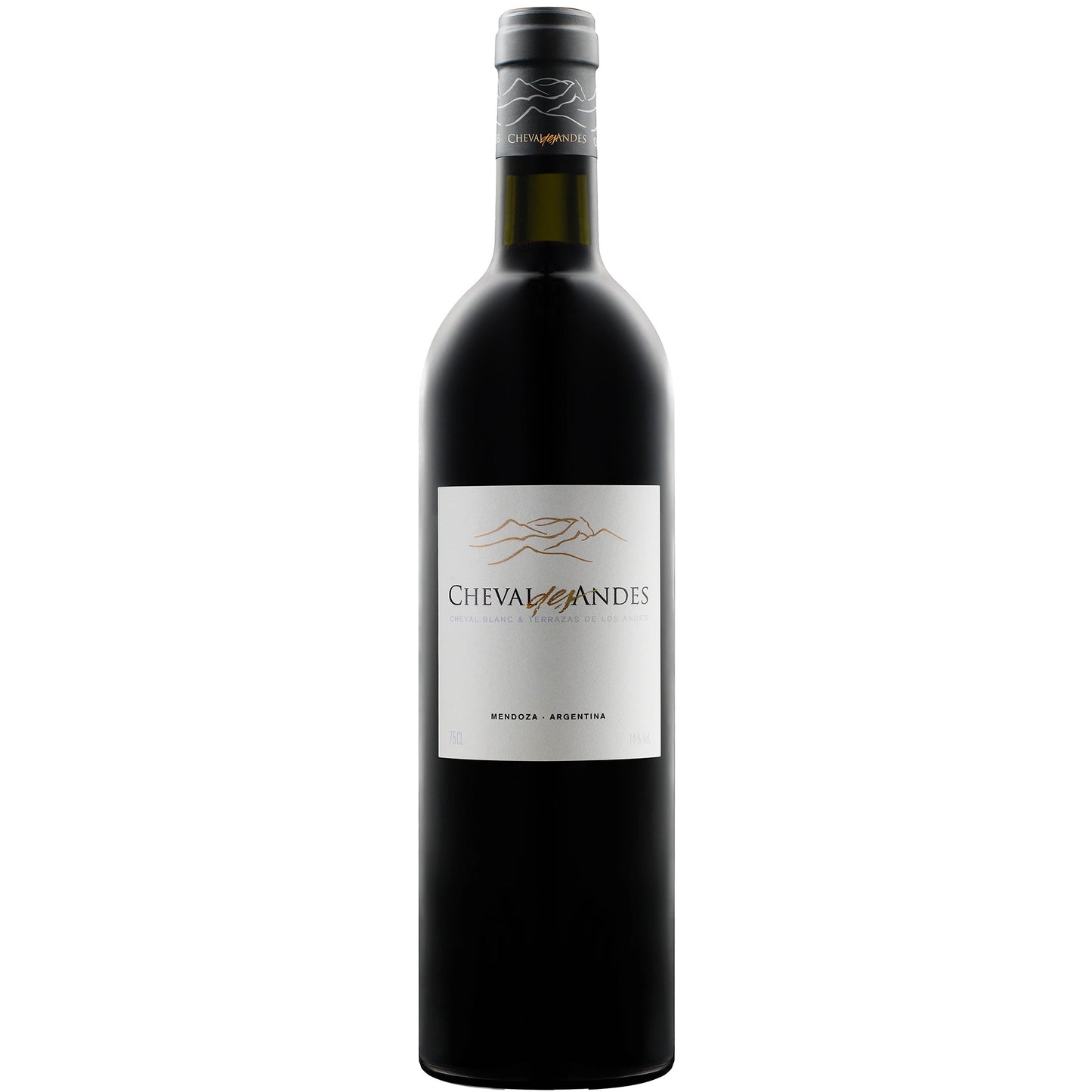
Cheval Des Andes, 2023 - Magnum
Cheval Des Andes, 2023 - Magnum
- 150cl
- 14%
- Red Still
- Cabernet Sauvignon, Malbec, Petit Verdot
Couldn't load pickup availability

Optimal drinking window: 2028 - 2048
Est. delivery in 2027
Cheval des Andes is the result of one of wine's great intercontinental handshakes: Château Cheval Blanc from St-Émilion and Terrazas de los Andes joining forces in Mendoza to produce something that feels neither purely Argentine nor purely Bordelais, but genuinely its own thing. The blend leans on old-vine Malbec from Luján de Cuyo, with Cabernet Sauvignon lending structure and spine.
In magnum, the 2023 has the best possible start in life — slower oxygen exchange, more even development, and that extra measure of patience built in from the moment it was bottled.
What the critics say:
"This vintage shows good precision as it zeroes in on balance and complexity with a Bordeaux-like sensibilty. Excellent complexity on the nose, showing currants, paprika, cedary blackberries, tobacco, grilled herbs and touches of cocoa powder and roasted sweet spices. Round and more effortless this year, with a positively fluid, precise mouth-feel, Medium body round off by silky, sweet tannins. Lightly creamy at the end but really integrated and elegant, with a long, supple finish. A blend of 57% cabernet sauvignon, 40% malbec and 3% petit verdot. Already approachable, but can hold for a decade, if not more."
"Deliciously dark fruit, concentrated and powerful but with the lightest of touches through the palate. There is creamy blackberry and cassis, leafy, red roses, pulses of air and lift. Pierre Polbos winemaker."
"This vintage shows good precision as it zeroes in on balance and complexity with a Bordeaux-like sensibilty. Excellent complexity on the nose, showing currants, paprika, cedary blackberries, tobacco, grilled herbs and touches of cocoa powder and roasted sweet spices. Round and more effortless this year, with a positively fluid, precise mouth-feel, Medium body round off by silky, sweet tannins. Lightly creamy at the end but really integrated and elegant, with a long, supple finish. A blend of 57% cabernet sauvignon, 40% malbec and 3% petit verdot. Already approachable, but can hold for a decade, if not more."
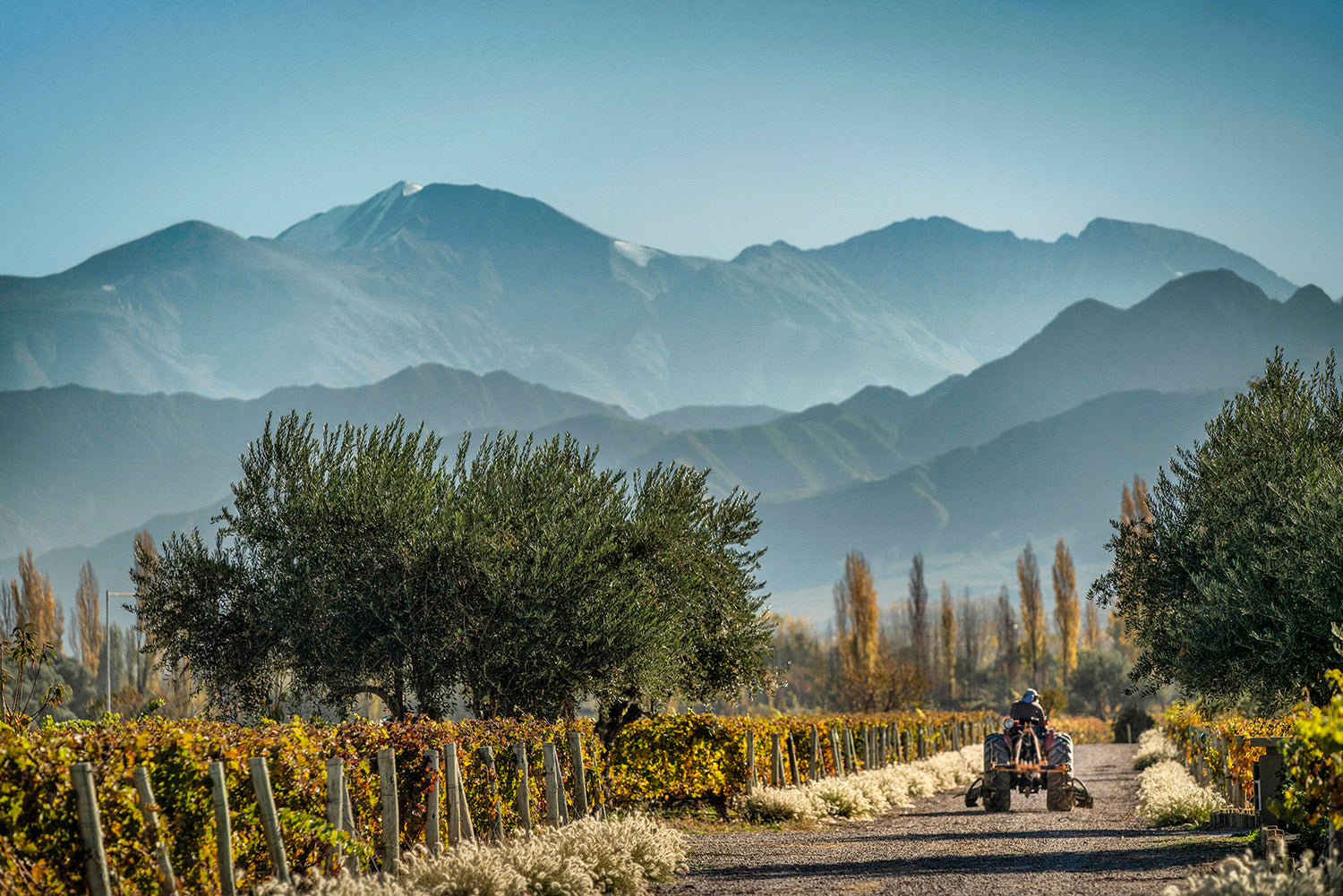
The vineyards sit in Luján de Cuyo at elevations between 950 and 1,100 metres above sea level, where the diurnal temperature range can exceed 20°C between day and night. This dramatic swing preserves natural acidity and aromatic intensity in the grapes whilst allowing full phenolic ripeness. Soils are predominantly stony alluvial deposits over clay, with good drainage that stresses the vines beneficially and concentrates flavour. The Andean foothills act as a rain shadow, delivering an arid, high-UV growing environment that is practically made for Malbec.
Luján de Cuyo was Argentina's first designated wine appellation, recognised in 1993, and remains the spiritual home of high-altitude Malbec in Mendoza. The DO covers vineyards between roughly 900 and 1,200 metres, with strict rules on minimum vine age and yield limits. Compared to Maipú to the east, Luján de Cuyo sits closer to the Andes, giving cooler nights, stonier soils, and wines of greater structural tension. It is the appellation most often cited when Argentinian wine producers want to signal seriousness.
The 2023 vintage in Mendoza arrived with its own particular rhythm. Spring brought adequate rainfall to replenish the soils after several drier years, though producers had to stay alert during flowering to manage the increased humidity. Summer unfolded with the kind of temperature swings that make Mendoza tick: hot days balanced by those crucial cool nights that flow down from the Andes, preserving acidity whilst allowing phenolic ripening to proceed at its own pace.
What emerged from the cellars shows Mendoza at its most expressive. The Malbecs display that wonderful combination of concentrated dark fruit and mineral backbone that comes when the vines have enough water early on but must work a bit harder later in the season. Cabernet Sauvignon benefited particularly well from the conditions, producing wines with structure and depth that should reward patience. Most 2023s are drinking beautifully now, offering immediate pleasure, though the better examples will happily cellar until 2035 or beyond.
OUR GROWERS
Cheval des Andes
Explore related wines


-
-
Speak to one of our Wine Gurus
Speak to a Wine GuruWith years of experience, our team can help you with all your wine buying and selling needs