

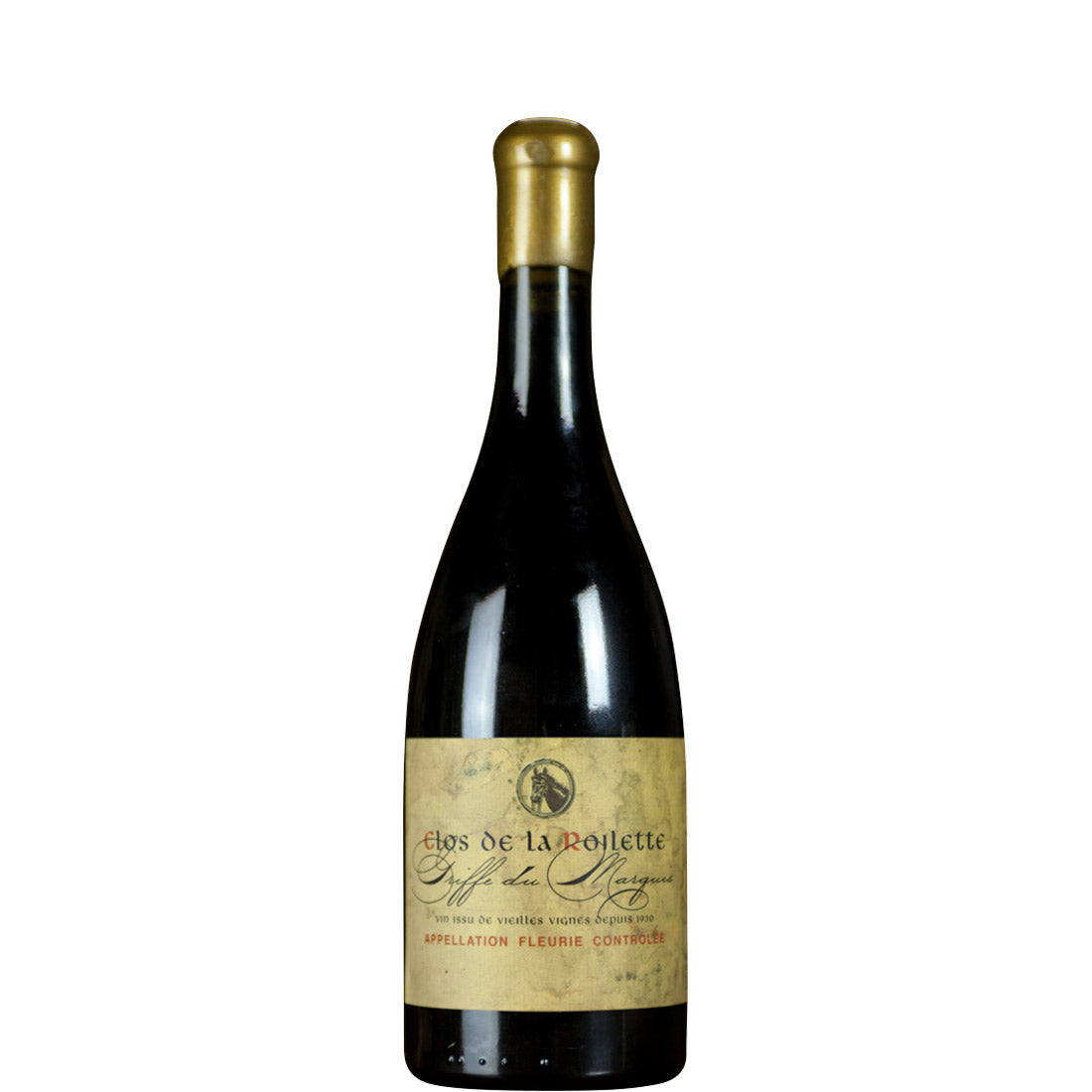
Clos De La Roilette Fleurie Griffe Du Marquis, Domaine Coudert, 2020
Clos De La Roilette Fleurie Griffe Du Marquis, Domaine Coudert, 2020
- 75cl
- 13%
- Red Still
- Gamay
Couldn't load pickup availability

Optimal drinking window: Now - 2030
Clos de la Roilette is one of Fleurie's most celebrated single vineyards, and Domaine Coudert's Griffe du Marquis bottling is the estate's top selection from it: old vines, lower yields, and a little more serious intent than the standard cuvée. Fleurie has a reputation for prettiness — the 'queen of Beaujolais', as the cliché goes — and this doesn't disappoint on that front, but there's more going on here than floral charm. The 2020 vintage gave Gamay rich, concentrated fruit with natural energy, and Coudert has captured both.
Expect vivid red fruit, violet, and a fine-boned mineral backbone from the granite soils that define this part of the cru. It's not heavy, not extracted — it has the kind of silky precision that makes great Beaujolais so compulsively drinkable.
The 2020 is drinking very well now, with its primary fruit at its most vivid and expressive. Over the next two to three years, the red fruit will begin to take on a slightly more savoury, earthy dimension — dried cherry, a hint of leather — which suits the wine's character rather well. By 2028 or so it will be approaching its plateau, where fruit and secondary complexity are in balance.
What the critics say:
"Bottled in January. A fine even mid purple with a beautifully poised bouquet that promises everything, some darker berries in with the alpine strawberries. Smoothly sensual followed by more powerful tannins and a touch of chocolate. Not an every day wine. *5/5*"
Tasting Notes
AppearanceBright, clear ruby with a translucent, youthful rim.
NoseRaspberry, wild strawberry, and dried violet lead, with a subtle granite-like minerality underneath. A whisper of peony and a faint, appealing earthiness that hints at the old vine origins.
PalateSilky and medium-bodied, with juicy red fruit and a cool, stony freshness that keeps everything in check. The tannins are fine and almost imperceptible, and the acidity gives the wine its lift and shape rather than any obvious tartness.
FinishClean, persistent, and lightly spiced, with the minerality carrying through to the end.
Overall impressionA Fleurie that earns the cru's reputation without relying on it.
Food Pairings
In the Beaujolais, this kind of wine is poured without ceremony alongside charcuterie — rosette de Lyon, andouillette, a slab of country pâté — the fat of the meat meeting the wine's freshness in exactly the right way. Poulet de Bresse roasted simply with herbs is the local Sunday answer, and it's hard to argue. Slightly cooled and served with a board of aged Comté or Saint-Nectaire, it does something quite wonderful. The Lyonnais, just down the road, would reach for it with quenelles de brochet or a simple gratin dauphinois without a moment's hesitation.
We think this wine would go well with
Serve at around 14-15°C — cool enough to preserve the wine's freshness and lift, but not so cold that it closes up. No need to decant; just pour and enjoy, perhaps letting it breathe for ten minutes in the glass. A medium-bowled red glass works well, giving the floral aromatics room to open without overwhelming the wine's natural delicacy.
The Clos de la Roilette sits on the granite-rich hillsides that characterise the best sites in Fleurie, with decomposed granite and sandy soils that drain freely and force vines to dig deep. This gives the wines their characteristic lift and mineral tension — it's the geology that stops Gamay from becoming too plump or easy. The elevation and aspect provide good diurnal temperature variation, preserving the natural acidity that makes these wines age better than their reputation sometimes suggests.
Fleurie is one of the ten Beaujolais crus, sitting at the northern end of the appellation and widely considered among the most refined of the group. Unlike Moulin-à-Vent or Morgon, which can achieve a more Burgundian weight and structure, Fleurie is prized for elegance and aromatic precision — floral, fine-grained, with a silky texture that makes it effortlessly appealing young. The crus were granted their own appellations distinct from generic Beaujolais and Beaujolais-Villages, and Fleurie's granite terroir gives it a character genuinely distinct from its neighbours.
The 2020 vintage in Beaujolais tells the story of a season that started with promise and delivered handsomely. Spring arrived early and stayed dry, setting the vines up for healthy flowering, whilst summer brought enough warmth without the punishing heat that can strip Gamay of its trademark freshness. The harvest kicked off in late August under ideal conditions, with producers picking ripe, healthy fruit that had retained excellent natural acidity.
What landed in the cellars was textbook Beaujolais: vibrant, pure-fruited wines with that irresistible combination of juicy approachability and underlying structure. The Cru Beaujolais from 2020 show particular promise, displaying the mineral backbone that comes from a vintage where the vines didn't have to struggle through drought or diluting rains. These wines are drinking beautifully now, offering immediate pleasure whilst the better examples will reward patience until 2028. We find the village wines and Beaujolais-Villages especially charming this year, capturing everything we love about Gamay at its most exuberant.
FAQs
What does Griffe du Marquis taste like?
Vivid raspberry and wild strawberry with violet, a fine stony minerality from the granite soils, and a silky, juicy texture. It's precise and fresh rather than heavy, with a lightly spiced finish that lingers.
When is the best time to drink this wine?
It's drinking very well right now and will continue to do so until around 2030. The 2020 vintage has real concentration, so there's no rush, but this is a wine built for pleasure in the near term rather than extended cellaring.
What food works best with this Fleurie?
Charcuterie is the classic local answer — pâté, rosette, andouillette. Beyond that, roast chicken, grilled salmon, aged Comté, or a simple mushroom risotto all work brilliantly. Serve it slightly cooled and it becomes one of the most versatile reds on the table.
How should I serve it?
Around 14-15°C is the sweet spot. No decanting needed — just open it, let it breathe for ten minutes in the glass, and pour. A standard medium-bowled red wine glass does the job well.
Is this worth cellaring?
It's not a wine we'd hide away for a decade, but it will reward a few more years in a cool cellar. The fruit will deepen and take on more savoury complexity by 2027-2028. After 2030, we'd drink up.
How does Griffe du Marquis differ from Coudert's standard Clos de la Roilette?
Griffe du Marquis is the estate's top selection: older vines, lower yields, and a touch more concentration and depth. It's the same vineyard, but with a little more of everything — more intensity, more texture, more length. Worth the step up.

OUR GROWERS
Domaine Coudert
Explore related wines


What are you looking for tonight? Tell me the occasion, a grape, a region — or just try a suggestion below.
Your recommendations will appear here.
-
-
Speak to one of our Wine Gurus
Speak to a Wine GuruWith years of experience, our team can help you with all your wine buying and selling needs