

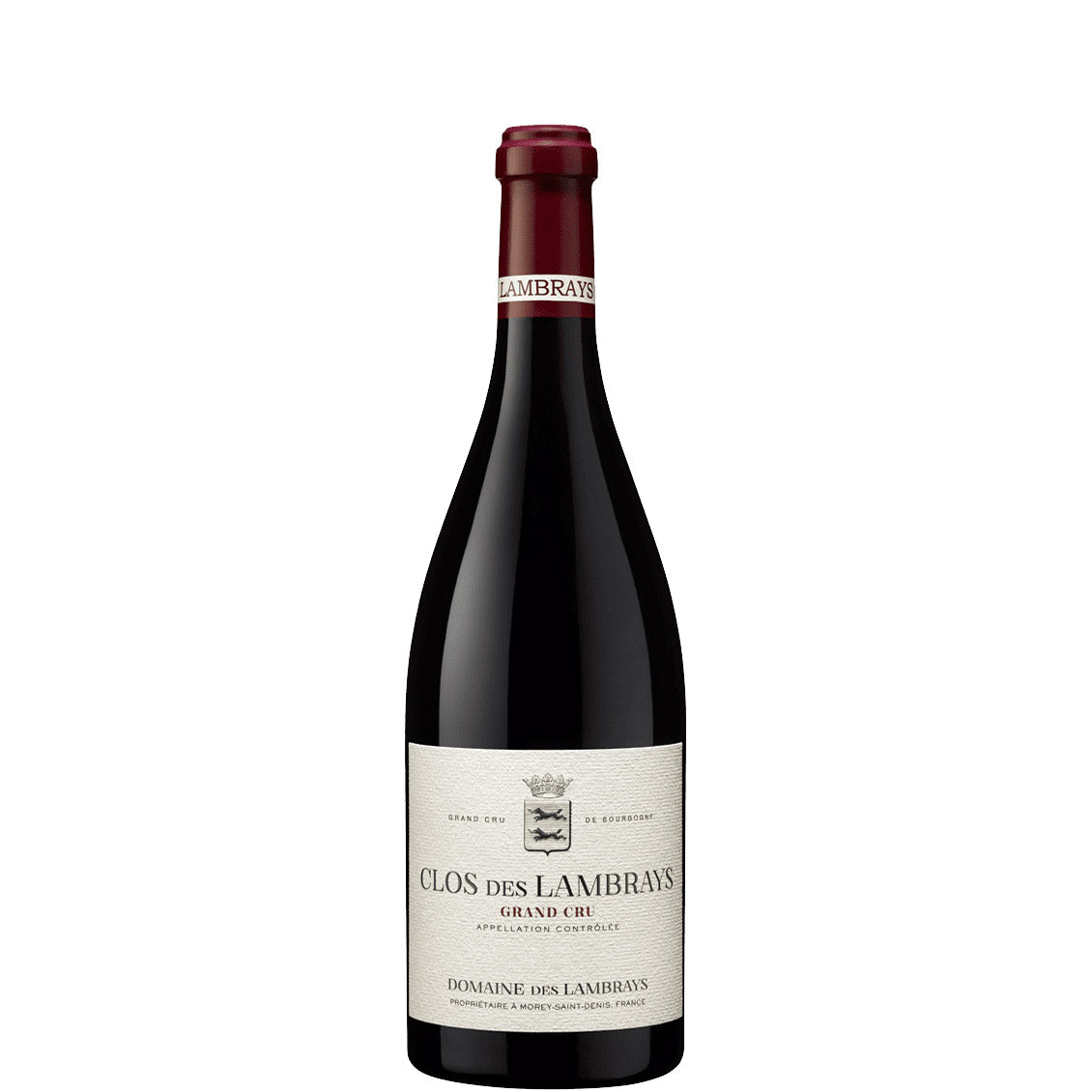
Clos Des Lambrays Grand Cru, Domaine Des Lambrays, 2014
Clos Des Lambrays Grand Cru, Domaine Des Lambrays, 2014
- 75cl
- 13.5%
- Red Still
- Pinot Noir
Couldn't load pickup availability

Optimal drinking window: 2026 - 2042
Clos des Lambrays is one of Burgundy's great monopoles — a single, walled 8.66-hectare Grand Cru owned almost entirely by Domaine des Lambrays, sitting between Morey-Saint-Denis and Chambolle-Musigny. It was only elevated to Grand Cru status in 1981, making it the youngest of the Côte de Nuits Grands Crus, which gives it a slightly underdog quality that we rather enjoy. The 2014 vintage was a quiet triumph across the Côte d'Or: cool growing conditions produced wines of genuine precision and freshness rather than weight, and Lambrays handled it beautifully — sorry, we mean with real distinction.
This is Pinot Noir at its most Morey-like: red cherry, dried rose petals, a hint of game, and that signature iron-threaded minerality running through the palate like a fine wire. The tannins are silky but present, the acidity bright and focused.
The 2014 Lambrays is in a rewarding early secondary phase right now — the primary cherry fruit has begun to integrate and earthy, forest-floor complexity is emerging. Drink it over the next two to three years for this particular pleasure, or hold until around 2029-2030 when we'd expect the wine to hit a more settled, composed peak with fuller secondary character. It should plateau comfortably through the mid-2030s before beginning a slow, graceful decline. Don't push it much beyond 2042 — the 2014's natural freshness is an asset now but lighter vintages don't always outlast the heavier ones in the very long run.
Tasting Notes
AppearanceMedium ruby with a translucent, slightly bricking rim that signals a wine moving gracefully into its secondary phase.
NoseRed cherry, dried rose, and a gentle whiff of sous-bois — that earthy, damp-forest quality that marks mature Morey. There's an iron-like mineral thread underneath that is unmistakably Lambrays, and a cool, almost saline quality that keeps it fresh and alive.
PalateThe 2014 vintage shows its character here: fine-boned, precise, and cool rather than generous or plush. Bright red fruit, good grip from silky but present tannins, and a nervy acidity that carries the wine across the palate without effort. There's depth here rather than opulence.
FinishLong and mineral, with dried cherry skin and a faint iron-graphite note that lingers well beyond what the mid-weight frame would suggest.
Overall impressionA precise, cool-vintage Lambrays that rewards attention — more Chambolle in spirit than Gevrey, and all the better for it.
Food Pairings
In Burgundy, a wine like this would most naturally find itself at the table alongside a roast pigeon or squab, perhaps with a sauce made from the bird's own juices and a splash of the wine itself. Locals would also reach for it with a classic coq au vin or a slow-braised rabbit with mustard. A well-aged Époisses or Comté would work well if you're keeping things simple. If you're feeling celebratory, roast woodcock or a simple roast partridge — nothing that competes with the wine's own subtlety.
We think this wine would go well with
Serve at around 16°C — this is not a wine that wants to be warm, and a few degrees too high will flatten the very precision that makes it worth drinking. Decant for 30 to 45 minutes if drinking now; the wine has had time in bottle and doesn't need long, but a little air opens the nose considerably. A large-bowled Burgundy glass is the right call — you want space for the aromatics to gather and develop as you drink.
The Clos des Lambrays sits on a gentle mid-slope in Morey-Saint-Denis, with soils that shift from brown limestone and clay at the top to lighter, stonier ground lower down. This variation within the clos is part of what gives the wine its complexity — the upper parcels contribute structure and grip, the lower ones freshness and fruit. The aspect is almost due east, catching morning sun and cooling quickly in the afternoon, which helps preserve the acidity that defines the wine's character. Altitude is modest by Burgundian standards, but the drainage and the limestone bedrock are what matter here.
Morey-Saint-Denis is the smallest of the four great communes of the Côte de Nuits and arguably the least famous, which has historically made it the savvy buyer's choice. It sits between the grandeur of Gevrey-Chambertin to the north and the perfumed delicacy of Chambolle-Musigny to the south, and its Grands Crus — Clos de la Roche, Clos Saint-Denis, Clos des Lambrays, and Clos de Tart — tend to split the difference: more structured than Chambolle, more refined than Gevrey. Grand Cru rules require the wine to be made from Pinot Noir with strict yield limits, and the classification carries real weight here given Lambrays only achieved it in 1981.
The 2014 vintage in Burgundy arrived after a tricky growing season that kept vignerons on their toes. A mild winter gave way to a wet spring, then summer brought welcome sunshine before September rains threatened the harvest. Those producers who waited for the weather to clear and picked selectively were rewarded, whilst those who panicked found themselves with diluted wines. The key was patience and ruthless sorting in both vineyard and cellar.
What emerged was a vintage of surprising charm, producing wines with lovely freshness and more approachable tannins than the structured 2012s. The Pinot Noirs show bright red fruit with genuine Burgundian finesse, whilst the Chardonnays display crystalline minerality without the sometimes overbearing richness of warmer years. We find the whites are drinking superbly now, having gained complexity whilst retaining their energy. The reds are hitting their stride beautifully, offering immediate pleasure whilst the better cuvées will reward cellaring until 2030.
FAQs
What does the 2014 Clos des Lambrays taste like?
Think red cherry, dried rose, forest floor, and a distinctive iron-like minerality running through the palate. It is precise and cool-fruited rather than rich or plush — a wine defined by tension and detail rather than generosity. The tannins are silky, the acidity bright, and the finish is long and mineral.
When should I drink this wine?
It is in a good place now, drinking well with some air and showing early secondary complexity. If you have the patience, holding until 2028 to 2030 will reward you with a more composed and layered wine. It should keep comfortably until 2042.
What food should I serve with it?
Roast pigeon, squab, or partridge are ideal — the wine's earthy, mineral character is a natural partner for game birds. Coq au vin or braised rabbit with mustard would be equally at home. If you want something simpler, a well-aged Comté or Époisses will do the job handsomely.
How should I serve this wine?
Serve at around 16°C — slightly cooler than most reds, which is right for Pinot Noir at this level. Decant for 30 to 45 minutes before drinking. Use a large Burgundy glass to give the aromatics room to breathe and develop.
Is Clos des Lambrays worth cellaring?
Yes, particularly in a vintage like 2014 where the wine's precision and acidity give it the backbone to age. It is not a wine built for the very long term in the way a great Gevrey might be, but it has plenty of life ahead of it and will reward another four to eight years in a good cellar.
How does Clos des Lambrays compare to other Morey-Saint-Denis Grands Crus?
Lambrays tends to sit between the power of Clos de la Roche and the delicacy of Clos Saint-Denis — it has real structure but always with a refined, almost Chambolle-like quality. Its status as a monopole and as Burgundy's youngest Grand Cru gives it a slightly different story to tell, and we think that makes it more interesting, not less.
Explore related wines


What are you looking for tonight? Tell me the occasion, a grape, a region — or just try a suggestion below.
Your recommendations will appear here.
-
-
Speak to one of our Wine Gurus
Speak to a Wine GuruWith years of experience, our team can help you with all your wine buying and selling needs