
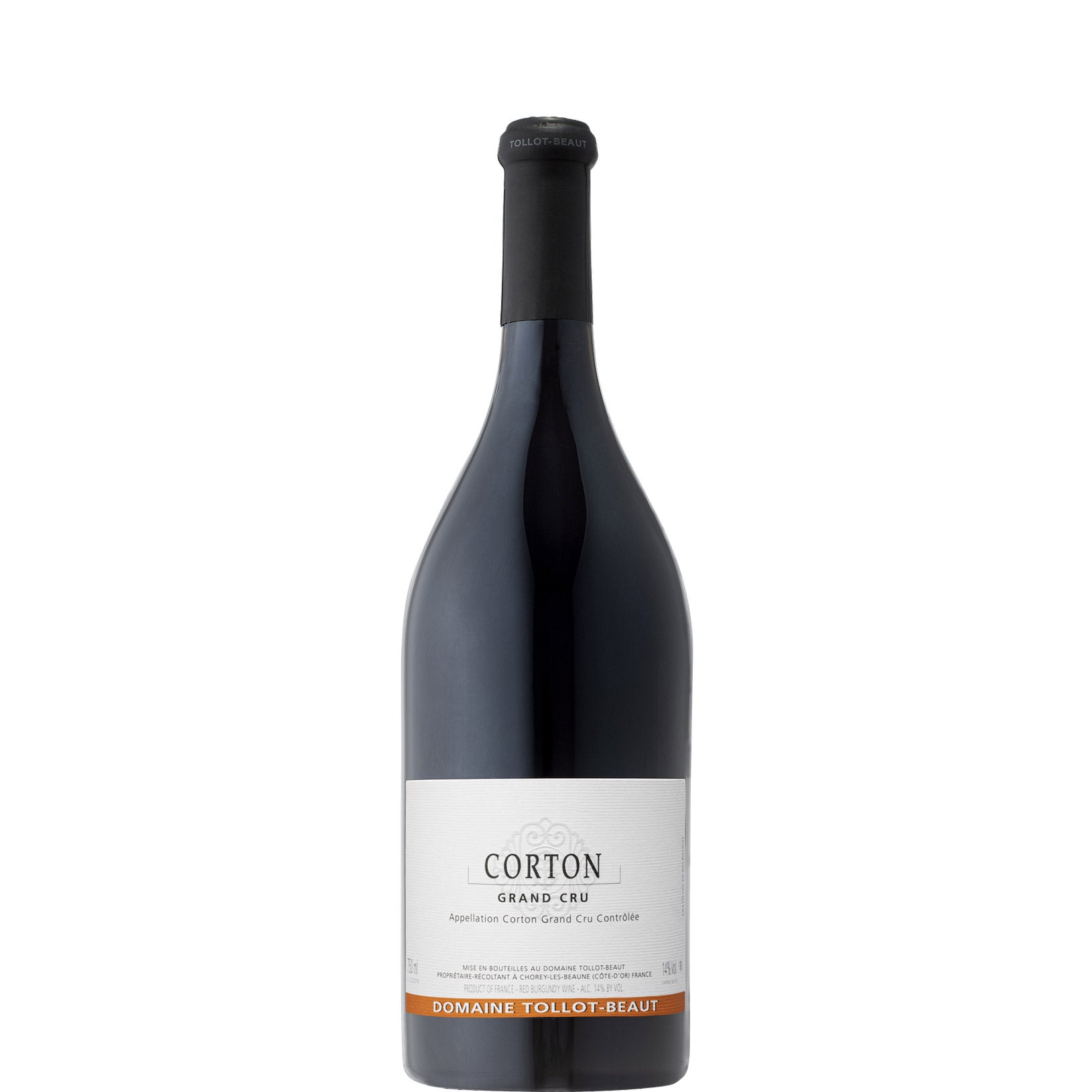
Corton Grand Cru, Domaine Tollot-Beaut, 2023
Corton Grand Cru, Domaine Tollot-Beaut, 2023
- 75cl
- 13.5%
- Red Still
- Pinot Noir
Couldn't load pickup availability

Optimal drinking window: 2029 - 2040
Domaine Tollot-Beaut's Corton Grand Cru comes from the historic slopes of the Corton hill, one of the Côte de Beaune’s few red Grand Crus. The vineyards sit on well-drained limestone and marl soils, with good exposure that allows Pinot Noir to ripen fully while retaining structure. Wines from Corton are typically broader and more powerful than most Beaune reds, combining dark fruit, firm tannins and the capacity to age for many years.
Domaine Tollot-Beaut has long been closely associated with Corton, owning several parcels on the hill and known for producing wines that balance the appellation’s natural strength with precision and polish.
In 2026, this wine is emphatically in its primary phase: the fruit is vivid but the tannins are still angular, and there is little of the secondary complexity that makes aged Corton so compelling. From around 2029, the structure should begin to soften and the first signs of development, forest floor, dried herbs, a gamey depth, will start to emerge alongside the fruit. The wine is likely to hit its stride somewhere between 2032 and 2040, when the tannins have fully integrated and the full mineral character of the Corton hill comes through. Beyond 2040, it will depend on storage conditions and the precise character of the vintage, but well-cellared examples should hold without difficulty until 2045.
Tasting Notes
AppearanceDeep ruby with a violet edge and excellent clarity.
NoseDark cherry, crushed blackberry, and a streak of iron-edged earthiness that is unmistakably Corton. There is a firmness to the fruit even at this early stage, with the oak still integrating and adding a faint note of warm spice rather than dominating. Give it air and something floral begins to emerge, violet or dried rose, sitting just behind the darker fruit.
PalateThe weight arrives immediately: this is a broad, structured wine with real grip, but Tollot-Beaut's characteristic precision keeps it from feeling heavy. Dark plum and blackcurrant sit alongside a firm tannic frame that is still finding its shape in 2026, and there is a mineral, almost chalky quality on the mid-palate that points to the limestone beneath the vines. The acidity is well-judged, giving the whole thing lift and ensuring the finish feels long rather than flat.
FinishLong, with persistent dark fruit and a dry, stony mineral quality that lingers well after the wine has gone.
Overall impressionA serious young Corton that is asking for time, but showing all the right signs.
Food Pairings
In Burgundy, a wine like this would traditionally be poured alongside something substantial from the local kitchen: a boeuf bourguignon slow-braised with the same wine, or a coq au vin that has had the patience to cook properly. Roast guinea fowl with wild mushrooms and a good deal of butter is another natural partner, as is a leg of lamb rubbed with herbs de Provence and rested until pink. The locals know that aged Époisses, washed-rind and pungent, is a classic if divisive match with structured Corton. A plate of jambon persillé, the cold pressed terrine of ham and parsley in aspic that is a Burgundian Sunday institution, works beautifully with the mineral grip of this style.
We think this wine would go well with
Serve at 16 to 17 degrees Celsius; too warm and the alcohol flattens the fruit, too cool and the tannins feel harder than they need to. Decanting is worth doing even now: give it at least 90 minutes in a wide-bottomed decanter to let the wine open up and shed its early austerity. A large Burgundy bowl will give the nose room to breathe and allow the more delicate floral elements to express themselves alongside the darker fruit. Do not be tempted to rush it.
The Corton hill is an unusual geological formation in the Côte de Beaune: a broad, wooded plateau ringed by south, south-east, and south-west facing slopes, giving a variety of exposures across its many lieux-dits. Tollot-Beaut's parcels sit on shallow limestone and marl soils that drain freely, forcing the vines to dig deep and producing fruit with genuine concentration and structure. The altitude is higher than much of the Côte de Nuits, which helps retain acidity and keeps the wines from tipping into heaviness. The result is a red Grand Cru that feels broader and more muscular than a Chambolle or Volnay, but with a mineral backbone that gives it real longevity.
Corton is the only red Grand Cru in the Côte de Beaune and, alongside Le Corton, encompasses several named lieux-dits including Bressandes, Perrières, and Clos du Roi, each with its own character. The appellation produces Pinot Noir of a distinctly different register to the Côte de Nuits: broader, earthier, and more structured, with a weight and grip that can make young examples feel forbidding. It has a complicated reputation, partly because the sheer size of the hill means quality varies considerably between producers and parcels. At its best, from a careful grower in a good year, it is one of Burgundy's most compelling and age-worthy reds.
The 2023 growing season in Burgundy unfolded like a cautionary tale about climate change, then pulled off a last-minute redemption that left everyone rather stunned. After a warm, early spring pushed budbreak ahead of schedule, the vines endured a thoroughly miserable summer of persistent rain and cool temperatures that had growers muttering darkly about rot and dilution. Just when things looked dire, September arrived with glorious sunshine and dry winds that concentrated the fruit and saved the harvest—though not without some frantic sorting in the cellars.
What emerged from this meteorological rollercoaster are wines that wear their vintage on their sleeve: Pinot Noirs with bright, singing acidity and red fruit that feels almost crystalline in its purity, whilst the Chardonnays show remarkable tension and mineral drive. The reds are drinking beautifully now if you fancy immediate pleasure, but we suspect the better villages and premiers crus will reward patience over the next decade. It's not a powerhouse vintage, but there's something genuinely charming about these wines—they remind us why we fell for Burgundy in the first place.
FAQs
What does Tollot-Beaut's Corton Grand Cru 2023 taste like?
Dark cherry, blackcurrant, and crushed blackberry with an iron-edged earthiness and a mineral, chalky quality on the mid-palate. The tannins are firm and the structure is real, but there is enough precision and lift to show this is going somewhere very good with time.
When should I drink this wine?
Not yet, if you can help it. The 2023 is still in its primary phase and the tannins are finding their shape. We would aim to open the first bottle from around 2029, with the sweet spot running from 2032 to 2040. Well-stored examples should hold until 2045.
Is it worth cellaring?
Absolutely. Corton Grand Cru from a producer of Tollot-Beaut's calibre is exactly the kind of wine that rewards patience. The 2023 vintage delivered ripe, concentrated fruit wrapped in genuine structure, and that combination ages well. Open it too early and you will find it austere; give it time and it will develop the earthy, mineral complexity that makes mature Corton so special.
What food should I serve with this wine?
Something substantial. Boeuf bourguignon, roast lamb, guinea fowl with wild mushrooms, or a well-aged hard cheese are all natural partners. The firm tannins and mineral grip need food with weight and richness to match them.
How should I serve it?
At 16 to 17 degrees Celsius, in a large Burgundy bowl, and with at least 90 minutes in a wide-bottomed decanter. Even now, decanting makes a real difference: it softens the early austerity and allows the more complex aromatic elements to emerge.
How does Corton compare to other Burgundy Grand Crus?
Corton is the odd one out in the Côte de Beaune: broader, more powerful, and more structured than the elegant Pinot Noirs from Volnay or Pommard below it. It sits closer in style to a Côte de Nuits Grand Cru than most Beaune reds, with real ageing potential and a mineral, earthy depth that sets it apart. It has a complicated reputation because the hill is large and quality varies, but from a careful producer like Tollot-Beaut it is one of Burgundy's most compelling reds.

Explore related wines


What are you looking for tonight? Tell me the occasion, a grape, a region — or just try a suggestion below.
Your recommendations will appear here.
-
-
Speak to one of our Wine Gurus
Speak to a Wine GuruWith years of experience, our team can help you with all your wine buying and selling needs