

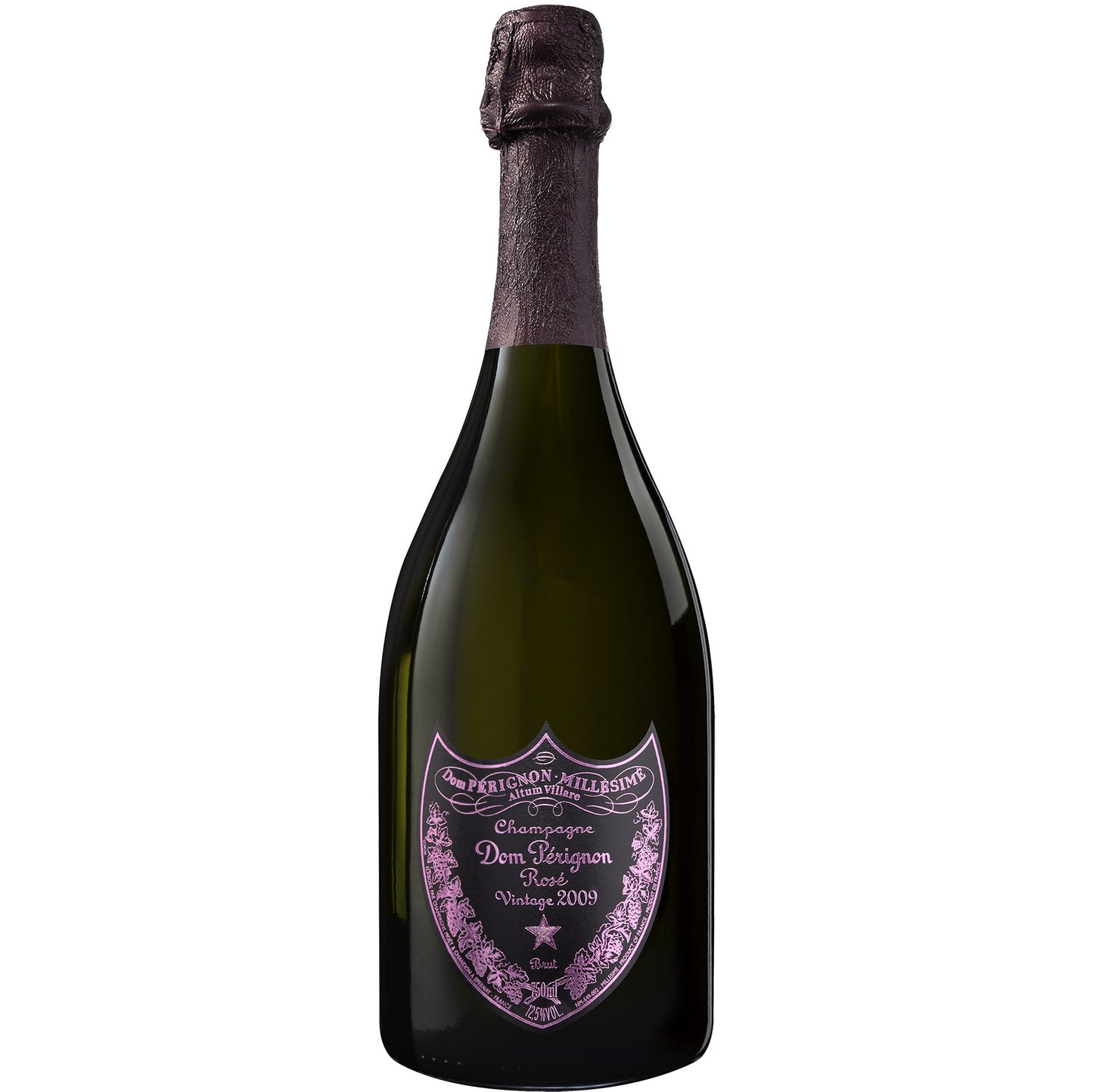
Dom Pérignon, Rosé, 2009 - Magnum
Dom Pérignon, Rosé, 2009 - Magnum
- 150cl
- 12.5%
- Rosé Sparkling
- Pinot Noir, Chardonnay
Couldn't load pickup availability

Optimal drinking window: 2026 - 2040
Dom Pérignon Rosé is one of Champagne's most coveted bottles, and the 2009 vintage in magnum is a particularly compelling proposition. The year was warm and generous, giving Pinot Noir the kind of ripeness that makes rosé Champagne sing — there's a fullness here, a confidence, that sets 2009 apart from cooler, more austere years. In magnum, the wine has aged with exceptional grace: slower, more measured, building layers of complexity that a standard bottle simply cannot match.
We find it in a superb window right now. The primary wild strawberry and blood orange fruit has deepened into something more amber and autumnal, underpinned by brioche, smoked stone, and a long chalky finish that is the house's unmistakable signature.
What the critics say:
"The 2009 Dom Pérignon Rosé marks a return to a richer style of Rosé following the more ethereal 2008 Rosé. Sweet red cherry, blood orange, spice and pomegranate all build in a creamy, sensual DP Rosé that hits all the right spots. Over the last few years, Chef de Caves Vincent Chaperon and his team have lowered the still Pinot portion of the Rosé down to about 10% from a high of 28% or so, reached around 2004 and 2005. In 2009, the Rosé gains considerable textural presence from the generosity of the year. It is a superb Champagne. I preferred it to the 2008, which was also part of this tasting."
"Peaches, fresh crushed strawberries and roses on the nose. Full-bodied and generous. Fine tannins that frame the wine beautifully and set it up for a fresh finish. Some fruit tea and cedar undertones. Enticing finish with hints of bitterness. Savory. Drink or hold."
Dom Pérignon draws on grand cru vineyards across Champagne's finest villages, including Aÿ, Hautvillers, Cramant, Avize, and Le Mesnil-sur-Oger. The soils are predominantly chalk — deep, porous Cretaceous belemnite chalk — which drains freely, stresses the vines just enough, and imparts that characteristic mineral precision and fine, persistent effervescence. In 2009, the warm growing season pushed ripeness to exceptional levels, but the chalk held the tension in check, preventing the wine from tipping into softness. For the rosé, the Pinot Noir component — sourced largely from the Montagne de Reims — brings structure and vinous depth that defines the cuvée's character.
Champagne is the most tightly regulated sparkling wine appellation in the world, governed by the CIVC (Comité Champagne) and restricted to a specific demarcated zone northeast of Paris. Only Chardonnay, Pinot Noir, and Pinot Meunier are permitted, and wines must spend a minimum of fifteen months on lees (thirty-six for vintage wines, though houses like Dom Pérignon routinely far exceed this). The rosé style here is produced by vinification — a proportion of still red wine is blended in rather than using the saignée method — giving greater control and consistency. No other appellation in the world commands quite the same cultural weight, commercial power, or capacity to age.
The 2009 growing season in Champagne delivered one of those rare gifts that nature occasionally bestows on winemakers: near-perfect conditions from spring through harvest. A warm, dry summer allowed the grapes to ripen beautifully whilst retaining their natural acidity, and the harvest began in late August under gloriously sunny skies. This was textbook Champagne weather, the sort that old-timers nod sagely about whilst younger vignerons wonder if they'll ever see its like again.
What emerged from those sun-drenched vineyards was a vintage of remarkable richness and intensity, particularly for the Pinot Noir, which achieved levels of ripeness that would make Burgundian neighbours envious. The Chardonnay developed gorgeous concentration whilst keeping its spine intact, and even the Pinot Meunier sang with unusual depth and character. We're talking about wines with serious power here, built for the long haul yet surprisingly approachable in their youth. The best 2009 Champagnes are drinking superbly now and will continue rewarding patience until 2030 and beyond.

Explore related wines


-
-
Speak to one of our Wine Gurus
Speak to a Wine GuruWith years of experience, our team can help you with all your wine buying and selling needs