

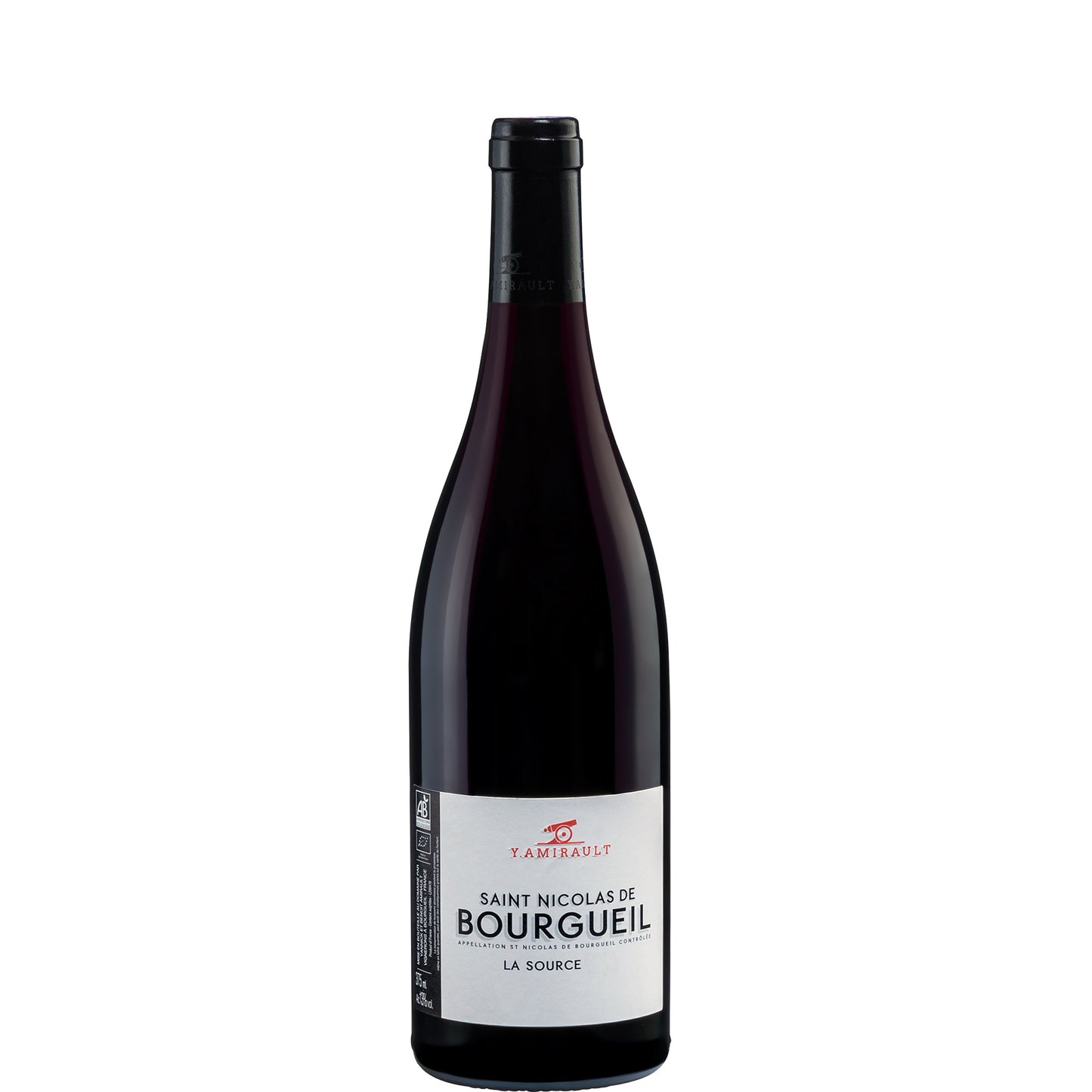
Domaine Amirault, Saint Nicolas De Bourgueil La Source, 2024
Domaine Amirault, Saint Nicolas De Bourgueil La Source, 2024
- 75cl
- 12.5%
- Red Still
- Cabernet Franc
- Organic
Couldn't load pickup availability

Optimal drinking window: 2026 - 2032
Saint-Nicolas-de-Bourgueil is Cabernet Franc's more quietly confident neighbour to Bourgueil, and Domaine Amirault is one of the names that defines what this appellation does best. La Source is the entry-level cuvée, drawn from younger vines on the sandier, lighter soils that give the wine its characteristic bounce and immediacy. This is Cabernet Franc at its most purely Loire: cool, crunchy, perfumed, and completely unencumbered by oak. Raspberry, crushed strawberry, violet, a flicker of green pepper that keeps everything honest, and a stony, almost chalky finish that makes you reach for another glass before you've thought about it.
The 2024 vintage across the Loire was one to watch carefully — a cool, challenging growing season that rewarded rigorous sorting and low yields. For a domaine as conscientious as Amirault, that translates into wines with real freshness and definition. Drink this slightly cool, perhaps alongside a plate of rillettes or a simple roast chicken, and it will reward you from the moment the cork comes out.
Right now, in 2026, La Source 2024 is at its most vivid and expressive — all primary fruit and freshness, exactly where you want it. Over the next two to three years the raspberry and violet aromatics will begin to knit together and a little more earthy, savoury complexity will emerge underneath. By 2028-2029 it should be hitting a sweet spot of fruit and secondary character. After 2030 the fruit will start to recede and the wine will take on a more austere, mineral quality that some will love, but we'd have polished off the last bottle well before then.
Tasting Notes
AppearanceBright, clear ruby with a violet-tinged rim and excellent translucency.
NoseFresh and immediate: raspberry, crushed wild strawberry, and violet lead, with a cool undercurrent of damp stone and a faint grassy lift that keeps the whole thing very much on the right side of Loire Cabernet Franc. No wood in sight, which is exactly as it should be.
PalateLighter-bodied but with real presence, the tannins fine-grained and barely there, the acidity bright and energising. Red fruit comes through cleanly — more pomegranate than plum — with a mineral, almost chalky quality mid-palate that anchors everything. A touch of green pepper in the background adds definition rather than distraction.
FinishClean, refreshing, and persistently mineral, with the fruit fading gracefully rather than dropping off a cliff.
Overall impressionEverything Loire Cabernet Franc should be: honest, juicy, and quietly addictive.
Food Pairings
On the banks of the Loire, this style of wine exists in permanent harmony with rillettes du Mans — the slow-cooked pork spread that locals eat smeared thick on crusty bread, its richness cut perfectly by the wine's acidity. Grilled goat's cheese on toast, particularly Sainte-Maure-de-Touraine which is made just down the road, is another instinctive pairing. Come autumn, a simple roast guinea fowl or a plate of cold charcuterie with cornichons is the kind of lunch that makes you understand why people move to this part of France. The wine's natural freshness also makes it genuinely good with river fish cooked simply — a Loire pike-perch with beurre blanc, for instance.
We think this wine would go well with
Serve this slightly cool, somewhere around 14-15°C — cold enough to let the fruit sing, not so cold that you lose the perfume. No need to decant; just pour and go. A standard Burgundy-shaped glass works well, giving the aromatics room to open without over-amplifying the lighter structure. This is a wine for drinking, not contemplating.
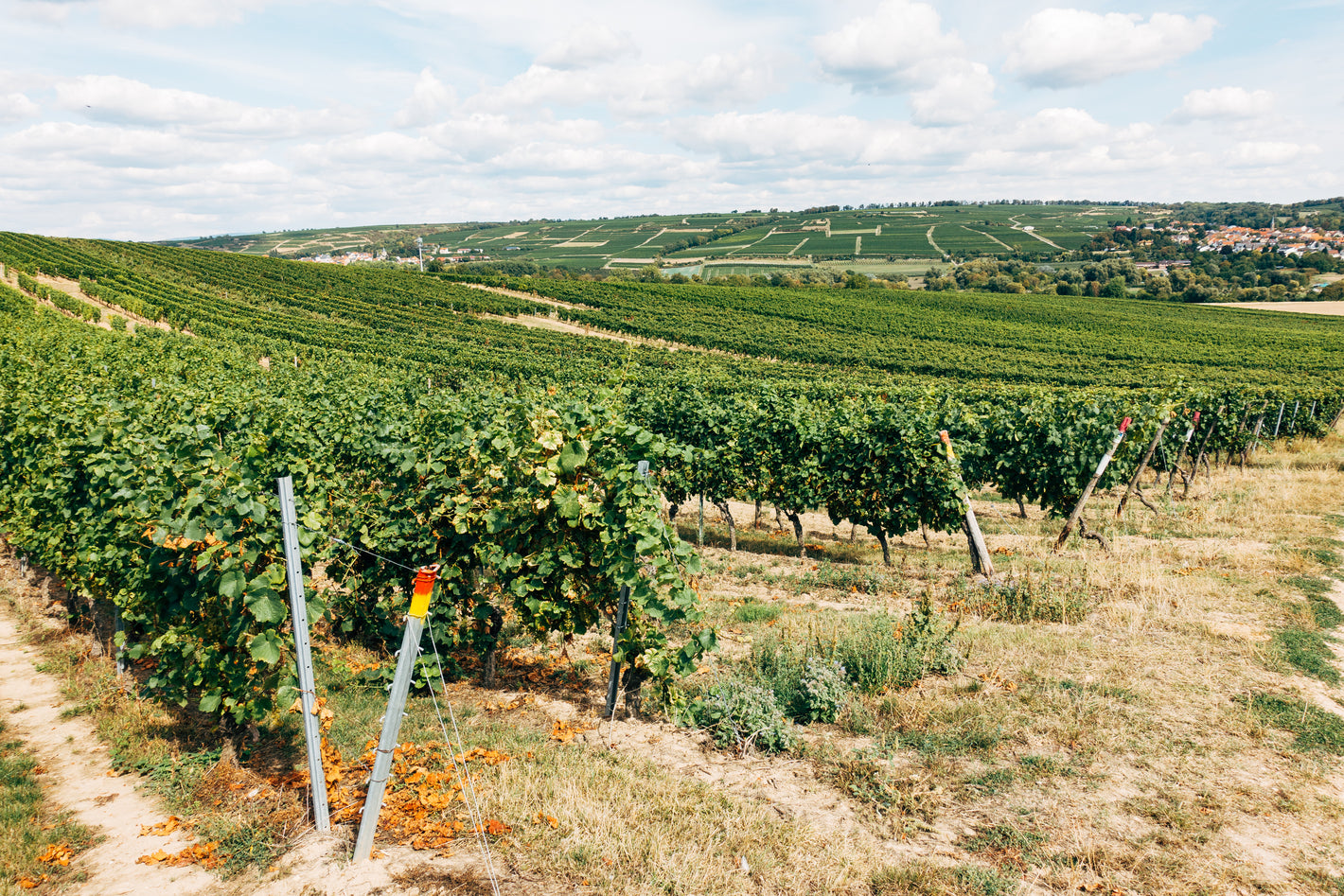
The La Source vineyards sit on the lighter, sandier soils on the plateau and slopes of Saint-Nicolas-de-Bourgueil, distinct from the denser clay-limestone that underpins some of Amirault's other cuvées. This sandy gravel over tuffeau (the local soft limestone) drains quickly and warms readily, encouraging an earlier ripening that gives the wine its supple, approachable character. The Loire Valley climate here is continental with an Atlantic influence — warm summers but cool enough to preserve the natural acidity and aromatic lift that makes Cabernet Franc in this corner of Touraine so compelling.
Saint-Nicolas-de-Bourgueil is a small, independent appellation within the Touraine, sitting just to the west of its more famous sibling Bourgueil, and producing exclusively red and rosé wines from Cabernet Franc. The distinction between the two appellations is partly geological: Saint-Nicolas has a higher proportion of sandy and gravelly soils alongside its tuffeau, which typically produces wines that are a little lighter, more aromatic, and earlier-drinking than the more tannic, structured Bourgueil. Both appellations are dominated by small, family-run estates, and the wines remain among the most underrated and underpriced reds in France.
We're still learning what 2024 gave us in the Loire, but the early signs are promising. The growing season brought its share of drama — a challenging spring that kept vignerons on their toes, followed by a summer that delivered just enough sunshine without tipping into the punishing heat that can flatten the region's trademark freshness. Harvest timing varied considerably across the valley's sprawling length, with producers picking earlier than usual in some appellations while others waited for that final push of ripeness.
What we're tasting shows wines with lovely energy and balance, particularly from Sancerre and Pouilly-Fumé where the Sauvignon Blanc has that mineral backbone we adore without the green aggression of cooler years. The Chenin Blanc from Vouvray and the Coteaux du Layon seems to have found its sweet spot between richness and acidity, while early tastings of Chinon suggest the Cabernet Franc has real potential for structured, age-worthy reds. Most 2024s are drinking beautifully now with their youthful vibrancy intact, though we suspect the better examples will reward patience over the next three to five years.
FAQs
What does La Source taste like?
Pure, crunchy Loire Cabernet Franc: raspberry, crushed strawberry, violet, a whisper of green pepper, and a stony mineral finish. Unoaked, fresh, and very easy to love.
When should I drink the 2024 vintage?
It's drinking well right now and will remain at its best until around 2030-2032. This is not a wine that needs patience — its appeal is in its immediacy and freshness, so open it sooner rather than later.
What food works best with this wine?
Rillettes, grilled goat's cheese, charcuterie, roast chicken, or guinea fowl. Anything simple and French will do the job. It's also surprisingly good alongside lighter fish dishes with a bit of richness to them.
How should I serve it?
Slightly cool, around 14-15°C. No decanting required. A standard Burgundy glass is ideal. Treat it like a good Beaujolais — this is a wine for the table, not the sideboard.
Is it worth cellaring?
Not really, no. The wine is built for freshness and fruit, not for long-term development. It will hold until 2032, but the best drinking is happening now, while the primary fruit is at its most expressive.
How does Domaine Amirault's La Source compare to their other cuvées?
La Source is the most approachable and earliest-drinking of the Amirault range, made from younger vines on sandier soils. Their single-parcel cuvées from older vines on clay-limestone — Les Malgagnes, for instance — are more structured and reward longer cellaring. La Source is where you go when you want the pleasure right away.

OUR GROWERS
Domaine Amirault
Explore related wines


What are you looking for tonight? Tell me the occasion, a grape, a region — or just try a suggestion below.
Your recommendations will appear here.
-
-
Speak to one of our Wine Gurus
Speak to a Wine GuruWith years of experience, our team can help you with all your wine buying and selling needs