

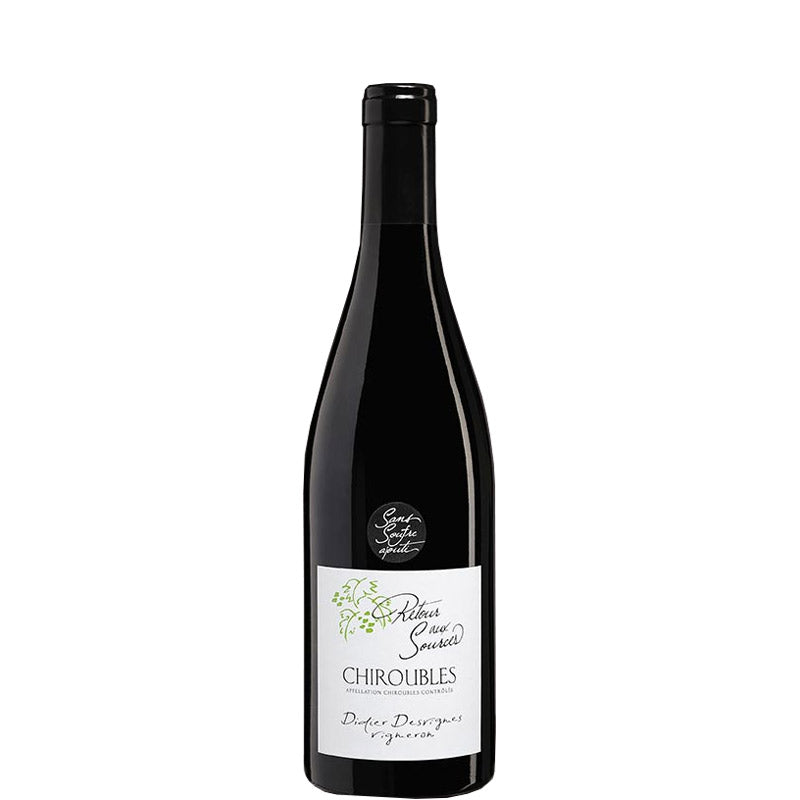
Domaine Du Calvaire De Roche-Grès, Chiroubles Sans Soufre Ajouté, Didier Desvignes, 2020
Domaine Du Calvaire De Roche-Grès, Chiroubles Sans Soufre Ajouté, Didier Desvignes, 2020
- 75cl
- Red Still
- Gamay
Couldn't load pickup availability

Optimal drinking window: 2026 - 2029
Didier Desvignes farms in Chiroubles, the highest and arguably most delicate of the ten Beaujolais crus, and this no-added-sulphur bottling from the Calvaire de Roche-Grès lieu-dit is about as honest an expression of Gamay as you'll find. The altitude gives the wine a lifted, almost airy quality — cherry, wild bramble, a flicker of violet — and the absence of sulphur means everything is right there on the surface, nothing muffled. Give it fifteen minutes in a carafe and it opens right up.
This is a wine for drinking with pleasure and without ceremony. The acidity is real and refreshing, the tannins are present but never pushy, and the whole thing has an effortless, thirst-quenching quality that makes it dangerously easy to pour a second glass.
At six years old, this wine is right in its sweet spot — the primary fruit is vibrant and the natural acidity is keeping everything lively. Drink it over the next year or two while the cherry and bramble fruit are at their freshest.
Tasting Notes
AppearanceBright, translucent ruby with a vivid crimson edge — you can practically see the energy in it.
NoseFresh cherry, wild raspberry, and a faint drift of violet. There's a raw, crunchy quality — like biting into fruit rather than smelling a candle — which is very much the point of a wine made without added sulphur. A little air brings out a subtle stony note beneath.
PalateLight to medium-bodied, with that same bright cherry fruit carrying through cleanly. There's a gentle, almost sandy grip from the granite soils, and the acidity is the wine's backbone — sharp enough to cut through food, soft enough not to jar. Nothing extraneous, nothing forced.
FinishClean, refreshing, and short-to-medium in length — it leaves you wanting another sip, which is exactly the right outcome.
Overall impressionA genuinely unaffected Beaujolais cru — pure, direct, and very easy to love.
Food Pairings
In the villages around Chiroubles, a wine like this would land on the table alongside charcuterie from Lyon — rosette, saucisson, a pot of rillettes — or a simple roast chicken with tarragon. The Lyonnais tradition of bouchon cooking is a natural match: quenelles, boudin, lentil salad with lardons. Further afield in the Beaujolais countryside, it would be poured with a gratin dauphinois or a plate of chèvre. This is unpretentious, generous food for an unpretentious, generous wine.
We think this wine would go well with
Serve this at around 13-14°C — slightly cooler than a standard red, which lets the freshness and fruit show at their best. It doesn't need decanting as such, but pouring it into a carafe for ten to fifteen minutes makes a real difference, especially given the lack of added sulphur. A standard Burgundy-style glass works well; nothing too large, you want to keep the aromatics focused.
Chiroubles sits at altitude — vines here can reach 400 metres and above, making it the highest of the Beaujolais crus. The soils are predominantly decomposed granite, which drains well and imparts a mineral freshness that underpins the fruit. The elevation extends the ripening season, which is why Chiroubles wines tend to have more lift and perfume than their neighbours in Fleurie or Morgon. The Calvaire de Roche-Grès lieu-dit adds a stony, rocky character that keeps the wine taut.
Chiroubles is one of the ten named crus of Beaujolais, and at roughly 360 hectares it is one of the smallest. All wines here are made from Gamay Noir, and the combination of altitude and granite soils produces wines that are typically lighter in body and more florally expressive than other crus. Compared to Moulin-à-Vent or Morgon, which can age for years and develop almost Burgundian depth, Chiroubles is built for earlier drinking — fragrant, fresh, and immediate. It is, in the best sense, a wine that doesn't ask much of you.
FAQs
What does this wine taste like?
Bright cherry and wild bramble dominate, with a natural, crunchy freshness and a light grip from the granite soils. It's a wine built on purity rather than weight — refreshing, direct, and easy to drink.
What does 'sans soufre ajouté' mean, and does it affect the wine?
It means no sulphur has been added during winemaking or at bottling. Sulphur is typically used as a preservative and antioxidant; without it, wines can be more expressive and fruit-forward, but they're also more sensitive to heat and need to be stored carefully and drunk within a reasonable window. This one rewards a few minutes in a carafe before serving.
When should I drink this wine?
Now is ideal. It's a 2020 Chiroubles with no added sulphur, and the fruit is at its freshest and most vibrant right now. We'd drink it over the next couple of years.
What food should I serve it with?
It's a wonderful food wine. Grilled red meats, roast chicken, guinea fowl, or a good plate of charcuterie all work brilliantly. The natural acidity makes it a natural partner for anything savoury and rich. Even a lentil salad with lardons in the Lyonnais tradition would be excellent.
How should I serve it?
Serve it slightly cool — around 13-14°C. Give it a brief spell in a carafe (ten to fifteen minutes is enough) to let it open up. A standard Burgundy glass keeps the aromatics nicely focused.
Is it worth cellaring?
Not really, and that's not a criticism. Chiroubles is built for early drinking, and without added sulphur this wine has a shorter runway than most. Its charm is in the fruit and freshness, both of which are at their peak right now. Open it, enjoy it.

OUR GROWERS
Didier Desvignes
Explore related wines


What are you looking for tonight? Tell me the occasion, a grape, a region — or just try a suggestion below.
Your recommendations will appear here.
-
-
Speak to one of our Wine Gurus
Speak to a Wine GuruWith years of experience, our team can help you with all your wine buying and selling needs