

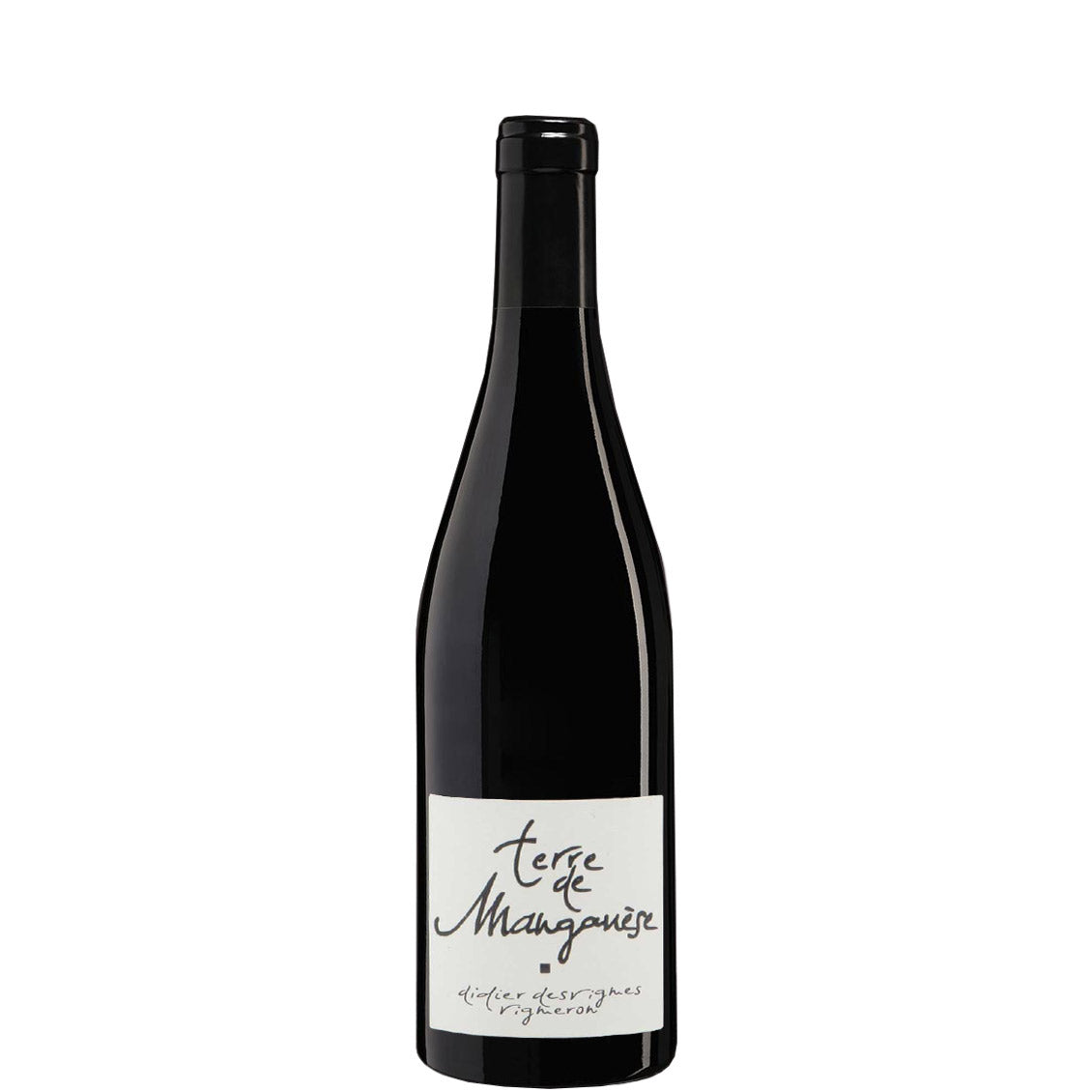
Domaine Du Calvaire De Roche-Grès Moulin-À-Vent, Terre De Manganèse, Didier Desvignes, 2019
Domaine Du Calvaire De Roche-Grès Moulin-À-Vent, Terre De Manganèse, Didier Desvignes, 2019
- 75cl
- 13.5%
- Red Still
- Gamay
Couldn't load pickup availability

Optimal drinking window: 2026 - 2032
Moulin-à-Vent is Beaujolais' most serious cru, and Didier Desvignes' Terre de Manganèse is among its most serious wines. The heavy bottle isn't pretension — it's a promise. The 2019 is atypically deep in colour, opening with balsamic and feral aromas that gradually give way to ripe dark cherry and a whisper of oak spice. There's real extraction here, a concentration that puts it in an altogether different conversation from everyday Beaujolais.
On the palate, the Gamay is opulent rather than exuberant — dark-fruited, spiced, and structured in a way that really does start to blur the line with Burgundy.
The 2019 vintage was warm and generous across Beaujolais, which has given this wine the fruit density to age comfortably. Right now the primary dark cherry fruit is still dominant, with the oak influence still slightly visible at the edges — both will knit more seamlessly over the next two to three years. By 2028 or so, we'd expect the wine to be entering a particularly sweet spot, with secondary savouriness and that Burgundian character the existing description hints at becoming much more pronounced. It should hold well until around 2032, after which the fruit may start to dry out ahead of the structure. Patience between now and 2028 will be rewarded.
Tasting Notes
AppearanceDeep ruby with a density of colour that is frankly unusual for Beaujolais, with very little lightening at the rim.
NoseInitially a little closed and feral, with balsamic and earthy tones that signal you are not in everyday Beaujolais territory. With time in the glass, ripe dark cherry and a gentle seasoning of oak spice emerge and take over. The whole thing feels coiled, as though it still has something held in reserve.
PalateOpulent dark cherry fruit leads, with nicely integrated oak and a thread of spice running through to the finish. The tannins are real and give the wine genuine grip without any sense of dryness or astringency. The concentration here is impressive — this is a wine that fills the mouth rather than dancing across it.
FinishLong, spiced, and faintly mineral, with the fruit lingering well past the point where most Beaujolais has already left the building.
Overall impressionA Beaujolais that refuses to behave like one — in the very best way.
Food Pairings
In the Beaujolais hills, this weight of wine calls for something more than a simple charcuterie plate. Think coq au vin made with older birds, or a slow-braised daube with plenty of root vegetables. Andouillette sausages are a local staple and have just the right savoury funk to stand up to the wine's depth. A well-aged Époisses or Comté would be equally at home — the region sits close enough to Burgundy that the cheese traditions overlap happily.
We think this wine would go well with
Serve at around 16-17°C — cooler than you might expect for such a structured red, which allows the wine's dark fruit to stay bright and the minerality to show clearly. A brief decant of 30-45 minutes is worthwhile and will help coax out the nose, which can be initially a little tight. A standard Burgundy-shaped glass works well here, offering enough bowl to open the wine up without losing the precision that makes it interesting.
The Calvaire de Roche-Grès vineyard sits on the granite and manganese-rich soils that give Moulin-à-Vent its reputation for producing Beaujolais capable of real ageing. The manganese in the subsoil is thought to add a particular grip and mineral backbone to the Gamay grown here, distinguishing these wines from the more purely granite-based sites nearby. The combination of poor, well-drained soils and the Beaujolais hills' continental-leaning climate pushes the vines to work hard, producing grapes with concentration and skin structure that other Beaujolais crus rarely match.
Moulin-à-Vent is widely regarded as Beaujolais' grandest cru, named after the ancient windmill that overlooks its vineyards on the border of Saône-et-Loire and Rhône. Unlike most Beaujolais, it is built for ageing — producers here can and do cellar their wines for a decade or more, with the best examples developing a Pinot Noir-like character that has long confused and delighted tasters in blind tastings. The appellation's granite and manganese soils give the wines a distinctive firmness and mineral depth that sets them apart from the rounder, more immediately approachable styles of neighbouring crus like Fleurie or Chiroubles.
FAQs
What does this wine taste like?
Rich, concentrated dark cherry fruit with balsamic depth, oak spice, and real tannic grip. It is far removed from the light, easy-drinking style most people associate with Beaujolais — this is a structured, age-worthy red that starts to blur the boundaries with village Burgundy.
When should I drink this wine?
It is already drinking well in 2026 and there is no need to wait, but it will reward patience. The sweet spot is probably 2028 to 2031, when the primary fruit and the structure will have had time to integrate fully. We'd drink it until 2032.
Is this really a Beaujolais?
It is, but only technically. Moulin-à-Vent is Beaujolais' most age-worthy and structured cru, and Desvignes' Terre de Manganèse is one of its most serious wines. Blind, a good many experienced tasters would guess at a village Burgundy rather than a Gamay from the south of the region — which is exactly the point.
What food works well with this wine?
Match the weight. Slow-braised meats, coq au vin, andouillette sausages, or aged cheeses like Comté or Époisses will all do the job admirably. This is not a wine to open alongside a simple salad.
How should I serve it?
Serve at around 16-17°C and decant for 30-45 minutes before pouring. A Burgundy-shaped glass works well. The wine can be a little tight on opening, so give it time to breathe and the nose will reward you.
Is it worth cellaring?
Yes, genuinely. The combination of the 2019 vintage's fruit density and Moulin-à-Vent's manganese-rich soils gives this wine the structure to age with real distinction. If you have the patience, hold some bottles until 2028 and see what develops.

OUR GROWERS
Didier Desvignes
Explore related wines


What are you looking for tonight? Tell me the occasion, a grape, a region — or just try a suggestion below.
Your recommendations will appear here.
-
-
Speak to one of our Wine Gurus
Speak to a Wine GuruWith years of experience, our team can help you with all your wine buying and selling needs