

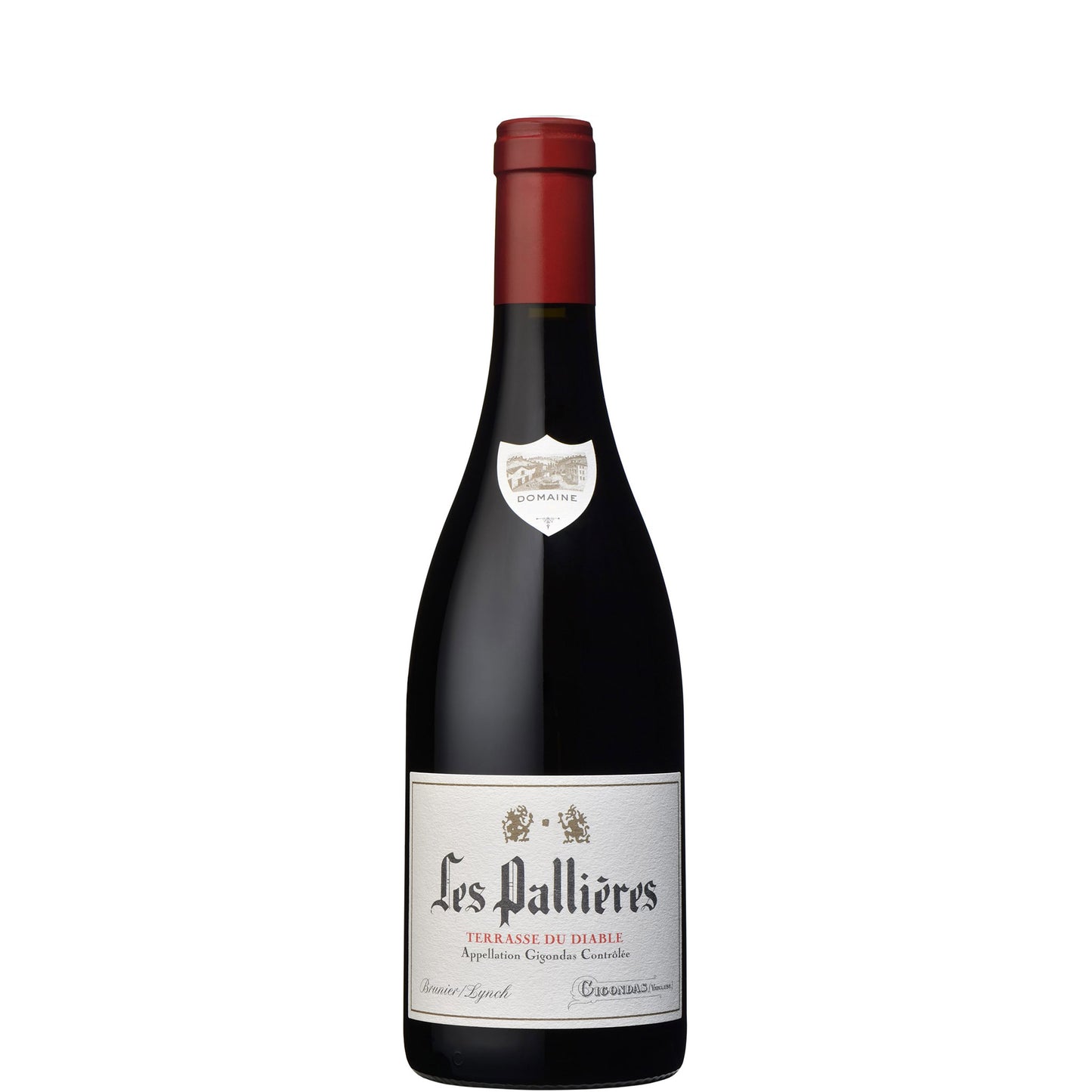
Domaine Les Pallières, Gigondas, Terrasse du Diable, 2021
Domaine Les Pallières, Gigondas, Terrasse du Diable, 2021
- 75cl
- 14.5%
- Red Still
- Grenache, Mourvèdre
- Biodynamic
- Vegetarian
- Vegan
Couldn't load pickup availability

Optimal drinking window: Now - 2038
Gigondas doesn't get the press of its neighbour Châteauneuf, but in many ways that's part of the appeal, and Domaine Les Pallières is one of the very best reasons to pay attention.
The Terrasse du Diable is a single-parcel selection from ancient Grenache vines grown high on the limestone terraces of the Dentelles de Montmirail, farmed biodynamically and made with the kind of restraint you don't always associate with southern Rhône reds. The 2021 vintage gave growers across the region beautiful freshness without sacrificing concentration, and it shows here.
This is a wine of real density and purpose; dark fruit, wild herbs, and a stony, iron-edged grip that holds everything in check.
What the critics say:
"At once fresh, meaty and earthy, with candied orange freshness. This is concentrated and elegant, with crisp tannins that drive it over the medium- to full-bodied palate. There’s terrific mountain freshness in the vibrant finish. A cuvee based on grenache with some mourvedre, mostly from high-altitude vineyards. Drink or hold."
Tasting Notes
AppearanceDeep, saturated ruby-purple with minimal signs of evolution at the rim.
NoseBrooding at first, with dark plum, dried fig, and a streak of iron-flecked earth that's unmistakably limestone-country. Underneath, dried thyme, crushed lavender, and something like warm stone after rain. It needs air — give it time and it begins to open into something genuinely compelling.
PalateFull-bodied and tightly wound, with a dense core of black fruit and firm, fine-grained tannins that coat the mouth without being aggressive. The acidity — impressive for a wine of this weight — keeps everything focused and gives it real length. There's a savoury, earthy quality through the mid-palate that stops it ever feeling heavy.
FinishLong, mineral, and dry, with garrigue and a faint iron tang that lingers well after the fruit has faded.
Overall impressionA serious, site-specific Gigondas that is currently keeping its best cards close to its chest.
Food Pairings
In and around Gigondas and the Vaucluse, this kind of wine is made for the table rather than the tasting bench. Locals would reach for a slow-braised daube de boeuf — beef cooked low and long with olives, orange peel, and a generous pour of the local red. Roasted leg of lamb studded with garlic and rosemary is another obvious match, as is grilled wild boar in the colder months. Hard, aged cheeses from the region — Banon, Tomme de Provence — work well with the wine's savoury grip. If you're keeping it simple, a board of cured meats and a good tapenade is all this wine needs to show its best.
We think this wine would go well with
Serve at around 16-17°C — too warm and the alcohol gets ahead of the fruit. Decanting is not optional: pour it at least 90 minutes before you plan to drink it, ideally two hours for a bottle opened now in 2026. A large-bowled Burgundy-style glass will help coax the aromatics open. If you're drinking it young, the decant time is the most important decision you'll make.
The vineyards sit at altitude on the dramatic limestone terraces beneath the Dentelles de Montmirail, one of Gigondas's most distinctive and demanding sites. The soils are a mix of clay, limestone, and sandy loam, with rocky outcrops that stress the vines and concentrate flavour. Elevation brings cooler nights than the valley floor, preserving the natural acidity that gives wines like the Terrasse du Diable their freshness and grip. The garrigue — wild rosemary, thyme, lavender — that covers the hillsides infuses the whole landscape and, inevitably, the wine.
Gigondas earned its own AOC in 1971, having previously been sold as Côtes du Rhône — a fact that still rankles locals slightly. It sits in the Vaucluse, sheltered by the Dentelles de Montmirail, and produces almost entirely red wine from Grenache-dominant blends with Syrah and Mourvèdre. Compared to Châteauneuf-du-Pape it tends to be more structured and mineral, with a wilder, more rugged character — less opulent, more purposeful. Maximum yields are strictly controlled, and many of the appellation's best producers farm old vines on rocky, high-altitude sites that would test any winemaker.
The 2021 Rhône had drama written all over it from the start. Spring frost knocked back yields across the valley, followed by a wet summer that kept growers on edge about disease pressure. When September finally arrived with warm, dry weather, those who'd managed their vineyards carefully through the challenging months found themselves with concentrated, healthy fruit that ripened beautifully in the sunshine.
What emerged defied the difficult growing season: wines with real energy and freshness, particularly impressive in the Northern Rhône where Syrah shows lovely spice and pepper alongside its dark fruit. The Southern Rhône produced Châteauneuf-du-Papes and Côtes du Rhônes with more restraint than the blockbuster years, but we rather like that - there's a liveliness here that makes them brilliant with food. The reds are drinking well now and will continue to develop until 2030 or beyond for the best cuvées, while the whites - often overlooked but particularly successful this year - are singing right now.
FAQs
What does the Terrasse du Diable taste like?
Dark plum, dried fig, crushed garrigue, and a stony, iron-edged grip. It's a structured, serious wine with impressive freshness for its weight — earthy and mineral rather than jammy or opulent.
When should I drink this wine?
Drink it between 2025 and 2038 for the best experience, with the peak likely somewhere in the early 2030s.
Does it need decanting?
Absolutely. Give it at least 90 minutes in a decanter, ideally two hours. The wine tightens up considerably if poured straight from the bottle, and decanting makes a real difference to how the aromatics open up.
What food should I pair it with?
Slow-braised lamb or beef is the classic match — think daube de boeuf with olives and orange peel, or a leg of lamb with garlic and rosemary. Grilled wild boar, aged Provençal cheeses, and good charcuterie all work well too.
Is this worth cellaring?
Yes, without question. The 2021 vintage gave the wine excellent natural freshness and the structure to age well. If you can leave it alone until 2030, it will reward your patience considerably.
How does Gigondas compare to Châteauneuf-du-Pape?
Gigondas tends to be more structured and mineral, with a wilder, more rugged edge. It rarely reaches Châteauneuf's levels of sheer opulence, but at its best — and Les Pallières is very much at its best — it has a focus and a sense of place that can be even more exciting.

OUR GROWERS
Domaine Les Pallières


What are you looking for tonight? Tell me the occasion, a grape, a region — or just try a suggestion below.
Your recommendations will appear here.
-
-
Speak to one of our Wine Gurus
Speak to a Wine GuruWith years of experience, our team can help you with all your wine buying and selling needs