

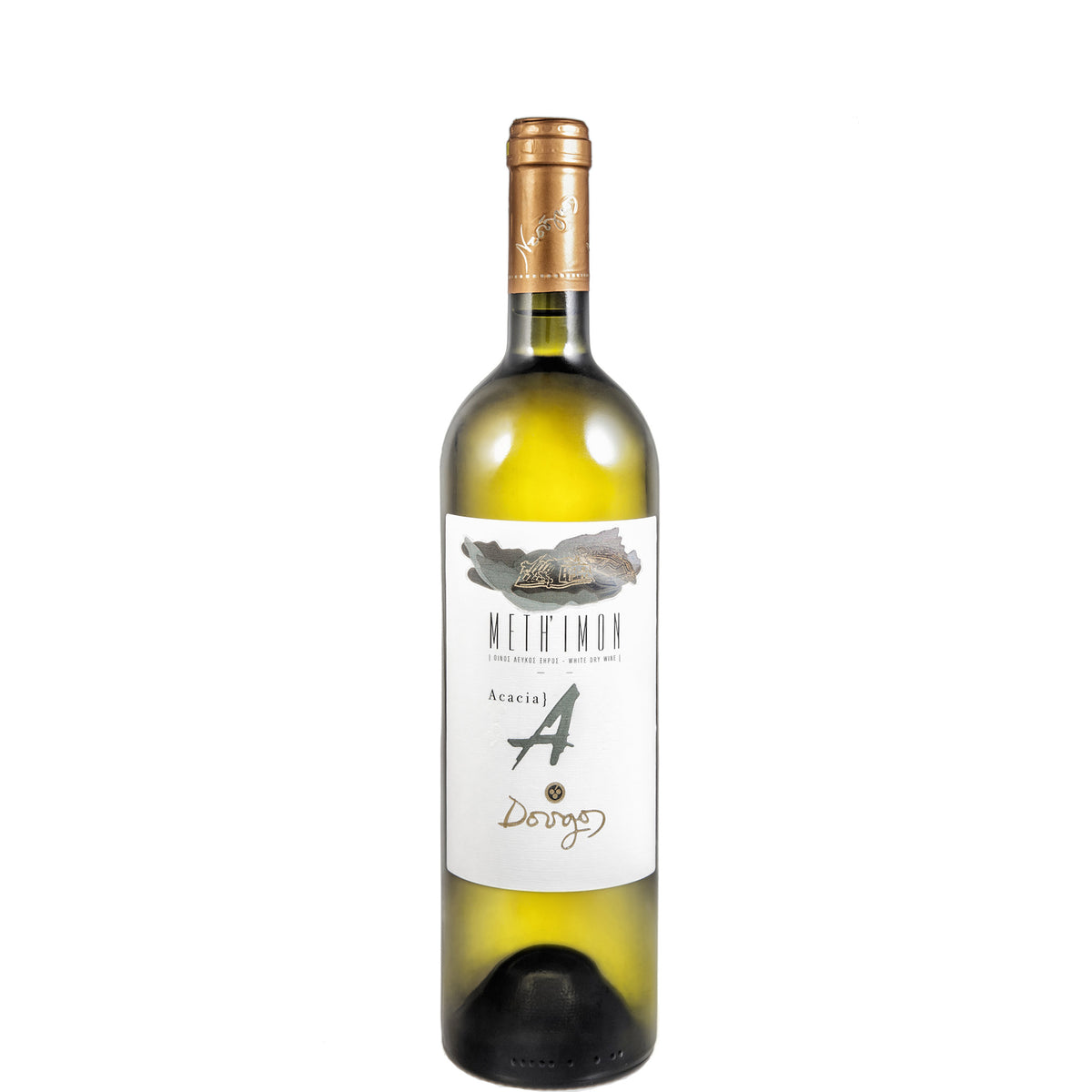
Dougos, Meth'Imon Acacia, 2021
Dougos, Meth'Imon Acacia, 2021
- 75cl
- 13.5%
- White Still
- Assyrtiko, Sauvignon Blanc
Couldn't load pickup availability

Optimal drinking window: 2026 - 2029
Dougos Winery sits in the foothills of Mount Olympus, and if that address sounds dramatic, the wines back it up. This is native Assyrtiko with a splash of Sauvignon Blanc, fermented and aged in large acacia barrels — a choice that matters, because acacia gives texture and a gentle aromatic lift without the vanilla freight of oak. The result is a white that's creamy and expressive but never flabby, with Assyrtiko's characteristic mineral edge cutting through the richness and keeping the finish clean and alive.
Floral, a little tropical, and with a faint sweetness from the wood that integrates rather than dominates — this is a genuinely interesting wine from a producer who clearly knows what they're doing. Drink it alongside grilled prawns, herb-roasted chicken, or a creamy seafood pasta.
Right now, in 2026, the wine is in a very happy place — the acacia and fruit are well-integrated and the mineral thread from the Assyrtiko is clean and expressive. Over the next year or two the tropical notes will soften slightly and a more honeyed, waxy character will emerge, adding interest without losing freshness.
What the critics say:
"I like the smoky, flinty character of this, with a textured array of grapefruits, pomelo pith, charcoal and burnt lemons. It's medium-bodied, with bright acidity. Deliciously pithy and salty at the end. 99% assyrtiko and 1% sauvignon blanc. From organically grown grapes. Drink now."
Tasting Notes
AppearancePale gold with bright, clear highlights and good viscosity on the glass.
NoseAcacia blossom and white peach open first, followed by a gentle tropical lift — mango, a little pineapple — with a faint honeyed warmth from the wood that feels inviting rather than heavy. There's something almost herbal underneath, a nod to the Sauvignon Blanc quietly doing its work.
PalateCreamy and generous from the off, with the acacia giving a smooth, rounded texture that carries the fruit well. But Assyrtiko doesn't let it get soft — there's a mineral grip and citrus tension running through the mid-palate that keeps things focused and stops the wine tipping into excess. The two varieties pull in opposite directions in the best possible way.
FinishClean and medium-long, with the mineral edge and a squeeze of lemon zest lasting well after the fruit fades.
Overall impressionA white that earns its texture — the acacia adds rather than obscures, and Assyrtiko's natural tension keeps the whole thing honest.
Food Pairings
In Thessaly, a wine like this would naturally find its way alongside freshwater fish from the region's rivers and lakes — grilled trout or carp dressed simply with lemon and olive oil. Locals might also pair it with taramosalata, the creamy fish roe dip that mirrors the wine's own richness, or with grilled halloumi and fresh herbs from the mountainside. Spanakopita — the spinach and feta pastry — is another local staple that works well with the wine's aromatic freshness. Further afield along the Greek coast, this style would be poured without hesitation alongside a plate of grilled octopus or a seafood risotto made with local shellfish.
We think this wine would go well with
Serve at around 10-12°C — cold enough to keep it crisp, warm enough to let the acacia aromatics open up. No need to decant; pour straight from the bottle and give it ten minutes in the glass. A wider-bowled white wine glass rather than a narrow flute will help the floral notes come forward and let the wine breathe properly.
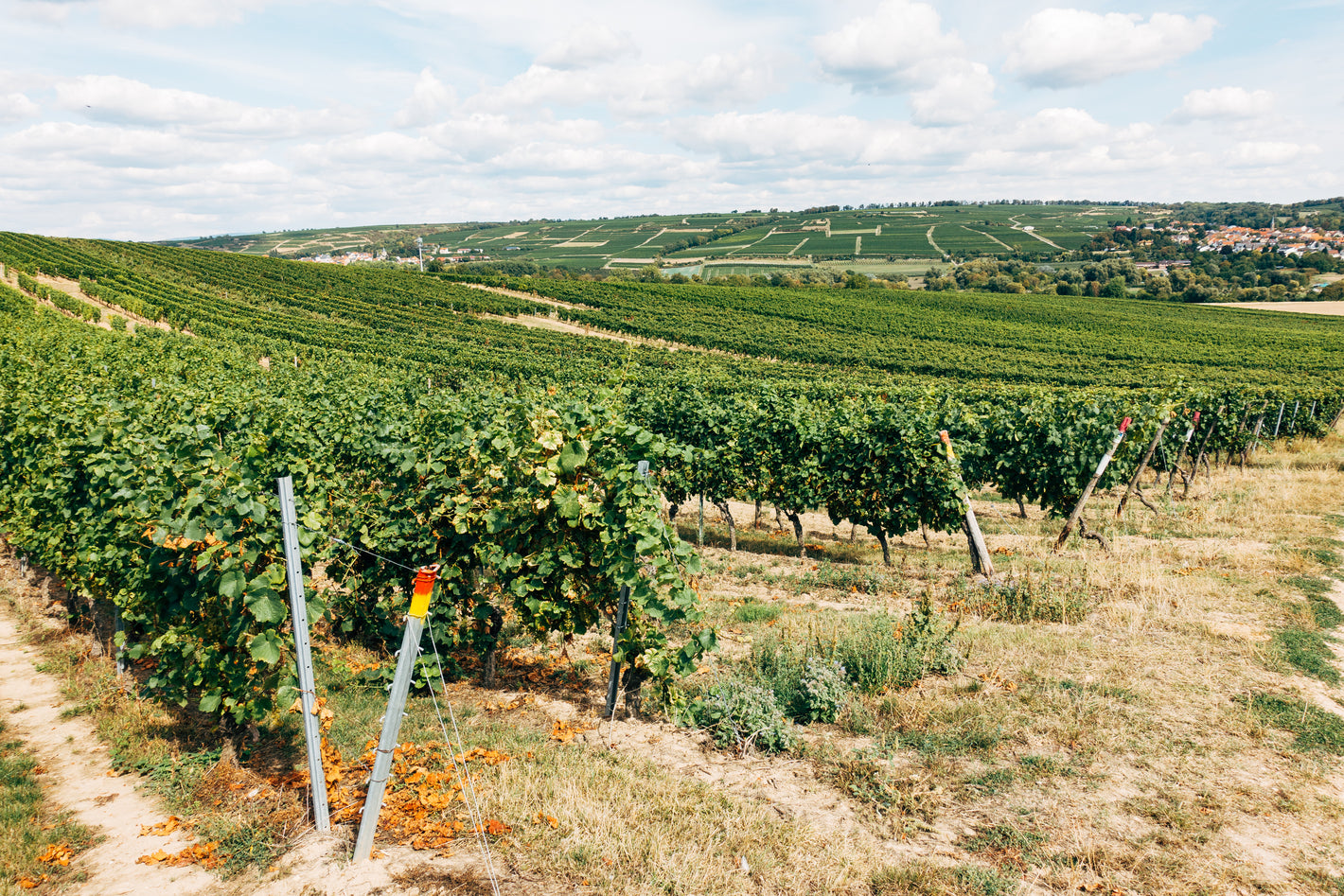
The vineyards sit in Tyrnavos, Thessaly, at altitude in the foothills of Mount Olympus, where cooler temperatures help preserve natural acidity and aromatic intensity in the grapes. The soils are largely clay-limestone, providing good water retention and a mineral backbone that is particularly evident in Assyrtiko. The continental climate, moderated by elevation, gives warm, sunny growing seasons with cool nights — ideal conditions for producing whites with both ripeness and freshness.
Thessaly is one of Greece's most historically significant wine regions, stretching across the central mainland and now attracting serious attention for its indigenous varieties. The area around Tyrnavos falls outside the stricter PGI or PDO framework for some wines, giving producers like Dougos freedom to experiment with blends and winemaking techniques. Compared to the island appellations such as Santorini, Thessaly's Assyrtiko tends to show more aromatic generosity and slightly softer edges, shaped by continental rather than maritime conditions.
The 2021 growing season across the Peloponnese was not without its tests. A relatively cool and wet spring delayed the start of the season, and summer brought the kind of heat the region knows well — but also some unsettling wildfire activity across parts of Greece that kept growers on edge. What saved 2021 was a temperate August and a dry, well-paced harvest window that allowed growers to pick at genuine physiological ripeness rather than racing against the heat. The result is a vintage shaped by patience as much as circumstance.
Across the board, 2021 produced wines with good natural acidity and real definition — Agiorgitiko from Nemea has a freshness to it that the riper, more opulent years can sometimes trade away, and Moschofilero from Mantinia is particularly lively. These are not blockbusters; they are wines with structure and grip that reward attention. Most reds are drinking well now, though the better Nemea bottlings have the backbone to hold until 2027 or 2028 without trouble.
FAQs
What does Meth'Imon Acacia taste like?
It's creamy and textured, with acacia blossom, white peach, and a gentle tropical lift from the Sauvignon Blanc. Assyrtiko's natural mineral tension cuts through the richness and keeps the finish clean and focused. The acacia barrel ageing adds body without tipping into heaviness.
When should I drink this wine?
It's drinking very well right now and will stay at its best until around 2029. This is not a wine to cellar for the long term — it's at its most expressive and aromatic in the next two to three years, so don't sit on it too long.
What food should I pair it with?
Grilled prawns or scallops are a natural match, as is roast chicken with herbs or a creamy seafood pasta. The wine's aromatic freshness also works well with lightly spiced Mediterranean dishes, spanakopita, or anything with lemon and olive oil. It's versatile enough for the table without demanding a specific occasion.
How should I serve it?
Serve at around 10-12°C in a wider-bowled white wine glass to let the floral aromatics open up. No need to decant — pour straight from the bottle and give it a few minutes in the glass. Avoid serving it too cold, as that will mute the acacia and fruit character that makes it interesting.
What makes the acacia barrel different from oak?
Acacia is a lighter, more neutral wood than oak. It adds texture and a subtle aromatic lift — think beeswax and blossom rather than vanilla and spice — without overwhelming the fruit. It's a deliberate choice at Dougos that suits Assyrtiko's naturally fresh, mineral character far better than heavy oak would.
Is this wine worth buying in quantity?
It's worth having a few bottles to enjoy over the next couple of years, but this isn't a candidate for deep cellaring. Buy what you'll drink before 2029 and enjoy it at its most expressive — which, happily, is right now.

OUR GROWERS
Dougos Winery
Explore related wines


What are you looking for tonight? Tell me the occasion, a grape, a region — or just try a suggestion below.
Your recommendations will appear here.
-
-
Speak to one of our Wine Gurus
Speak to a Wine GuruWith years of experience, our team can help you with all your wine buying and selling needs