

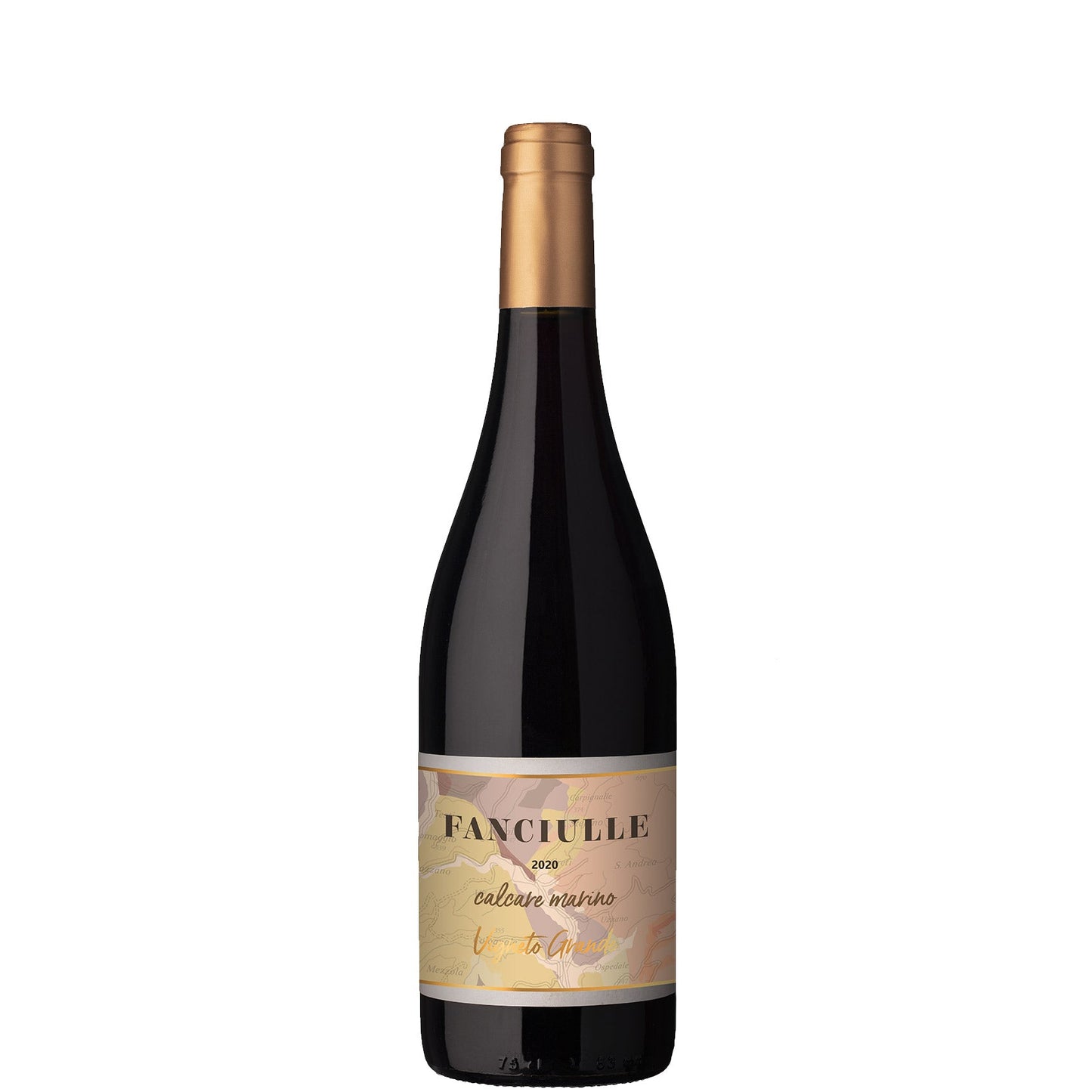
Fanciulle, Vigneto Grande, 2020
Fanciulle, Vigneto Grande, 2020
- 75cl
- 12.5%
- Red Still
- Sangiovese
- Organic
Couldn't load pickup availability

Optimal drinking window: 2026 - 2033
About Fanciulle, Vigneto Grande, 2020
Jem Macy is the founder and winemaker of Fanciulle, the gorgeous boutique estate from the sun-drenched hills of Tuscany. Every wine that Fanciulle produces is either biodynamically or organically grown across her range of single (predominantly) Sangiovese sites.
"Fanciulle typicity would be described as elegant and opulent whilst being fresh and invigorating, or to put it in Jem's own (and incredibly accurate words), "Sangiovese for Burgundy lovers" ."From limestone-rich soils. South facing, 400m above sea level. 25yr old vines. 2/3 French oak, 12.5% alcohol. "Quite a deep but lifted nose, spiced plums and sweet anise, dried violets, cacao nibs, touches of cedar and iron filings and a campfire the following morning, hints of crushed rock and marzipan but also a re citrus oil note too. High-toned berry fruit on the aerien attack, succulent, well-drawn tannins that draw the spicy, herbal berry fruit mid-palate along to a tapered finish. Mid-weight but plenty of intensity and energy at the core. Will be interesting to see how this fleshes out and softens slightly over the next 24 months but very drinkable even now."
Tom Harrow, Head Wine Guru
Right now the wine is in an engaging primary phase — the fruit is vivid, the tannins firm but not closed, and there is enough brightness to enjoy it without much ceremony. Over the next 12 to 24 months the tannins should flesh out and soften slightly, allowing the more savoury, mineral secondary notes to come forward and knit together with the fruit. The sweet spot is probably 2027 to 2030, when everything should be in balance and the wine at its most complete. Beyond 2031 it will likely begin to dry out as the fruit recedes, though bottles kept in good cellar conditions may surprise you until 2033.
Tasting Notes
AppearanceDeep ruby with a lifted, almost translucent rim that hints at the wine's energy and freshness.
NoseSpiced plums and dried violets lead, with sweet anise and cacao nibs close behind. There is cedar, iron filings, and something faintly smoky — like the morning after a campfire — alongside a bright thread of citrus peel that keeps everything lively.
PalateHigh-toned berry fruit on the attack, with Sangiovese's characteristic grip arriving in the form of well-structured, precise tannins that pull the spicy, herb-flecked fruit through the mid-palate. Mid-weight in body but with real intensity and nervous energy at the core — this does not feel like a wine that has padded itself out.
FinishTapered and clean, with lingering spice, a mineral echo, and just enough citrus brightness to keep you reaching back for the glass.
Overall impressionPrecisely the kind of Sangiovese that makes Burgundy drinkers stop and reconsider their assumptions.
Food Pairings
In Tuscany, a wine like this would sit naturally alongside a bistecca alla Fiorentina — the iron and citrus in the wine cutting beautifully through the fat of a well-aged Chianina steak. Locally, it would also find its place with wild boar ragu on pappardelle, or a slow-braised rabbit with olives and rosemary. A board of aged Pecorino Toscano and a handful of walnuts would do just as well if you want something less involved. The wine's freshness also makes it unusually good with earthy porcini dishes — a risotto or a simple pasta with butter and dried mushrooms.
We think this wine would go well with
Serve at around 16 to 17 degrees Celsius — cool enough to keep the acidity lively but warm enough to let the spice and fruit open up. A 30-minute decant will do it good right now; if you are opening a bottle before 2028, give it a full hour. A larger Burgundy-style bowl will suit it well, helping the nose unfurl without dissipating that lifted quality.
The Vigneto Grande sits on limestone-rich soils at around 400 metres above sea level, with a south-facing aspect that ensures good ripening even at altitude. That elevation is key: it preserves acidity and keeps the wine from tipping into the overripe register that warmer, lower Tuscan sites can produce. The 25-year-old vines root deep into the rock, which is part of what gives the wine that distinctive mineral edge — crushed stone and iron alongside the fruit.
Fanciulle's wines fall within Tuscany's broader IGT framework rather than the more prescriptive Chianti or Brunello DOC/DOCG classifications, which gives Jem the freedom to farm and vinify on her own terms. Tuscany's IGT category was partly created to accommodate producers whose ambitions outgrew the rulebooks — the so-called Super Tuscans came this route. Here it simply means Jem can grow, pick, and age exactly as she sees fit, without compromise.
The 2020 growing season in Tuscany threw everything it had at the vines, then delivered one of those dramatic turnarounds that makes wine people believe in providence. A cold, wet spring delayed budbreak and kept everyone on edge about flowering, whilst summer brought punishing heat that had producers reaching for shade nets and irrigation systems. Just when the vintage looked destined for mediocrity, September arrived with cooling temperatures and crucial rainfall that allowed the grapes to recover their composure and ripen properly rather than simply desiccate on the vine.
What emerged from the cellars shows Tuscany's resilience in fine form. The Sangiovese displays more immediate charm than we often see from the variety, with bright cherry fruit that doesn't sacrifice the underlying structure that makes Chianti and Brunello age so gracefully. Super Tuscans from the coastal areas fared particularly well, where Cabernet Sauvignon and Merlot thrived in the maritime influence and produced wines with both power and freshness. Most 2020s are drinking beautifully now, offering accessibility without compromising their long-term prospects, and we suspect the best will reward cellaring for another decade or more.
FAQs
What does the Vigneto Grande taste like?
Think spiced plums, dried violets, iron, and cedar with a bright citrus thread running through it. The tannins are precise and the whole thing has a nervous energy to it that sets it apart from richer, more opulent styles of Tuscan red. Jem Macy calls it Sangiovese for Burgundy lovers, and that is not far off.
When should I drink this wine?
It is genuinely enjoyable now, but another year or two in bottle will see the tannins soften and the wine find its full shape. The window runs from 2026 until around 2033, with the sweet spot probably somewhere between 2027 and 2030.
Is it worth cellaring?
Yes, with some patience. This is not a wine that needs a decade in the dark, but it will reward 12 to 24 months of further ageing. Think of it as a wine that is already talking but has more to say once it settles.
What food should I serve it with?
It is built for the Tuscan table — bistecca, wild boar ragu, slow-braised rabbit, earthy porcini pasta. Aged Pecorino and walnuts work well too if you want something simpler. The freshness in the wine makes it more food-versatile than many Tuscan reds at this price point.
How should I serve it?
Around 16 to 17 degrees Celsius, in a larger Burgundy-style bowl. Decant for at least 30 minutes, or a full hour if you are drinking it before 2028. It opens up noticeably with air.
Who is Fanciulle and why should I trust them with Sangiovese?
Fanciulle is Jem Macy's boutique Tuscan estate, farming biodynamically and organically across a focused range of single-vineyard Sangiovese sites. Her philosophy is precision over power, freshness over ripeness — and wines like this one make a compelling case that she has found exactly the right approach.

Explore related wines


What are you looking for tonight? Tell me the occasion, a grape, a region — or just try a suggestion below.
Your recommendations will appear here.
-
-
Speak to one of our Wine Gurus
Speak to a Wine GuruWith years of experience, our team can help you with all your wine buying and selling needs