

Frerejean Frères, 'Cuvée Éclipse' Blanc de Blancs, Grand Cru Millésime, 2016
Frerejean Frères, 'Cuvée Éclipse' Blanc de Blancs, Grand Cru Millésime, 2016
- 75cl
- 12%
- White Sparkling
- Chardonnay
Couldn't load pickup availability

Optimal drinking window: 2026 - 2036
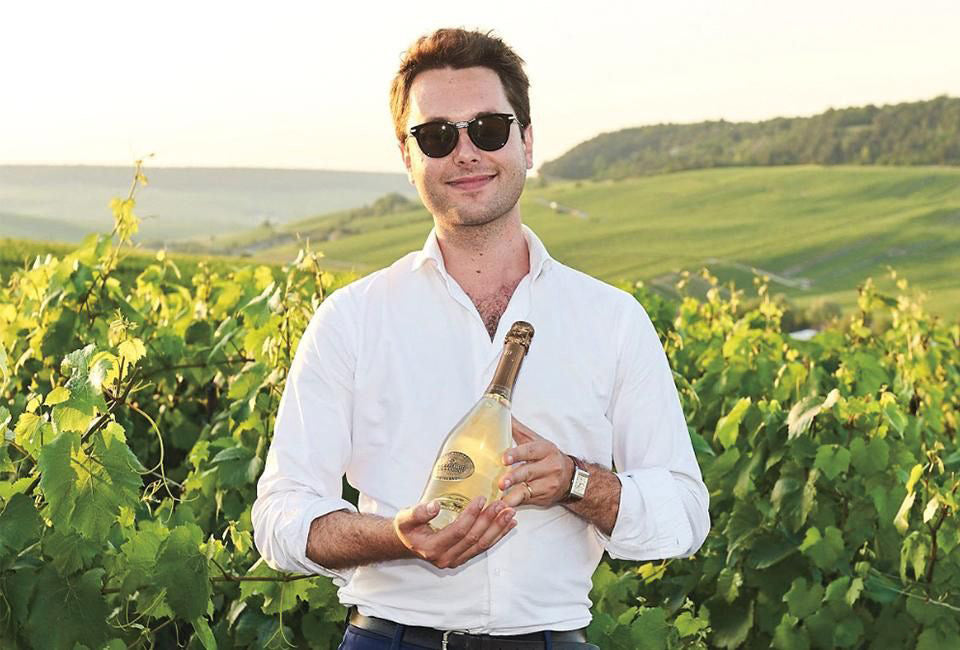
The 2016 'Cuvée Éclipse' Blanc de Blancs, Grand Cru is the brand new, highly limited special release from the maison. 100% Chardonnay from a single Grand Cru vineyard in their heartland in Avize, whose vines are over 60 years old, with a very low dosage of 2g applied and aged for a decade in 20% oak. Only 3,000 bottles produced.
It was disgorged in January and a bottle was tried with Rodolphe in April. Even though it was still settling, you could not disguise the sheer brilliance of this wine, which sets a new benchmark for the maison. The complexity and balance is quite profound.
Right now, the Éclipse is in an exciting transitional phase — primary fruit is still front and centre, with the lees character providing support rather than dominance. Over the next two to three years, we'd expect those toasty, honeyed secondary notes to integrate more fully and the mineral spine to become even more pronounced. By 2028 to 2030, it should be at or very close to its peak, with the complexity of a fully evolved prestige Blanc de Blancs.
Tasting Notes
AppearancePale gold with a fine, persistent mousse and slow-rising streams of tiny bubbles.
NoseGreen apple and white peach at the fore, shading into preserved lemon, warm brioche, and a cool, stony mineral quality that recalls wet chalk on a warm day. There is a delicate floral lift — white blossom, almost — that adds real elegance.
PalatePrecise and tensile, with a core of citrus and orchard fruit held in place by that characteristic Côte des Blancs acidity. The lees ageing adds a creamy texture and a subtle nuttiness without ever softening the structure. The balance between richness and cut is the real achievement here.
FinishLong and saline, with a chalky mineral persistence and a breath of toasted hazelnut that lingers well beyond the last sip.
Overall impressionA Blanc de Blancs of real precision and quiet ambition — worth every minute of the wait.
Food Pairings
In the Côte des Blancs, this kind of Champagne would most naturally find itself alongside a platter of local brine-kissed oysters from Normandy, or a simple preparation of langoustines with drawn butter. Locals also prize it with the region's own cheese traditions — a young Chaource, barely set, is a classic match, its creamy acidity mirroring the wine's own. Further along the table you might find a sole meunière or a delicate poached turbot, both of which let the wine's mineral precision shine rather than compete with it.
We think this wine would go well with
Serve between 9 and 11°C — cold enough to preserve the bubble and freshness, warm enough to let the lees complexity breathe. No decanting needed, though giving it 15 minutes in the glass before drinking is well worth it. Use a tulip-shaped Champagne glass rather than a flute; the wider bowl allows the nose to open properly and does far more justice to a wine of this depth.
The Grand Cru vineyards of the Côte des Blancs sit on some of the most storied chalk in all of Champagne — deep Cretaceous beds that drain freely, stress the vines productively, and impart that distinctive saline, almost electric mineral quality that sets the best Blanc de Blancs apart. The gentle easterly-facing slopes provide good morning sun while retaining freshness through the afternoon. In 2016, a cool growing season allowed extended hang time, concentrating flavour without sacrificing the razor-edged acidity the chalk naturally produces.
Champagne is the most tightly regulated sparkling wine appellation in the world, and Grand Cru status is awarded to just 17 villages, all of which score 100% on the historic échelle des crus classification. Blanc de Blancs within this framework means 100% Chardonnay, which in the Côte des Blancs is the dominant and best-suited variety. Compared to the Montagne de Reims, which favours Pinot Noir, or the Vallée de la Marne, where Pinot Meunier dominates, the Côte des Blancs produces the most refined and age-worthy expressions of Chardonnay in the region.
The 2016 growing season in Champagne delivered exactly what producers dream about: a textbook year that reminded everyone why this corner of northern France makes the world's finest sparkling wine. After a challenging start with spring frosts and mildew pressure, summer settled into a rhythm of warm days and cool nights that allowed both Chardonnay and Pinot Noir to ripen slowly and evenly. The harvest began in late September under ideal conditions, with grapes showing the kind of natural balance between sugar and acidity that eliminates any need for heavy-handed winemaking.
What emerged from the press houses was immediately obvious: 2016 produced Champagnes with exceptional purity and drive, the sort of vintage that makes tasting room visits memorable. The Chardonnay shows crystalline precision whilst the Pinots deliver both power and finesse, creating wines that feel both substantial and graceful on the palate. Most houses declared this a vintage year, and rightly so. These wines are drinking superbly now, offering immediate pleasure whilst clearly built for the long haul until 2035 and beyond.
FAQs
What does the Cuvée Éclipse taste like?
It is a precise, mineral-driven Blanc de Blancs with green apple, white peach, preserved lemon, and a chalky saline quality that runs from the nose all the way through to the finish. There is a creamy, toasty depth from extended lees ageing, but the overall character is one of tension and freshness rather than richness.
When is the best time to drink this wine?
It is drinking well now and will continue to improve until around 2030, when we think it will be at its most complete. Holding a bottle until 2034 or 2035 is perfectly reasonable for those who enjoy fully evolved Champagne, though we would not push it much beyond that.
What food should I serve with it?
Oysters, langoustines, or any delicate seafood preparation are the natural partners. A lightly creamy sauce suits the lees texture without overwhelming it. If you want to go cheese, a young Chaource or a mild goat's cheese works very well.
How should I serve it?
Between 9 and 11°C, in a tulip-shaped glass rather than a flute. Give it a few minutes to open up in the glass before drinking — the nose will reward the patience.
Is this worth cellaring?
Yes, genuinely. The 2016 vintage in Champagne produced wines with the structure and acidity to age gracefully, and the Éclipse has the lees depth and mineral backbone to develop well over the next several years. If you can hold a few bottles back until 2028 to 2030, we think you will be very glad you did.
How does Frerejean Frères compare to better-known Champagne houses?
They do not have the marketing budgets of the grandes marques, but in terms of quality and vinous seriousness they belong in the same conversation as the best small grower producers in the Côte des Blancs. The focus on Grand Cru Chardonnay and long lees ageing puts them firmly in prestige Blanc de Blancs territory at a price that still feels honest.

Explore related wines


What are you looking for tonight? Tell me the occasion, a grape, a region — or just try a suggestion below.
Your recommendations will appear here.
-
-
Speak to one of our Wine Gurus
Speak to a Wine GuruWith years of experience, our team can help you with all your wine buying and selling needs