

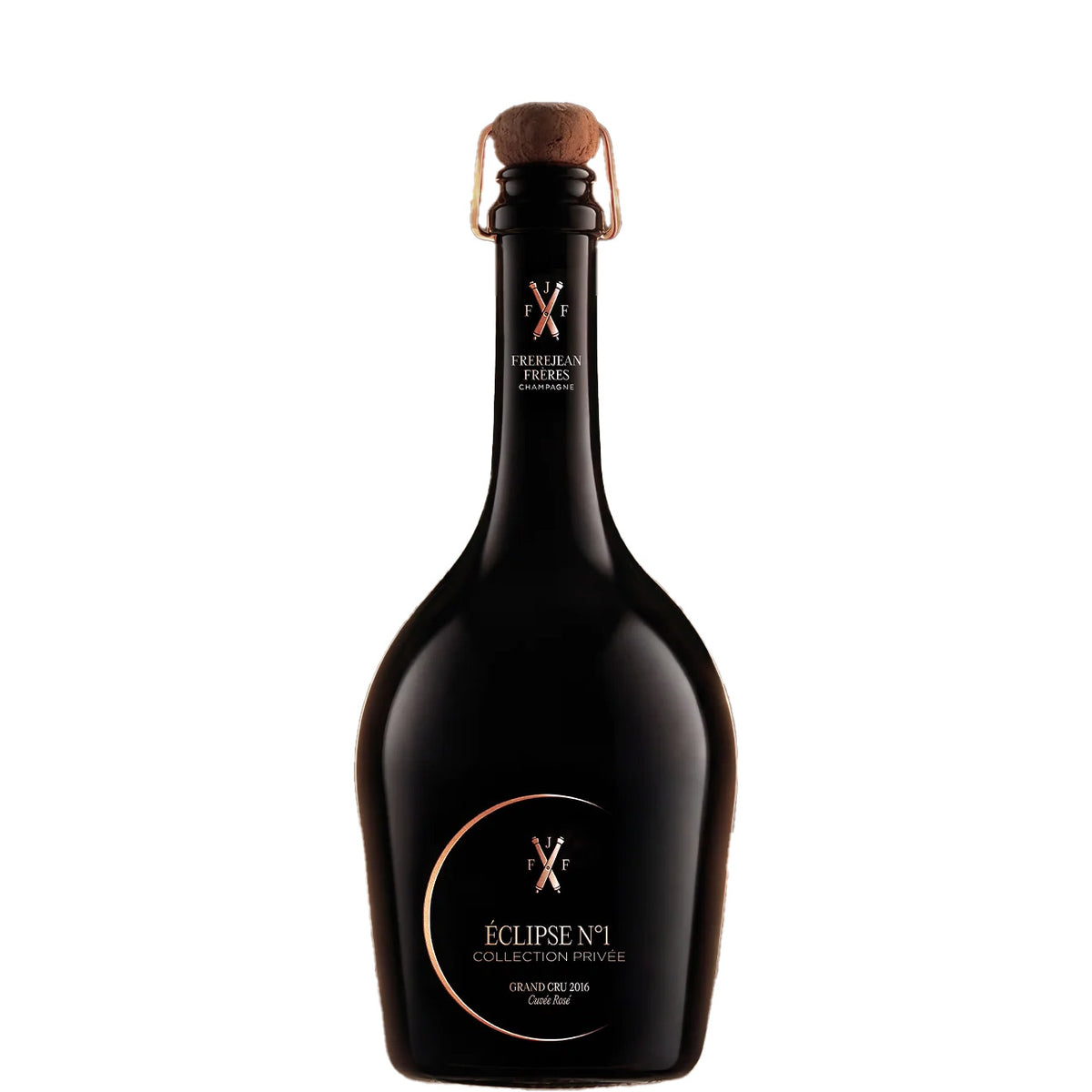
Frerejean Frères, 'Cuvée Éclipse' Rosé, Grand Cru Millésime, 2016
Frerejean Frères, 'Cuvée Éclipse' Rosé, Grand Cru Millésime, 2016
- 75cl
- 12%
- Rosé Sparkling
- Chardonnay, Pinot Noir
Couldn't load pickup availability

Optimal drinking window: 2026 - 2034
Frerejean Frères’ Éclipse Rosé 2016 is a pretty serious bit of Champagne. A 100% Grand Cru rosé from the Côte des Blancs and Vallée de la Marne, it’s 90% Chardonnay and 10% Pinot Noir, giving it the fine, chalky freshness of Chardonnay with a little extra depth and red-fruit character from the Pinot. It has spent close to nine years ageing on its lees, with 11% of the wine seeing oak, and is finished Extra-Brut.
It’s elegant rather than flashy, with enough structure to work properly at the table. Produced in just 5,500 bottles, it’s the first release in Frerejean Frères’ limited Éclipse collection, created to showcase exceptional vintages after plenty of time in the cellar.
Try it with tuna or sea-bream ceviche, roast duck, or even a raspberry dessert if you want to take the fruitier side of the wine for a spin.
The 2016 is drinking well now — the primary fruit has integrated with the extended lees ageing and the wine has found a pleasing equilibrium between freshness and complexity. Over the next two to three years, the saline mineral character will become more pronounced and the toasty, autolytic notes will deepen further. By around 2029-2030 it should be at its peak, with the fruit, structure, and secondary complexity all in sync.
Tasting Notes
AppearancePale salmon-copper with a fine, steady bead and a delicate, persistent mousse.
NoseWild strawberry and blood orange lead, followed by toasted brioche and a whisper of dried rose petal. There's a stony, almost flinty edge underneath that gives the whole thing a sense of composure — this isn't a fruity rosé, it's a serious one.
PalateThe mousse is fine and creamy but the wine's real energy comes from its acidity and chalky mineral backbone, which keeps the red fruit and pastry notes from becoming soft or indulgent. There's a lovely tension between the Chardonnay's precision and the Pinot Noir's generosity — neither dominates, both contribute. A thread of blood orange bitterness runs through the mid-palate and keeps you returning.
FinishLong, saline, and dry with a lingering chalk-dust mineral note and a final breath of citrus peel.
Overall impressionA rosé Champagne that makes its case through restraint and precision rather than charm alone.
Food Pairings
In Champagne, a wine like this would be opened with the kind of food that respects its structure rather than overwhelms it — think a simple platter of charcuterie from the Ardennes, rillettes, and a few slices of jambon de Reims. Locals might also pair it with a gratin of freshwater crayfish from the Marne river, where the wine's saline acidity cuts beautifully through the cream. Smoked salmon on blinis with crème fraîche is a classic match for good reason: the smoky richness and the wine's toasty, mineral character work in easy harmony. For something more substantial, roast pigeon with cherry jus — a dish common to the region's smarter tables — plays directly to the wine's Pinot Noir roots.
We think this wine would go well with
Serve at 9-11°C — cold enough to keep the mousse lively, but not so cold that the complexity closes down. No need to decant, though giving it ten minutes in the glass before drinking allows the nose to open properly. A large-bowled white wine glass or a tulip-shaped Champagne glass rather than a flute will serve this wine far better, giving the aromas room to gather and the mousse space to settle into something more interesting.
The Grand Cru villages of the Côte des Blancs sit on some of Champagne's deepest and purest chalk deposits, which drain freely and force vine roots deep in search of water and minerals — the result is a distinctive saline, flinty tension in the wine that no other soil type quite replicates. Avize and Cramant, where much of Frerejean Frères' Chardonnay fruit originates, face east and southeast, capturing morning sun while avoiding afternoon heat, preserving the natural acidity that makes these wines so age-worthy. The Pinot Noir component for the Éclipse comes from the Montagne de Reims Grand Crus, where slightly heavier soils with more clay lend body and red-fruit character.
Champagne is the only AOC in France where the méthode traditionnelle — secondary fermentation in bottle — is mandated for all sparkling wine production, alongside strict rules on grape varieties, yields, and minimum ageing. Grand Cru is the appellation's highest classification, applied to just 17 villages whose fruit commands a 100% rating on the échelle des crus scale; the designation is vineyard-led rather than château-led, meaning it speaks directly to site quality rather than producer prestige. Vintage Champagne, or millésime, must come entirely from a single harvest and spend a minimum of three years on lees, though the best producers age for considerably longer. Compared to non-vintage Champagne, millésime wines carry the character of their specific year rather than a house style, which means great vintages reward patience in a way that NV bottles simply can't.
The 2016 growing season in Champagne delivered exactly what producers dream about: a textbook year that reminded everyone why this corner of northern France makes the world's finest sparkling wine. After a challenging start with spring frosts and mildew pressure, summer settled into a rhythm of warm days and cool nights that allowed both Chardonnay and Pinot Noir to ripen slowly and evenly. The harvest began in late September under ideal conditions, with grapes showing the kind of natural balance between sugar and acidity that eliminates any need for heavy-handed winemaking.
What emerged from the press houses was immediately obvious: 2016 produced Champagnes with exceptional purity and drive, the sort of vintage that makes tasting room visits memorable. The Chardonnay shows crystalline precision whilst the Pinots deliver both power and finesse, creating wines that feel both substantial and graceful on the palate. Most houses declared this a vintage year, and rightly so. These wines are drinking superbly now, offering immediate pleasure whilst clearly built for the long haul until 2035 and beyond.
FAQs
What does the Cuvée Éclipse Rosé taste like?
It's a serious, structured rosé Champagne built around wild strawberry, blood orange, and toasted brioche, with a chalky, saline mineral backbone that keeps everything focused and dry. This isn't a soft, fruity rosé — it has real precision and something to say.
When is the best time to drink the 2016?
It's drinking well now and will continue to develop until around 2034. The sweet spot is probably 2027 to 2031, when the fruit, secondary complexity, and mineral backbone are all in balance. Open it too early and you catch it before it's fully expressed; leave it too long and the fruit fades ahead of the structure.
What food should I serve with it?
Smoked salmon, charcuterie, and Champagne-region classics like jambon de Reims all work brilliantly. For something more ambitious, roast pigeon with cherry jus plays directly to the wine's Pinot Noir depth. The wine's acidity and saline finish also make it a natural partner for anything cream-based — crayfish gratin, lobster bisque, or a simple but good crab on toast.
How should I serve it?
Serve at 9-11°C in a large tulip or white wine glass rather than a flute — the broader bowl gives the aromas room to open and lets you actually smell what's going on. Give it ten minutes in the glass before drinking. No decanting needed.
Is it worth cellaring?
Yes, with confidence. The 2016 vintage in Champagne was excellent — great natural acidity and ripe, concentrated fruit — and Frerejean Frères' extended lees ageing means there's plenty of structure to support further development. It won't improve indefinitely, but you have a comfortable window until 2034.
What makes Frerejean Frères different from larger Champagne houses?
They work exclusively from Grand Cru fruit rather than buying in from across the appellation, and they produce in small batches with genuine attention to individual vineyard character. The result is Champagne that reflects a specific place rather than a consistent commercial style — which is exactly what makes wines like the Éclipse worth seeking out.
Explore related wines


What are you looking for tonight? Tell me the occasion, a grape, a region — or just try a suggestion below.
Your recommendations will appear here.
-
-
Speak to one of our Wine Gurus
Speak to a Wine GuruWith years of experience, our team can help you with all your wine buying and selling needs