
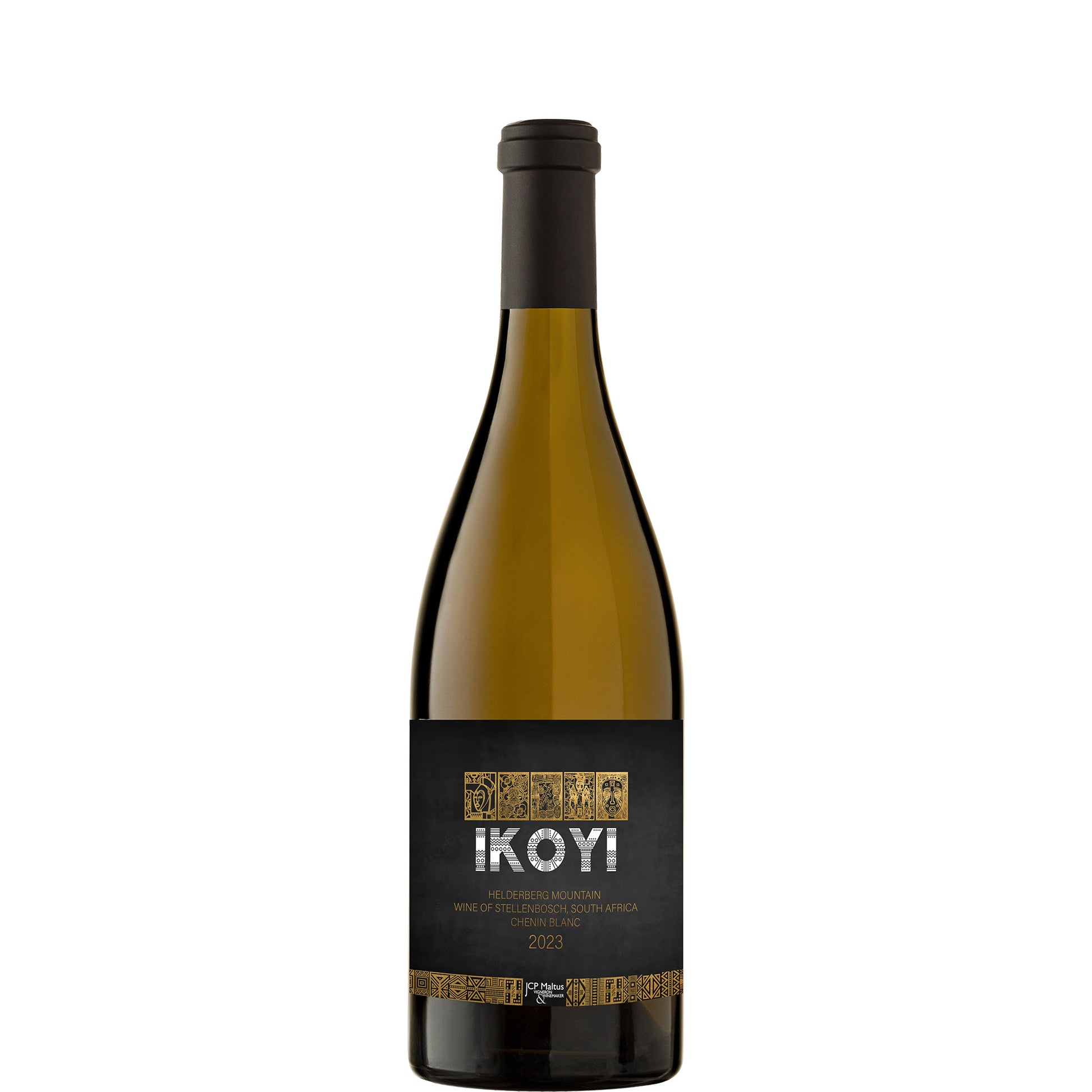
IKOYI White, 2023
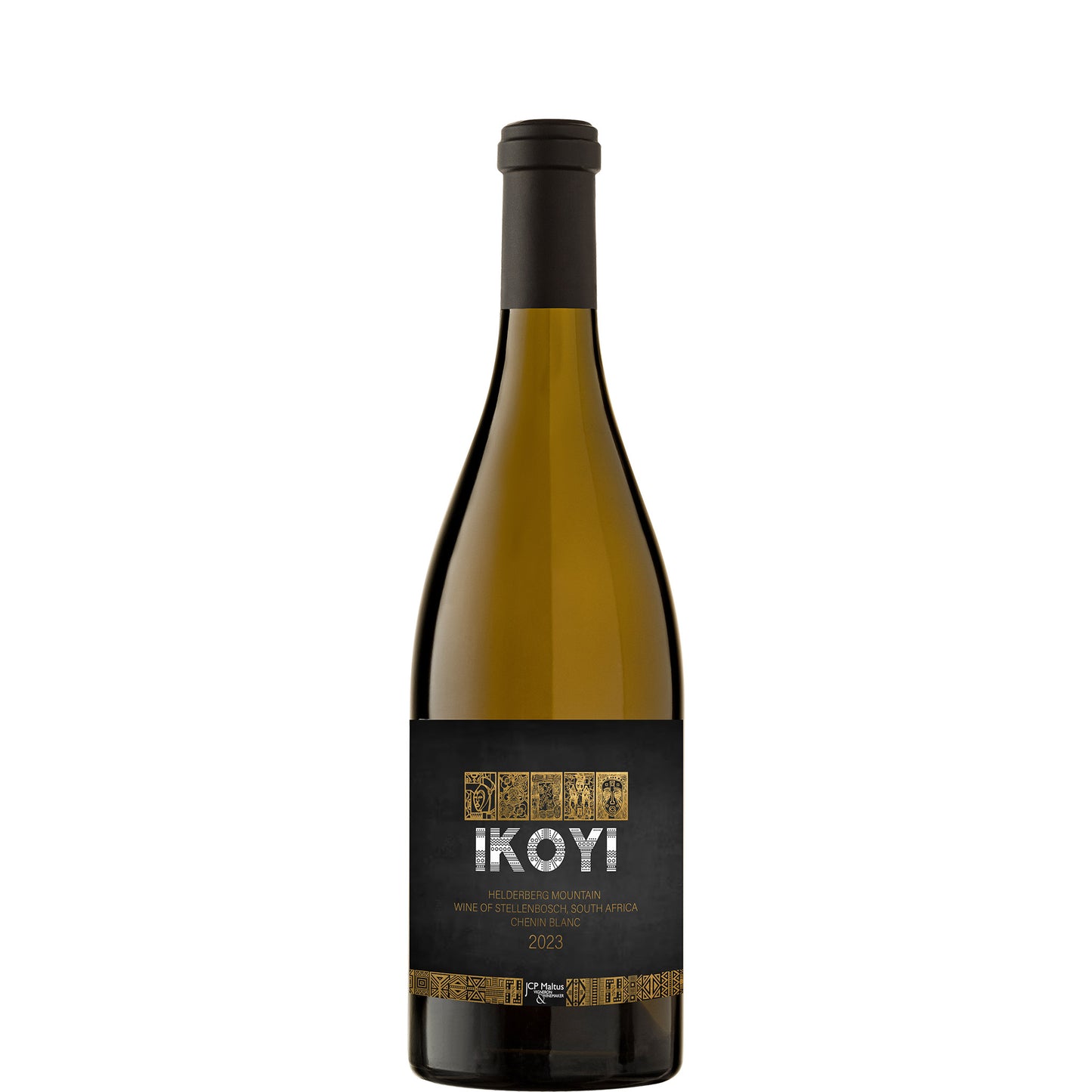
IKOYI White, 2023
- 75cl
- 13.5%
- White Still
- Chenin Blanc
Couldn't load pickup availability

Optimal drinking window: Now - 2030
"The combination on the nose of exoticism (beeswax, macadamia nuts, yuzu, yellow plums) and vigour (grapefruit peel, fresh ginger, wet stones, sea breeze, apple blossom, pine) is very appealing. The palate also has a good balance of zestiness and slightly richer nuances. Juicy citrus and white stone fruit convert to waxed pears, toasted pine nuts and salted caramel, but always pulled along by tongue-tingling acids. The passage in oak has given the wine broader shoulders but done nothing to stunt the tension and purity."
Tom Harrow, Head Wine Guru
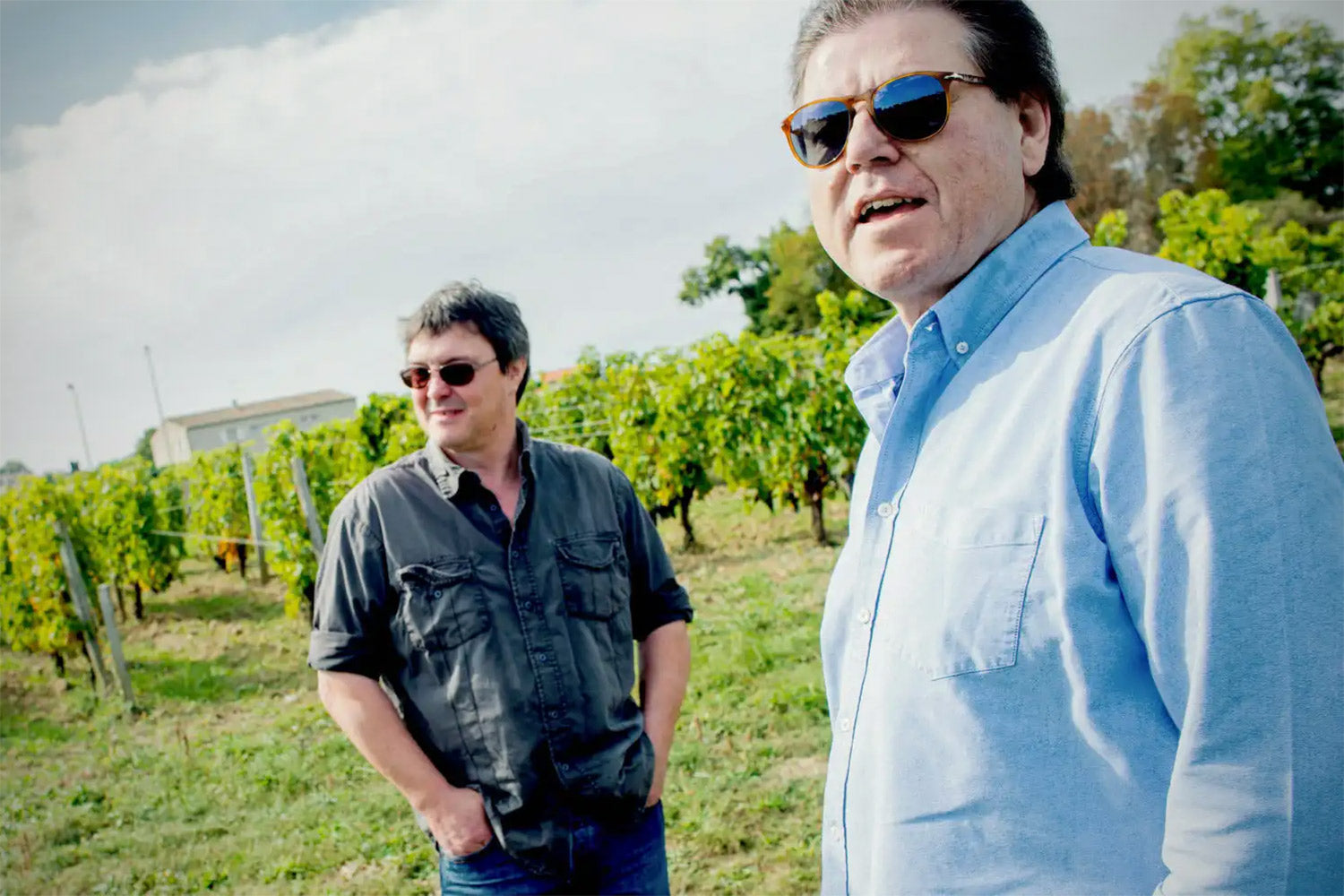
In order to craft a top-notch Chenin Blanc, we were keen to work with Jonathan Maltus OBE, one of the original Saint Émilion garagistes, and Jonathan teamed up with Cape Winemakers Guild member Rianie Strydom of Strydom Family Wines.
"Driven, ripe, dry and slightly bitter, through to a clean citrus flourish on the finish, this is a wonderful expression of cool, high-altitude Stellenbosch Chenin."
Chris Kissack, Winedoctor (Aug-2026)
The best examples of this signature white from South Africa has rare appeal to both lovers of white Burgundy and Sauvignon Blanc. Ours comes from a site 300m above sea-level, from the northern slopes of the Helderberg. Planted in 1988 the 35-year old vines are very low-yielding (around 30 hl/ha) and the vineyard lies in the “Golden Triangle” of Stellenbosch, close to Haskell Vineyards, Alto and Rust en Vrede.
Right now, in 2026, this wine is in a very good place — the fruit is vivid, the oak is already well-integrated, and the acids are keeping everything taut. Over the next two to three years the citrus notes will soften and the more waxy, honeyed side of the Chenin will come forward. By 2029 or 2030 it should be at its most expressive, with secondary complexity — nuts, lanolin, dried stone fruit — adding real depth.
What the critics say:
"Wine lovers from all over the world can look forward to excellent wines from a much cooler and smaller 2023 wine grape season in South Africa."
Tasting Notes
AppearancePale gold with a bright, almost luminous edge — you'd guess something coastal and high-altitude before you even take a sniff.
NoseThere's a lovely push-pull at work here: beeswax, macadamia, yellow plum, and a touch of yuzu on one side, then grapefruit peel, fresh ginger, apple blossom, and a lick of sea breeze on the other. The oak is there but it doesn't announce itself — it just adds a faint toasted depth underneath. Nothing is overripe, nothing is shy.
PalateJuicy citrus and white stone fruit lead, then the wine fills out through the mid-palate with waxed pear, toasted pine nuts, and a whisper of salted caramel. The acids keep everything honest — this is a wine with broader shoulders than most Chenin at this price, but the tension never lets up. You get richness and precision in the same mouthful, which is no small trick.
FinishLong, saline, and slightly waxy, with citrus pith and a faint mineral echo that lingers well past the glass.
Overall impressionA Chenin Blanc that appeals equally to white Burgundy drinkers and Sauvignon Blanc lovers — and fully delivers on that promise.
Food Pairings
In the Western Cape, a Chenin like this is the natural companion to snoek pâté — smoky, rich, and saline, it wants something with exactly this wine's character to cut through it. Slow-roasted pork belly with apricot and ginger is a classic Cape Malay-influenced pairing that plays beautifully to the wine's stone fruit and spice. A simple grilled crayfish with lemon butter is hard to argue with. Locally you'd also see it alongside creamy bobotie or a slow-cooked chicken pie with a buttery pastry crust. The waxiness and acidity make it equally good with aged Gruyère or a strong washed-rind cheese.
We think this wine would go well with
Serve at around 10-12°C — cold enough to keep the acids crisp, but not so cold that the texture disappears. No need to decant, though letting it open up for ten minutes in the glass is no bad thing. A wide-bowled white wine glass works well here; it gives the aromatic complexity room to breathe without overwhelming the precision. Don't chill it to restaurant-fridge temperatures or you'll lose half of what makes it interesting.
The vineyard sits on the northern slopes of the Helderberg at 300 metres above sea level, which gives it a cooler, more wind-exposed aspect than many Stellenbosch sites. That altitude keeps the growing season long and the acids alive. The vines were planted in 1988, now well into their late thirties, and low yields of around 30 hl/ha mean each cluster is working hard. The 2023 season was notably cool and compact across South Africa, which only sharpened the wine's natural tension.
Stellenbosch is South Africa's most prestigious red wine region, but its whites — Chenin Blanc in particular — have been quietly extraordinary for decades. The Helderberg sub-district sits in the southern reaches of the appellation, where False Bay breezes push in from the coast and moderate what would otherwise be a warm inland climate. The so-called Golden Triangle, where this vineyard sits alongside names like Haskell, Alto and Rust en Vrede, has long produced wines of unusual concentration and freshness. Stellenbosch Chenin rarely gets the headline treatment of its Swartland counterpart, but the best examples match it for depth and add a coastal precision of their own.
The 2023 growing season in Stellenbosch was shaped by a relatively cool, dry summer, which gave growers the kind of measured ripening that makes viticulturalists quietly optimistic. Rainfall was well-distributed early in the season, building good vine reserves without encouraging disease pressure, and the harvest came in at a sensible pace rather than a panic. The result was fruit with genuine freshness alongside ripe tannins — the sort of balance that doesn't happen by accident.
Across the board, 2023 produced wines with real definition. Cabernet Sauvignon and the Bordeaux blends that Stellenbosch does so well have come out with firm but finely grained structure and the kind of concentrated dark fruit that rewards patience. Chenin Blanc and Syrah also performed strongly, with Syrah in particular showing the peppery, muscular character the cooler sites here do better than almost anywhere else. Most reds will drink well from now but have the architecture to develop further — we'd give the serious Cabernet-based wines until at least 2028 to 2032 before calling them truly ready.
FAQs
What does IKOYI White taste like?
It sits somewhere between a white Burgundy and a Sauvignon Blanc, with beeswax, macadamia, grapefruit peel, waxed pear, and toasted pine nuts all in play. The acids are lively and the finish is long and slightly saline. It's a wine with both richness and precision — not always easy to achieve.
When is the best time to drink this wine?
It's drinking very well now, in 2026. The 2023 vintage was a cool, concentrated year in South Africa, which gives this wine excellent freshness. We'd drink it from now until around 2030-2031, with a peak somewhere around 2028-2030 when secondary complexity starts to add real depth.
What food should I pair it with?
Grilled crayfish or lobster with lemon butter is the obvious call. It also works brilliantly with slow-roasted pork, Cape Malay-spiced chicken dishes, creamy fish pies, and aged hard cheeses. The waxiness and citrus acidity give it real versatility at the table.
Is this wine worth cellaring?
Yes, with moderate ambition. Old-vine Chenin Blanc from a cool vintage like 2023 has genuine ageing potential. You'll start to see the wine open up and gain complexity from around 2028 onwards. We wouldn't push it much beyond 2032, but there's no rush to open it tonight either.
How should I serve it?
Serve at 10-12°C in a wide-bowled white wine glass. No need to decant, but give it a few minutes in the glass before diving in. Avoid over-chilling — too cold and you'll mute the aromatic complexity that makes this wine worth buying.
Who makes IKOYI White?
It's a collaboration between Jonathan Maltus OBE — one of the original Saint-Émilion garagistes — and Rianie Strydom of Strydom Family Wines, a member of the Cape Winemakers Guild. The fruit comes from a single old-vine Chenin Blanc vineyard on the Helderberg, planted in 1988. It's a cross-continental partnership that punches well above its weight.
Explore related wines


What are you looking for tonight? Tell me the occasion, a grape, a region — or just try a suggestion below.
Your recommendations will appear here.
-
-
Speak to one of our Wine Gurus
Speak to a Wine GuruWith years of experience, our team can help you with all your wine buying and selling needs