

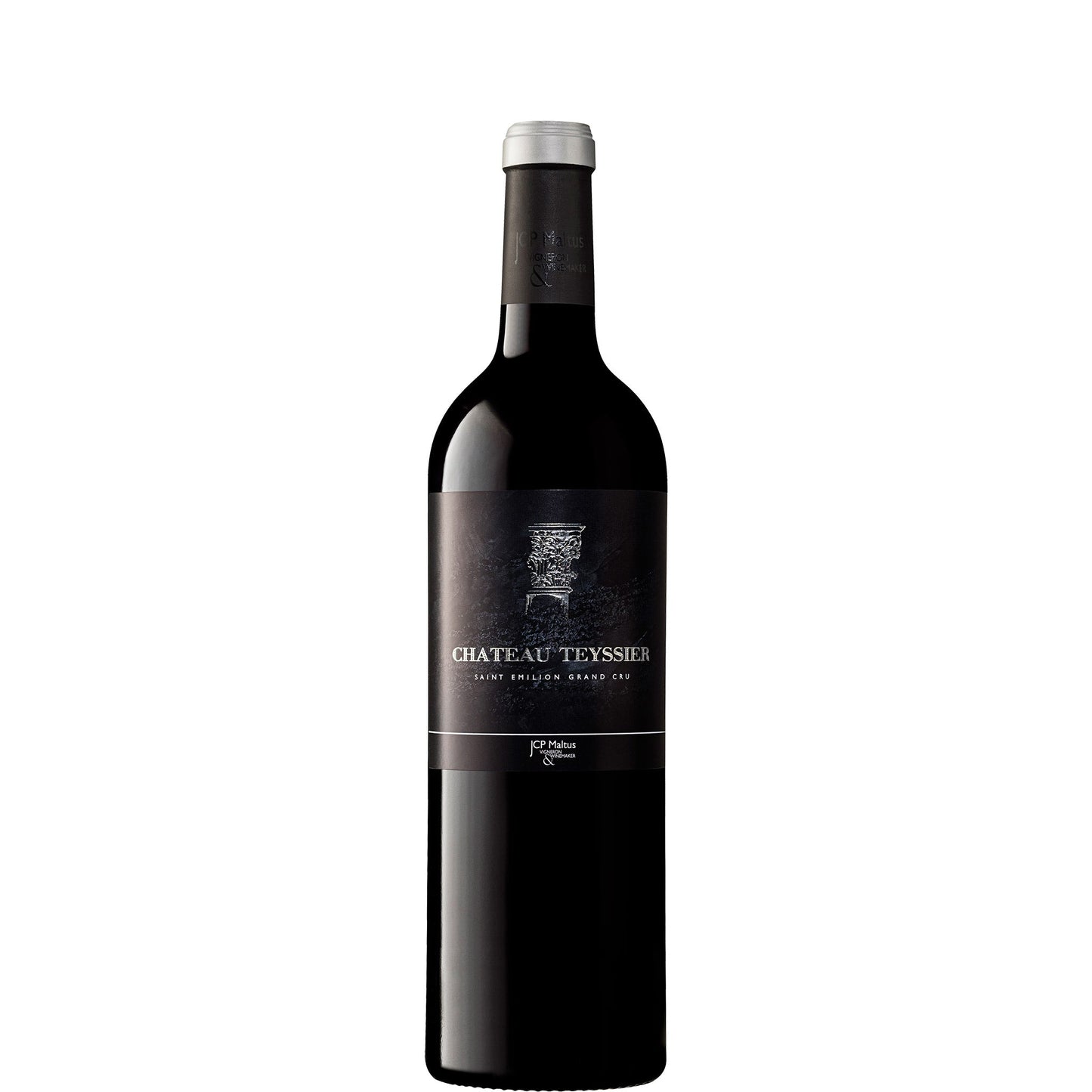
JCP Maltus, Château Teyssier Kosher, 2019
JCP Maltus, Château Teyssier Kosher, 2019
- 75cl
- 13.5%
- Red Still
- Cabernet Franc, Merlot
- Kosher
Couldn't load pickup availability

Optimal drinking window: Now - 2033
Teyssier is a solid performer, gracing the 1st class lounges of several airlines, the choice of a Grand Prix or two, and recommended by critics like The Wall Street Journal's Will Lyons and Master of Wine Tim Atkin. It's also one of our key picks and best value reds, great for impressing at dinner parties.
We are delighted to announce that Jonathan Maltus agreed to produce a limited selection Kosher edition of his famous estate wine Château Teyssier 2019.
Currently showing primary blackberry and blueberry fruit supported by well-integrated oak, the wine is entering its optimal drinking window. Over the next 2-3 years, expect the fruit to become more integrated whilst earthy, leather, and tobacco notes emerge to complement the existing graphite minerality. The wine should plateau around 2029-2031, maintaining its balance of fruit and secondary complexity. Beyond 2033, the fruit may begin to fade, though the limestone-derived structure should ensure graceful ageing for serious collectors.
What the critics say:
"Tight, focused ripe fruit with chewy, polished tannins. It’s full-bodied with a lingering and precise finish. Extremely well-done."
"QPR Winner. The nose of this wine is lovely, crisp, earthy, dirty, and smoky, with ripe fruit, showing red, blue, and hints of black fruit, all wrapped in black tea, anise, rich menthol, lovely minerality, coffee grinds, and loam, nice! The mouth of this full-bodied wine is ripe, balanced, and tense, with lovely blackberry, raspberry, ripe blueberry, loam, roasted herbs, mouth-draping and elegant tannin, with sweet oak, lovely tension, scraping minerality, loam, and more smoke. The finish is long, ripe, and balanced, with more tannin, ripe blueberry, plum, leather, dark chocolate, menthol, rich graphite, and minerality, and loam lingering long. Bravo! Drink from 2025 until 2033."
Tasting Notes
AppearanceDeep ruby with hints of purple at the rim, showing good concentration and youthful vigour.
NoseThe aromatics leap from the glass with ripe blackberry and blueberry fruit wrapped in earthy minerality and smoke. There's a lovely lift of black tea and anise, with coffee grounds and that distinctive Saint-Émilion graphite character adding complexity. The oak integration is exemplary, supporting rather than dominating the fruit.
PalateFull-bodied and beautifully balanced, with ripe berry fruit flowing across polished, mouth-coating tannins. The minerality scrapes pleasantly across the palate, whilst roasted herbs and sweet oak add layers of interest. There's genuine tension here despite the richness, with the limestone terroir providing backbone and structure.
FinishLong and persistent, with dark chocolate, menthol, and graphite lingering alongside ripe plum and leather notes.
Overall impressionA wine that perfectly captures Saint-Émilion's ability to combine immediate pleasure with serious structure.
Food Pairings
In Saint-Émilion, this would accompany the rich, earthy cuisine of the Périgord: confit de canard with roasted garlic, magret de canard aux cèpes, or the local specialty of lamprey cooked in red wine. The limestone terroir makes it a natural partner for aged Roquefort or mature Comté, whilst the wine's structure can handle the robust flavours of cassoulet or côte de bœuf grilled over vine cuttings. Local charcuterie, particularly boudin noir with apples, would showcase the wine's earthy minerality perfectly.
We think this wine would go well with
Serve at 17-18°C to allow the fruit and mineral complexity to express fully. Decant for 60-90 minutes to soften the polished tannins and allow the aromatics to open properly. Use a large Bordeaux glass to concentrate the nose whilst providing adequate surface area for aeration. At this age, the wine benefits from breathing time but doesn't require extended decanting.
Château Teyssier's vineyards sit on Saint-Émilion's limestone plateau, where clay-limestone soils provide excellent water retention and mineral complexity. The elevated position ensures good drainage whilst the limestone bedrock imparts the characteristic graphite minerality that defines the best Right Bank wines. These soils favour Merlot particularly, allowing it to achieve full phenolic ripeness whilst retaining freshness.
Saint-Émilion is Bordeaux's most romantic appellation, where limestone meets history in equal measure. Unlike the Médoc's gravel-loving Cabernet Sauvignon, Saint-Émilion's clay-limestone soils favour Merlot-based blends that offer earlier approachability without sacrificing ageing potential. The appellation's classification system, revised regularly, recognises estates for both terroir and consistent quality. Saint-Émilion wines typically show more immediate fruit charm than their Left Bank counterparts whilst developing complex earthy notes with age.
The 2019 growing season in Bordeaux delivered exactly what vignerons dream about: a textbook combination of winter rain to replenish the soils, a warm spring that encouraged even budbreak, and crucially, a bone-dry summer that stressed the vines just enough without cooking them. September brought the perfect finale with warm days and cool nights, allowing grapes to ripen slowly while retaining their natural acidity. Harvest began in mid-September under ideal conditions, with pickers working through October to capture each variety at optimal ripeness.
What emerged from the cellars shows all the hallmarks of a properly made vintage: the Merlot displays that gorgeous plush fruit character without any jammy excess, while Cabernet Sauvignon achieved full phenolic ripeness with structured tannins that feel ripe rather than harsh. We find these wines have a lovely immediacy about them—they're not the brooding, backward style that demands decades of patience, but rather wines with enough backbone to age gracefully while offering genuine pleasure from release. Most are drinking beautifully now and will continue to develop over the next 15-20 years, making this one of those vintages that works for both early drinkers and patient cellars.
FAQs
What does this wine taste like?
Rich and structured with ripe blackberry fruit, graphite minerality, and polished tannins. There's lovely complexity from earthy notes, black tea, and a distinctive smoky character that marks quality Saint-Émilion winemaking.
When should I drink this wine?
It's drinking beautifully now and will continue to develop until 2033. The wine is approachable immediately but will reward patience as earthy secondary flavours emerge over the next few years.
What food pairs well with this wine?
Classic with roasted lamb, duck confit, or aged hard cheeses like Comté. The wine's structure handles rich, earthy dishes perfectly, whilst its mineral backbone complements mushroom-based cuisine beautifully.
Should I decant this wine?
Yes, decant for 60-90 minutes to soften the tannins and allow the aromatics to fully express. Serve at 17-18°C in large Bordeaux glasses for optimal appreciation.
Is this wine suitable for kosher dietary requirements?
Yes, this is a fully kosher wine produced under strict rabbinical supervision, maintaining all the quality and character of the original Château Teyssier whilst meeting kosher certification requirements.
How does this compare to regular Château Teyssier?
This kosher edition maintains the same exacting winemaking standards and vineyard sources as the regular bottling. The only difference is the kosher supervision during production, ensuring the wine meets dietary requirements without compromising quality.
Explore related wines


What are you looking for tonight? Tell me the occasion, a grape, a region — or just try a suggestion below.
Your recommendations will appear here.
-
-
Speak to one of our Wine Gurus
Speak to a Wine GuruWith years of experience, our team can help you with all your wine buying and selling needs