
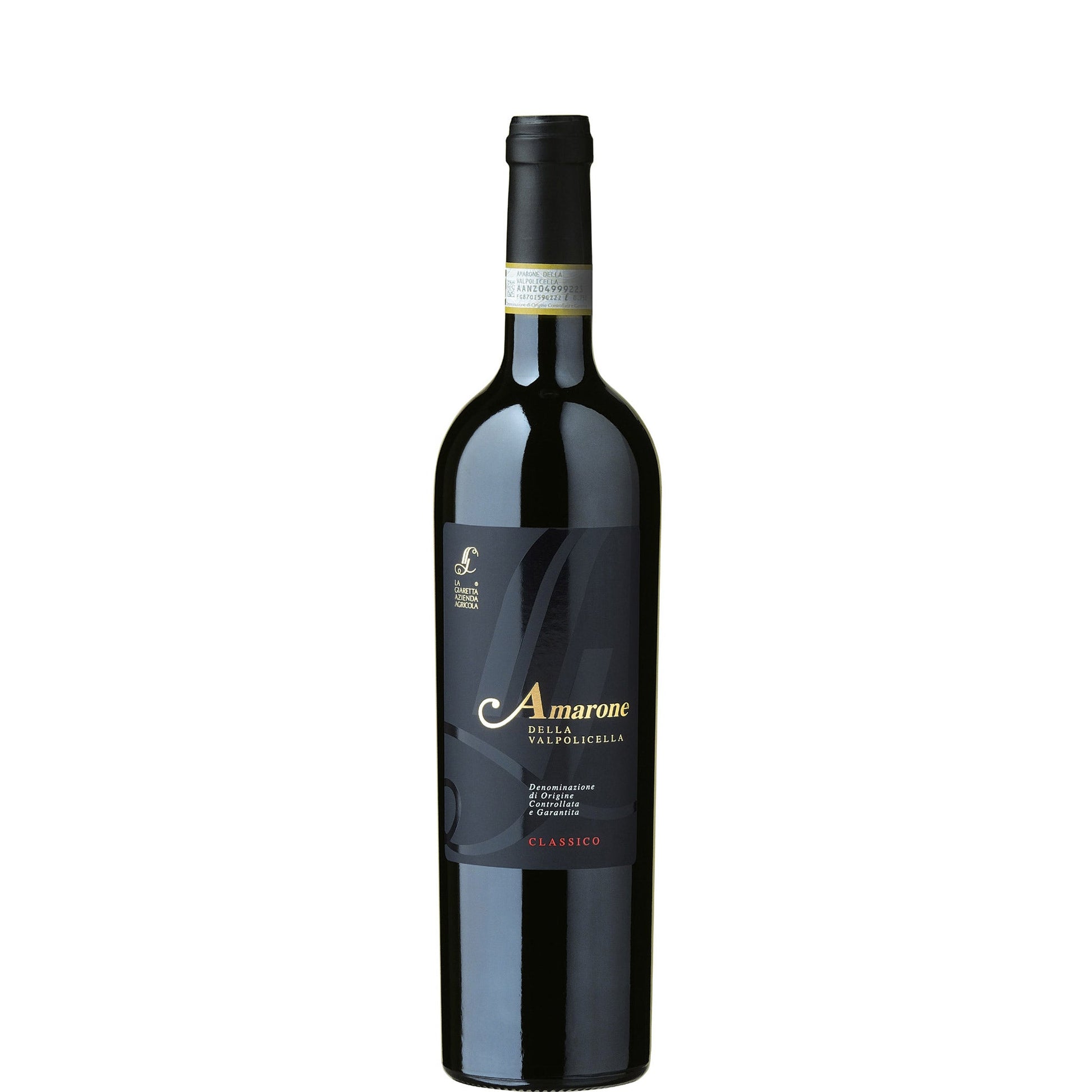
La Giaretta, Amarone della Valpolicella Classico, 2022
La Giaretta, Amarone della Valpolicella Classico, 2022
- 75cl
- 17%
- Red Still
- Corvina, Corvinone, Rondinella
Couldn't load pickup availability

Optimal drinking window: 2026 - 2042
Francesco and Francesca (yes, really) run La Giaretta from the heart of Valpolicella Classico, in Marano, with the kind of obsessive care that makes their vineyards look more like kitchen gardens than commercial plots. Their Amarone draws on old vines trained in the traditional Pergola Veronese system, planted 30 to 40 years ago, and the grapes are dried in the time-honoured way before fermentation — concentrating everything that makes Corvina so compelling when handled with restraint. Small oak barrels do the ageing work, adding structure without overwhelming the fruit.
The 2022 is everything a classic-zone Amarone should be: richly concentrated without tipping into excess, with dark cherry, dried fig, and bitter chocolate running through a palate that has real grip and length. There is no international variety in sight — this is pure Valpolicella, made by people who love what they do.
Right now, the 2022 is in its primary phase — all concentrated fruit and firm structure, impressive but not yet fully expressive. From around 2027, the tannins should begin to integrate and the dried fruit character will start to give way to more complex secondary notes: leather, dried herbs, tobacco, and the earthy savouriness that marks a mature Amarone Classico.
Tasting Notes
AppearanceDeep garnet, almost opaque at the core, with a rim that holds its colour well for a 2022.
NoseRich and brooding at first — dried black cherry, fig paste, and bitter chocolate — then opens to reveal a lift of dried rose petal and a whisper of cinnamon. There is a savoury, almost leathery edge that promises complexity to come.
PalateFull-bodied and concentrated, with the characteristic Amarone texture: velvety in the middle but with firm, drying tannins at the edges that remind you this wine has places to go. Dark fruit dominates now, but there is enough freshness underneath to keep things lively rather than heavy.
FinishLong and warming, with a lingering bitterness — in the best Italian sense — and a faint trace of espresso.
Overall impressionA serious, classically styled Amarone from one of the zone's most quietly impressive small producers — needs a little patience, but it is absolutely worth it.
Food Pairings
In Verona and the surrounding valleys, Amarone is treated with the reverence most places reserve for special-occasion Burgundy. It appears at the table alongside brasato all'Amarone — beef braised low and slow in the wine itself — which is essentially the dish the wine was born for. Locals also reach for aged Valpolicella cheeses, particularly Monte Veronese in its stravecchio form, whose nutty intensity stands up to the wine's concentration without a fight. Game birds, wild boar, and robust risottos built on bone marrow or mushrooms all work beautifully in this context. And if you find yourself in the region in winter, a glass alongside a plate of pastissada de caval — horse meat stew, a Veronese speciality of Roman origin — is the kind of pairing that makes you understand why this wine exists at all.
We think this wine would go well with
Serve at around 17 to 18°C — too warm and the alcohol becomes dominant. Decanting is not optional here: give it at least an hour in the decanter, and ideally two, to let the tannins settle and the fruit open up properly. A large-bowled Burgundy-style glass works well, giving the wine room to breathe and the aromatics space to gather. Do not rush it.
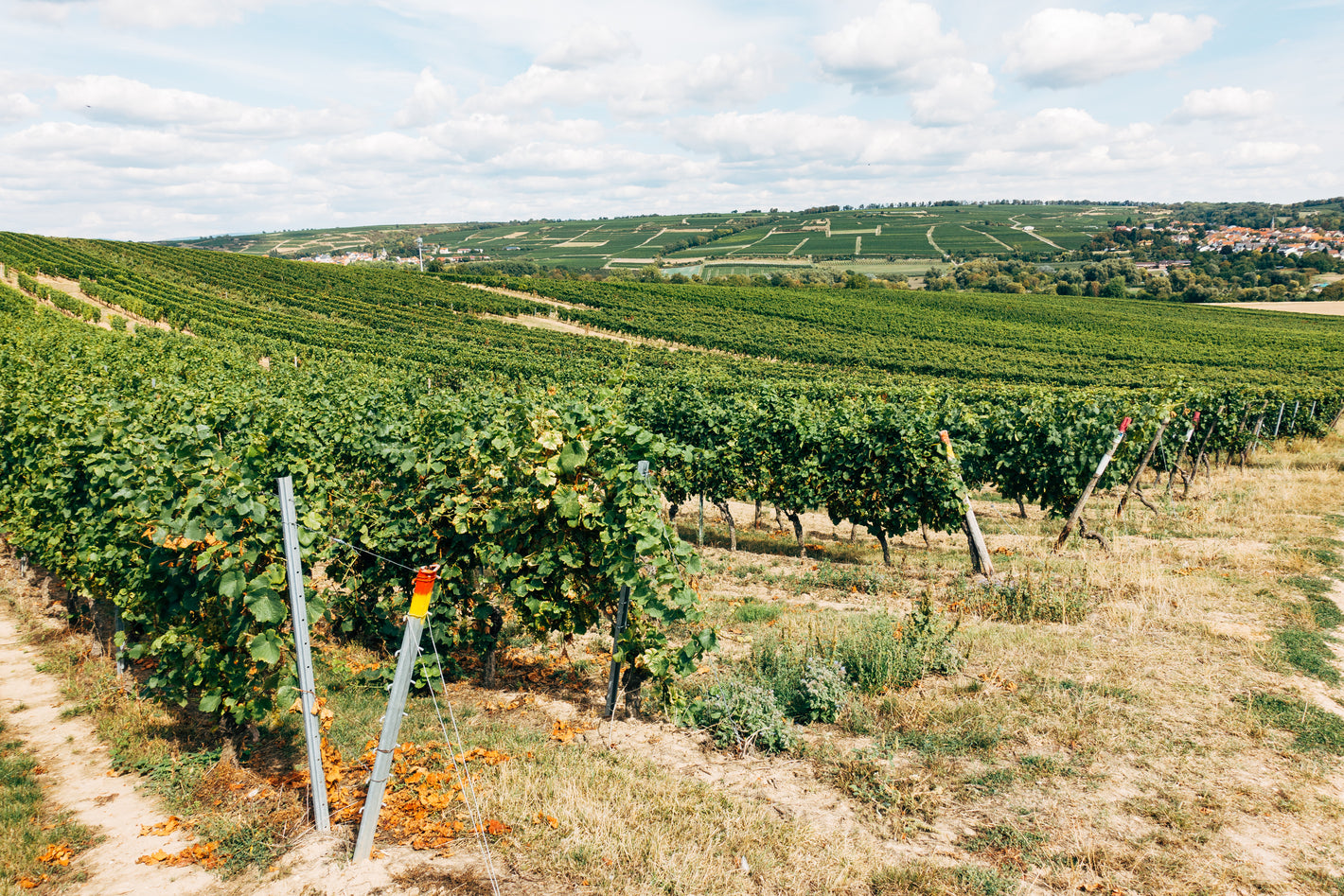
Marano is one of the original five valleys of the Valpolicella Classico zone, sitting at higher elevations than the flatlands to the east, with soils dominated by limestone and clay over a chalk-rich subsoil. The altitude brings cooler nights, which preserve acidity and aromatic freshness even in warm vintages. The Pergola Veronese vine training system, traditional to this area, keeps the canopy high and open, protecting the grapes from excessive heat while allowing the slow, even ripening that the appassimento process demands.
Amarone della Valpolicella Classico is the prestige tier of the Veneto's most celebrated red wine, produced from partially dried grapes — typically Corvina, Corvinone, and Rondinella — in the historic original zone west of Verona. The drying process, known as appassimento, concentrates sugars, flavours, and tannins over several months, yielding wines of considerable weight and power that are nevertheless fermented to dryness. The Classico designation is significant: it restricts production to the original valleys — Marano, Fumane, Negrar, Sant'Ambrogio, and San Pietro in Cariano — where the combination of altitude, limestone soils, and established old vines consistently produces more structured, mineral wines than those from the wider DOC zone.
FAQs
What does La Giaretta's Amarone taste like?
Rich and concentrated, with dried black cherry, fig, bitter chocolate, and a warming spice character from small oak ageing. The tannins are firm and present — this is not a soft or easy-going wine — but there is enough freshness and length to keep it lively and engaging rather than heavy.
When is the best time to drink the 2022?
The wine will be at its most expressive from the late 2020s through to the mid-2030s, and should hold well in good storage until 2042.
Does it need decanting?
Yes, and generously. Give it at least an hour in the decanter — ideally two. Young Amarone can be tight and reluctant straight from the bottle, and the difference after decanting is significant.
What food works well with this wine?
Braised or slow-cooked red meats are the classic match — brasato all'Amarone if you want the full Veronese experience. Aged hard cheeses, game, and rich mushroom-based dishes all work very well. This is not a wine for delicate food.
What makes the Classico zone different from standard Valpolicella?
The Classico zone covers the original five valleys west of Verona, where higher altitudes, limestone soils, and long-established old vines produce wines with more structure, definition, and ageing potential than those from the broader appellation. La Giaretta is based in Marano, one of the most highly regarded of these valleys.
Is this wine worth cellaring?
Absolutely, if you have the patience. The 2022 is built for the medium to long term, and those who wait until the late 2020s or early 2030s will be rewarded with a wine that has fully found its voice. Buy a few bottles and open them at intervals — the difference between a 2026 and a 2032 opening will be instructive.



What are you looking for tonight? Tell me the occasion, a grape, a region — or just try a suggestion below.
Your recommendations will appear here.
-
-
Speak to one of our Wine Gurus
Speak to a Wine GuruWith years of experience, our team can help you with all your wine buying and selling needs