

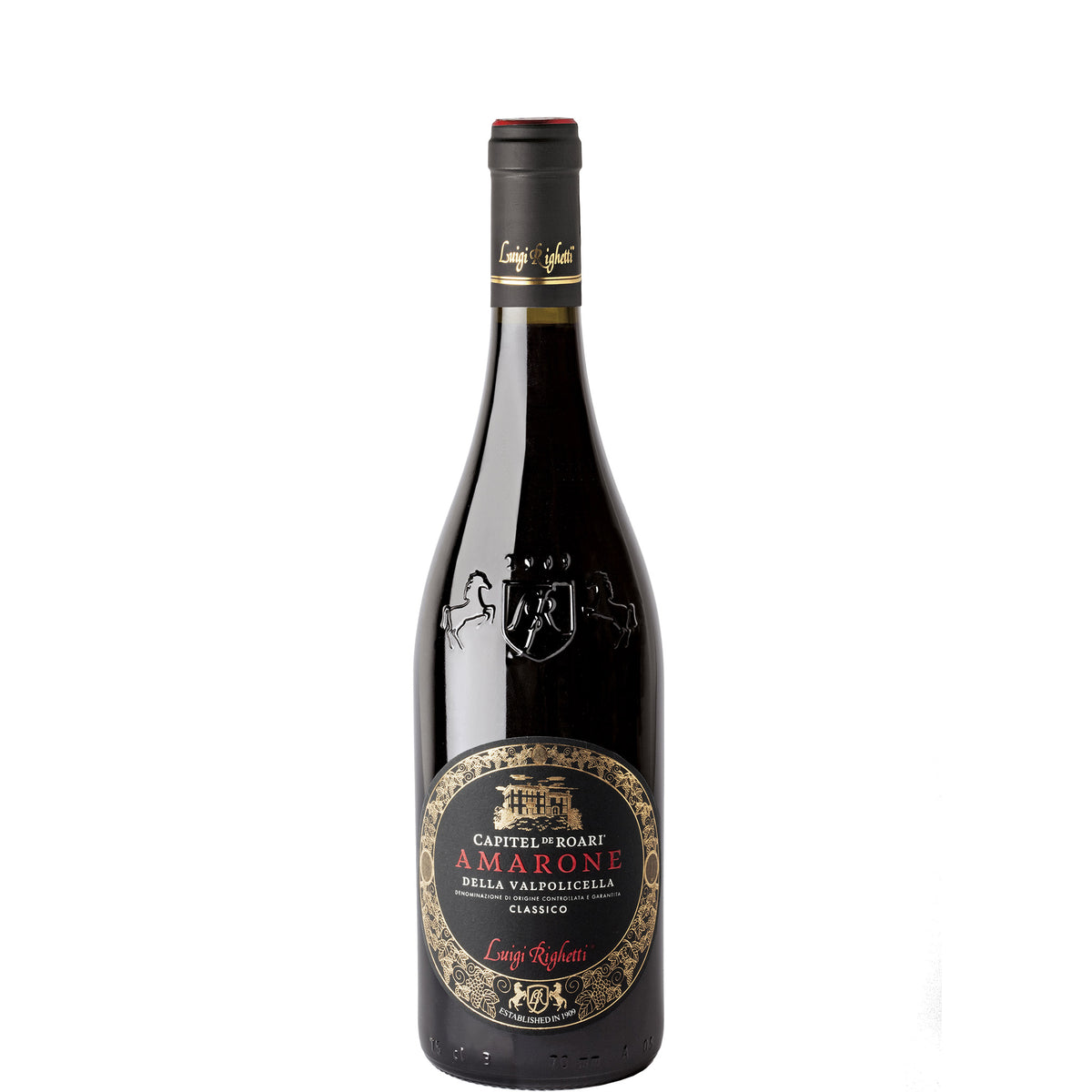
Luigi Righetti Amarone Capitel del Roari, 2023
Luigi Righetti Amarone Capitel del Roari, 2023
- 75cl
- 15%
- Red Still
- Corvina, Rondinella, Molinara
Couldn't load pickup availability

Optimal drinking window: 2026 - 2038
Luigi Righetti has been making wine in the heart of Valpolicella since the early twentieth century, and Capitel del Roari is the house's flagship statement on what Amarone can be: generous and powerful, but never clumsy.
The grapes are dried for several months using the traditional appassimento method before fermentation, concentrating fruit, structure, character - then the wine is matured in oak until it finds its poise. The result is a deep, warming red with ripe black cherry, dried fig, dark chocolate, and a seam of sweet spice running through the centre. What makes this stand apart from heavier, more extracted examples is its freshness. The tannins are silky rather than gripping, the finish is long and savoury rather than jammy, and there's a genuine sense of balance that makes it approachable now while leaving room to develop further in bottle.
At three years old, the 2023 is already showing its character, and over the next two to three years the dried fruit will integrate fully and the tannins will continue to soften and knit together. By around 2029 to 2031 we'd expect it to hit a genuine sweet spot — rich and complex, with the savoury and spice elements fully developed.
Tasting Notes
AppearanceDeep ruby-garnet, almost opaque at the centre, with a slightly lighter brick-tinged rim that hints at the concentration within.
NoseRich and inviting from the start — dried black cherry, prune, and fig lead, with dark chocolate and a curl of tobacco underneath. There's a sweet spice element, something between clove and cinnamon, that lifts the whole thing and stops it from feeling heavy.
PalateFull-bodied and warming, as you'd expect at this ripeness level, but the freshness is the real story here — the fruit is concentrated without being jammy, and the tannins are genuinely silky rather than drying. Dark plum, bitter chocolate, and a savoury, almost meaty undercurrent carry through to a long finish.
FinishLong, dry, and savoury, with a pleasing bitterness in the very last note that is distinctly and correctly Amarone.
Overall impressionA well-balanced, characterful Amarone that earns its richness without leaning on it.
Food Pairings
Around Verona, Amarone is traditionally the wine for the table's most serious moments — braised beef shin or a slow-cooked horse meat stew called pastissada de caval, a dish with roots going back centuries in the Veneto. Bigoli in salsa, the local thick pasta with anchovy and onion, works surprisingly well against the wine's richness. A wedge of aged Parmigiano Reggiano or Monte Veronese stravecchio alongside a glass poured slightly cooler than room temperature is a local classic worth stealing. And in Verona's older households, a small glass of Amarone is still occasionally served with the meal's end — perhaps with dark chocolate or a piece of dried fruit — rather than a dedicated dessert wine.
We think this wine would go well with
Serve at around 17 to 18 degrees Celsius — slightly cooler than many expect for a wine this big, which keeps the alcohol from feeling heavy on the nose. Decant for at least an hour, ideally two; the wine opens up considerably with air and the fruit becomes more expressive and less brooding. A large-bowled glass is the right call here, giving the wine room to breathe and allowing the aromatics to gather properly before they reach you.
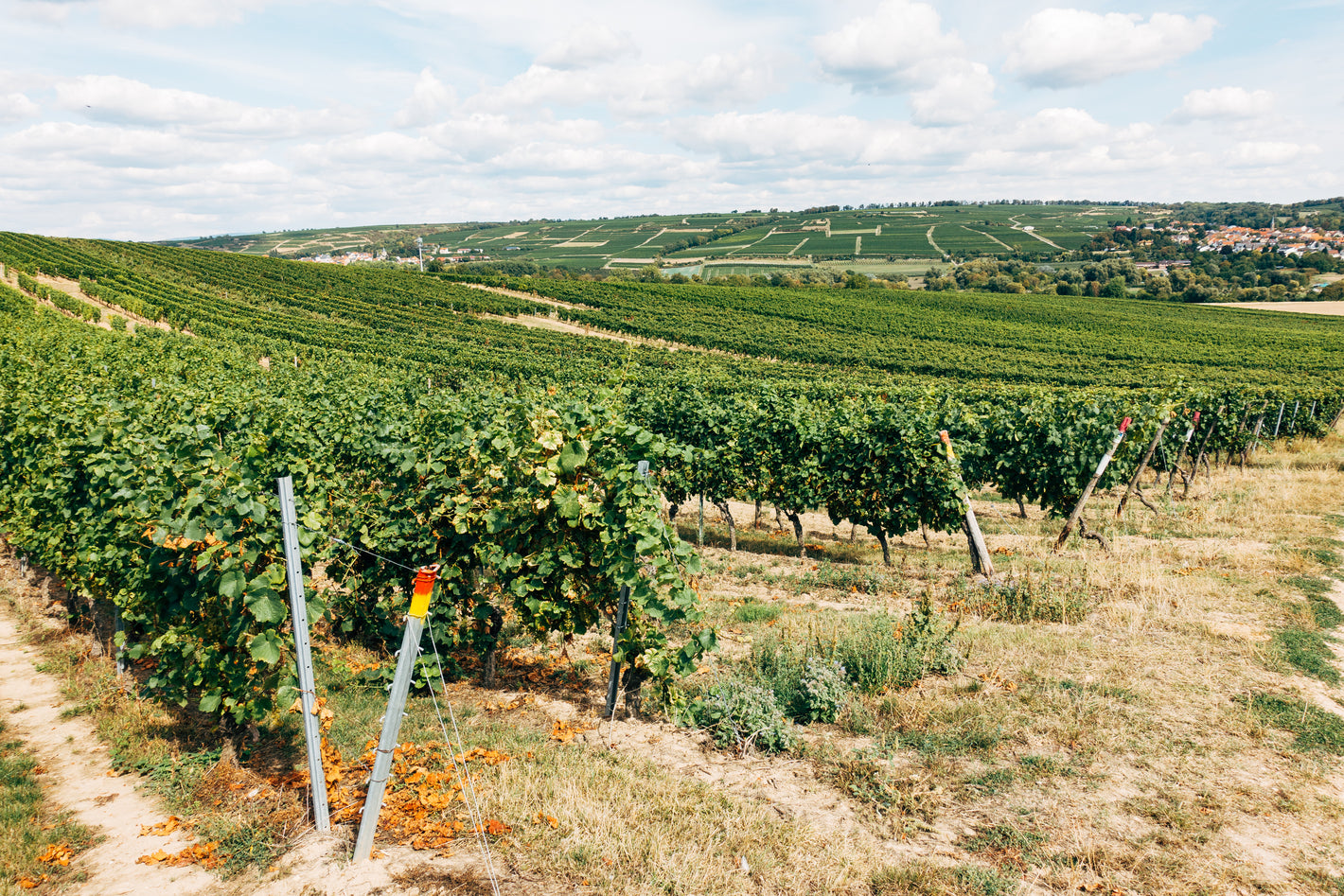
The vineyards sit in the Classico zone of Valpolicella, in the valleys and hillsides west of Verona where limestone and clay soils predominate, often mixed with alluvial deposits at lower elevations. The altitude and the amphitheatre-like topography of the valleys provide good diurnal temperature variation, which helps the grapes retain acidity even at the high sugar concentrations needed for Amarone. The drying lofts, or fruttai, where the harvested clusters spend several months losing moisture, are as important to the final character of the wine as the vineyard itself.
Amarone della Valpolicella DOCG is one of Italy's most distinctive and demanding appellations, requiring grapes to be partially dried before fermentation — a process that typically reduces the original weight by 30 to 40 percent and concentrates sugars, tannins, and flavour compounds significantly. The resulting wine must reach a minimum of 14 percent ABV, though most serious examples sit considerably higher. It is distinct from its sibling Ripasso, which uses the leftover grape skins from Amarone production to re-ferment a lighter Valpolicella base wine. Within the broader zone, the Classico subzone — covering the original historic communes including Negrar, Fumane, Marano, and Sant'Ambrogio — is generally regarded as producing the most characterful and age-worthy expressions.
We're still getting to grips with 2023 in Veneto, but early signs suggest a vintage that kept producers on their toes. The growing season brought its share of challenges, with variable weather patterns that demanded careful vineyard management and precise timing at harvest. What emerges is a year where the best producers really earned their stripes, navigating conditions that rewarded experience and penalised complacency.
The wines we've tasted so far show promise rather than immediate fireworks. Soave displays lovely mineral backbone with citrus precision, while Valpolicella shows bright red fruit that's more vivacious than brooding. The Amarone producers we work with seem quietly confident about their drying grapes, though it's far too early for definitive judgments there. These aren't wines crying out for immediate attention, but they're building nicely in bottle and should reward patience over the next few years.
FAQs
What does Capitel del Roari taste like?
Rich and warming, with dried black cherry, prune, fig, dark chocolate, and sweet spice. The tannins are silky rather than grippy and the finish is long and savoury — it has real depth without being heavy or overblown.
When should I drink this wine?
It is approachable now, in 2026, with decanting. It will develop and improve until around 2031, then hold well until 2038. If you are opening a bottle today, give it two hours in a decanter and it will reward you generously.
What food works best with Amarone?
Think slow-cooked and substantial — braised beef, venison, rich meat ragù, or a proper osso buco. Aged hard cheeses like Parmigiano Reggiano or Pecorino Stravecchio are excellent. Dark chocolate works well at the end of a meal. Avoid light or delicate dishes; this wine needs something to push against.
How should I serve it?
Serve at 17 to 18 degrees Celsius and decant for at least an hour, preferably two. Use a large-bowled red wine glass to give the aromas room to open up. If the wine seems closed or alcoholic on first pour, be patient — it changes considerably with air.
Is this worth cellaring?
Yes, if you have the patience. The window is roughly 2029 to 2035 for peak drinking, when the fruit, spice, and savoury elements will be fully integrated.
How does Luigi Righetti compare to other Amarone producers?
Righetti sits in the reliable, quality-conscious middle ground of the appellation — not as widely celebrated as Quintarelli or Dal Forno Romano, but considerably more consistent and characterful than many larger commercial operations. Capitel del Roari in particular offers genuine Amarone character without the extreme extraction or price tag of the region's cult names.

OUR GROWERS
Luigi Righetti


What are you looking for tonight? Tell me the occasion, a grape, a region — or just try a suggestion below.
Your recommendations will appear here.
-
-
Speak to one of our Wine Gurus
Speak to a Wine GuruWith years of experience, our team can help you with all your wine buying and selling needs