
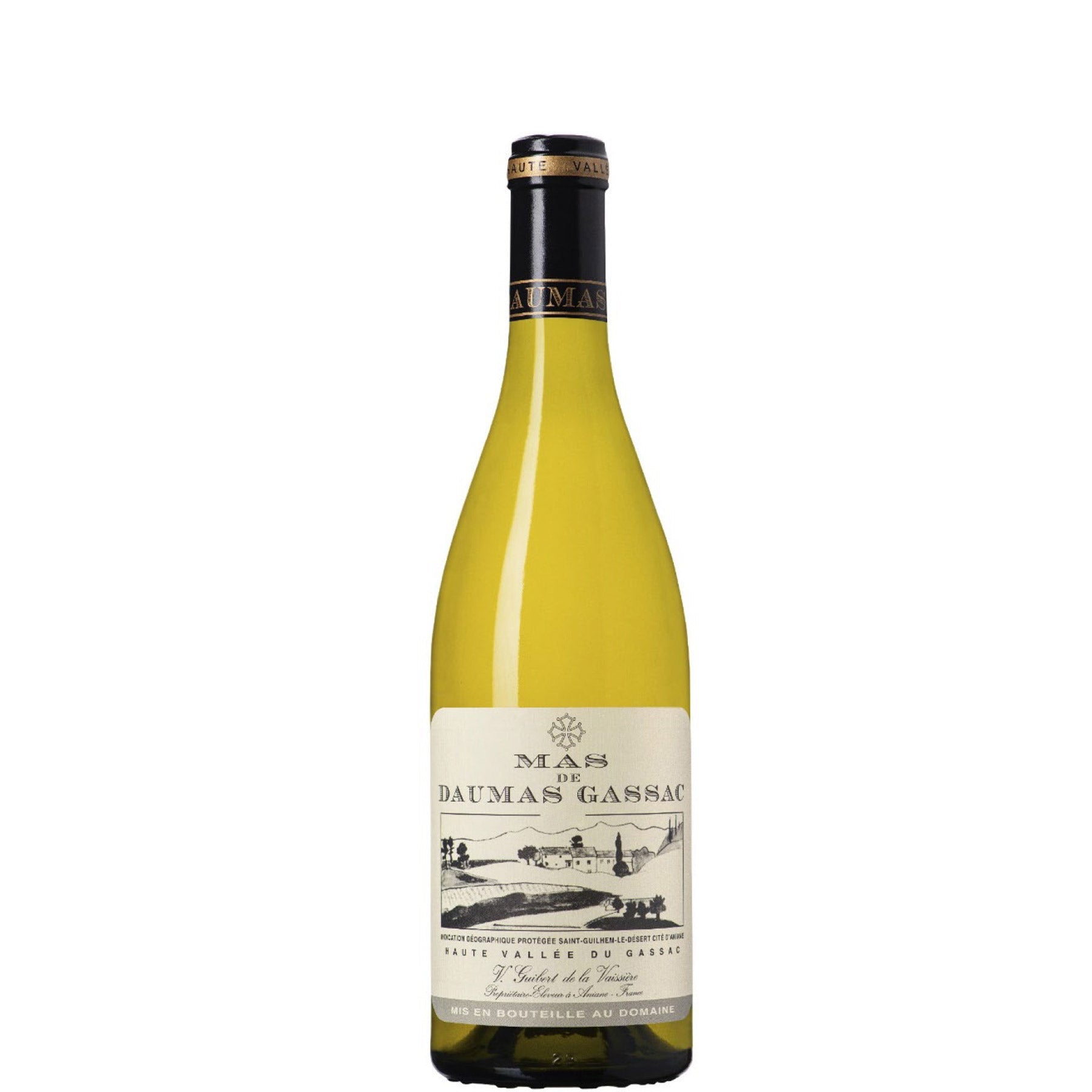
Mas de Daumas Gassac, Blanc, 2020
Mas de Daumas Gassac, Blanc, 2020
- 75cl
- 13.5%
- White Still
- Viognier, Chardonnay, Petit Manseng, Chenin Blanc
- Organic
Couldn't load pickup availability

Optimal drinking window: 2026 - 2035
Mas de Daumas Gassac is the Languedoc's great anomaly: a white wine that commands the attention and cellar time of a grand cru, in a region better known for sun-drenched reds. The blanc is a wild blend anchored in Viognier, with a cast of varieties that reads like a vinous curiosity cabinet, all grown on the estate's remarkable glacial flour soils north of Montpellier.
"Main grapes: Viognier, Chardonnay and Petit Menseng with a small amount of Chenin Blanc. A unique wine with lots going on. Medium-bodied, layers of tropical fruits and honey. Long finish. Pair with French Onion Soup."
Our note
Currently in its primary phase, this 2020 is all coiled intensity and raw materials waiting to integrate. Over the next two to three years, the angular edges will begin to soften as the tropical fruit ripeness melds with the floral complexity. From 2028 onwards, expect the wine to hit its stride as secondary notes of honey, wax and spice develop whilst the mineral backbone provides structure. The peak drinking window will likely be 2028-2033, when all elements achieve harmony whilst retaining freshness. Beyond 2035, the wine may begin to show tertiary development, gaining nutty complexity but potentially losing some of its vibrant fruit character.
What the critics say:
"Pale gold. Awkward, at first – needed lots of air. (To be honest, this wine needs lots more time…) So young and unformed, but very intense. This is fisted into a white-knuckled ball of concentration, still angular, but even so, it's a kaleidoscope of layers, flavours, components. The ripeness of golden Cape gooseberries and apricots pushes through clouds of May blossom and angelica flower. Grapefruit and passion fruit, bitter-salty quinine, linden and mimosa florals, honey, wax and lime. On the finish, cardamom and white pepper and chalk linger, dry and insistent. A wine that, even in its cocoon, has weight and presence. When I taste this wine, it feels like a heavy pewter spoon, tarnished into worn beauty, cold, pressed into warm wax, laid on bronze silk. Buy this wine, tuck it into a far corner of the cellar, come back to it in three, four, five years' time."
Tasting Notes
AppearancePale gold with hints of green at the rim, suggesting youth and vibrancy.
NoseInitially reticent, needing considerable air to reveal its complexity. Layers of golden Cape gooseberries and apricots emerge through clouds of May blossom and angelica flower. Grapefruit and passion fruit weave with bitter-salty quinine, whilst linden and mimosa florals add ethereal lift over a base of honey, wax and lime.
PalateFisted into a white-knuckled ball of concentration, still angular and unformed but intensely layered. The tropical fruit ripeness has weight and presence, like a heavy pewter spoon pressed into warm wax. Medium-bodied but with remarkable density, the wine shows its youth through taut structure rather than immediate charm.
FinishCardamom and white pepper linger with chalk minerality, dry and insistent.
Overall impressionA wine in its cocoon that will emerge transformed with proper cellaring.
Food Pairings
In the Languedoc, this style of serious white would traditionally accompany the region's more refined seafood dishes—think bourride, the local saffron-scented fish stew from nearby Sète, or grilled daurade with herbs de Provence. The wine's intensity and mineral backbone would also complement the area's goat cheeses, particularly the ash-covered pélardon that develops complexity with age much like this wine itself. Local cooks might also pair it with cassoulet blanc, the lesser-known white bean and preserved duck version of the region's famous cassoulet, where the wine's weight can stand up to the richness whilst its acidity cuts through the fat.
We think this wine would go well with
Serve well-chilled at 10-12°C to tame its current intensity and highlight its mineral precision. This wine benefits enormously from decanting—give it at least two hours in a wide decanter to let those tight layers begin to unfold. Use large Burgundy glasses to concentrate the complex aromatics whilst allowing plenty of air contact. If drinking young, consider opening the bottle a day ahead and storing it upright in the fridge to let it gradually reveal its secrets.
The vineyards sit on deep, well-drained soils of glacial origin that geology professor Henri Enjalbert recognised as exceptional in the 1970s. These soils, similar in structure to some of Burgundy's finest sites, provide the mineral backbone that gives these wines their remarkable intensity and age-worthiness. The wild valley location near Saint-Guilhem-le-Désert creates a unique microclimate, with cool nights preserving acidity whilst warm days ripen the diverse grape varieties to perfection. This terroir allows the estate to craft wines of genuine concentration and complexity that stand apart from much of the Languedoc.
Mas de Daumas Gassac falls under the Languedoc appellation, but the estate has always operated outside the traditional regional style. Where much Languedoc wine focuses on immediate pleasure and value, Daumas Gassac pursues age-worthy complexity more akin to classic French regions. The Languedoc's warm Mediterranean climate typically favours reds, making this serious white blend all the more remarkable. The appellation rules allow for considerable grape variety flexibility, which the Guiberts exploit brilliantly with their unconventional but harmonious blend of Viognier, Chardonnay, Petit Manseng and Chenin Blanc.
The 2020 vintage in Languedoc threw winemakers a curveball, starting with a relatively mild winter that gave way to a challenging spring marked by significant rainfall and cooler temperatures. Just when producers were beginning to worry about disease pressure and delayed flowering, the summer heat arrived with characteristic Mediterranean intensity, creating the sort of stop-start growing season that separates the wheat from the chaff. Harvest came later than the scorching years of 2017 and 2019, giving grapes crucial hang time to develop flavour whilst retaining the acidity that makes Languedoc wines so food-friendly.
What emerged was a vintage with real personality rather than brute force. The Syrahs show lovely spice and structure without the jammy overripeness that can plague hot vintages, whilst Grenache and Mourvèdre found their sweet spot between power and finesse. We find the reds drinking beautifully now, with enough backbone to cellar for another five to eight years if you fancy waiting. The whites, particularly those from higher altitude sites, captured a freshness that makes them absolute gems for current drinking.
FAQs
What does this wine taste like?
Intensely concentrated with tropical fruits, honey, and floral complexity. Think golden Cape gooseberries and apricots wrapped in May blossom, with a mineral, spicy finish.
What food pairs well with this wine?
Rich seafood dishes like bourride or grilled daurade, aged goat cheeses, or cassoulet blanc. Its intensity and mineral backbone can handle robust flavours.
How should I serve this wine?
Serve well-chilled at 10-12°C and decant for at least two hours. Use large Burgundy glasses and consider opening a day ahead if drinking young.
Is this wine worth cellaring?
Absolutely—this will transform into something remarkable from 2028 onwards.
What makes this Languedoc white special?
It's made on terroir that geology professors compared to the best of Burgundy, using an unconventional blend that creates serious, age-worthy complexity rather than immediate pleasure.


What are you looking for tonight? Tell me the occasion, a grape, a region — or just try a suggestion below.
Your recommendations will appear here.
-
-
Speak to one of our Wine Gurus
Speak to a Wine GuruWith years of experience, our team can help you with all your wine buying and selling needs