

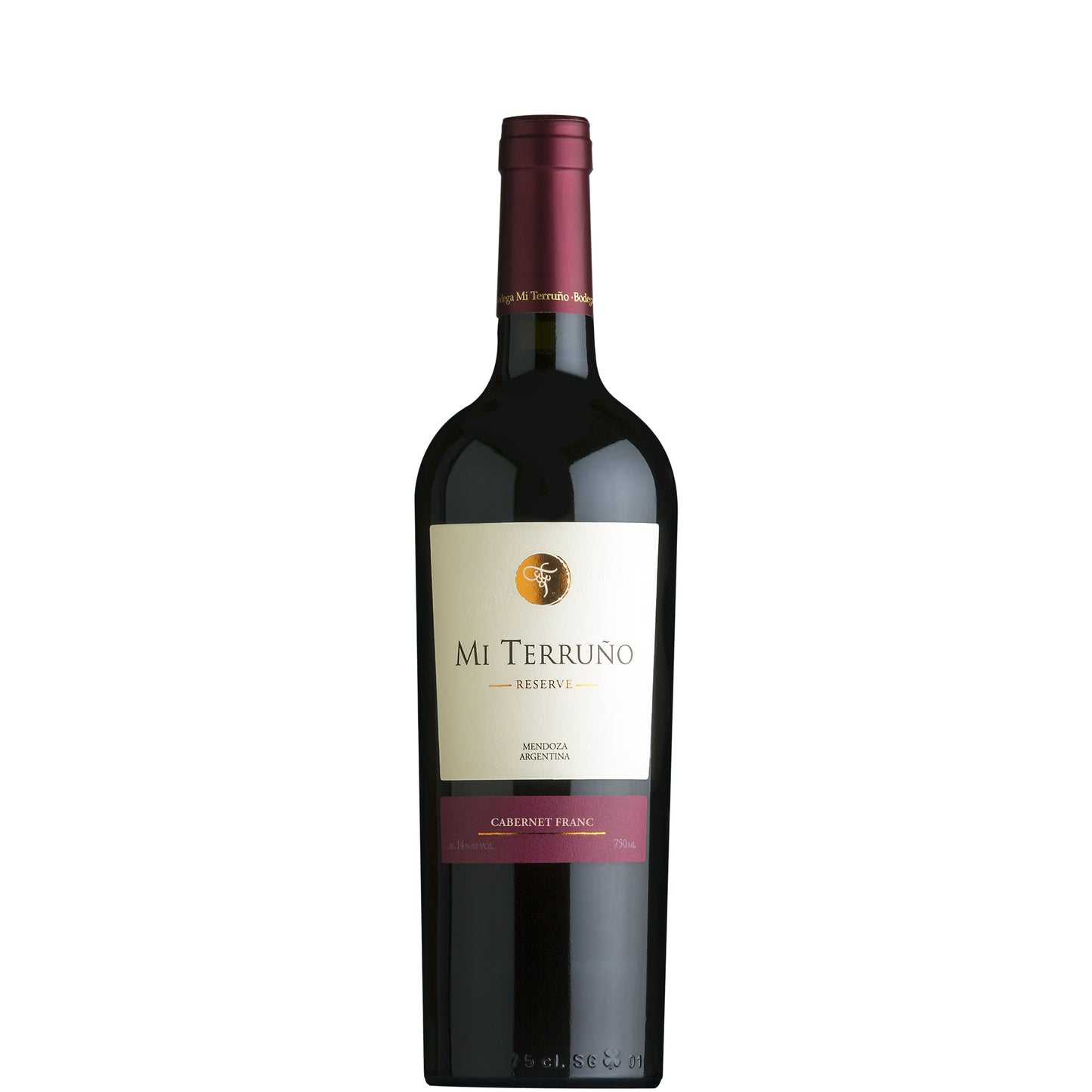
Mi Terruño, Cabernet Franc Reserve, 2023
Mi Terruño, Cabernet Franc Reserve, 2023
- 75cl
- 13.5%
- Red Still
- Cabernet Franc
Couldn't load pickup availability

Optimal drinking window: 2026 - 2031
Mi Terruño Cabernet Franc Reserve 2023 comes at you with a pleasing mix of dark cherry, blackberry and violet, followed by a little green-herbal Cabernet Franc character that keeps things interesting rather than vegetal. There’s a subtle whiff of cedar and spice in the background, too.
On the palate, it’s medium-bodied, juicy and nicely structured, with ripe tannins giving the wine a firm but polished backbone. Blackcurrant and plum lead the charge, while fresh acidity keeps the fruit from becoming heavy. The finish brings a touch of pepper, herbs and gentle oak.
This is Cabernet Franc in a fairly generous, approachable mood: enough structure to make it serious, enough fruit to make it immediately enjoyable. A bottle for steak, grilled lamb, burgers—or simply an evening when you want something with a bit more personality than your everyday red.
The 2023 is already drinking well, with its primary fruit forward and the tannins integrated enough to enjoy without any wait. Over the next two to three years, the plum and cherry will knit more closely with the tobacco and earth, producing a more seamless, composed wine. By 2028-2029 it should be at its most expressive.
What the critics say:
"Aromas of dried leaves, plums, blackberries and a touch of earth. Concentrated yet balanced, with ripe fruit flavors and savory undertones. The finish shows a subtle saline edge. Drink now."
Tasting Notes
AppearanceDeep ruby with good clarity and a faint purple edge.
NoseDark cherry and blackcurrant upfront, then dried tobacco and a whisper of dried herbs. There is a subtle earthy quality underneath that adds interest without muddying the fruit.
PalateThe palate delivers on the nose's promise: plum and blackcurrant with a lick of spice, carried by silky tannins that never feel aggressive. The acidity is well-judged, keeping the wine fresh rather than jammy.
FinishSatisfying length with a clean savoury note that lingers well after the glass is empty.
Overall impressionAn elegant, focused Cabernet Franc that earns its Reserve label without leaning on oak or extraction to make the point.
Food Pairings
In Argentina, a wine like this would almost certainly appear alongside asado — the country's great slow-cooked barbecue tradition, where beef ribs and chorizo spend hours over quebracho wood embers. The smoky, fatty richness of the meat is a natural foil for Cabernet Franc's leanness. Equally at home with empanadas de carne, especially those with a little cumin and olive, or a simple milanesa with chimichurri. The herbal edge of the wine also works well with grilled lamb, which features prominently in Patagonian cooking.
We think this wine would go well with
Serve at around 16-17°C — cool enough to keep the freshness intact, but not so cold that the tannins tighten up. A 20-30 minute decant will open up the fruit and soften the edges nicely on the 2023. A standard Bordeaux-shaped glass works well, giving the wine enough room to breathe without spreading the aromas too thin.
Cabernet Franc in Argentina performs best at altitude, typically above 800 metres, where cooler nights slow ripening and preserve the grape's characteristic freshness and herbal lift. The soils across much of Mendoza and Patagonia are alluvial and sandy over clay, offering good drainage and encouraging deep root development. The combination of intense Andean sun and significant diurnal temperature variation produces fruit that is ripe but retains structure — exactly what this style demands.
Argentina does not operate a strict appellation system in the European sense, though geographical indications (IGs) such as Mendoza and Patagonia are increasingly used to signal origin and style. The country's wine law is relatively permissive compared to Old World counterparts, giving producers latitude to experiment with varieties and blending. What Argentina has quietly developed, however, is a strong reputation for altitude-driven reds that offer genuine complexity at accessible prices — Cabernet Franc among them.
FAQs
What does this wine taste like?
Dark plum and blackcurrant are at the core, with tobacco, dried herbs, and a subtle earthy note adding depth. The tannins are silky rather than grippy, and the finish is clean and lingering.
When should I drink this wine?
It is drinking well now and will continue to do so until around 2031. The sweet spot is probably 2028-2029, when the fruit will have settled and the savoury complexity will be more prominent.
What food should I pair it with?
Grilled or slow-cooked beef is the obvious match — this is an Argentine wine, after all. It also works beautifully with lamb, chorizo, or anything with a smoky, charred edge. The herbal character of Cabernet Franc makes it a natural companion for chimichurri and other herb-forward sauces.
Do I need to decant it?
A short decant of 20-30 minutes will help open it up and soften the edges. It is not essential, but it makes a noticeable difference, particularly if you are drinking it young.
Is this worth cellaring?
Yes, for a few years. This is not a wine built for long-term ageing, but tucking a few bottles away until 2028 or 2029 will reward patience with a more integrated, complex result.
How is this different from a typical Malbec?
Where Malbec tends towards plush, velvety fruit and generous body, Cabernet Franc is leaner, more herbal, and more structured. This wine has more in common with a good Loire Franc than a classic Mendoza Malbec — which is precisely what makes it interesting.

Explore related wines


What are you looking for tonight? Tell me the occasion, a grape, a region — or just try a suggestion below.
Your recommendations will appear here.
-
-
Speak to one of our Wine Gurus
Speak to a Wine GuruWith years of experience, our team can help you with all your wine buying and selling needs