


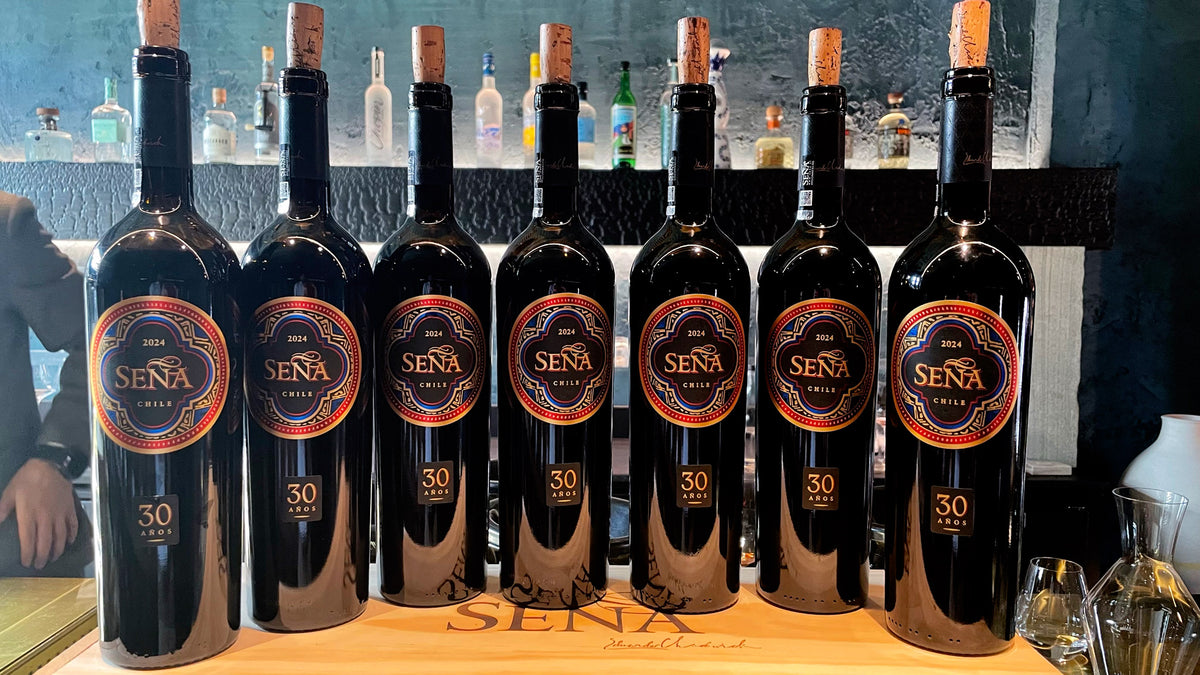
Mondavi & Chadwick, Seña, 2024
Mondavi & Chadwick, Seña, 2024
- 75cl
- 13%
- Red Still
- Cabernet Sauvignon, Carmenère, Malbec, Petit Verdot
- Organic
- Biodynamic
Couldn't load pickup availability

Optimal drinking window: 2028 - 2045
Est. delivery in 2027
Seña is one of Chile’s most celebrated wines, born from the visionary partnership of Robert Mondavi and Eduardo Chadwick. Since its debut, it has set the benchmark for Chilean fine wine on the international stage.
The vines here have sunk deep roots into volcanic, mineral-rich soils, shaped by cooling Andean breezes and morning Pacific fogs. Farmed biodynamically, Seña combines Bordeaux varietals with Chilean spirit, delivering a wine of striking elegance, layered complexity, and effortless sophistication.
Seña has always been a favourite with Club Members, and having tasted the 2024 at a pre-launch event, we're going to put our neck out: this is our favourite new release ever of this wine. A perfect, long, cool season has crafted something genuinely special, and it arrives at exactly the right moment, marking Seña's 30th anniversary. The only fly in the ointment is the yield, just 20% of a normal crop, so there is very little to go around.
What the critics say:
"Seña is often more marked by its blue fruit profile, and this year it goes a bit deeper and darker with its serious depth of fresh blackberries, currants, graphite and a restrained touch of cigar box. Precise and refined, with crunchy fine tannins on the medium- to full-bodied palate and a long, expressive finish carrying the juicy fruit to the end. A later harvest from April 5 to the end of April and carmenere until May 2. A blend of 60% cabernet sauvignon, 18% malbec, 16% carmenere and 6% petit verdot. Drink or hold."
"The 2024 Seña continues the excellence that the entire Errázuriz range exhibits in this vintage, offering a graceful, effortless and underrated expression of Aconcagua. A rich bouquet of dark fruits, fresh herbs and floral notes is brightened by a streak of rising camphor and sweet mint flourishes, introducing a suave, tense and seamless mouthfeel with classical proportions. Ultra-fine tannins and graphite-mineral notes surround the finish, lingering with an extra round of herbal and minty nuances. It is a blend of 60% Cabernet Sauvignon, 18% Malbec, 16% Carmenère and 6% Petit Verdot that matured for 18 months, with 70% of the wine resting in barrels and 30% in foudre—this being the highest percentage to date."
"The 2024 Seña (60% Cabernet Sauvignon, 16% Carmenere, 18% Malbec, 6% Petit Verdot) shows a balsamic profile marked by boldo, notes of native forest, black fruit, ripe plum and delicate spice. The palate has structure, with grippy tannins and a certain juiciness. The style aligns closely with the estate's Chilean profile, while the notably lower alcohol level (13.1%) lends balance and precision."
"Proving that the new team of Emily Faulconer and Tomás Muñoz were keen to follow in the steps of Pancho Baettig, producing Señas that are more “European” in style, this continues the welcome transformation of the last few vintages. Cabernet Sauvignon takes centre stage, flanked by 18% Malbec, 16% Carmenère and 6% Petit Verdot and complemented by scented 65% new oak (and a sizeable foudre component). Bright, refreshing and appealingly perfumed, it has a frame of granular tannins, plum, cassis and red cherry flavours, deftly integrated wood spices and a waft of graphite. Very composed, it is appealing now but has a long life ahead of it."
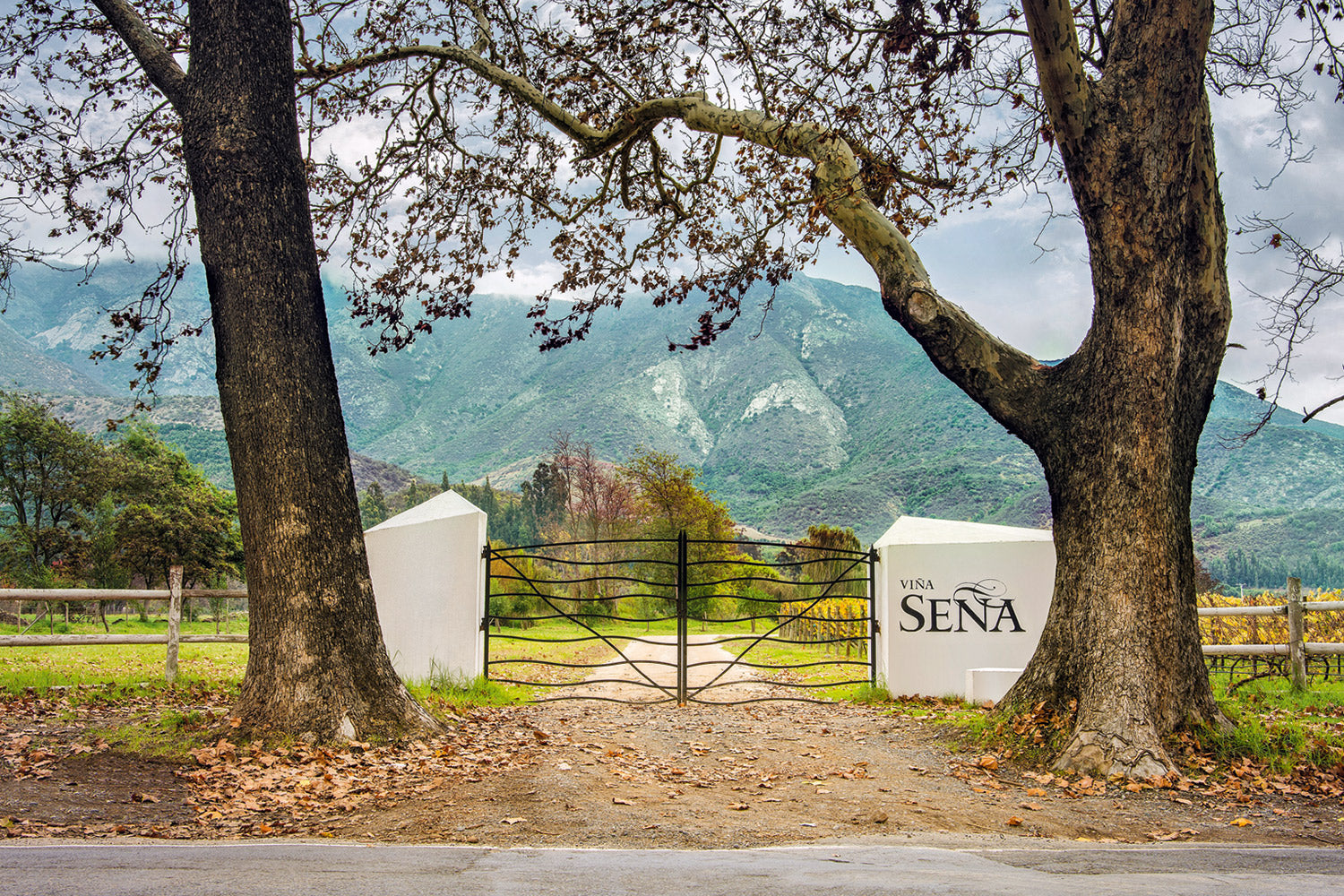
The Seña vineyard sits in the Aconcagua Valley at elevations between 400 and 550 metres, where the valley narrows and the Andes begin to assert themselves. Soils are a complex mix of clay, gravel, and decomposed granite — well-draining, with enough mineral content to give the wines their characteristic stony precision. The Pacific Ocean is close enough to send cooling afternoon breezes inland, moderating what would otherwise be fierce Andean heat and preserving the acidity that keeps Seña so alive. That tension between warmth and cool is exactly what gives the wine its balance between ripeness and freshness.
The Aconcagua Valley DO runs east to west from the foothills of the Andes toward the Pacific coast, taking its name from the Aconcagua River. It is one of Chile's warmer valley appellations at its inland end, but coastal and elevation influences make it far more nuanced than that headline suggests — think long growing seasons, diurnal temperature swings, and a real sense of place rather than just sun. Compared to the broader and more commercially familiar Maipo Valley to the south, Aconcagua tends to produce wines with a more structured, mineral personality, particularly at the higher-altitude sites where Seña farms.
The 2024 vintage in Aconcagua Valley arrived after a growing season marked by the kind of climatic swings this dramatic, wind-scoured corridor between the Andes and the Pacific handles better than most. Dry conditions through much of the growing period kept yields in check and disease pressure low, while the cooling influence of the Humboldt-driven Pacific winds did what they always do here — slowing ripening just enough to preserve the freshness that defines the valley's best wines. We should be honest that 2024 is still a vintage the wider wine world is getting to grips with, so sweeping proclamations feel premature. What we can say is that the conditions pointed firmly in the right direction.
Cabernet Sauvignon, the valley's calling card, appears to have produced wines with taut, well-defined structure and fruit that feels precise rather than overblown — the opposite of the jammy Andean stereotype. Syrah, increasingly the variety we get most excited about from Aconcagua, looks similarly promising: concentrated but with the peppery, cool-climate drive that separates the serious examples from the merely ripe. Most reds will reward another two to three years in the cellar, though the better-balanced examples should drink well from 2026 until 2034 or so.


OUR GROWERS
Seña
Explore related wines


-
-
Speak to one of our Wine Gurus
Speak to a Wine GuruWith years of experience, our team can help you with all your wine buying and selling needs