

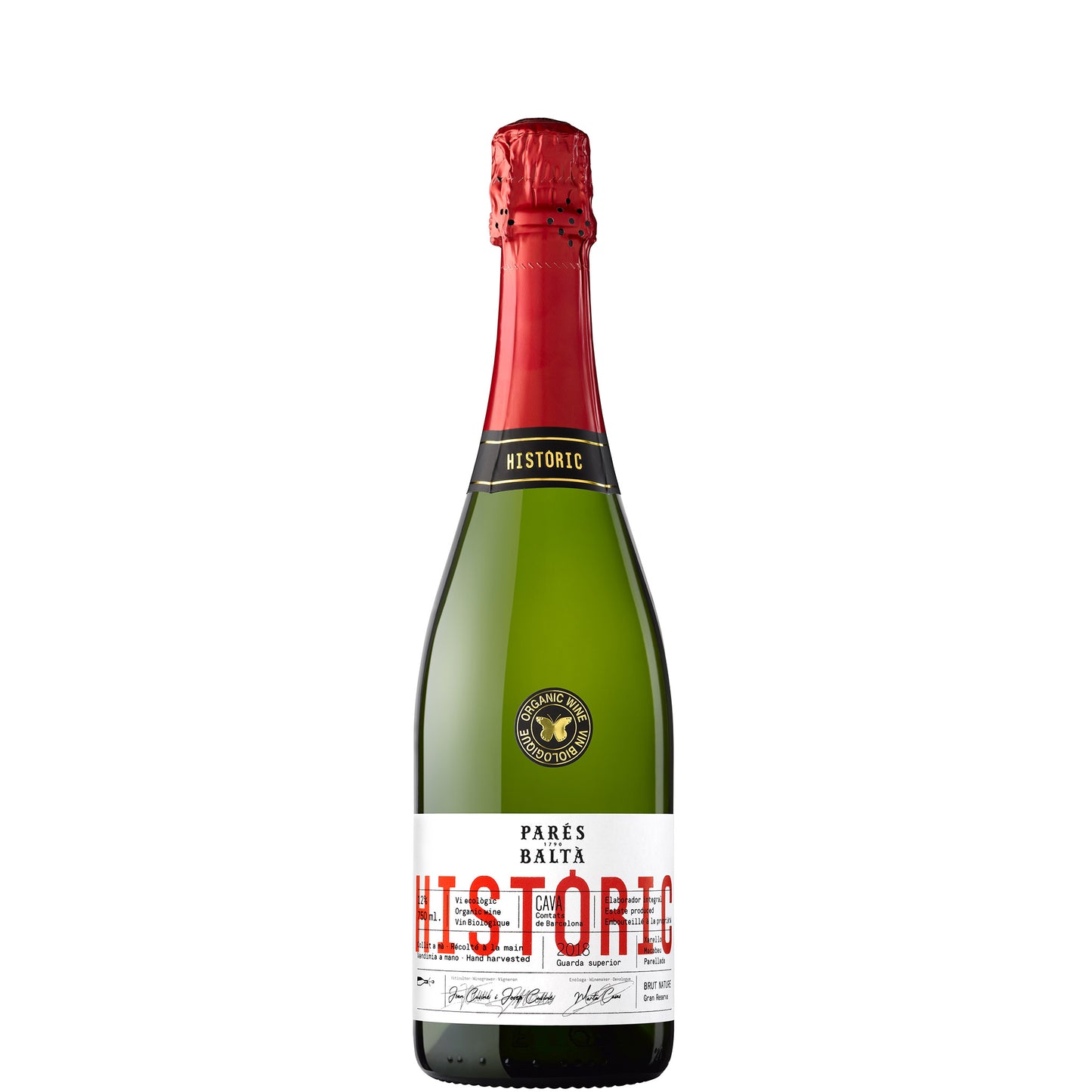
Parés Baltà, Historic Brut Nature, Cava, 2018
Parés Baltà, Historic Brut Nature, Cava, 2018
- 75cl
- 11.5%
- White Sparkling
- Xarel·lo, Macabeo, Parellada
- Organic
- Biodynamic
- Vegetarian
- Vegan
Couldn't load pickup availability

Optimal drinking window: 2026 - 2029
Parés Baltà's Historic Brut Nature is Cava making a serious case for itself. No added sugar whatsoever - Brut Nature means exactly that - and with eight years on the lees before disgorgement, this 2018 has had time to develop a complexity that factory Cava simply cannot buy. The Xarel·lo, Macabeo, and Parellada blend from their certified organic estate in the Penedès brings a stony, almost saline precision that feels distinctly Catalan rather than generically sparkling.
We love this style for what it refuses to do: there's no dosage sugar softening the edges, no concession to crowd-pleasing roundness. What you get instead is a wine with real backbone; green apple acidity, a bready, autolytic depth, and a finish with the kind of citrus pith dryness that makes you reach for another glass.
At eight years from vintage and already disgorged, this wine is in a good place right now — the lees-derived complexity is fully integrated and the fruit is still lively. Over the next year or two it will continue to develop in bottle, with the toasty, nutty secondary character becoming more pronounced as the primary fruit slowly retreats. By 2028 it will be at or near its peak. Hold it beyond 2029 and you risk losing the freshness that makes it so attractive; unlike vintage Champagne, extended post-disgorgement ageing rarely rewards patience in this style.
What the critics say:
"This balanced sparkler integrates a streak of Meyer lemon peel–infused acidity to brighten flavors of grainy pear, star fruit and blanched almond, plus a touch of beeswax. Floral and mineral notes show on the finish."
Tasting Notes
AppearancePale gold with a fine, persistent bead and a faint greenish rim.
NoseThere's a lovely tension here between the toasty, brioche-like autolytic depth that comes from eight years on lees and the brighter, crisper register of green apple and white peach. Underneath that, something chalky and almost saline — Xarel·lo doing what it does best.
PalateBone dry, as promised — the zero dosage is immediately apparent in the clean, citrus-pith finish and the absence of any softening sweetness. The mousse is fine and creamy, and there's a real structural backbone here: lemon zest, toasted almonds, a hint of dried chamomile. Not a wine that flatters on first sip; it earns its keep.
FinishLong and mineral with a persistent, almost salty dryness that keeps you reaching for another glass.
Overall impressionSerious Cava that makes no apologies for its austerity — and is all the more compelling for it.
Food Pairings
In Catalonia, this style of dry, aged Cava is the natural partner for pa amb tomàquet — bread rubbed with ripe tomato and olive oil, sometimes topped with anchovies or jamón. The local aperitivo culture leans on things like boquerones, salt cod croquetes, and patatas bravas, all of which the bone-dry acidity here cuts through brilliantly. More substantially, Catalan seafood dishes like suquet de peix (fisherman's stew) or grilled razor clams with garlic and parsley are a natural match. For something richer, try it alongside a classic botifarra sausage with white beans — the wine's structure handles the fat without a blink.
We think this wine would go well with
Serve well chilled at around 7-8°C, though you can let it warm slightly in the glass to around 9-10°C to open up the toasty, autolytic complexity. No need to decant, though giving it a few minutes in the glass before the first sip is no bad thing. A tulip-shaped Champagne flute or a wider-bowled sparkling wine glass both work well here — the latter will give the nose a bit more room to express itself.
The Parés Baltà vineyards sit at altitude in the Penedès hills, where the inland-facing slopes bring significant diurnal temperature variation — warm days, cool nights — that preserves acidity in all three of their traditional Cava varieties. Soils are predominantly chalky limestone with clay, giving the wines that mineral, almost stony quality that distinguishes estate-grown Cava from the plains-grown bulk. Xarel·lo in particular thrives here, putting on a firmness and aromatic lift that wouldn't survive at lower elevations.
Cava is Spain's principal method traditionnelle sparkling wine, produced predominantly in Catalonia though the DO technically spans several Spanish regions. The appellation requires a minimum of nine months on the lees for non-vintage; Reserva (fifteen months) and Gran Reserva (thirty months) tiers exist for longer-aged expressions. Brut Nature is the driest legal classification — zero dosage, nothing added after disgorgement — and increasingly used by serious producers to demonstrate that Cava can age and develop real complexity without sugar as a crutch. The DO has been pushing for quality reform, and a newer Cava de Paraje Calificado designation exists for single-vineyard, estate-grown wines.
The 2018 vintage in Catalonia delivered one of those satisfying years that reminds you why this corner of Spain produces such distinctive wines. A wet winter gave the vines a proper drink after several drier years, setting them up beautifully for the growing season ahead. The summer brought warmth without the punishing heat that can bake the life out of grapes, allowing for steady, even ripening across the diverse microclimates from Penedès to Priorat.
What emerged was a vintage with real personality – wines that combine the sun-soaked generosity you expect from Catalonia with a freshness that keeps you coming back to the glass. The indigenous varieties particularly shone: Garnacha developed lovely spiced fruit character, whilst Cariñena retained the structure and mineral backbone that makes it so food-friendly. These wines are drinking beautifully now and will continue to develop over the next five to seven years, though the reds from higher-altitude sites like Montsant will reward those patient enough to wait a bit longer.
FAQs
What does this wine taste like?
Bone dry, with toasted brioche and green apple from eight years on the lees, a chalky mineral quality from the Xarel·lo, and a finish with real citrus-pith dryness. It's precise and austere rather than generous and fruity — a style that rewards attention.
When should I drink it?
It's drinking well right now in 2026 and will hold happily until around 2029. After that the freshness that makes it so compelling will start to fade. This isn't a wine to sit on for a decade — enjoy it while the acidity is still singing.
What food does it pair well with?
Anything with salt and acidity to match its own: anchovies, salt cod, oysters, grilled seafood, or fried things that need cutting through. Catalan classics like pa amb tomàquet or boquerones are textbook. It also handles richer fish dishes and light charcuterie without breaking a sweat.
Is this very different from regular Cava?
Yes, substantially. Most Cava sold commercially has a dosage — a small addition of sugar after disgorgement — that softens and rounds the wine. Brut Nature has none of that, which means the wine's acidity, mineral character, and structural dryness are fully exposed. Eight years on the lees is also well beyond the minimum requirement, adding a depth and complexity that entry-level Cava simply doesn't have.
How should I serve it?
Well chilled, around 7-8°C, in a tulip flute or a wider sparkling wine glass. No need to decant. Give it a minute in the glass before the first sip and the toasty, autolytic complexity will start to emerge as it warms slightly.
Is Parés Baltà organic?
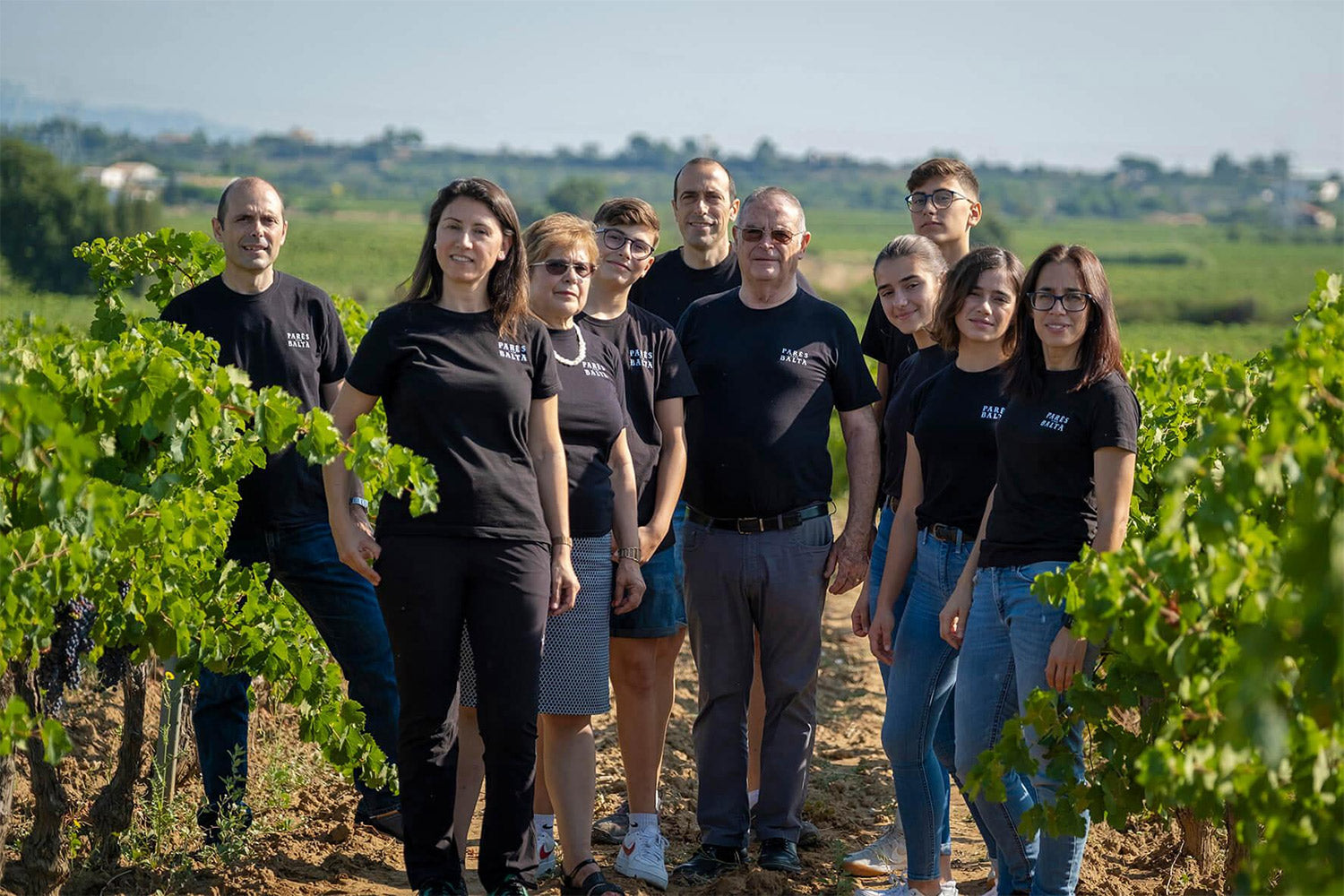
Yes — they have been certified organic since 2005 and practise biodynamic farming across much of the estate. It's one of the things that sets them apart from the larger Cava houses, and you can taste the care in the vineyard in the minerality and precision of this wine.


What are you looking for tonight? Tell me the occasion, a grape, a region — or just try a suggestion below.
Your recommendations will appear here.
-
-
Speak to one of our Wine Gurus
Speak to a Wine GuruWith years of experience, our team can help you with all your wine buying and selling needs