

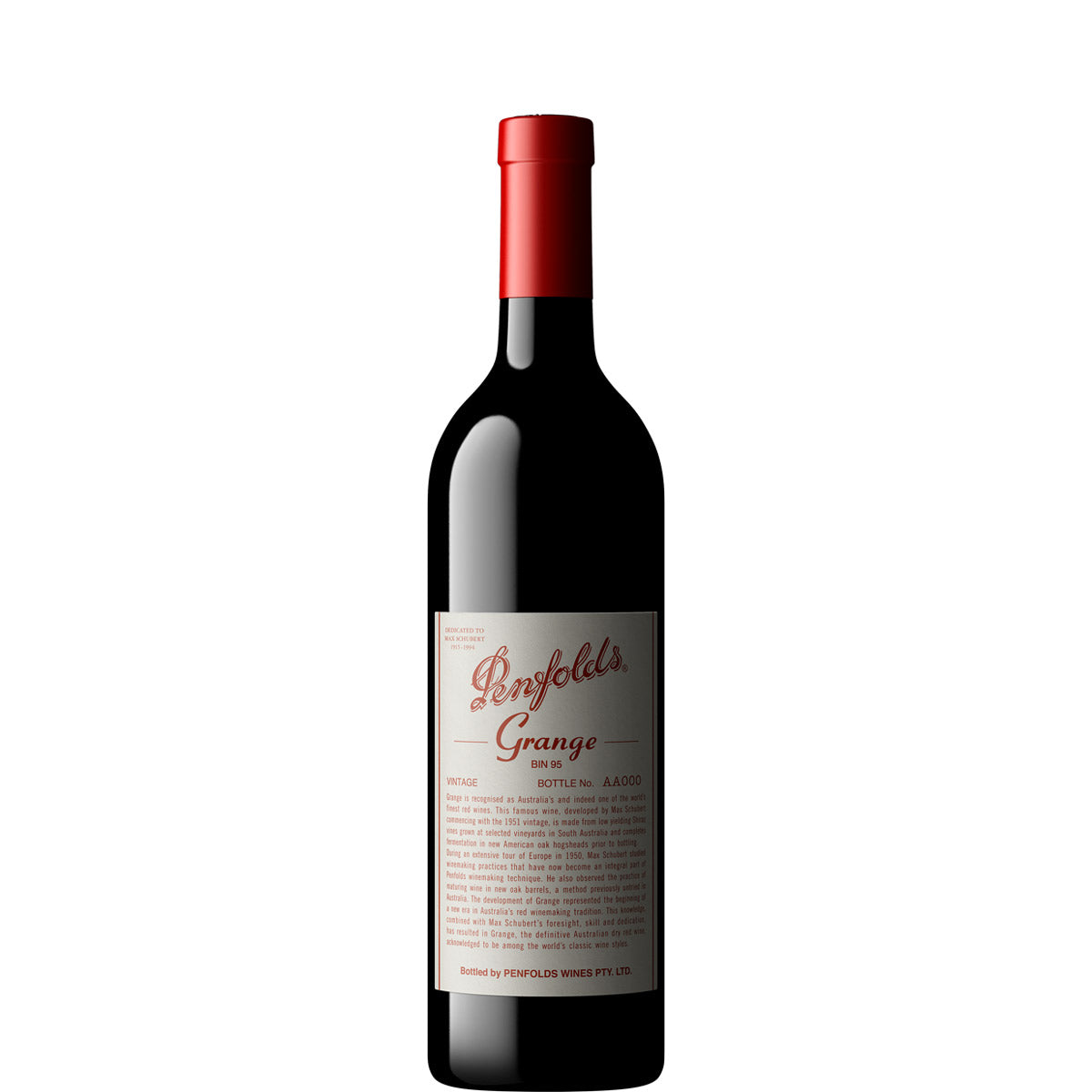
Penfolds, Grange Bin 95, 2022
Penfolds, Grange Bin 95, 2022
- 75cl
- 14.5%
- Red Still
- Shiraz, Cabernet Sauvignon
Couldn't load pickup availability

Optimal drinking window: 2030 - 2060
Special Offer: Any order over £1,000 will secure a complimentary space at an exclusive tasting with Penfolds in 2027.
Est. delivery in 2027
Grange is one of the wine world's great originals — not a copy of Bordeaux or Burgundy, but something that couldn't exist anywhere else.
Max Schubert created it in the early 1950s against the express wishes of Penfolds management, who famously ordered him to stop making it. He didn't, of course, and the rest is history that most wine lovers already know.
What the critics say:
"There are times when a tasting of an icon wine can leave you slightly underwhelmed. This was not one of those times. Standing out like an A-lister in a spotlight among the 2026 Collection releases, this 75th anniversary vintage of Grange deserves every standing ovation the audience can give. Coming from a cool growing season – 'I always like the cooler years,' shares chief winemaker Peter Gago – 2022 blends fruit from Barossa Valley, McLaren Vale and Coonawarra, spending 18 months in new American oak hogsheads. Already offering so much aromatically, with a finely detailed nose that layers rose petals and spice with meaty and earthy tones; so fresh and harmonious. With just 3% of Cabernet in the mix, the palate showcases absolute purity of Shiraz fruit; somehow managing to combine plushness with elegance and vivid energy. Yes, you can deconstruct the impeccable tannins and trademark Grange volatile acidity; but I suspect you'll be swept up in the effortless balance and lingering finish of a wine that already feels so complete, though it also has decades ahead of it. Bravo!"
"Intimate and subtly complex. Cedar and peony notes are the first to reveal themselves with a crunchy, lifted dark berry fruit – sloe, blueberry, damson and mulberry. There’s a subtle slightly medicinal note, a little reminiscent of a peaty Islay whisky in the Lagavulin mode! Black cherry too and black olive tapenade, a little soot and oak smoke. Silken textured, from the seamless integration of the tannins. And a lovely cool, whetstone minerality. Searingly fresh, gracious and glossy, this is bright and luminous, all the more impressive for the amplitude, density and concentration of the mid-palate. The tannins are beautifully soft, gently caressing the mid-palate and sculpting a lifted and elegant fantail finish. Texturally sublime and a study in harmony and elegance. There are some striking similarities with the 1998 tasted alongside."
"Rich plum colour, intense, fragrant violet and peony flowers, crushed cocoa bean and cola, dark chocolate, silky smooth tannins. These guys know exactly how to deliver a masterclass in vivid, crystal clear flavours, and you're not going to go wrong. Peter Gago winemaker, Tom King director."
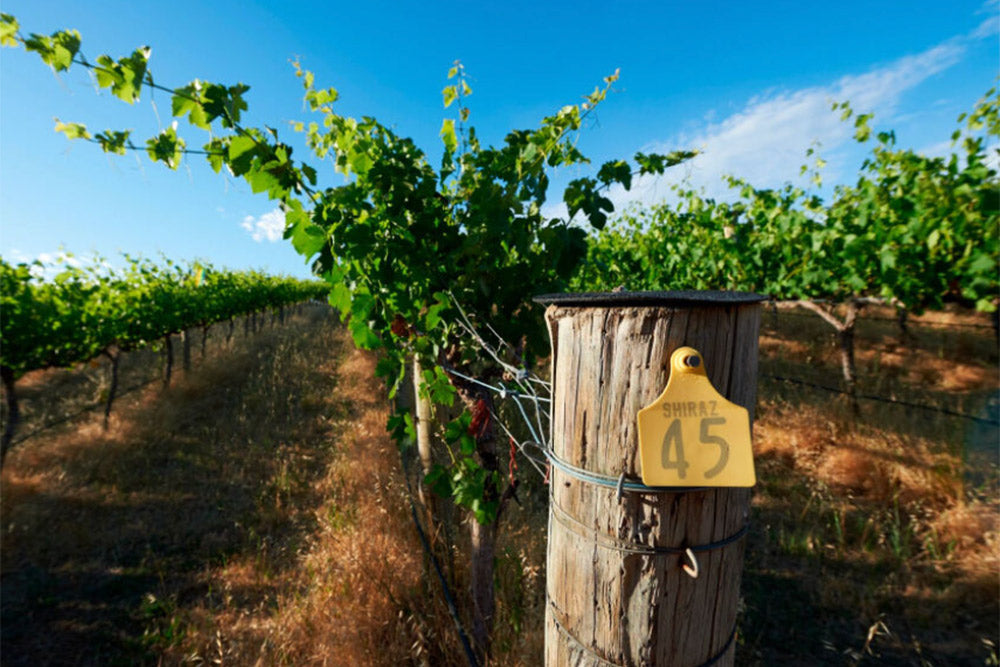
Grange is not a single-vineyard wine; it is a blend from several South Australian sites, principally the Barossa Valley, Magill Estate, and McLaren Vale. The Barossa brings the old-vine Shiraz backbone — deep-rooted vines in ancient sandy loam and ironstone soils that force concentration and produce fruit of extraordinary depth. Magill Estate, just outside Adelaide, contributes structure and a stony, more restrained character. The blending philosophy means the wine expresses South Australia as a whole rather than any single patch of ground.
Grange carries the South Australia geographical indication, which permits the broad multi-regional blending that defines its style. There is no specific appellation framework constraining grape varieties or yields in the way that French AOC rules do — which is precisely the freedom that allowed Max Schubert to create the wine in the first place. This flexibility is both the wine's strength and, for its detractors, a point of philosophical tension with Old World single-site ideals.
South Australia had a warm, dry growing season in 2022, with a summer that arrived early and stayed. Rainfall was well below average across most of the state, which kept disease pressure low and gave growers unusually clean fruit. Heat events during the growing season were a concern in some areas, and yields were generally down, but what came off the vine was concentrated and in fine condition. The Barossa and McLaren Vale fared particularly well, while the cooler Clare and Eden Valleys had the acid retention to match the ripeness.
The wines that resulted tend to sit on the richer, fuller side of the spectrum — Shiraz with real depth and grip, Cabernet with structure to spare, and Grenache that repays those who picked with nerve rather than waiting for maximum colour. These are not wines that need coaxing; most are drinking well now, and the better examples will hold comfortably until 2030 and beyond. A vintage worth taking seriously.
OUR GROWERS
Penfolds
Explore related wines


-
-
Speak to one of our Wine Gurus
Speak to a Wine GuruWith years of experience, our team can help you with all your wine buying and selling needs