

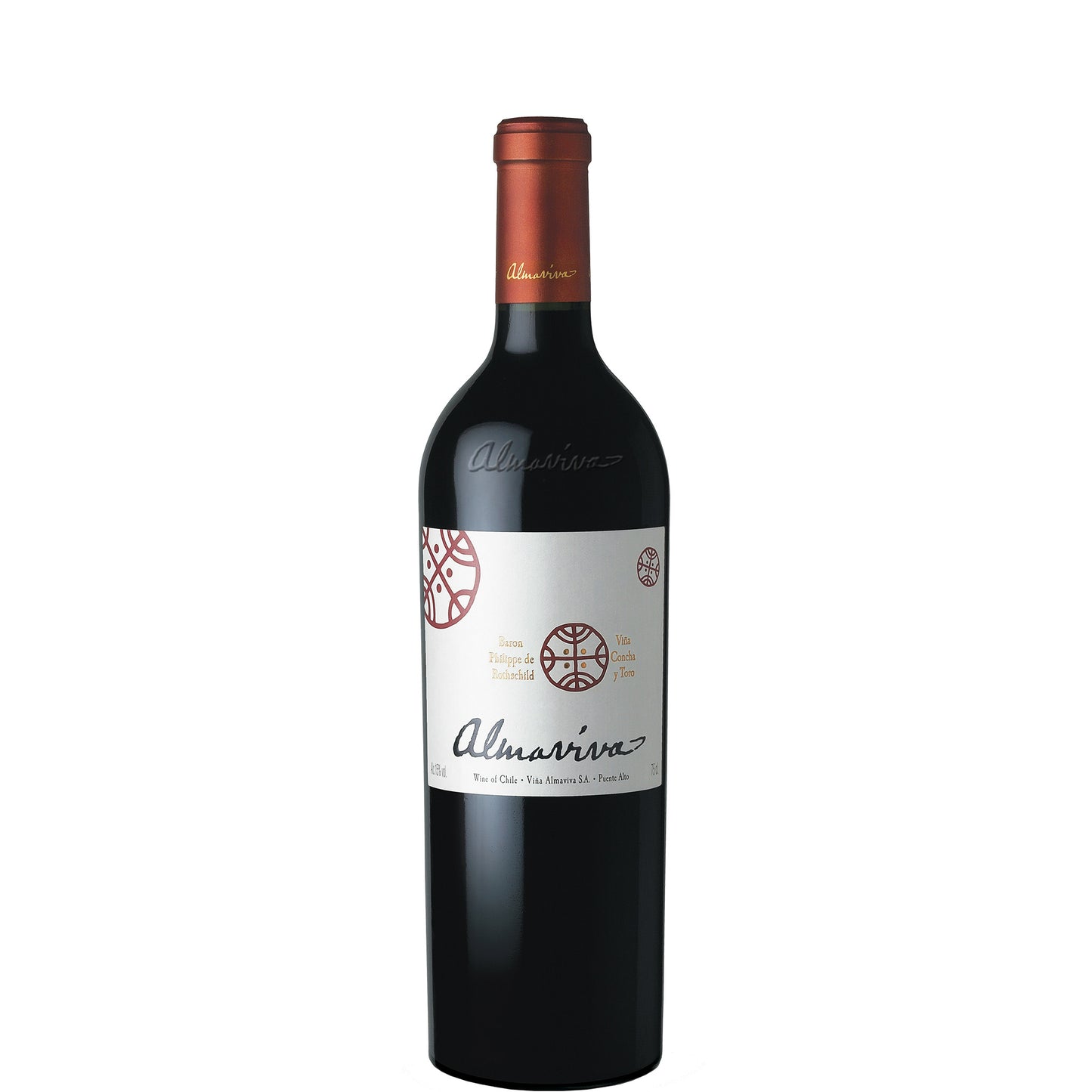
Philippe Rothschild & Concha Y Toro, Almaviva, 2024
Philippe Rothschild & Concha Y Toro, Almaviva, 2024
- 75cl
- 14.5%
- Red Still
- Cabernet Sauvignon, Carmenère, Cabernet Franc, Petit Verdot
- Organic
Couldn't load pickup availability

Optimal drinking window: 2028 - 2045
Est. delivery in 2027
Almaviva is one of South America's most unambiguous statements of intent: a joint venture between Mouton Rothschild and Concha y Toro, conceived in 1996 to prove that Chile's Maipo Valley could produce a wine capable of sitting at the same table as the great Bordeaux blends. Nearly three decades on, it does exactly that.
The blend is anchored by Cabernet Sauvignon from the Puente Alto vineyards, with Carmenère lending something distinctly Chilean — a dark, earthy warmth that no amount of French winemaking can quite iron out, and nor should it.
What the critics say:
"The 2024 Almaviva ranks as the most impressive and definitive iteration of the wine I have tasted to date. The nose delivers a degree of nuance, refinement and complexity that other vintages have glimpsed but never fully attained, seamlessly fusing incense, pipe tobacco, sage, sweet red pepper and singed cedar aromas with impeccable harmony and a graceful overall nature. On the palate, a classically suave, gourmand mouthfeel is energized by an uncommon vibrancy, flowing into a reverberant, saturated finish that lingers with filigreed tannins and a strident core of graphite-laden minerality. The blend is mostly Cabernet Sauvignon with about 25% Carmenère, 4% Cabernet Franc and 2% Petit Verdot."
"The 2024 Almaviva shows subtle exuberance with its hallmark restrained sweetness, with good depth of complexity and generosity. A touch of cedar and tobacco with sweet currants, berries and subtlety. Round and medium- to full-bodied, with the depth of cabernet sauvignon marrying the sweet spices from the carmenere. Structured yet fine-grained and polished. Very long finish. 70% cabernet sauvignon, 24% carmenere, 4% cabernet franc and 2% petit verdot. Drink after 2027."
"An exceptional vintage of Almaviva, this is fragrant and savoury, with wonderful lift through the palate, fennel, anis, raspberry puree, a succulent and balanced vintage of this wine. Michel Friou winemaker, Manuel Louzada director, jointly owned by Rothschild, Concha y Toro. 70% new oak for ageing."
"Beautiful. Ethereal. Lifted and aromatically very precise despite the sense of subtle restraint. Cassis. Pink and green peppercorns. This is very pure and lifted. It’s radiant with lovely, very precise, floral notes. The aromatics of the Carménère and Cabernet Franc really sing and yet it is the Cabernet Sauvignon that provides the elegant, compact frame. A great advert both for the bond between them that is the terroir on which they grow and for the respect it is shown at Almaviva."
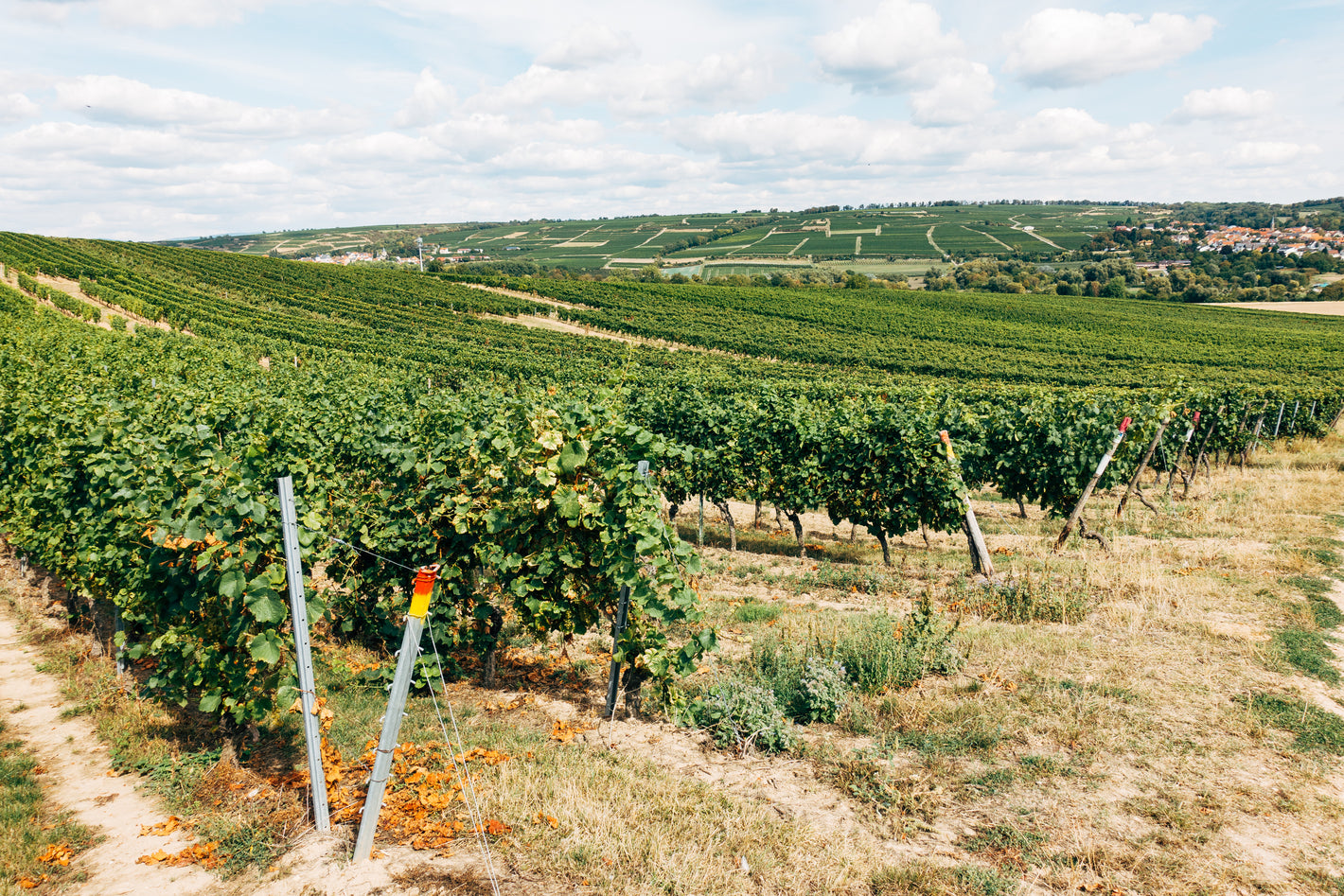
The Puente Alto vineyards sit at the foot of the Andes in the upper Maipo Valley, at around 650–700 metres above sea level, where the Maipo River emerges from the mountains. Soils are predominantly stony alluvial deposits — gravel, sand, and cobbles over clay subsoils — which drain well, keep yields low, and concentrate flavour. The proximity to the Andes brings cold nights even in summer, preserving acidity and slowing ripening in a way that gives Almaviva its structure and freshness alongside the natural warmth of the Chilean sun.
Maipo Valley is Chile's most historically prestigious red wine region, particularly for Cabernet Sauvignon, and sits just south of Santiago. Within Maipo, Puente Alto has emerged as the most sought-after subzone, home to Almaviva and Don Melchor among others. The appellation has no formal tiered classification system in the Bordeaux sense, but the concentration of prestige producers in its upper reaches has effectively created a de facto hierarchy. Compared to warmer coastal or northern valleys, Maipo produces Cabernet of greater structure and restraint.
The 2024 vintage in Maipo arrived after a growing season marked by lower than average temperatures through the critical ripening period, which stretched the harvest out and kept acidity lively. Rainfall was broadly well timed, avoiding the kind of late-season pressure that can force growers into difficult decisions about when to pick. The Andes snowpack held well, keeping irrigation water available through the dry summer months — not glamorous, but genuinely important in a valley where water management is as consequential as any weather event.
The results lean toward precision rather than brute force, which suits modern Maipo Cabernet Sauvignon rather well. Tannins are firm but not aggressive, and the wines have the sort of structure that rewards patience without demanding it — most are drinking well now with a decant, but the better bottles will repay cellaring until 2030 and beyond. Carmenère, where it appears, looks particularly good: the longer hang time did it real favours.
OUR GROWERS
Philippe Rothschild & Concha Y Toro
Explore related wines


-
-
Speak to one of our Wine Gurus
Speak to a Wine GuruWith years of experience, our team can help you with all your wine buying and selling needs