

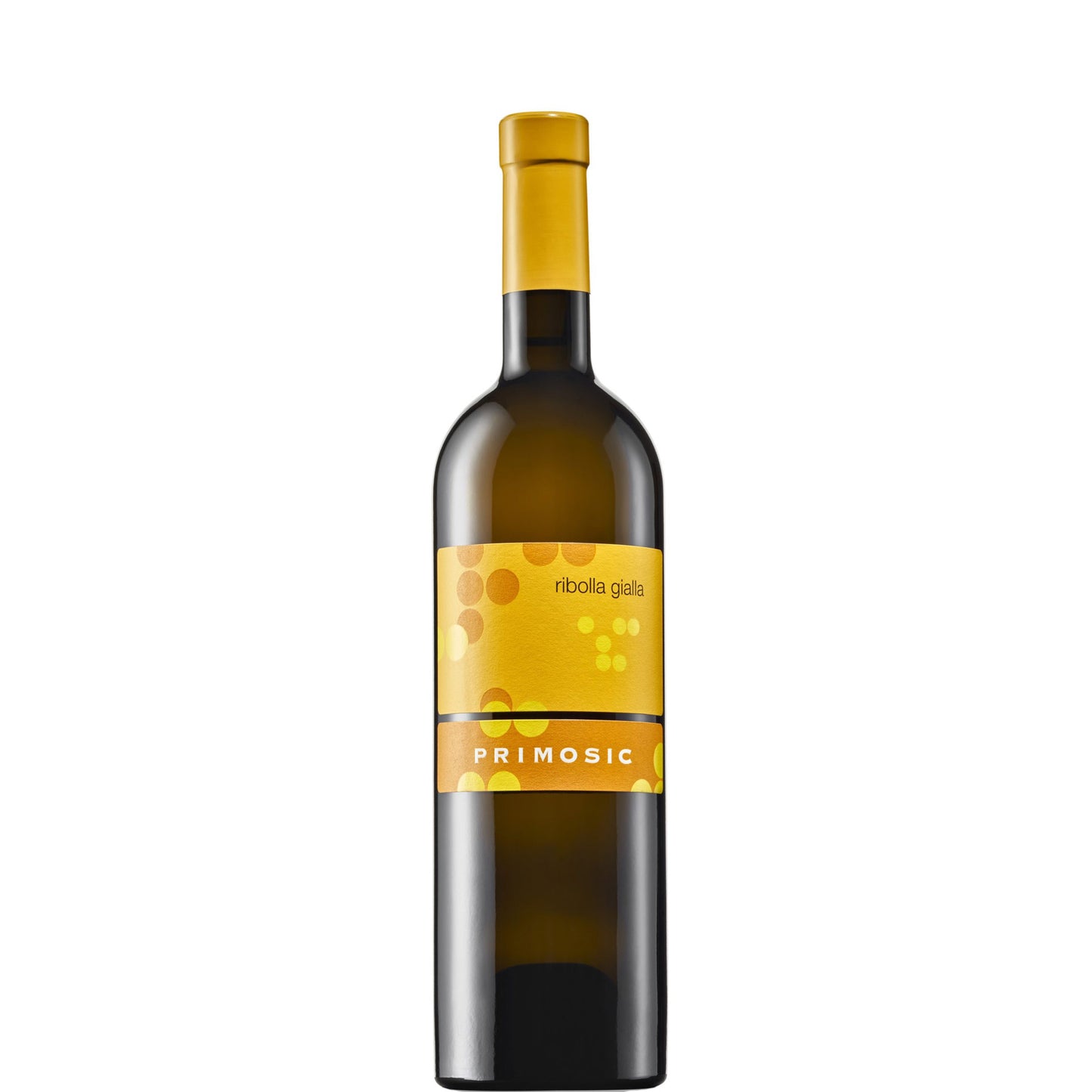
Primosic, Ribolla Gialla, IGT, 2024
Primosic, Ribolla Gialla, IGT, 2024
- 75cl
- 12.5%
- White Still
- Ribolla Gialla
Couldn't load pickup availability

Optimal drinking window: 2026 - 2030
Primosic is one of the great names in Collio, that sliver of Friuli-Venezia Giulia where the hills tip into Slovenia and the soils produce some of Italy's most characterful whites. Their stainless-steel Ribolla Gialla is the purest expression of a grape that is utterly native to this corner of the world — tight, mineral, and unapologetically itself. Think white peach, lemon curd, and a chalky, saline edge that makes you reach for another glass before you've finished the first.
The 2024 vintage brought cool nights and a long, dry growing season, which suits Ribolla Gialla perfectly — it needs that tension to sing. We'd drink this young and bright, ideally over the next two to three years, when the fruit is at its most vivid. Chill it properly and pour it generously.
The 2024 is in its element right now, with primary fruit front and centre and that lively acidity doing exactly what it should. Over the next year or two the citrus notes will round off slightly and the mineral, stony quality will become more pronounced — a more contemplative wine, still very good. By 2028 it will have reached a pleasant plateau, but Ribolla Gialla in the unoaked style is not really built for the long haul; after 2030 we'd expect the freshness to fade and the wine to lose its defining tension. Drink it while it crackles.
Tasting Notes
AppearancePale straw with a faint green shimmer and good clarity.
NoseFresh and precise: white peach, lemon zest, and a cool, chalky mineral lift that recalls wet stone on a warm day. There's a gentle floral note — dried chamomile, perhaps — that drifts in quietly underneath.
PalateLean and focused with lively acidity that carries flavours of citrus pith, green apple, and almond skin from start to finish. The texture is crisp rather than rich, with that characteristic Ribolla Gialla bite that keeps everything refreshing and taut.
FinishClean, saline, and pleasingly bitter at the very end — like a good espresso, it leaves you wanting more.
Overall impressionA textbook Friulian white: no showboating, just pure, mineral-driven drinking pleasure.
Food Pairings
In Friuli-Venezia Giulia, Ribolla Gialla is the default house white, poured alongside everything from a simple plate of prosciutto di San Daniele to a bowl of jota, the hearty bean and sauerkraut soup that reflects the region's central European influences. Locals would think nothing of drinking it with fresh river trout simply grilled with olive oil and lemon, or alongside the region's famous frico — a crispy fried disc of aged Montasio cheese that is one of the great bar snacks of northern Italy. It also works beautifully with the local cured meats and the mild, creamy cheeses that Friulian producers turn out with quiet efficiency. If you want to keep it simple, a plate of grilled white asparagus in spring is about as good a match as you'll find.
We think this wine would go well with
Serve at 8 to 10°C — cold enough to keep it bright, not so cold that it shuts down the mineral character. No need to decant; pour straight from the bottle and let it warm slightly in the glass over ten minutes or so. A standard white wine tulip or a Burgundy-style bowl both work well here — you want enough space for the aromatics to gather without the glass being so large that the wine warms too quickly.
The Collio hills sit on a distinctive geological formation known as Flysch di Cormons — alternating layers of sandstone and marl laid down in the Eocene epoch, which gives the wines their characteristic mineral backbone and aromatic freshness. The altitude ranges from 80 to 200 metres, with cool breezes from the Alps moderating what would otherwise be a warm continental climate. This combination of well-drained, nutrient-poor soils and diurnal temperature variation is precisely what keeps Ribolla Gialla's natural acidity intact and its aromatic profile precise rather than blowsy.
This wine is labelled IGT Delle Venezie rather than Collio DOC, which gives Primosic flexibility on yields and winemaking without sacrificing quality — a common choice among serious producers in the region. The Collio DOC itself covers a narrow strip of hills in Gorizia province, with strict rules around permitted varieties and minimum ageing; Ribolla Gialla is one of its signature grapes. Neighbouring Friuli Colli Orientali produces similar whites just across the valley, but Collio's Flysch soils give its wines a distinctly saline, stony edge that sets them apart from the rounder, fuller style you find further inland.
The 2024 growing season in Friuli was shaped by a wet, unsettled spring that kept growers on alert for disease pressure, followed by a warmer, drier summer that allowed the vines to recover composure. It was the kind of year that rewarded the attentive and punished the complacent — those who managed canopies carefully and kept yields in check came through well; those who didn't found the vintage less forgiving. Harvest conditions were generally favourable, with cooler temperatures in September helping to preserve the natural acidity that defines the region's best whites.
The results lean toward wines with real freshness and definition rather than sheer concentration — Friulano and Ribolla Gialla in particular show the crisp, saline character that makes them so food-friendly, while the Collio and Colli Orientali whites have good structural tension. It's not a vintage that screams for the cellar. Most wines are drinking well now or will hit their stride over the next two to four years, making 2024 a very willing partner for the dinner table sooner rather than later.
FAQs
What does Primosic's Ribolla Gialla taste like?
Crisp and mineral-driven, with white peach, lemon zest, and a saline, stony edge that's distinctly Friulian. There's a characteristic bitter almond bite on the finish that makes it genuinely refreshing rather than just clean.
When should I drink this wine?
It's drinking well right now and will stay lively until around 2029. This is a wine built for freshness, not the cellar — the sooner the better.
What food goes well with this wine?
Prosciutto di San Daniele, grilled white fish, fresh river trout, frico (the Friulian fried cheese crisp), or simply a bowl of good pasta with butter and sage. Anything that lets the wine's mineral freshness do the heavy lifting.
How should I serve it?
Chill it to around 8 to 10°C and serve straight from the bottle — no decanting needed. A standard white wine glass is fine; let it warm slightly in your hand for a few minutes to open up the aromatics.
Is Ribolla Gialla worth cellaring?
Not in this style, no. Primosic's unoaked Ribolla Gialla is at its best young, when the fruit is vivid and the acidity is electric. If you want a Ribolla built for ageing, their skin-contact Riserva Oslavia is the one to lay down.
What makes Ribolla Gialla different from other Italian whites?
It's one of the few genuinely indigenous grapes of Friuli-Venezia Giulia, and it has a personality all its own — leaner and more mineral than Pinot Grigio, less aromatic than Friulano, with a distinctive bitter edge on the finish. It also happens to be the grape behind some of Italy's most celebrated orange wines, though in this version Primosic keeps it fresh and unoaked.

Explore related wines


What are you looking for tonight? Tell me the occasion, a grape, a region — or just try a suggestion below.
Your recommendations will appear here.
-
-
Speak to one of our Wine Gurus
Speak to a Wine GuruWith years of experience, our team can help you with all your wine buying and selling needs