

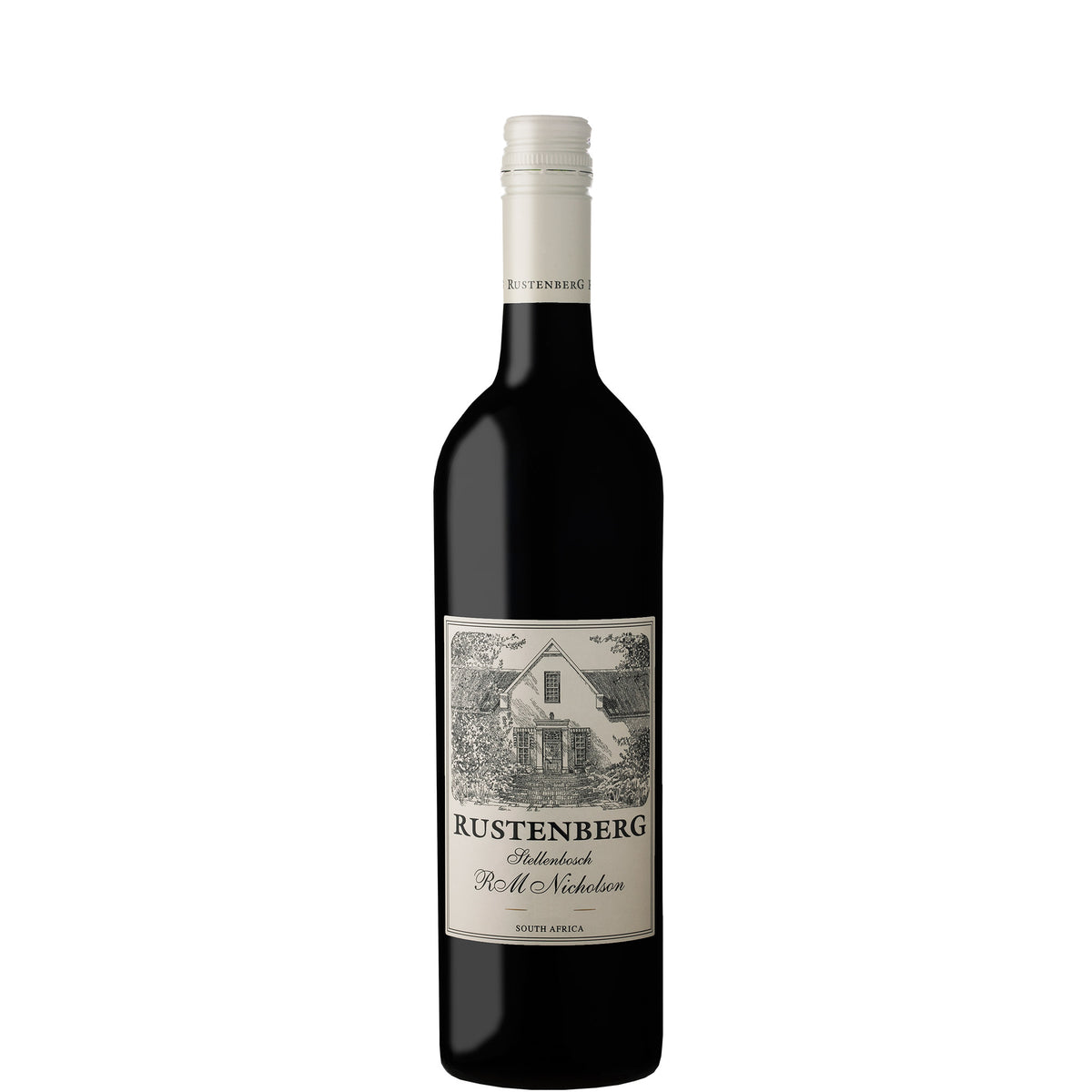
Rustenberg, R.M. Nicholson, 2021
Rustenberg, R.M. Nicholson, 2021
- 75cl
- 14%
- Red Still
- Merlot, Cabernet Sauvignon, Shiraz
Couldn't load pickup availability

Optimal drinking window: 2026 - 2032
Named after Reg Nicholson, the former owner-winemaker who created Rustenberg's original "Dry Red" and clearly wasn't one for playing it safe, the R.M. Nicholson is Stellenbosch's take on what happens when you stop asking which grapes belong together and start asking what actually works. The blend shifts with each vintage, Bordeaux varieties giving it spine and depth, Shiraz bringing a juicy, peppery generosity that stops the whole thing from feeling buttoned-up.
t's a wine that rewards a decant — give it thirty minutes and it opens up considerably, then drink it alongside something substantial from the braai.
The 2021 is already drinking well, with primary fruit that's vibrant and forward rather than locked away. Over the next two to three years the blackcurrant and pepper will begin to integrate more fully into the structure, and the tannins will soften further. By around 2028-2029 it should be at its most complete, with more secondary savoury complexity emerging alongside the fruit.
Tasting Notes
AppearanceDeep ruby-crimson with good density and a clean, bright rim.
NoseRipe blackcurrant and dark plum lead, with dried herbs and a distinct crack of black pepper underneath. There's a warm spice note — something between cinnamon and clove — that comes from the Shiraz rather than the oak.
PalateMedium to full-bodied with tannins that are present but not aggressive — the Bordeaux varieties give the frame, the Shiraz softens the edges and adds a juicy, lifted quality. Fresh blackcurrant and dark cherry sit alongside that herbal thread, with the pepper persisting through the mid-palate.
FinishClean and moderately long, with black pepper and a faint savoury note carrying it through.
Overall impressionA confident, characterful Cape blend that earns its generosity without losing its shape.
Food Pairings
In Stellenbosch, a wine like this belongs next to a braai — specifically, a slow-cooked leg of lamb over coals, seasoned with rosemary and garlic, the kind of thing that takes all afternoon. Boerewors, the spiced beef and pork sausage that's basically South African law at any outdoor gathering, also sings alongside this. Closer to the table, a Cape Malay lamb curry or a rich, slow-braised oxtail would be at home with the wine's structure and spice. If you're keeping it simple, aged Cheddar or a hard, nutty cheese will do the job neatly.
We think this wine would go well with
Serve at around 17-18°C — any warmer and the alcohol starts to dominate, any cooler and the fruit closes in on itself. This wine benefits from decanting: thirty minutes is the minimum, an hour is better, and it's noticeably more expressive for the effort. A standard Bordeaux-style glass with a generous bowl is the right vessel, giving the peppery aromatics room to open.
Rustenberg's vineyards sit on the lower slopes of the Simonsberg mountain, where granitic and decomposed granite soils with good drainage encourage the vines to root deep. The altitude moderates what can otherwise be fierce Cape heat, and afternoon cloud cover from the mountain provides further cooling. This combination tends to produce fruit with more natural acidity and freshness than valley-floor vineyards nearby, which gives the wines their lifted, energetic character.
Stellenbosch is South Africa's most celebrated red wine district, a patchwork of valleys and mountain foothills east of Cape Town with a wide range of soils and exposures. There are no prescriptive rules about grape varieties or blending, which is why producers like Rustenberg can play freely with Bordeaux and Rhône varieties in the same wine. The Simonsberg-Stellenbosch ward, where Rustenberg sits, is generally regarded as one of the cooler, more elegant sub-zones, often compared in ambition — if not in climate — to the left bank of Bordeaux.
FAQs
What does the R.M. Nicholson taste like?
Bold and characterful, with blackcurrant, dried herbs, and black pepper at the fore. The Shiraz in the blend adds a juicy, spiced lift to what would otherwise be a more structured Bordeaux-style framework. It's generous without being heavy.
When is the best time to drink the 2021?
It's drinking well right now and will continue to do so until around 2032. The sweet spot is probably 2027-2030, when the fruit and structure will have knitted together fully. No need to wait, but it won't punish patience either.
Should I decant it?
Yes, and it's worth it. Thirty minutes minimum, an hour if you can manage it. The wine opens up considerably with air — more aromatics, softer tannins, and that peppery character becomes more expressive rather than just punchy.
What food works well with this wine?
Something substantial. Slow-braised lamb, a proper beef stew, or anything from the braai. The wine's spice and structure make it a natural partner for bold, savoury cooking — Cape Malay lamb curry works particularly well.
Why is it called R.M. Nicholson?
It's named after Reg Nicholson, a former owner and winemaker at Rustenberg who created the estate's original Dry Red. The wine follows his spirit rather than any fixed recipe — the blend shifts each vintage to capture the best of what the year produced.
Is this wine worth cellaring?
It will hold until around 2032 without trouble, but this isn't a wine that transforms dramatically with age. It's built for medium-term enjoyment rather than long cellar maturation.

Explore related wines


What are you looking for tonight? Tell me the occasion, a grape, a region — or just try a suggestion below.
Your recommendations will appear here.
-
-
Speak to one of our Wine Gurus
Speak to a Wine GuruWith years of experience, our team can help you with all your wine buying and selling needs