

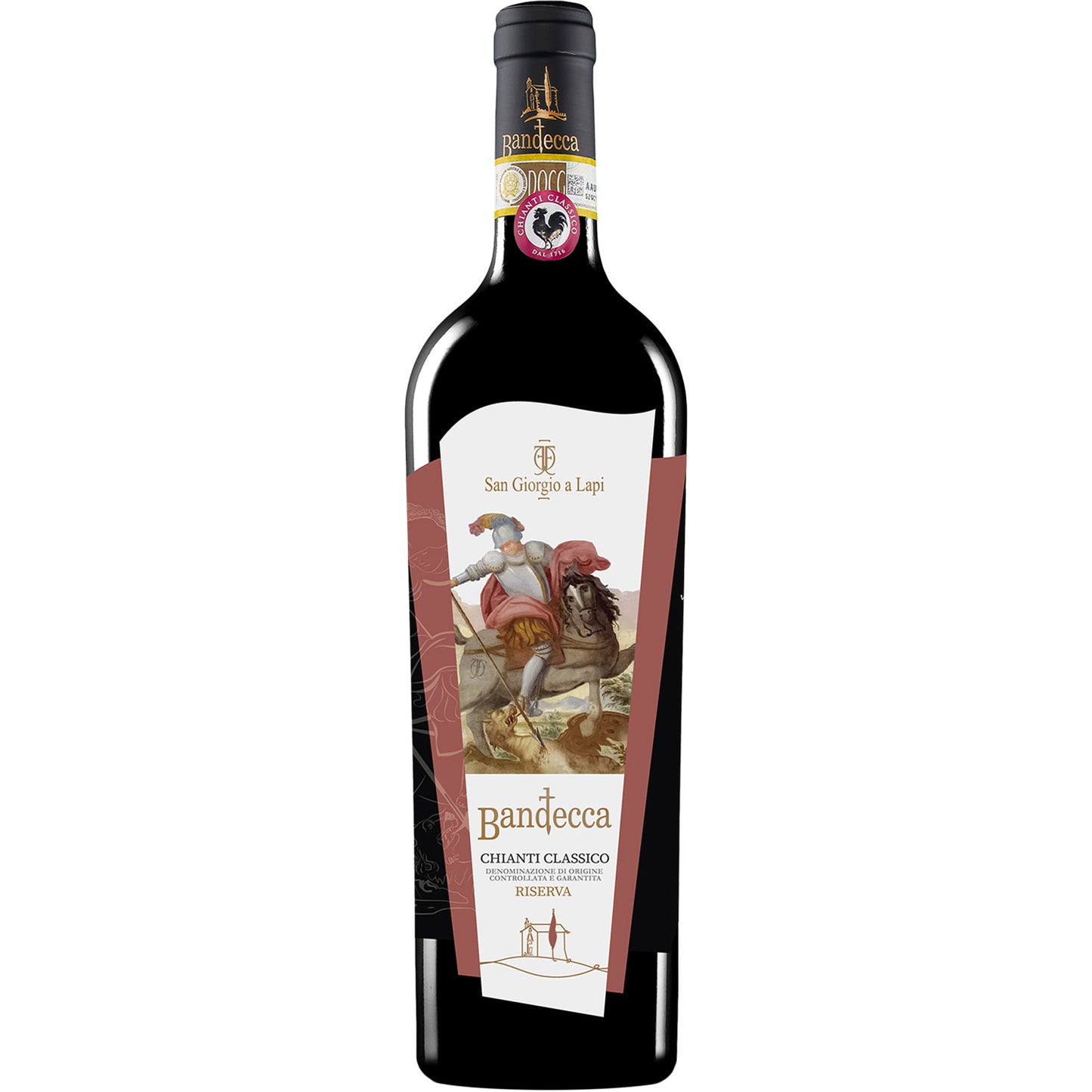
San Giorgio a Lapi, Bandecca Chianti Classico Riserva, 2021 - Magnum
San Giorgio a Lapi, Bandecca Chianti Classico Riserva, 2021 - Magnum
- 150cl
- 14%
- Red Still
- Sangiovese, Colorino
Couldn't load pickup availability

Optimal drinking window: 2026 - 2036
Grown in the rolling hills of Castelnuovo Berardenga, San Giorgio a Lapi's Bandecca Chianti Classico Riserva delivers deep, ripe cherry and blackberry flavours, layered with hints of spice, leather, and earthy undertones. Aged to perfection, it strikes a great balance between richness and elegance, with silky tannins and a long, smooth finish.
Whether you're pairing it with a classic bistecca alla fiorentina, a hearty pasta dish, or just enjoying a glass on its own, this Chianti Classico Riserva has heaps of Tuscan charm.
The 2021 vintage in Chianti Classico was warm and relatively generous, producing wines with good concentration and approachable structure — and in magnum, that structure is preserved with more patience than a standard bottle. Right now, the fruit is vivid and the tannins are polished enough to drink with pleasure. By 2028 or so, the primary cherry and blackberry will begin to integrate into something more complex — dried fruit, leather, tobacco, forest floor — and that's when the wine will really hit its stride. It will plateau comfortably around 2030 to 2033, and while it won't decline sharply, by 2036 you'd want the last bottle open rather than sitting in the rack.
Tasting Notes
AppearanceDeep ruby with a lively garnet edge and good clarity in the glass.
NoseRipe dark cherry and blackberry lead, with dried herbs, cracked pepper, and a faint leathery undertone that speaks to the Riserva ageing. There's a warm, earthy quality underneath — sun-baked soil and dried rose petals — that is very Castelnuovo Berardenga.
PalateFull and generous on entry, with concentrated dark fruit that fills the mouth without feeling heavy. The tannins are firm but smooth, well-integrated after their time in oak, and the acidity keeps everything in line — Sangiovese's great gift. Spice and a savoury, almost meaty note emerge on the mid-palate.
FinishLong and dry, with lingering cherry skin, tobacco, and a clean mineral bite at the very end.
Overall impressionA generous, well-structured Riserva that balances Castelnuovo's warmth with the discipline of good Sangiovese.
Food Pairings
In Tuscany, a Chianti Classico Riserva like this is practically inseparable from bistecca alla fiorentina — a thick-cut T-bone grilled over wood coals and served simply with olive oil, salt, and lemon. Locals would also reach for this alongside wild boar ragu on pappardelle, or a slow-braised cinghiale in the cooler months. Pecorino stagionato, the aged sheep's milk cheese made throughout Siena province, is a natural match — the fat in the cheese tames the tannins and the salt lifts the fruit. Ribollita, the hearty bread-and-bean soup of the region, works surprisingly well too, especially on a winter evening when you want something warming in the glass as much as the bowl.
We think this wine would go well with
Serve at around 17°C — a touch below room temperature in most British homes, so fifteen minutes in a cool spot before opening won't hurt. Decanting is worth doing: 45 minutes to an hour will open up the fruit and soften any residual oak grip, especially in the magnum format where the wine has had less exposure to air during ageing. A large-bowled Burgundy or Sangiovese glass gives the wine the space to breathe and lets the aromatic complexity develop properly in the glass.
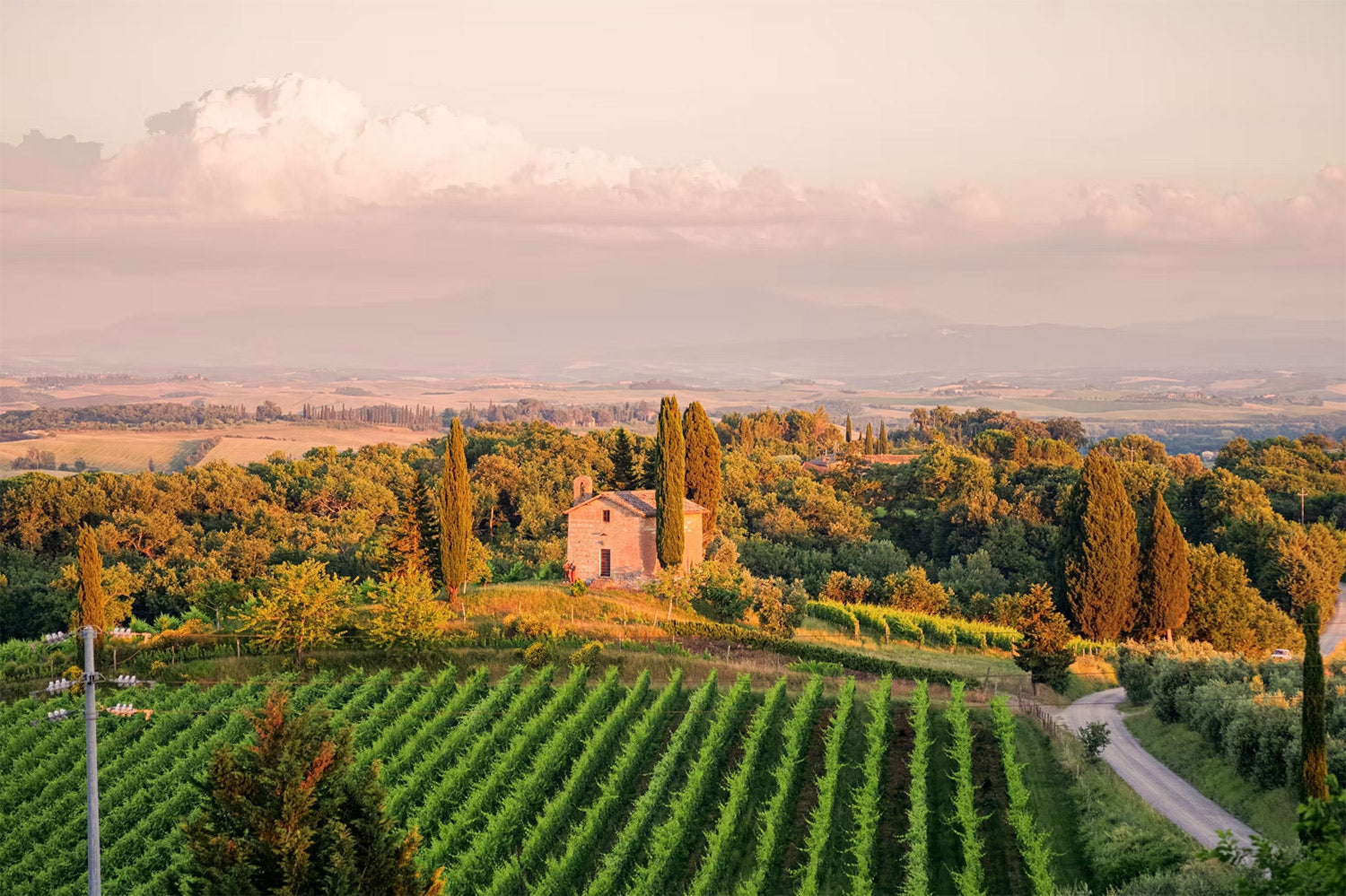
Castelnuovo Berardenga sits at the southernmost edge of Chianti Classico, where the climate is noticeably warmer and drier than further north around Panzano or Radda. The soils here are a mix of galestro — the crumbly, schist-like stone that drains freely and keeps vines honest — and alberese, a compact, calcium-rich clay that lends structure and longevity. This combination produces Sangiovese with more flesh and ripeness than elsewhere in the zone, yet the altitude of the vineyards (typically 300–400 metres) preserves the acidity and freshness that define the grape.
Chianti Classico is the historic heartland of Tuscan wine, occupying the hills between Florence and Siena, and it has spent the last two decades quietly reinventing itself. The Riserva designation requires a minimum of 24 months' ageing, including at least three months in bottle, and a minimum of 80% Sangiovese — though many producers, including serious estates, go to 100%. Compared to the broader Chianti DOC, Classico demands lower yields and stricter selection; compared to the Gran Selezione tier above it, Riserva tends to offer more approachability alongside genuine age-worthiness. It remains one of Italy's most reliable categories for quality Sangiovese at a sensible price.
Tuscany's 2021 growing season began with a soggy spring that had growers muttering into their espressos, followed by a summer that swung between scorching heat and welcome August rains. The real drama came at harvest time when many producers had to pick fast and choose wisely, dancing around September downpours that separated the meticulous from the merely hopeful. Those who waited too long paid the price, but the estates that timed it right caught fruit with lovely ripeness and crucially intact acidity.
What emerged feels like Tuscany with its shirt sleeves rolled up — wines that are more approachable and less brooding than the powerhouse vintages we've grown used to. The Sangiovese shows bright red fruit and genuine charm rather than the dense, muscular character of recent years, whilst the international varieties like Cabernet Sauvignon and Merlot retained surprising freshness despite the heat. We're finding these wines drink beautifully now with a few years of bottle age, though the best Chiantis and Super Tuscans will happily cellar for another decade if you can resist them that long.
FAQs
What does the Bandecca Riserva taste like?
It leads with ripe dark cherry and blackberry, layered with dried herbs, cracked pepper, leather, and a savoury earthiness that's very characteristic of Castelnuovo Berardenga. The tannins are smooth and the finish is long and dry with a mineral edge.
When is the best time to drink this?
It's drinking well now, and the magnum format means it will continue to develop with bottle age. We'd suggest enjoying it any time from now until 2036, with the sweet spot likely around 2028 to 2033 when the fruit integrates and secondary complexity comes through.
Is it worth cellaring the magnum format?
Yes, genuinely. Magnums age more slowly and evenly than standard bottles, which means the 2021 has more runway than you might expect from a Riserva. If you can hold off for a few years, the reward is a wine with much greater depth and complexity.
What food works best with this wine?
Bistecca alla fiorentina is the obvious answer, but it works equally well with wild boar ragu, braised lamb, aged Pecorino, or a hearty ribollita. The acidity and tannin structure make it a natural match for rich, savoury dishes.
How should I serve it?
Serve at around 17°C and decant for 45 minutes to an hour before drinking. A large-bowled glass — Burgundy or Sangiovese style — will give the wine room to open up and show its aromatic range.
What makes this a Riserva rather than a standard Chianti Classico?
Riserva requires a minimum of 24 months' ageing, including time in oak and then in bottle, before release. The result is a wine with more structure, greater depth, and a longer future than the annata (standard) release — and it typically comes from the estate's better fruit selections.
Explore related wines


What are you looking for tonight? Tell me the occasion, a grape, a region — or just try a suggestion below.
Your recommendations will appear here.
-
-
Speak to one of our Wine Gurus
Speak to a Wine GuruWith years of experience, our team can help you with all your wine buying and selling needs