

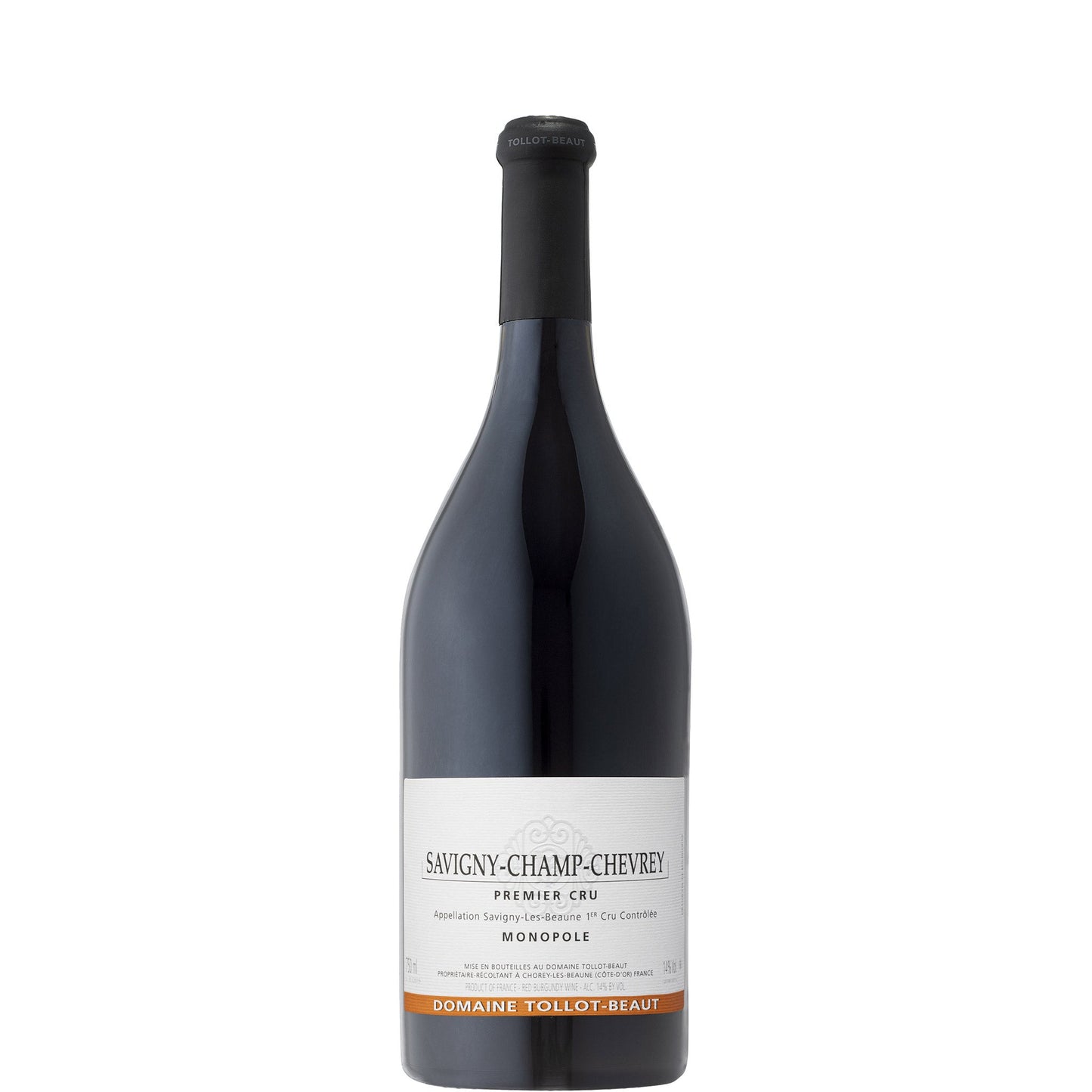
Savigny-lès-Beaune Premier Cru 'Champ Chevrey' Monopole, Domaine Tollot-Beaut, 2023
Savigny-lès-Beaune Premier Cru 'Champ Chevrey' Monopole, Domaine Tollot-Beaut, 2023
- 75cl
- 13.5%
- Red Still
- Pinot Noir
Couldn't load pickup availability

Optimal drinking window: 2027 - 2038
Champ Chevrey is one of the quieter glories of Savigny-lès-Beaune — a monopole climat tucked at the northern end of the village, owned entirely by Tollot-Beaut and farmed with the kind of unhurried seriousness that has defined this domaine for generations.
The 2023 vintage across Burgundy gave wines of real charm and approachability, with ripe, generous fruit balanced by a freshness that the best sites held onto through the heat. Here, that translates to Pinot Noir with real shape: not heavy, not simple, but with the structure to reward a few years of patience and the fruit to flatter it now.
Right now, in 2026, the 2023 is accessible and genuinely attractive — the fruit is open, the oak is integrated, and there is real pleasure to be had. But the tannins still have something to say, and the wine will fill out and gain complexity over the next two to three years as the primary fruit softens and more secondary, earthy, and spiced character begins to emerge. We would call the window from 2027 to 2036: the fruit still present but now supported by the kind of savoury, forest-floor depth that makes good Burgundy so compelling.
Tasting Notes
AppearanceClear, mid-ruby with a translucent, bright rim — classic for a young Côte de Beaune premier cru.
NoseLifted red cherry and raspberry with a suggestion of dried rose and a dusting of light earth underneath. There is a cool, almost mineral quality that keeps things focused and precise rather than broad. A touch of new oak is present but it knows its place.
PalateSilky on entry, with real Pinot Noir delicacy, but there is genuine structure here — fine tannins with some grip that suggests this has more to give. The fruit runs from fresh cherry through to a slightly darker, spiced plum note on the mid-palate, and the acidity is bright and well-integrated. Not a weighty wine, but one with purpose and direction.
FinishClean, persistent, and mineral, with a light earthiness that lingers pleasantly after the fruit has faded.
Overall impressionA premier cru that earns its classification through precision and shape rather than sheer intensity — and is better for it.
Food Pairings
In Burgundy, a wine like this would be poured alongside poulet de Bresse roasted with tarragon and butter — the region's unofficial signature dish and an almost unfairly good match for village and premier cru Pinot Noir. Coq au vin made with the same style of wine it is served with remains a classic for very good reason: the earthiness of the sauce mirrors what is in the glass. Locals might also reach for a lapin à la moutarde, where the Dijon mustard and cream cut through the wine's acidity and bring out the fruit. A simple plate of Époisses or Comté on the side of the table would not go amiss either.
We think this wine would go well with
Serve at around 16°C — slightly cooler than you might instinctively choose, which keeps the freshness in the fruit and stops the alcohol getting ahead of itself. A brief decant of 20 to 30 minutes will help if you are drinking it young, simply to open things up and let the oak settle. If you are pulling this after 2028, it may not need any time at all. Use a larger Burgundy bowl — the wide surface area does most of the work a decant would otherwise do, and lets the nose develop in the glass as you drink.
Champ Chevrey sits on the northern side of Savigny-lès-Beaune, on gently sloping ground that faces east to south-east. The soils here are limestone-rich with a clay component — what the Burgundians call argilo-calcaire — which gives the wines their characteristic combination of freshness and structure. The altitude is modest, around 250 to 280 metres, and the site benefits from good drainage thanks to the underlying rock. It is a cooler, more sheltered climat than those on the main Beaune-facing slopes, which tends to produce wines of a more reserved, precise character rather than the softer, more immediately plush style of Savigny's warmer exposures.
Savigny-lès-Beaune sits just west of Beaune itself, tucked into the valley of the Rhoin river, and has long been something of a quiet achiever in the Côte de Beaune. Its premier crus are divided between two distinct zones — those on the Pernand-Vergelesses border to the north, which tend to produce firmer, more mineral wines, and those on the Beaune border to the south, which lean riper and rounder. Champ Chevrey belongs to the northern group. The AOC rules require Pinot Noir for reds and allow a maximum yield of 40 hectolitres per hectare at premier cru level, though conscientious growers like Tollot-Beaut work well below that. Compared to neighbouring Beaune and Pommard, Savigny premier crus are consistently undervalued — which, for the buyer, is entirely the point.
The 2023 growing season in Burgundy unfolded like a cautionary tale about climate change, then pulled off a last-minute redemption that left everyone rather stunned. After a warm, early spring pushed budbreak ahead of schedule, the vines endured a thoroughly miserable summer of persistent rain and cool temperatures that had growers muttering darkly about rot and dilution. Just when things looked dire, September arrived with glorious sunshine and dry winds that concentrated the fruit and saved the harvest—though not without some frantic sorting in the cellars.
What emerged from this meteorological rollercoaster are wines that wear their vintage on their sleeve: Pinot Noirs with bright, singing acidity and red fruit that feels almost crystalline in its purity, whilst the Chardonnays show remarkable tension and mineral drive. The reds are drinking beautifully now if you fancy immediate pleasure, but we suspect the better villages and premiers crus will reward patience over the next decade. It's not a powerhouse vintage, but there's something genuinely charming about these wines—they remind us why we fell for Burgundy in the first place.
FAQs
What does this wine taste like?
Think fresh red cherry and raspberry with a cool, mineral quality underneath, fine silky tannins, and a clean, earthy finish. It is precise rather than plush — a wine with shape and focus, not volume.
When is the best time to drink this?
It is enjoyable now if you give it a short decant, but we think 2027 to 2038 is the real window. That is when the fruit will have softened into something more complex and the wine's full character will be on show. It will hold until around 2038 in good storage.
Is it worth cellaring?
Yes, with confidence. The 2023 vintage in Burgundy produced wines with genuine structure underneath the approachable fruit, and Champ Chevrey's limestone soils give it the backbone to age. It is not a short-term wine dressed up as a keeper — the potential is real.
What food should I serve this with?
Roast chicken with herbs, rabbit with mustard sauce, or anything in that French bistro register where the food is rich enough to meet the wine but not so heavy it overwhelms it. A good Comté or Époisses alongside would be entirely in keeping.
What makes Champ Chevrey special?
It is a monopole — meaning Tollot-Beaut own the entire climat and no other producer makes a wine from it. That gives them complete control over how it is farmed and vinified, and it means the wine has a consistent house identity that multi-owner premier crus rarely achieve.
How should I serve it?
Around 16°C, in a wide Burgundy bowl. If drinking young, a 20 to 30 minute decant will help open things up. After 2028, it may not need any additional time at all.

Explore related wines


What are you looking for tonight? Tell me the occasion, a grape, a region — or just try a suggestion below.
Your recommendations will appear here.
-
-
Speak to one of our Wine Gurus
Speak to a Wine GuruWith years of experience, our team can help you with all your wine buying and selling needs