

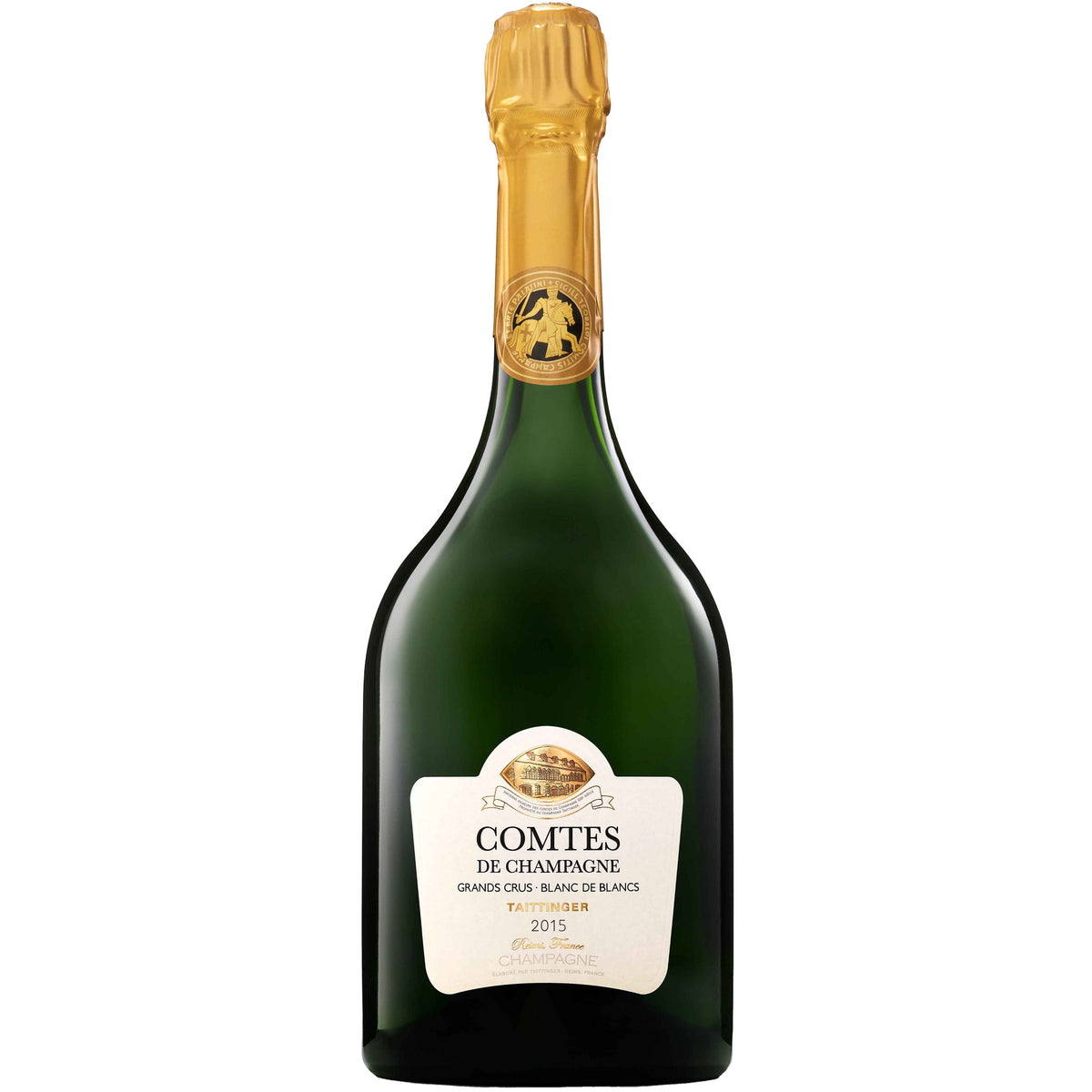
Taittinger, Comtes de Champagne Blanc de Blancs Brut, 2015 - Magnum
Taittinger, Comtes de Champagne Blanc de Blancs Brut, 2015 - Magnum
- 150cl
- 12.5%
- White Sparkling
- Chardonnay
Couldn't load pickup availability

Optimal drinking window: 2026 - 2047
Est delivery in Winter, 2026/2027
Comtes de Champagne is Taittinger's flagship and, frankly, one of the great arguments for why Chardonnay rules Champagne. Made entirely from Grand Cru Côte des Blancs fruit; Avize, Cramant, Oger, Le Mesnil-sur-Oger, and aged for a minimum of five years on lees, the 2015 vintage brings an unusual ripeness to a wine that normally defines itself through precision and restraint. Presented in elegant antique-style bottles, it’s one of the most iconic Blanc de Blancs in Champagne.
Taittinger itself has a long backstory. Founded in 1734, it was taken on by Pierre Taittinger in 1931 after his WWI service in the region, and unusually for a big name, it’s still family-run today by Pierre’s great-grandchildren, Vitalie and Clovis. The cellars in Reims sit on 4th-century chalk caves that once belonged to Benedictine monks, and the deep cool conditions are spot-on for ageing Champagne slowly and gracefully.
What the critics say:
"The 2015 Comtes de Champagne is delicate, airy and wonderfully expressive. Lemon peel, white flowers, chalk, mint and slate are finely sculpted in the glass. Light on its feet and crystalline, the 2015 is terrific. There's a touch of savoriness that is typical of the year, but it is not dominant or overpowering. At present, the 2015 shows a bit of tightness from its recent disgorgement, but that should not be an issue in time. Comtes is a real success in a year that was quite challenging. Dosage is 9 grams per liter. Disgorged: July 2025."
The Chardonnay for Comtes de Champagne is drawn predominantly from five grand cru villages of the Côte des Blancs — Avize, Cramant, Oger, Chouilly, and Le Mesnil-sur-Oger — where the soil is almost pure chalk. This chalk acts like a slow-release reservoir for water, keeping the vines in balance even in warm years, and it is what gives blanc de blancs Champagne from this strip of hillside its signature mineral tension and vertical lift. The 2015 growing season was notably warm and dry, concentrating flavour without sacrificing the acidity that chalk so reliably preserves.
Champagne is the most tightly regulated sparkling wine appellation on earth, and for good reason — the combination of marginal climate, chalk subsoil, and centuries of accumulated winemaking knowledge produces something that genuinely cannot be replicated elsewhere. Blanc de blancs Champagne, made exclusively from Chardonnay, is a style unique to the appellation and especially associated with the Côte des Blancs, a narrow escarpment south of Épernay. Grand cru status is awarded to villages where every vineyard is rated at 100% on the historic échelle des crus scale, and the five villages that contribute to Comtes de Champagne are all grand cru. The appellation requires a minimum of 15 months on lees for non-vintage and 36 months for vintage; Taittinger ages Comtes considerably longer than the legal minimum.
The 2015 growing season in Champagne started with a scorching summer that had everyone fretting about ripeness levels, before September delivered the kind of gentle, drawn-out harvest conditions that dreams are made of. The early heat meant picking began in late August for some houses, but crucially the weather stayed dry and cool enough through September to allow patient producers to wait for perfect phenolic ripeness. What could have been a vintage of jammy, over-ripe fruit instead became something far more interesting.
We find 2015 Champagnes showing remarkable depth and richness whilst keeping their essential freshness intact. The Chardonnay particularly shines here, with a texture and weight that speaks to the warm summer but maintains that mineral backbone Champagne demands. Pinot Noir delivered generous fruit without losing structure, and the best cuvées have a density that sets them apart from lighter recent vintages. Most are drinking superbly now and will continue to develop until 2030, though the finest prestige bottlings will reward patience well beyond that.

Explore related wines


-
-
Speak to one of our Wine Gurus
Speak to a Wine GuruWith years of experience, our team can help you with all your wine buying and selling needs