

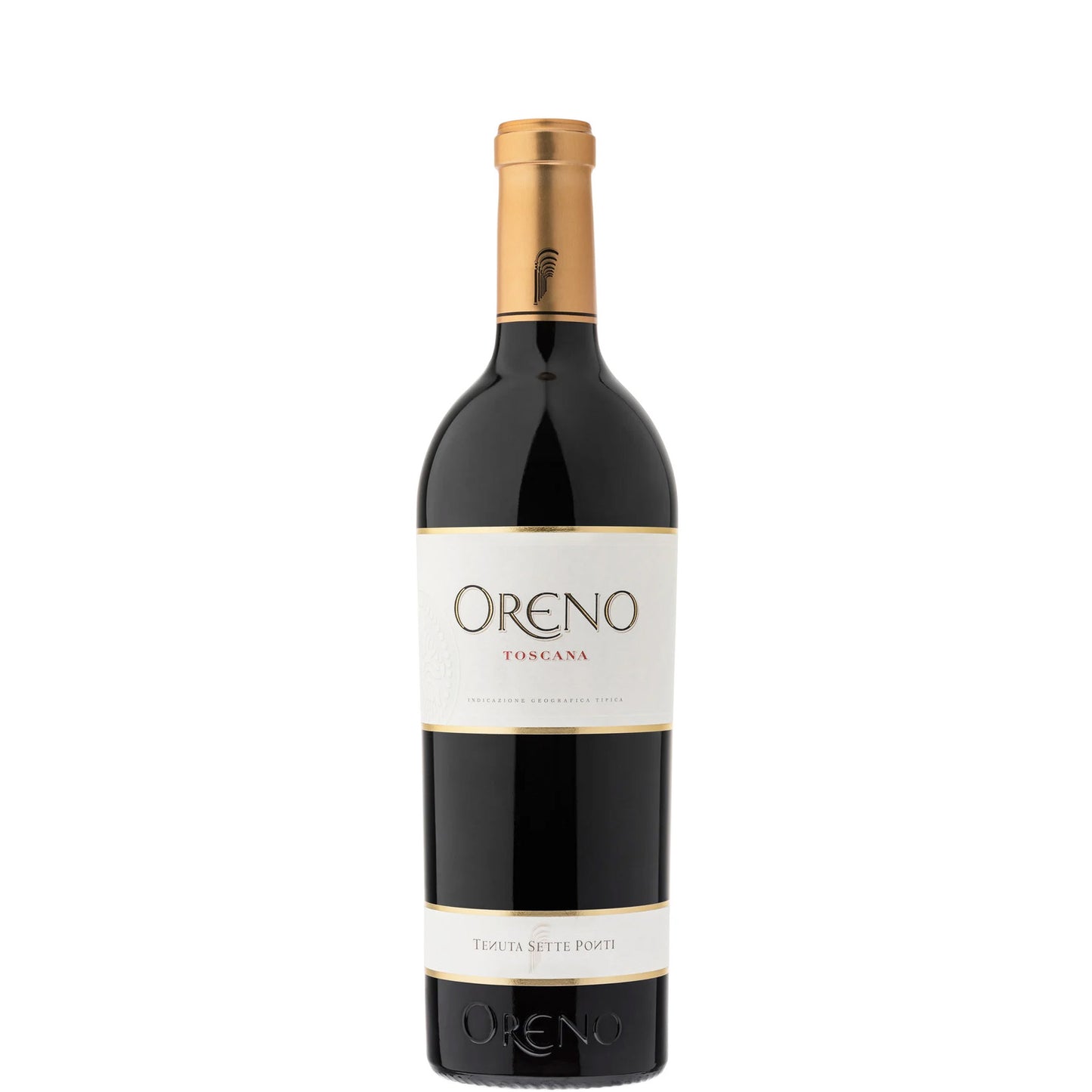
Tenuta Sette Ponti, Oreno, 2020
Tenuta Sette Ponti, Oreno, 2020
- 75cl
- 15%
- Red Still
- Cabernet Sauvignon, Merlot, Petit Verdot
- Organic
Couldn't load pickup availability

Optimal drinking window: Now - 2038
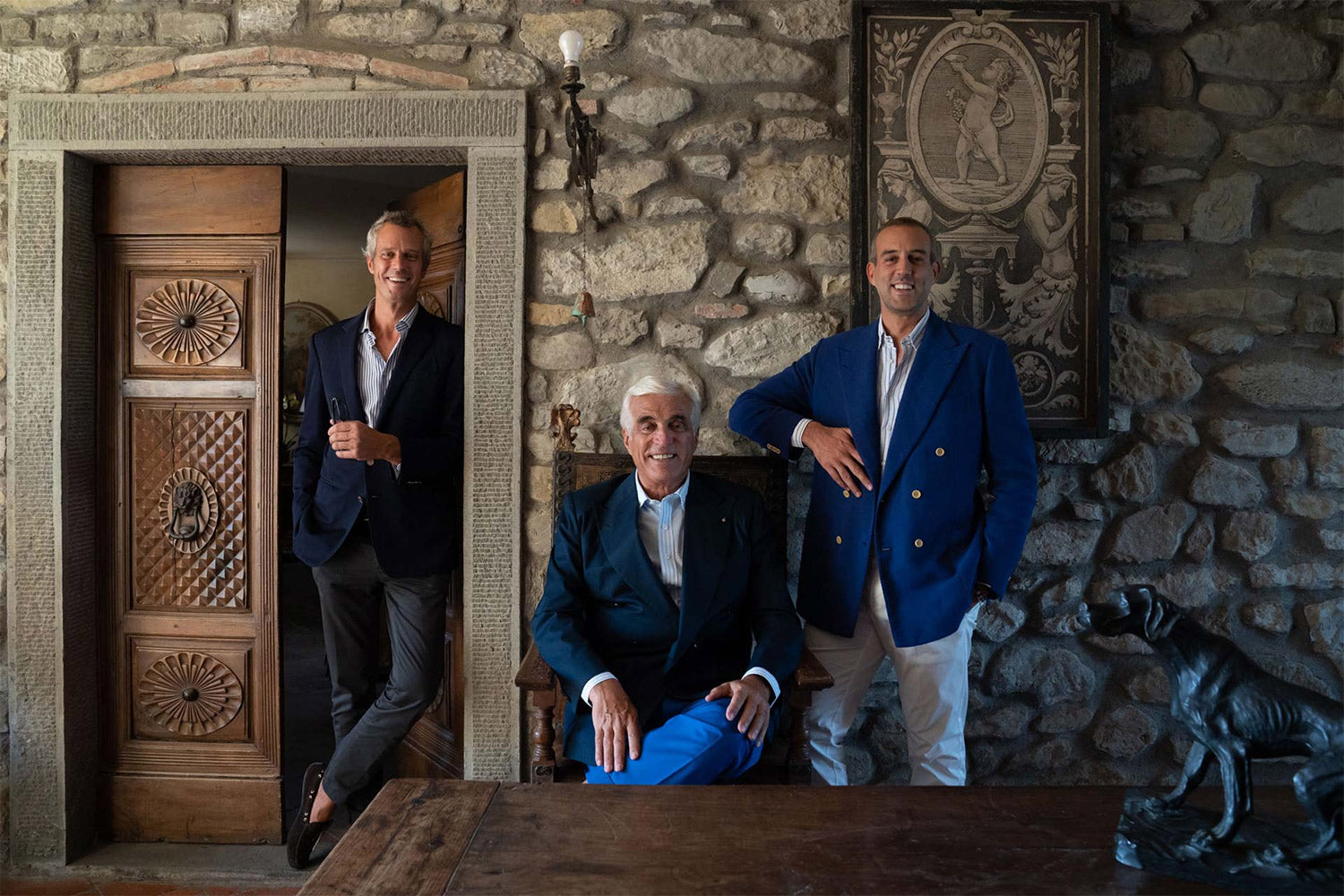
The Oreno was released in 1999, thanks to Dr. Antonio Moretti Cuseri, a great wine lover, who, during his frequent travels, was struck by the elegance and finesse of Bordeaux grape varieties - so much that he decided to plant these varieties on the estate.
The name, in fact, comes from a stream which crosses the estate, just in the area rich of clay where the Merlot vines grow; while in the soils with a greater presence of pebbles, which ensure a perfect drainage and perform a self-regulating function of temperature and humidity, Cabernet Sauvignon finds its natural collocation. The perfect complement to the blend is Petit Verdot, traditionally used as a carrier of spicy notes and intensity of flavour. The result is a wine inspired by the Bordeaux style but with a strong Tuscan imprint.
Right now, the 2020 Oreno is an impressive but somewhat closed proposition — the tannins are the dominant voice and the fruit is compressed behind them. From around 2028, expect the structure to soften enough for the dark fruit and mineral complexity to start integrating properly. By 2030-2032 we'd expect it to hit its stride, with secondary notes of dried herbs, leather, and earthy depth adding another layer. The plateau should be a long one, comfortably holding until 2038, after which it may begin to dry out gradually.
What the critics say:
"A red with a layered, velvety texture, showing blackberry and black-olive character, together with some iodine and graphite. Full-bodied and rich with lots of fruit and chewy tannins. Savory. 50% merlot, 40% cabernet sauvignon and 10% petit verdot. Needs two or three years to soften."
"Lovely detail on the nose, a sweet floral scent with touches of dried herbs, coffee and mint. Structured and fleshy, this has weight and power straight away with the focus more on the tannins and concentration of crunchy fruit than overt liveliness at this point. A serious, contemplative wine with lots going on. I love the intensity here, this is confident with clear direction and energy. I also love the salty, smoked stone taste at the end giving nuance and sense of place. Detailed and expressive, great winemaking on show here, and there is lots to get stuck into. Ageing 18 months in French oak barriques and tonneaux then in bottle for one year before being released."
Tasting Notes
AppearanceDeep, almost opaque ruby-purple with a dense, inky core and a narrow, youthful rim.
NoseBlackberry and black olive lead, then graphite and iodine pull things in a darker, more mineral direction. There's a sweet floral lift underneath, dried herbs, a whisper of coffee, and something cool and mentholated that keeps it from feeling heavy.
PalateFull-bodied and concentrated, with the tannins very much in charge right now — grippy, serious, and built for the long game. The fruit is crunchy and precise rather than plush, and a savoury, smoked-stone quality on the mid-palate gives the wine real personality and a distinctly Tuscan edge.
FinishLong and mineral, with a salty persistence and the tannins lingering purposefully.
Overall impressionA wine of genuine ambition and clear direction — Bordeaux in inspiration, unmistakably Tuscan in character, and very much still becoming itself.
Food Pairings
In Valdarno and wider Tuscany, a wine like this would traditionally meet bistecca alla Fiorentina — a thick-cut T-bone from Chianina cattle, grilled over wood embers and finished with nothing more than coarse salt and olive oil. Wild boar slow-braised with juniper and red wine is another natural partner, as is cinghiale in umido, the kind of dish that takes most of a Sunday to make. Aged Pecorino di Pienza, hard and crystalline, works well too, cutting through the tannin with a pleasingly abrasive saltiness.
We think this wine would go well with
Serve at 17-18°C — any warmer and the alcohol will push forward at the expense of the wine's structure. Decanting is strongly recommended: give it at least 90 minutes, ideally two hours, to let those tannins begin to open up and the fruit to come forward. A large-bowled Bordeaux glass will give the wine the space it needs to breathe and show its full range.
The vineyards sit in the Valdarno Superiore, a corridor between Chianti Classico and the Arno valley, where soils shift meaningfully across the estate. Clay-rich ground near the Oreno stream suits Merlot, giving it flesh and depth, while stonier, pebbly sections drain freely and moderate temperature swings for the Cabernet Sauvignon. Petit Verdot fills in the blend with structure and spice. The altitude and continental character of the valley deliver warm days and cool nights, preserving freshness in a wine of considerable weight.
Oreno is classified as a Toscana IGT, the catch-all designation that gave birth to the Super Tuscan movement when ambitious producers wanted to use non-indigenous varieties outside the constraints of Chianti DOCG rules. The IGT designation carries no restrictions on grape variety or blending, which is precisely why it became the vehicle for some of Tuscany's most ambitious wines. Far from being a consolation classification, Toscana IGT is now home to some of Italy's most sought-after bottles.
The 2020 growing season in Tuscany threw everything it had at the vines, then delivered one of those dramatic turnarounds that makes wine people believe in providence. A cold, wet spring delayed budbreak and kept everyone on edge about flowering, whilst summer brought punishing heat that had producers reaching for shade nets and irrigation systems. Just when the vintage looked destined for mediocrity, September arrived with cooling temperatures and crucial rainfall that allowed the grapes to recover their composure and ripen properly rather than simply desiccate on the vine.
What emerged from the cellars shows Tuscany's resilience in fine form. The Sangiovese displays more immediate charm than we often see from the variety, with bright cherry fruit that doesn't sacrifice the underlying structure that makes Chianti and Brunello age so gracefully. Super Tuscans from the coastal areas fared particularly well, where Cabernet Sauvignon and Merlot thrived in the maritime influence and produced wines with both power and freshness. Most 2020s are drinking beautifully now, offering accessibility without compromising their long-term prospects, and we suspect the best will reward cellaring for another decade or more.
FAQs
What does the Oreno taste like?
Dark and concentrated — blackberry, black olive, graphite, and a salty, smoked-stone mineral quality that sets it apart from a straightforward international style. The tannins are chewy and serious, the body full, and the finish long. It's a wine with real character and clear direction.
When should I drink the 2020 Oreno?
It needs time. The tannins are still dominant and the wine is very much in its shell. We'd suggest holding until at least 2028, with the sweet spot likely running from 2030 until around 2038. If you do open it now, decant generously.
What food should I serve with this wine?
Bistecca alla Fiorentina is the obvious answer — the grippy tannins are made for charred, fatty beef. Slow-braised wild boar or a rich lamb shoulder work equally well, as would aged Pecorino if you're going the cheese route.
How should I serve it?
Serve at 17-18°C in a large Bordeaux glass, and decant for at least 90 minutes to two hours. This is not a wine to pour straight from the bottle and expect the best from.
Is the Oreno worth cellaring?
Absolutely. With 97 points from James Suckling and 95 from Decanter, the 2020 is one of the finest Orenos made. It's built for the long haul — the structure and concentration are there to support a decade or more of ageing, and patience will be genuinely rewarded.
What makes Oreno different from other Super Tuscans?
It's Bordeaux-inspired in its blend of Merlot, Cabernet Sauvignon, and Petit Verdot, but the Tuscan character comes through clearly in that salty, mineral, smoked-stone quality on the finish. It doesn't try to be Pomerol or Pauillac — it has its own sense of place, rooted in the Valdarno's clay and pebble soils, and that's what makes it genuinely interesting.
Explore related wines


What are you looking for tonight? Tell me the occasion, a grape, a region — or just try a suggestion below.
Your recommendations will appear here.
-
-
Speak to one of our Wine Gurus
Speak to a Wine GuruWith years of experience, our team can help you with all your wine buying and selling needs